Kirjojen hintavertailu – 12 859 819 kirjaa ja 27 kauppaa

Kirjailija

H. G. Adler

Kirjat ja teokset yhdessä paikassa: 7 kirjaa, julkaisuja vuosilta 2009–2023, suosituimpiin kuuluu After Liberation. Vertaile teosten hintoja ja tarkista saatavuus suomalaisista kirjakaupoista.

Nimi esiintyy myös muodoissa: H.G. Adler

7 kirjaa

Kirjojen julkaisuvuodet: 2009–2023.

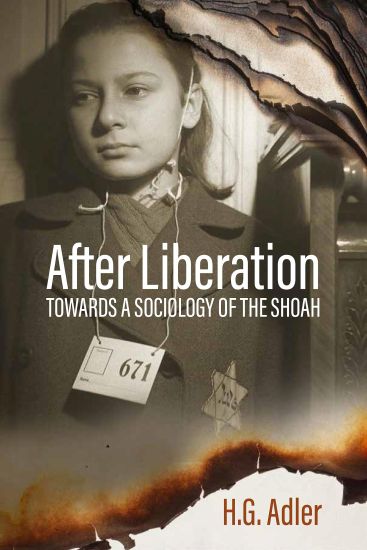
After Liberation

After Liberation

H.G. Adler; Jeremy Adler

BERGHAHN BOOKS
2023
sidottu
H. G. Adler (1910–1988) was one of the founding figures of Holocaust scholarship whose monumental monograph Theresienstadt 1941-1945. The Face of a Coerced Community (1955; 1960) was the first study to present a fully documented account of the Final Solution. This collection gathers together, for the first time in English, some of Adler’s most important scholarly essays on the Shoah and connected themes. Ideas raised for the first time in his book on Theresienstadt are here taken up and developed at greater length, new accents are set, and new themes are explored. Spanning his thought across three decades they focus on the fate of the ‘coerced’ human being and reflect on freedom, enslavement, terror, concentration camps, persecution, the mass society, dread, loneliness, and ideology.
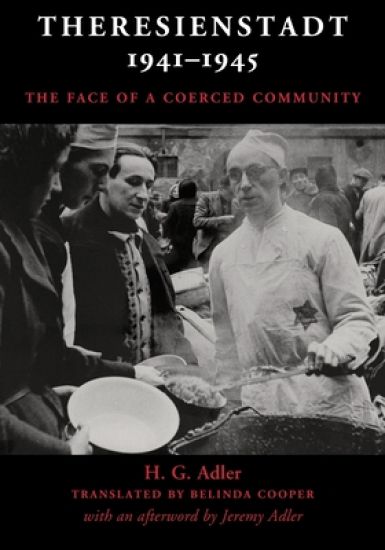
Theresienstadt 1941–1945

Theresienstadt 1941–1945

H. G. Adler; Jeremy Adler

Cambridge University Press
2021
pokkari

Halvin toimitettuna 38,90 €

First published in 1955, with a revised edition appearing five years later, H. G. Adler's Theresienstadt, 1941–1945 is a foundational work in the field of Holocaust studies. As the first scholarly monograph to describe the particulars of a single camp - the Jewish ghetto in the Czech city of Terezin - it is the single most detailed and comprehensive account of any concentration camp. Adler, a survivor of the camp, divides the book into three sections: a history of the ghetto, a detailed institutional and social analysis of the camp, and an attempt to understand the psychology of the perpetrators and the victims. A collaborative effort between the United States Holocaust Memorial Museum and the Terezin Publishing Project makes this authoritative text on Holocaust history available for the first time in the English language, with a new afterword by the author's son Jeremy Adler.
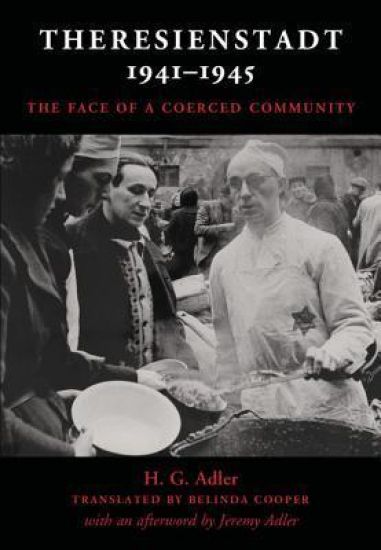
Theresienstadt 1941–1945

Theresienstadt 1941–1945

H. G. Adler; Jeremy Adler

Cambridge University Press
2017
sidottu

Halvin toimitettuna 120,80 €

First published in 1955, with a revised edition appearing five years later, H. G. Adler's Theresienstadt, 1941–1945 is a foundational work in the field of Holocaust studies. As the first scholarly monograph to describe the particulars of a single camp - the Jewish ghetto in the Czech city of Terezin - it is the single most detailed and comprehensive account of any concentration camp. Adler, a survivor of the camp, divides the book into three sections: a history of the ghetto, a detailed institutional and social analysis of the camp, and an attempt to understand the psychology of the perpetrators and the victims. A collaborative effort between the United States Holocaust Memorial Museum and the Terezin Publishing Project makes this authoritative text on Holocaust history available for the first time in the English language, with a new afterword by the author's son Jeremy Adler.
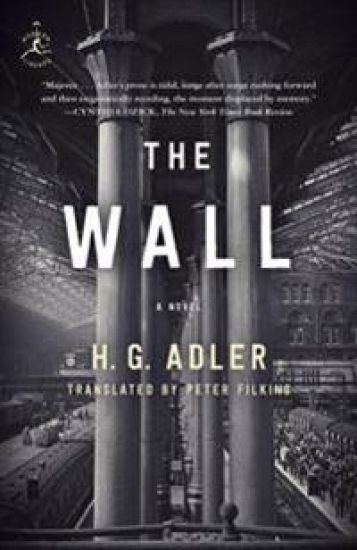
The Wall

The Wall

H. G. Adler

Modern Library Inc
2015
pokkari
NAMED ONE OF THE BEST BOOKS OF THE YEAR BY PUBLISHERS WEEKLY Compared by critics to Kafka, Joyce, and Musil, H. G. Adler is becoming recognized as one of the towering figures of twentieth-century fiction. Nobel Prize winner Elias Canetti wrote that "Adler has restored hope to modern literature," and the first two novels rediscovered after his death, Panorama and The Journey, were acclaimed as "modernist masterpieces" by The New Yorker. Now his magnum opus, The Wall, the final installment of Adler's Shoah trilogy and his crowning achievement as a novelist, is available for the first time in English. Drawing upon Adler's own experiences in the Holocaust and his postwar life, The Wall, like the other works in the trilogy, nonetheless avoids detailed historical specifics. The novel tells the story of Arthur Landau, survivor of a wartime atrocity, a man struggling with his nightmares and his memories of the past as he strives to forge a new life for himself. Haunted by the death of his wife, Franziska, he returns to the city of his youth and receives confirmation of his parents' fates, then crosses the border and leaves his homeland for good. Embarking on a life of exile, he continues searching for his place within the world. He attempts to publish his study of the victims of the war, yet he is treated with curiosity, competitiveness, and contempt by fellow intellectuals who escaped the conflict unscathed. Afflicted with survivor's guilt, Arthur tries to leave behind the horrors of the past and find a foothold in the present. Ultimately, it is the love of his second wife, Johanna, and his two children that allows him to reaffirm his humanity while remembering all he's left behind. The Wall is a magnificent epic of survival and redemption, powerfully told through stream of consciousness and suffused with daydream, fantasy, memory, nightmare, and pure imagination. More than a portrait of a Holocaust survivor's journey, it is a universal novel about recovering from the traumas of the past and finding a way to live again. Praise for The Wall " A] majestic novel . . . Adler's prose is tidal, surge after narrative surge rushing forward and then enigmatically receding, the moment displaced by memory, and memory by introspective soliloquy."--Cynthia Ozick, The New York Times Book Review "A towering meditation on the self and spirit . . . The writing is sonorous and so entirely devastating that the reader is compelled to pore over every word."--Publishers Weekly (starred review) "Masterful and utterly unique."--The Jerusalem Post "Haunting and utterly heart-wrenching . . . a literary masterpiece."--Historical Novels Review "An epic novel . . . an unforgettable portrait."--The Jewish Week " A] pensive portrait of a man struggling to find a place in the world after enduring transformative calamity . . . an eloquent record of suffering--and perhaps of redemption as well."--Kirkus Reviews Praise for H. G. Adler's novels The Journey and Panorama, translated by Peter Filkins "Modernist masterpieces worthy of comparison to those of Kafka or Musil."--The New Yorker "Haunting . . . as remarkable for its literary experimentation as for its historical testimony."--San Francisco Chronicle, on Panorama From the Hardcover edition.

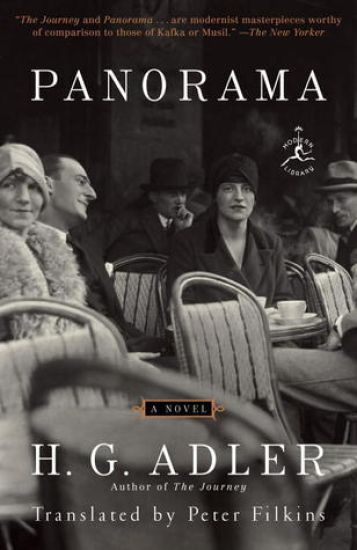
Panorama

Panorama

H. G. Adler; Peter Demetz

Modern Library Inc
2012
pokkari
Published for the first time in English, Panorama is a superb rediscovered novel of the Holocaust by a neglected modern master. One of a handful of death camp survivors to fictionalize his experiences in German, H. G. Adler is an essential author--referenced by W. G. Sebald in his classic novel "Austerlitz," and a direct literary descendant of Kafka. When "The Journey" was discovered in a Harvard bookshop and translated by Peter Filkins, it began a major reassessment of the Prague-born H. G. Adler by literary critics and historians alike. Known for his monumental "Theresienstadt 1941-1945," a day-by-day account of his experiences in the Nazi slave-labor community before he was sent to Auschwitz, Adler also wrote six novels. The very depiction of the Holocaust in fiction caused furious debate and delays in their publication. Now "Panorama," his first novel, written in 1948, is finally available to convey the kinds of truths that only fiction can. A brilliant epic, "Panorama" is a portrait of a place and people soon to be destroyed, as seen through the eyes of young Josef Kramer. Told in ten distinct scenes, it begins in pastoral Word War I-era Bohemia, where the boy passively witnesses the "wonders of the world" in a thrilling panorama display; follows him to a German boarding school full of creeping xenophobia and prejudice; and finds him in young adulthood sent to a labor camp and then to one of the infamous extermination camps, before he chooses exile abroad after the war. Josef's philosophical journey mirrors the author's own: from a stoic acceptance of events to a realization that "the viewer is also the participant" and that action must be taken in life, if only to make sure the dead are not forgotten. Achieving a stream-of-consciousness power reminiscent of James Joyce and Gertrude Stein, H. G. Adler is a modern artist with unique historical importance. "Panorama" is lasting evidence of both the torment of his life and the triumph of his gifts. "From the Hardcover edition."