Kirjailija
H. G. Wells
Kirjat ja teokset yhdessä paikassa: 1 483 kirjaa, julkaisuja vuosilta 1895–2027, suosituimpiin kuuluu Maailmojen sota. Vertaile teosten hintoja ja tarkista saatavuus suomalaisista kirjakaupoista.
Nimi esiintyy myös muodoissa: H G Wells, H.G. Wells, H.G Wells, H. G Wells
1 483 kirjaa
Kirjojen julkaisuvuodet: 1895–2027.
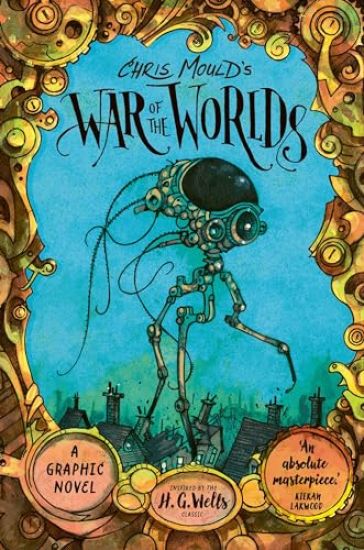
A stunning full-colour illustrated adaptation of H. G. Wells' sci-fi classic, from the illustrator of THE IRON MAN and ANIMAL FARM.'Those who have never seen Martian life can scarcely imagine the horror.'1894. Across space, this earth is being watched by envious eyes. What seems to be a meteorite falls to earth, but from the debris unfolds a terrifying alien threat . . . As war descends, Leon and his scientist wife race against the clock to discover the science behind these invaders in the hopes of ending the war of all worlds.'Exquisite, detailed illustrations . . . convey as much emotion as do words in this remarkable re-imagining of War of the Worlds.' Susan Price, Carnegie winning author of Ghost Drum'An absolute masterpiece.' Kieran Larwood, author of The World of Podkin One-Ear series

Classic Monster Novels Condensed: Mary Shelley's Frankenstein, Bram Stoker's Dracula, H. G. Wells' The Invisible Man
Mary Shelley; Bram Stoker; H. G. Wells
Createspace Independent Publishing Platform
2012
nidottu
Halvin toimitettuna 16,40 €
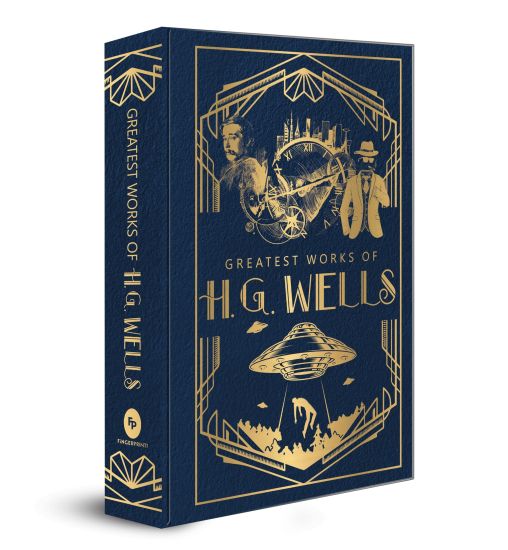
Greatest Works of H. G. Wells (Deluxe Hardbound Edition) showcases the remarkable literary genius of H. G. Wells, a pioneer of science fiction and visionary storytelling. Immerse yourself in a collection of his greatest works, beautifully presented in a luxurious hardbound edition. Experience Wells' groundbreaking imagination and thought-provoking narratives. Engage with classic tales such as The War of the Worlds and The Time Machine. Explore themes of scientific discovery, social commentary, and the human condition. Delve into Wells' compelling storytelling and vivid depiction of future worlds. This deluxe hardbound edition is a collector's item, making it a must-have for fans of science fiction, literature enthusiasts, and lovers of visionary storytelling.
H. G. Wells Double Feature - The Invisible Man and The Island of Dr. Moreau (Reader's Library Classics)
H G Wells
Reader's Library Classics
2021
pokkari
The crying sounded even louder out of doors. It was as if all the pain in the world had found a voice. Also available in a beautiful hardcover edition (ISBN: 9781954839014)Considered one of the father's of Science Fiction, H. G. Wells was a prominent and influential author of the late 19th century and early 20th century. Two of his greatest novels come together in this paperback edition of The Invisible Man and The Island of Dr. Moreau. This Invisible Man: A curious man, wearing a long coat, a wide-brimmed hat, and whose face is entirely swathed in bandages save for an obvious fake pink nose, walks into an English inn to the shock of many of the townspeople. Beakers and chemicals in tow, the man demands his solitude. It's strange enough as it is until his money begins to run out and mysterious burglaries occur within the town. The Invisible Man, written in 1897, chronicles the bizarre interaction between the citizens of a small town and a man who had discovered how to turn himself invisible. The Island of Dr. Moreau: Shipwrecked in the south Pacific Ocean, Englishman Edward Prendick awakens aboard a ship where a man named Montgomery and his beastly looking servant were transporting animal cargo. Soon, together they arrive on an island and more and more of these bizarre humanlike creatures appear. Prendick senses a sinister secret to the island after he meets with the owner, a one Dr. Moreau... Ahead of its time, The Island of Dr. Moreau features the ideas of genetic manipulation half a century before the discovery of DNA.
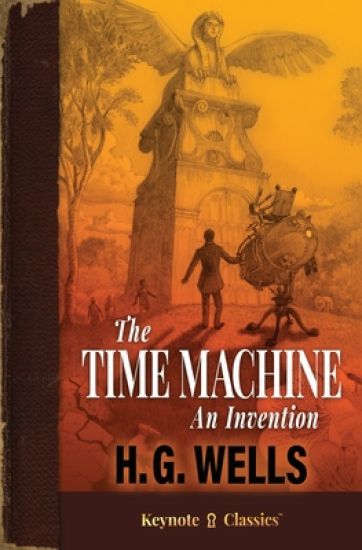
The Time Machine (Annotated Keynote Classics)
H G Wells; Michelle M White; J D White
Keynote Classics
2020
pokkari
Halvin toimitettuna 18,00 €
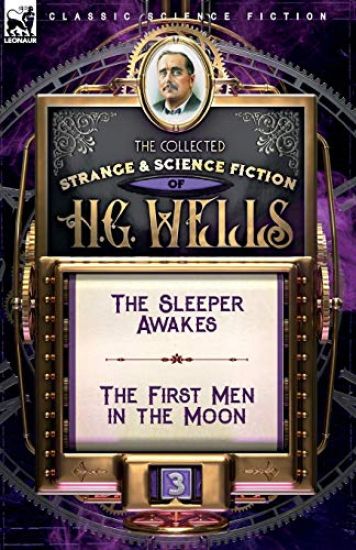
Volume 3--The Sleeper Awakes & The First Men in the MoonFor those who know anything of the most outstanding British authors of the late 19th and early 20th centuries, the name of Herbert George Wells (1866-1946) needs little introduction, for he wrote on many subjects. He is principally remembered as one of the 'Fathers of Science Fiction' and this six volume Leonaur collection focuses upon his writing in that genre--from the strange to the fantastical and scientifically prophetic--with which he will forever be associated. These wonderful and dramatic stories have been gathered together in these attractive, good value volumes in chronological order of original publication. In 'The Sleeper Awakes' (1899) a man falls asleep for over two hundred years and on awakening in a dystopian London discovers that as a result of compound bank interest he is the wealthiest man on earth. His adventures propel him to leadership of a movement fighting for liberation from tyrannical rulers. The scientific romance 'The First Men in the Moon' (1901) tells the fantastic story of two men who journey to the moon to discover it is populated by the Selenites--a race of insect-like alien creatures. Leonaur editions are newly typeset and are not facsimiles; each title is available in softcover and hardback with dustjacket.
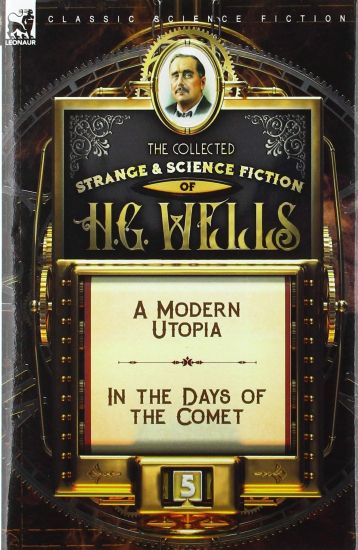
Volume 5--A Modern Utopia & In the Days of the CometFor those who know anything of the most outstanding British authors of the late 19th and early 20th centuries, the name of Herbert George Wells (1866-1946) needs little introduction, for he wrote on many subjects. He is principally remembered as one of the 'Fathers of Science Fiction' and this six volume Leonaur collection focuses upon his writing in that genre--from the strange to the fantastical and scientifically prophetic--with which he will forever be associated. These wonderful and dramatic stories have been gathered together in these attractive, good value volumes in chronological order of original publication. In 'A Modern Utopia' (1905) two adventurers travel to a planet 'out beyond Sirius' to experience a society in which their own doubles exist. 'In the days of the Comet' (1906) a bizarre green comet enters the Earth's atmosphere releasing a soporific fog. Upon awakening humankind has been forever changed promoting a healthy, contented and peaceful society. Leonaur editions are newly typeset and are not facsimiles; each title is available in softcover and hardback with dustjacket.
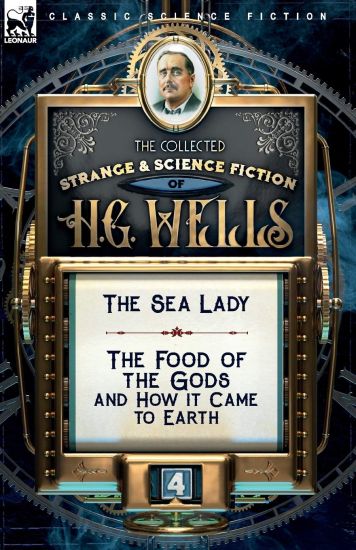
Volume 4--The Sea Lady & The Food of the Gods and How it Came to EarthFor those who know anything of the most outstanding British authors of the late 19th and early 20th centuries, the name of Herbert George Wells (1866-1946) needs little introduction, for he wrote on many subjects. He is principally remembered as one of the 'Fathers of Science Fiction' and this six volume Leonaur collection focuses upon his writing in that genre--from the strange to the fantastical and scientifically prophetic--with which he will forever be associated. These wonderful and dramatic stories have been gathered together in these attractive, good value volumes in chronological order of original publication. Wells' fantasy 'The Sea Lady' (1901) concerns a mermaid intent on seducing a man she had seen in the southern oceans. 'The Food of the Gods and How it Came to Earth' (1904) tells of a group of scientists who invent a food which causes those who eat it to grow to six or seven times their normal size. Chickens, rats, plants and insects all eat the food with disturbing consequences. When human children also eat it events spiral towards disaster. Leonaur editions are newly typeset and are not facsimiles; each title is available in softcover and hardback with dustjacket.
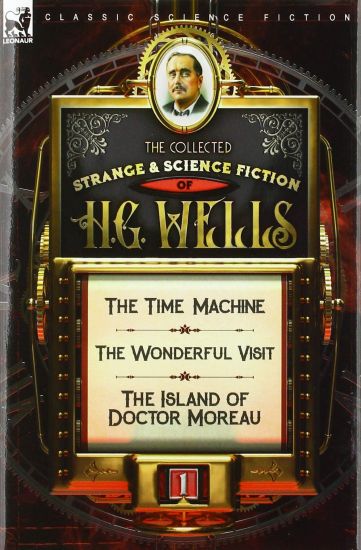
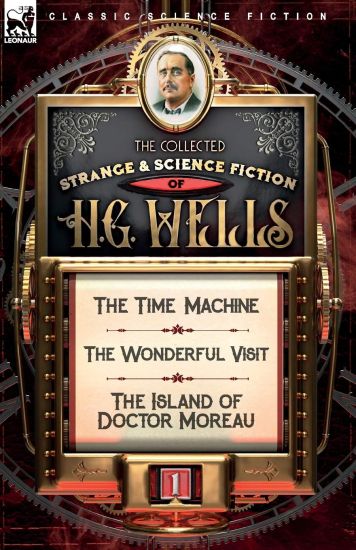
Volume 1--The Time Machine, The Wonderful Visit & The Island of Doctor MoreauFor those who know anything of the most outstanding British authors of the late 19th and early 20th centuries, the name of Herbert George Wells (1866-1946) needs little introduction, for he wrote on many subjects. He is principally remembered as one of the 'Fathers of Science Fiction' and this six volume Leonaur collection focuses upon his writing in that genre--from the strange to the fantastical and scientifically prophetic--with which he will forever be associated. These wonderful and dramatic stories have been gathered together in these attractive, good value volumes in chronological order of original publication. In 'The Time Machine' (1895) an inventor-traveller visits several future destinations including a future populated by the gentle Eloi and brutish Morlocks. 'The Wonderful Visit' (1895) features an angel with dazzling plumage who visits Victorian England. In 'The Island of Doctor Moreau' (1896) a shipwrecked man finds himself on the island home of a mad scientist who is creating human-like hybrid creatures from animals. Leonaur editions are newly typeset and are not facsimiles; each title is available in softcover and hardback with dustjacket.
Volume 2--The Invisible Man & The War of the WorldsFor those who know anything of the most outstanding British authors of the late 19th and early 20th centuries, the name of Herbert George Wells (1866-1946) needs little introduction, for he wrote on many subjects. He is principally remembered as one of the 'Fathers of Science Fiction' and this six volume Leonaur collection focuses upon his writing in that genre--from the strange to the fantastical and scientifically prophetic--with which he will forever be associated. These wonderful and dramatic stories have been gathered together in these attractive, good value volumes in chronological order of original publication.'The Invisible Man' (1897) tells the story of Griffin, a scientist who has invented a way to become invisible, but has not invented a way to reverse the process. Given to extreme violence by nature, he becomes a stalking deadly horror. 'The War of the Worlds' (1897) tells the story of a Martian invasion of Earth in which giant tripod fighting machines wreak death and destruction on England. The tentacled Martians appear to be totally undefeatable by humans, but fall prey to common bacteria to which they have no immunity. Leonaur editions are newly typeset and are not facsimiles; each title is available in softcover and hardback with dustjacket.
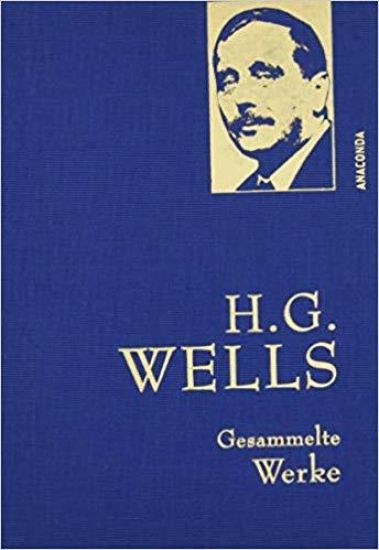
H.G. Wells - Gesammelte Werke (Die Zeitmaschine - Die Insel des Dr. Moreau - Der Krieg der Welten - Befreite Welt)
H. G. Wells
Anaconda Verlag
2019
sidottu
H. G. Wells's genius is perfectly shown in this collection of his most famous and enduring stories. From the eerily prescient visions of the future in The Time Machine to the palpable fear and paranoia of an alien invasion in The War of the Worlds, each is a masterpiece in its own right. Whether for devoted Wells aficionados or readers discovering his work for the first time, this collection is an essential addition to the library of any science fiction fan.
The Sea Lady: by H. G. Wells
T. a. Copeland; H. G. Wells
Createspace Independent Publishing Platform
2018
nidottu
In The Sea Lady H. G. Wells employs a time-honored technique of satire: the alien perspective. A mermaid finds the ordinary world we inhabit not altogether sensible, her previous experience making it strange to her, and therefore strange to us as well. Herein lies a good deal of humor. In an early scene Wells burlesques the way popular literature represents his world and then uses the rest of the story to criticize the world as it truly is. But the lady has an agenda, too, and it isn't at all what she leads her hostess to believe. When we learn this, Wells's satire grows dark. Or does it rather grow brighter? The ending is mysterious. Yet it is not quite as mysterious as the ending of the novel on which this play is based. The novel is narrated like a documentary, as if the data were gathered from interviews of witnesses, and for this reason the final scene cannot be reported, since only the principals, now gone, witnessed it. Readers' inability to forgive Wells for depriving them of this climactic scene may account for the novel's relative obscurity. This adaptation uses much of Wells's own writing, both in this novel and in other stories, to fill in the blank.
Hailed as the founder of modern science fiction, H. G. Wells (1866-1946) wrote a brilliant succession of novels and short stories that remain in the first rank of the genre. In fantasies made credible by their simple realism, his enduringly relevant tales gave symbolic expression to the ideas and anxieties of his era. This collection contains the best of H. G. Wells's science-fiction short stories: favorites like "The Crystal Egg," "Aepyornis Island," "The Strange Orchid," "The Man Who Could Work Miracles," "A Dream of Armageddon," "The Sea Raiders," and other tales about fourth-dimensional adventure, biological monstrosities, marvelous inventions, time distortions, cosmic catastrophe, and other intriguing events. In addition to these 17 short stories, this anthology features the novel The Invisible Man in its entirety. One of Wells's most popular stories, it offers both a serious study of egotism as well as a first-rate science-fiction thriller.