Kirjojen hintavertailu – 12 859 819 kirjaa ja 27 kauppaa
Kirjailija
H. G. Wells
Kirjat ja teokset yhdessä paikassa: 1 483 kirjaa, julkaisuja vuosilta 1895–2027, suosituimpiin kuuluu Maailmojen sota. Vertaile teosten hintoja ja tarkista saatavuus suomalaisista kirjakaupoista.
Nimi esiintyy myös muodoissa: H G Wells, H.G. Wells, H.G Wells, H. G Wells
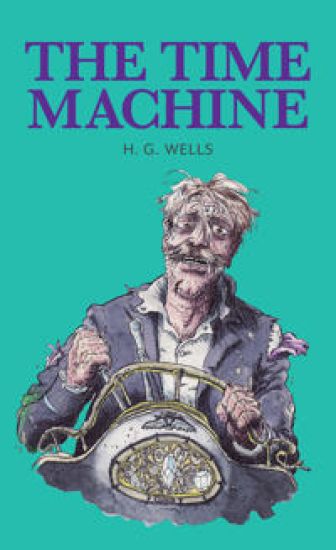
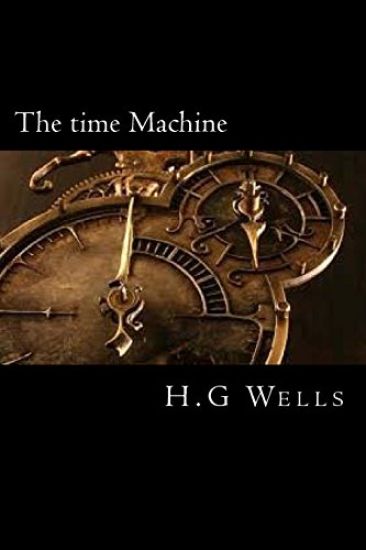
The time traveller has invented a time machine. Its capabilities are beyond even his fertile imagination. Hundreds of thousand of years in the future, the beautiful Eloi people live in a Garden of Eden. But why are the Eloi so fearful of the dark? What horrors lurk beneath the surface of their world? What will the time traveller learn about the future? Will he survive the evil he encounters? Even if he can find his stolen machine, will it return him safely home? What does his future hold? What is the future of the human race?
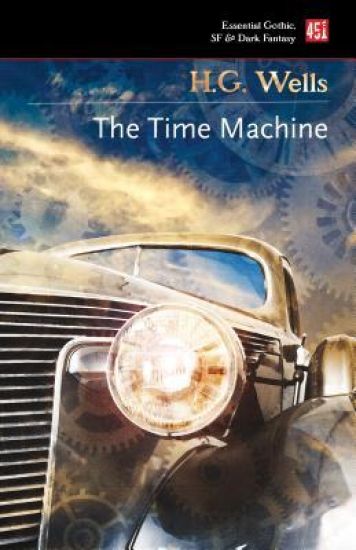
A masterful tale from the founding father of science fiction. An ingenious inventor creates a machine which can hurtle through time. With no idea what to expect, the time traveller sets out on an epic adventure into the unknown. On his first journey into the future of the human race, the traveller encounters the Eloi: an apathetic but carefree tribe, forming a close bond with the woman Weena. Less appealing however, are the bestial Morlocks who stalk the area at night, picking off the Eloi for food. When his time machine disappears, the time traveller is faced with no option but to confront the ape-like creatures, unwittingly starting a deadly battle in order to escape. FLAME TREE 451: From mystery to crime, supernatural to horror and fantasy to science fiction, Flame Tree 451 offers a healthy diet of werewolves and mechanical men, blood-lusty vampires, dastardly villains, mad scientists, secret worlds, lost civilizations and escapist fantasies. Discover a storehouse of tales gathered specifically for the reader of the fantastic. Each book features a brand new biography and glossary of Literary, Gothic and Victorian terms.
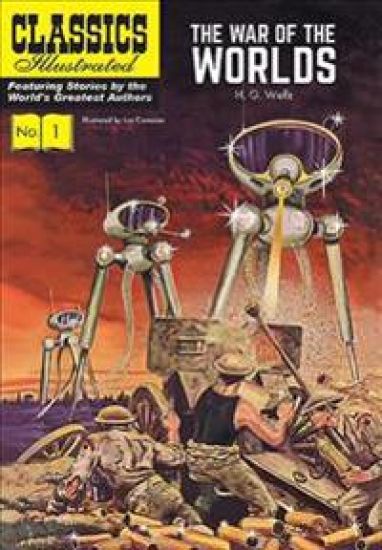
"Towards the end of the nineteenth century, several newspapers in England carried a small account of the discovery of a mass of flaming gas, chiefly hydrogen, originating on the planet Mars and moving with enormous speed towards the Earth. The news item, however, was so insignificant, that I, as well as the rest of the world, ignored what proved to be one of the gravest dangers that ever threatened the human race..." So begins this exciting version of Wells's science fiction of the Martian invasion, told through the eyes of an ordinary man. Classics Illustrated tells this wonderful tale in colourful comic strip form, offering an excellent introduction for younger readers. This edition also includes a biography of H. G. Wells, theme discussions and study questions, offering the reader the ability to further explore Wells's terrifying tale. The Classics Illustrated comic book series began in 1941 with its first issue, Alexandre Dumas's The Three Musketeers, and has since included over 200 classic tales released around the world. This new Vintage Replica hardback edition is part of a continuing effort to make Classics Illustrated available to all, be they young readers just beginning their journeys into the great world of classic literature, or collectors who have fond memories of this much loved comic book series.
Ranked among the classic novels of the English language and the inspiration for several unforgettable movies, this early work of H. G. Wells was greeted in 1896 by howls of protest from reviewers, who found it horrifying and blasphemous. They wanted to know more about the wondrous possibilities of science shown in his first book, The Time Machine, not its potential for misuse and terror. In The Island of Dr. Moreau, a shipwrecked gentleman named Edward Prendick, stranded on a Pacific island lorded over by the notorious Dr. Moreau, confronts dark secrets, strange creatures, and a reason to run for his life.
H G Wells Herbert George Wells, an English writer, was born on 21st 1866 and died on 13 Aug 1946. He was renowned for his works of science fiction especially 'The Time Machine'. He is also referred as 'The Father of Science Fiction'
A provocative novel by H. G. Wells. In the midst of a world war, the tail of a comet brushes the atmosphere of earth, causing everyone to lose consciousness for a few hours. When the world awakens, everyone has an expanded understanding of the meaning of things. The war is quickly ended; a new utopia is created; even crime is reduced to near zero. What caused the transformation-or was there one?
A fantastic tale of the world's beauty and unity after the Great Change occurs. We are delighted to publish this classic book as part of our extensive Classic Library collection. Many of the books in our collection have been out of print for decades, and therefore have not been accessible to the general public. The aim of our publishing program is to facilitate rapid access to this vast reservoir of literature, and our view is that this is a significant literary work, which deserves to be brought back into print after many decades. The contents of the vast majority of titles in the Classic Library have been scanned from the original works. To ensure a high quality product, each title has been meticulously hand curated by our staff. Our philosophy has been guided by a desire to provide the reader with a book that is as close as possible to ownership of the original work. We hope that you will enjoy this wonderful classic work, and that for you it becomes an enriching experience.
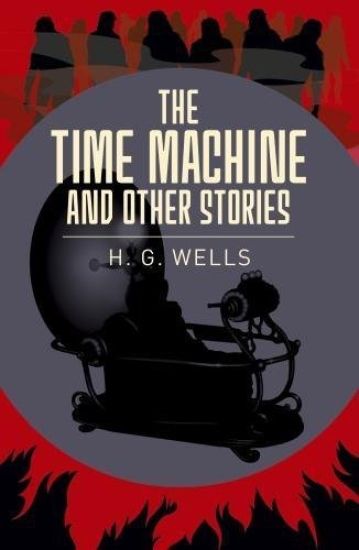
So begins the Time Traveller's astonishing firsthand account of his journey 800,000 years beyond his own era-and the story that launched H. G. Wells's successful career and earned him his reputation as the father of science fiction. With a speculative leap that still fires the imagination, Wells sends his brave explorer to face a future burdened with our greatest hopes...and our darkest fears. A pull of the Time Machine's lever propels him to the age of a slowly dying Earth. There he discovers two bizarre races-the ethereal Eloi and the subterranean Morlocks-who not only symbolize the duality of human nature, but offer a terrifying portrait of the men of tomorrow as well. Published in 1895, this masterpiece of invention captivated readers on the threshold of a new century.
This thrilling tale is H. G. Wells at his modernist, visionary best. In 1907, a naive Londoner named Bert Smallways finds himself an unwitting passenger on a fleet of German airships heading over the Atlantic to attack New York. What unfolds in characteristically Wellsian fashion is a clash of early flying machines that leaves Gotham in shambles and unleashes the terrible age of Total War. Uncannily relevant to our own era, The War in the Air remains a cornerstone of early science fiction.
Man had not yet learned to fly when H. G. Wells conceived this story of a Martian attack on England. Giant cylinders crash to Earth, disgorging huge, unearthly creatures armed with heat-rays and fighting machines. Amid the boundless destruction they cause, it looks as if the end of the world has come.
It is the tale of a fallen angel who simply cannot adapt to society in a small English village. The angel's reactions to the villagers, his pureness and wholesomeness make him an enemy of the people. As time passes on earth, he becomes more and more human, falling in love and suffering all the human trials and tribulations.
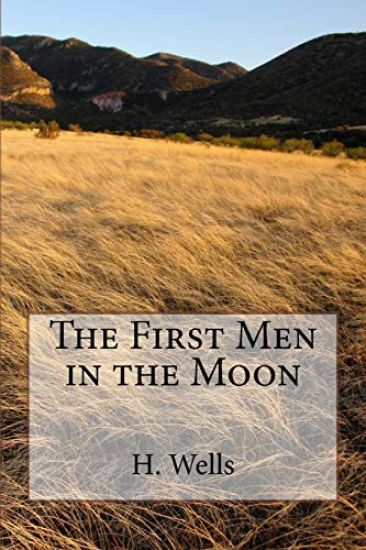
Of the enormous body of work produced by H. G. Wells - more than a book a year over the course of half a century - the early science fiction novels that first made him famous have proved to be the most enduring and have earned him the sobriquet "the father of modern science fiction." In the 1901 classic The First Men in the Moon, Wells reveals not only a fertile imagination at ease with biological and astronomical phenomena, but also a passionate concern for man and society. His "first men in the moon" prove to be the eccentric Mr. Cavor and his traveling companion, Mr. Bedford, who navigate a gravity-defying sphere through space before executing a rough landing on the moon. As castaways from earth, they practice lunar locomotion, get lost in the wilds of a moon jungle, and confront intelligent life forms living in lunar caverns. Through the adventures of these two earthlings, the author is able to look at mankind from a distance and, in his words, "burlesque the effects of specialization." The result is a delightful tale filled with adventure, romance, and fantasy that is still capable of stirring the imagination of readers in the 21st century. " Wells's science-fiction novels] achieve a near poetry which makes them part of the popular mythology of their age ... the best of his work has a vitality, a verve, an imaginative compulsion unsurpassed by any of his contemporaries." - N. C. Nicholson, author of H. G. Wells.
First published in 1897, The Invisible Man ranks as one of the most famous scientific fantasies ever written. Part of a series of pseudoscientific romances written by H. G. Wells (1866-1946) early in his career, the novel helped establish the British author as one of the first and best writers of science fiction. Wells' years as a science student undoubtedly inspired a number of his early works, including this strikingly original novel. Set in turn-of-the-century England, the story focuses on Griffin, a scientist who has discovered the means to make himself invisible. His initial, almost comedic, adventures are soon overshadowed by the bizarre streak of terror he unleashes upon the inhabitants of a small village. Notable for its sheer invention, suspense, and psychological nuance, The Invisible Man continues to enthrall science-fiction fans today as it did the reading public nearly 100 years ago.
Wells begins by distinguishing between "two divergent types of mind," one that judges and attaches importance principally to what has happened in the past and one that judges and attaches importance principally to what will happen in the future. To the former he attributes the adjectives "legal or submissive," "passive," and "oriental," and to the latter the adjectives "legislative, creative, organizing, or masterful," and "active," calling it "a more modern and much less abundant type of mind." Observing that these two minds reach "divergent and incompatible consequences" in the spheres of morality and public affairs, Wells analyzes the reasons for which the past-oriented mind predominates and asserts that this is principally due to the evidently greater knowability of the personal past as compared to the future. But he argues that the inference from this attitude that the future is essentially unknowable does not square with "modern science, that is to say the relentless systematic criticism of phenomena." Not only has science made us knowledgeable about a distant, impersonal past, it also regards the ability successfully to predict to be a criterion of validity. Though the unpredictability of human behavior complicates the problem, the fact that "as individuals increase in number they begin to average out" means that "an inductive knowledge of a great number of things in the future is becoming a human possibility." Confessing himself to be among "those who believe entirely in the forces behind the individual" rather than in individuals themselves as determining causes, Wells argues that there is "no reason why we should not aspire to, and discover and use, safe and servicable, generalizations upon countless issues in the human destiny." But personal prophecy and fortune-telling will never be possible; "the knowledge of the future we may hope to gain will be general and not individual." Wells devotes the last part of his text to speculations about "the question what is to come after man," considering it "the most persistently fascinating and the most insoluble question in the whole world." He concludes with a statement of personal faith "in the coherency and purpose in the world and in the greatness of human destiny.
Although H. G. Wells is best known for his science fiction stories he wrote in many genres including history, and social commentaries. The Wheels of Chance was written when the bicycle was beginning to become very popular (1890 -1905) and saw bicycles becoming a part of social changes in England. People could move quickly and rigid class structure was beginning to crumble. This is the story of a down-on-his-luck draper's assistant who takes a second-hand bicycle... We are delighted to publish this classic book as part of our extensive Classic Library collection. Many of the books in our collection have been out of print for decades, and therefore have not been accessible to the general public. The aim of our publishing program is to facilitate rapid access to this vast reservoir of literature, and our view is that this is a significant literary work, which deserves to be brought back into print after many decades. The contents of the vast majority of titles in the Classic Library have been scanned from the original works. To ensure a high quality product, each title has been meticulously hand curated by our staff. Our philosophy has been guided by a desire to provide the reader with a book that is as close as possible to ownership of the original work. We hope that you will enjoy this wonderful classic work, and that for you it becomes an enriching experience.
The second Spoken Ink collection of superb short stories by H. G. Wells, who was a master of the form. Humour and wit abound in his writing, as does sharp social observation. Among the 17 stories in this collection, The Plattner Story tells of a chemistry teacher who analyses a most unusual powder one of the boys brings to class, in The Cone a woman married to a bullying industrialist is having an affair with his young friend. Her jealous husband gives the lover a tour of the steel furnaces he is so proud of. The Sad Story of the Dramatic Critic is in fact fall-off-your chair hilarious, especially as read by Mike Grady, as well-known and cherished as Thora Hird's son-in-law Barry Wilkinson in Last of the Summer Wine. Truly poignant stories of love are The Jilting of Jane and A Slip under the Microscope.
The story of William Porphyry Benham is the story of a man who was led into adventure by an idea. It was an idea that took possession of his imagination quite early in life, it grew with him and changed with him, it interwove at last completely with his being. His story is its story. It was traceably germinating in the schoolboy; it was manifestly present in his mind at the very last moment of his adventurous life. He belonged to that fortunate minority who are independent of daily necessities, so that he was free to go about the world under its direction. It led him far. It led him into situations that bordered upon the fantastic, it made him ridiculous, it came near to making him sublime. And this idea of his was of such a nature that in several aspects he could document it. Its logic forced him to introspection and to the making of a record.
This masterpiece of science fiction is the fascinating story of Griffin, a scientist who creates a serum to render himself invisible, and his descent into madness that follows.