Kirjailija
H. G. Wells
Kirjat ja teokset yhdessä paikassa: 1 483 kirjaa, julkaisuja vuosilta 1895–2027, suosituimpiin kuuluu Maailmojen sota. Vertaile teosten hintoja ja tarkista saatavuus suomalaisista kirjakaupoista.
Nimi esiintyy myös muodoissa: H G Wells, H.G. Wells, H.G Wells, H. G Wells
1 483 kirjaa
Kirjojen julkaisuvuodet: 1895–2027.
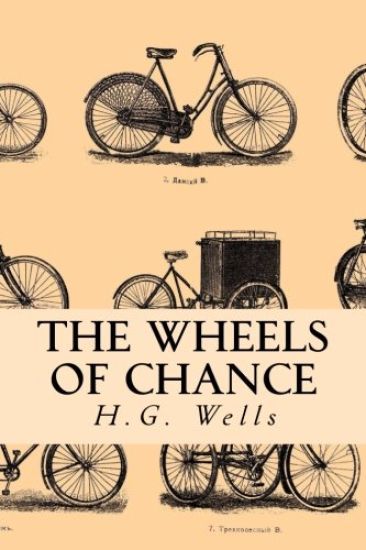
The Wheels of Chance-A Bicycling Idyll is an early comic novel by H. G. Wells about an August 1895 cycling holiday, somewhat in the style of Three Men in a Boat. In 1922 it was adapted into a silent film The Wheels of Chance directed by Harold M. Shaw. The Wheels of Chance was written at the height of the cycling craze (1890-1905), when practical, comfortable bicycles first became widely and cheaply available and before the rise of the automobile. The advent of the bicycle stirred sudden and profound changes in the social life of England. Even the working class could travel substantial distances, quickly and cheaply, and the very idea of travelling for pleasure became a possibility for thousands of people for the first time. This new freedom affected many. It began to weaken the rigid English class structure and it gave an especially powerful boost to the existing movement toward female emancipation. Wells explored these social changes in his story. The hero of The Wheels of Chance, Mr. Hoopdriver, is a frustrated "draper's assistant" 2] in Putney, a badly paid, grinding position (and one which Wells briefly held); and yet he owns a bicycle and is setting out on a bicycling tour of "the Southern Coast" on his annual ten days' holiday. Hoopdriver survives his frustration by escaping in his imagination into a world of fantasy. He is not a skilled rider of his forty-three-pound bicycle, and his awkwardness reflects both Wells's own uncertainties in negotiating the English class system and his critical view of that society. Nonetheless, Hoopdriver is treated sympathetically: "But if you see how a mere counter-jumper, a cad on castors, and a fool to boot, may come to feel the little insufficiencies of life, and if he has to any extent won your sympathies, my end is attained." Hoopdriver's summer adventure begins lyrically: Only those who toil six long days out of the seven, and all the year round, save for one brief glorious fortnight or ten days in the summer time, know the exquisite sensations of the First Holiday Morning. All the dreary, uninteresting routine drops from you suddenly, your chains fall about your feet. . . . There were thrushes in the Richmond Road, and a lark on Putney Heath. The freshness of dew was in the air; dew or the relics of an overnight shower glittered on the leaves and grass. . . . He wheeled his machine up Putney Hill, and his heart sang within him. Hoopdriver encounters a pretty young woman cycling alone and wearing rationals (bloomers). He dares not speak to the Young Lady in Grey, as he calls her, but their paths keep crossing. She is ultimately revealed to be Jessie Milton, a girl of seventeen who has run away from her stepmother in Surbiton, risking "ruin" at the hands of the bounder Bechamel, an unscrupulous older man who has promised to help the naive Jessie to establish herself an independent life but who is really intent on seducing her. Ironically, her flight has in part been inspired by liberal ideals of unconventionality that have been hypocritically promoted by her stepmother's popular novels.

The Door in the Wall and Other Stories
H. G. Wells
Createspace Independent Publishing Platform
2014
nidottu
The Door in the Wall and Other Stories is a collection of classic H. G. Wells science fiction and fantasy stories that includes the following titles: The Door in the Wall, The Star, A Dream of Armageddon, The Cone, A Moonlight Fable, The Diamond Maker, The Lord of the Dynamos, and The Country of the Blind.

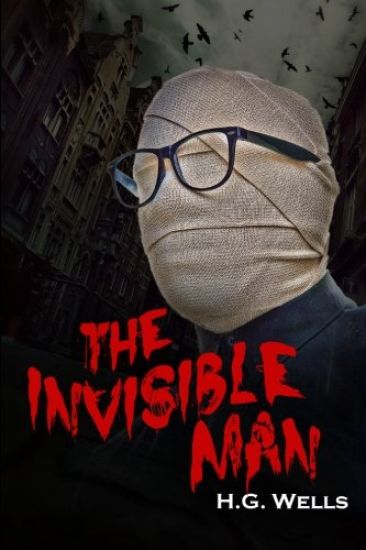
The Invisible Man: A Grotesque Romance
H. G. Wells
Createspace Independent Publishing Platform
2014
nidottu
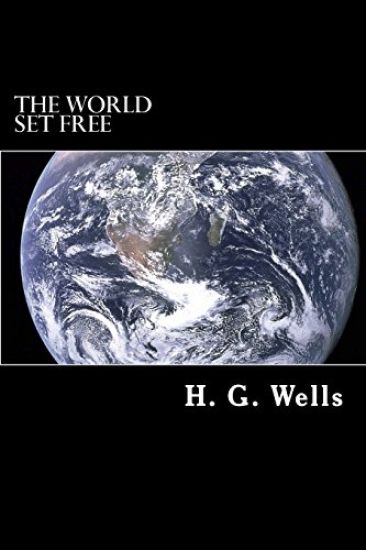
The World Set Free is a novel written in 1913 and published in 1914 by H. G. Wells. The book is based on a prediction of nuclear weapons of a more destructive and uncontrollable sort than the world has yet seen. It appeared first in serialised form with a different ending as "A Prophetic Trilogy", consisting of three books: A Trap to Catch the Sun, The Last War in the World and The World Set Free. Herbert George "H. G." Wells (21 September 1866 - 13 August 1946) was an English author, now best known for his work in the science fiction genre. He was also a prolific writer in many other genres, including contemporary novels, history, politics and social commentary, even writing textbooks and rules for war games. Together with Jules Verne, Wells has been referred to as "The Father of Science Fiction".
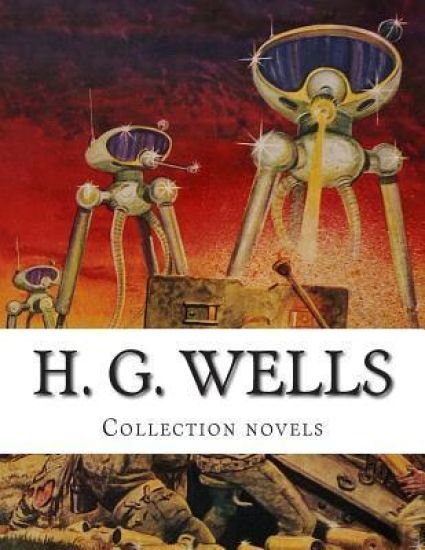
Anticipations of the Reaction of Mechanical and Scientific Progress Upon Human Life and Thought
H. G. Wells
Createspace Independent Publishing Platform
2014
nidottu
The Invisible Man: A Grotesque Romance
H. G. Wells
Createspace Independent Publishing Platform
2014
nidottu
The Invisible Man is a science fiction novella by H. G. Wells published in 1897. The Invisible Man of the title is Griffin, a scientist who has devoted himself to research into optics and invents a way to change a body's refractive index to that of air so that it absorbs and reflects no light and thus becomes invisible. Herbert George "H. G." Wells (21 September 1866 - 13 August 1946) was an English author, now best known for his work in the science fiction genre. He was also a prolific writer in many other genres, including contemporary novels, history, politics and social commentary, even writing textbooks and rules for war games. Together with Jules Verne, Wells has been referred to as "The Father of Science Fiction". His most notable science fiction works include The War of the Worlds, The Time Machine and The Island of Doctor Moreau.
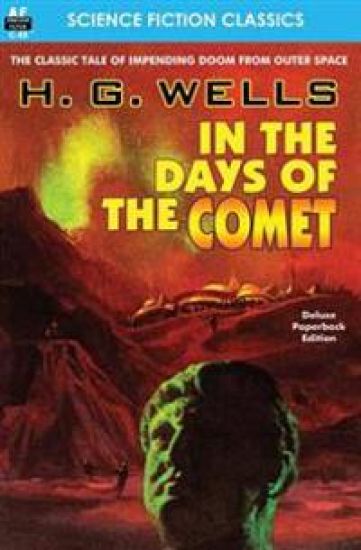
Armchair fiction presents extra large paperback editions of the best in classic science fiction novels. "In the Days of the Comet" is one of many all-time classics from the pen of H. G. Wells. "And then it struck... I picture to myself this thing happening in space, a planetary moment, the faint smudge, the slender whirl of meteor drawing nearer to this planet... And as that midge from the void touches it, the transparent gaseous outer shell clouds in an instant green and then slowly clears again... Thereafter for three hours or more-we know the minimum time for the Change was almost exactly three hours because all the clocks and watches kept going-everywhere, no man nor beast nor bird not any living thing that breathes the air stirred at all but lay still..." H. G. Wells was one of the greatest writers of the fantastic who ever lived. Join him for one of his very best science fiction novels-a futuristic tale of Earth in the ultimate state of cataclysm.
'On this machine, I intend to explore time ...'The time traveller has invented a time machine. Its capabilities are beyond even his fertile imagination. Hundreds of thousand of years in the future, the beautiful Eloi people live in a Garden of Eden. But why are the Eloi so fearful of the dark? What horrors lurk beneath the surface of their world? What will the time traveller learn about the future? Will he survive the evil he encounters? Even if he can find his stolen machine, will it return him safely home? What does his future hold? What is the future of the human race?
The Time Machine: (Starbooks Classics Editions)
H. G. Wells
Createspace Independent Publishing Platform
2014
nidottu
The Time Machine H. G. WELLS (1866 - 1946) The Time Machine is a science fiction novella by H. G. Wells, published in 1895. Although Wells is generally credited with the popularisation of the concept of time travel by using a vehicle that allows an operator to travel purposefully and selectively, The Clock That Went Backward by Edward Page Mitchell was published in 1881 and involves a clock that allows a person to travel backwards in time. The term "time machine", coined by Wells, is now universally used to refer to such a vehicle. This work is an early example of the Dying Earth subgenre. The Time Machine has since been adapted into two feature films of the same name, as well as two television versions, and a large number of comic book adaptations. It has also indirectly inspired many more works of fiction in many media.
he War of the Worlds is a science fiction novel by English author H. G. Wells. It first appeared in serialized form in 1897, published simultaneously in Pearson's Magazine in the UK and Cosmopolitan magazine in the US. The first appearance in book form was published by William Heinemann of London in 1898. It is the first-person narrative of the adventures of an unnamed protagonist and his brother in Surrey and London as Earth is invaded by Martians.


Ann Veronica: A Modern Love Story is a novel by H. G. Wells, first published in 1909. The story follows the life of Ann Veronica Stanley, a young woman who rebels against the social norms of her time and seeks to live her life on her own terms. Ann Veronica is intelligent and independent, but she is also constrained by the expectations of her family and society. She falls in love with a married man, but ultimately decides to pursue her own happiness and independence. Along the way, she confronts issues such as women's suffrage, the role of women in society, and the nature of love and relationships. The novel is a powerful exploration of the struggles and triumphs of a young woman fighting for her own identity and place in the world. This Is A New Release Of The Original 1909 Edition. This scarce antiquarian book is a facsimile reprint of the old original and may contain some imperfections such as library marks and notations. Because we believe this work is culturally important, we have made it available as part of our commitment for protecting, preserving, and promoting the world's literature in affordable, high quality, modern editions, that are true to their original work.