Kirjojen hintavertailu – 12 903 725 kirjaa ja 27 kauppaa

Kirjailija

H. Richard Milner

Kirjat ja teokset yhdessä paikassa: 12 kirjaa, julkaisuja vuosilta 2017–2024, suosituimpiin kuuluu Urban Preparation. Vertaile teosten hintoja ja tarkista saatavuus suomalaisista kirjakaupoista.

12 kirjaa

Kirjojen julkaisuvuodet: 2017–2024.

Urban Preparation

Urban Preparation

Chezare A. Warren; H. Richard Milner; James Earl Davis

Harvard Educational Publishing Group
2017
sidottu
Chezare A. Warren chronicles the transition of a cohort of young Black males from Urban Prep Charter Academy for Young Men to their early experiences in higher education. A rich and closely observed account of a mission-driven school and its students, Urban Preparation makes a significant contribution to our understanding of how young males of color can best be served in schools throughout the United States today. A founding teacher at Urban Prep, Warren offers a detailed exploration of what this single-sex public high school on the South Side of Chicago has managed to accomplish amid profoundly challenging circumstances. He provides a comprehensive portrait of the school—its leaders, teachers, and professional staff; its students; and the community that the school aims to serve—and highlights how preparation for higher education is central to its mission. Warren focuses on three main goals: to describe Urban Prep’s plans and efforts to prepare young Black males for college; to understand how race, community, poverty, and the school contributed, in complex and interrelated ways, to the academic goals of these students; and to offer a wide-ranging set of conclusions about the school environments and conditions that might help young Black males throughout the country succeed in high school and college.
Urban Preparation

Urban Preparation

Chezare A. Warren; H. Richard Milner; James Earl Davis

Harvard Educational Publishing Group
2017
nidottu
Chezare A. Warren chronicles the transition of a cohort of young Black males from Urban Prep Charter Academy for Young Men to their early experiences in higher education. A rich and closely observed account of a mission-driven school and its students, Urban Preparation makes a significant contribution to our understanding of how young males of color can best be served in schools throughout the United States today. A founding teacher at Urban Prep, Warren offers a detailed exploration of what this single-sex public high school on the South Side of Chicago has managed to accomplish amid profoundly challenging circumstances. He provides a comprehensive portrait of the school—its leaders, teachers, and professional staff; its students; and the community that the school aims to serve—and highlights how preparation for higher education is central to its mission. Warren focuses on three main goals: to describe Urban Prep’s plans and efforts to prepare young Black males for college; to understand how race, community, poverty, and the school contributed, in complex and interrelated ways, to the academic goals of these students; and to offer a wide-ranging set of conclusions about the school environments and conditions that might help young Black males throughout the country succeed in high school and college.
Navigating School Board Politics

Navigating School Board Politics

Carrie Sampson; H. Richard Milner

Harvard Educational Publishing Group
2024
nidottu
A visionary overview of the political role of publicly elected school boards and a proactive take on the work they can accomplish toward social justice In Navigating School Board Politics, Carrie R. Sampson examines the political power of the US education system’s publicly elected school boards, the reality of how they apply that power, and the resounding impact of their governance. The work makes the case that school boards, as both the direct link between local communities and school districts, and the political conduits between school districts and state and federal policymakers, can be driving forces to diminish inequities in public education. Sampson begins with a historical overview of the role of school boards in the United States. She shows that, despite the recent ideological deadlocks publicized as “school board wars,” board members can accomplish vital work as advocates for their communities: forming effective coalitions with superintendents, administrators, and community leaders; scrutinizing budgets that represent millions of dollars of public investment; and maintaining a deep understanding of local issues. The work highlights the School Board Governance for Equity framework, an evidence-based set of principles that current and prospective board members can adopt to advance social justice in their districts. Through case studies, Sampson demonstrates that equity-focused school board governance requires a collective effort: just as elected board members must maintain awareness of structural inequities and provide representation for marginalized community members, community members must speak up at board meetings and vote for both equity-focused candidates and equitable policies and practices.
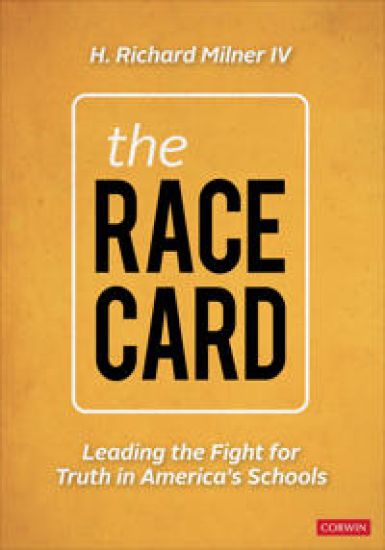
The Race Card

The Race Card

H. Richard Milner

SAGE PUBLICATIONS INC
2023
nidottu
Race neutral leadership is not an option. Education leaders are on the frontline in the fight for racial justice and must co-construct practices to disrupt storylines, policies, and practices that perpetuate opportunity gaps. Drawing from established research and the wisdom of teachers, young people, parents, community members, policy advocates, and school leaders, The Race Card is a guide for frontline leaders at every level to confront and disrupt racism. Designed to engage leaders in candid conversations about race and racism, this book provides a road map for building anti-racist leadership capacity in today’s turbulent political environment. Features include Eight interrelated tenets of Frontline LeadershipStrategies for supporting faculty, staff, students, and the broader community in practices centering racial justice and equityGuidance for dismantling the lies and beliefs that perpetuate inequitiesDesign principles and strategies to cultivate opportunity-rich and robust curriculum, instruction, relationships, and assessment The frontline isn’t always a comfortable place, but it’s where education leaders are needed right now. Lead the fight for truth in your school community and help change history—by putting our nation back on the path to racial justice.
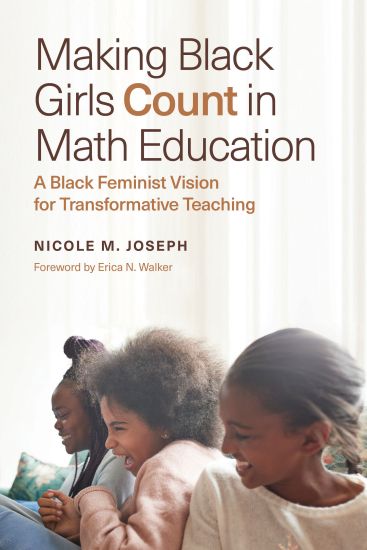
Making Black Girls Count in Math Education

Making Black Girls Count in Math Education

Nicole M. Joseph; H. Richard Milner; Erica N. Walker

Harvard Educational Publishing Group
2022
nidottu
Making Black Girls Count in Math Education explores the experiences of Black girls and women in mathematics from preschool to graduate school, deftly probing race and gender inequity in STEM fields. Nicole M. Joseph investigates factors that contribute to the glaring underrepresentation of Black female students in the mathematics pipeline. Joseph’s unflinching account calls attention to educational structures and practices that contribute to race- and gender-based stratification in science, technology, engineering, and mathematics disciplines. The author also disentangles a complex network of historical and sociopolitical elements that influence the perception and experiences of Black girls and women both inside and outside of mathematics education. In her clear-eyed assessment of the intersectional difficulties facing this marginalized group, Joseph offers a critical view of the existing mathematics education research, practice, and policies that have neglected Black girls and women; confronts the problematic history of mathematics education policy; and considers imbalances in the current teacher workforce in US mathematics programs. She then provides practical, actionable suggestions for reform. Joseph invites students, families, and educators, as well as researchers, policy makers, and other relevant stakeholders to disrupt systems, structures, and ideologies. She calls for an end to racism and sexism in many areas of mathematics education, including learning environments, curriculum design and implementation, and testing and assessments. An essential read for anyone concerned about supporting the mathematical learning and development of Black girls and women, this work advocates for coalition-building so that greater, more equitable opportunities for learning and engagement may be offered to Black female students.
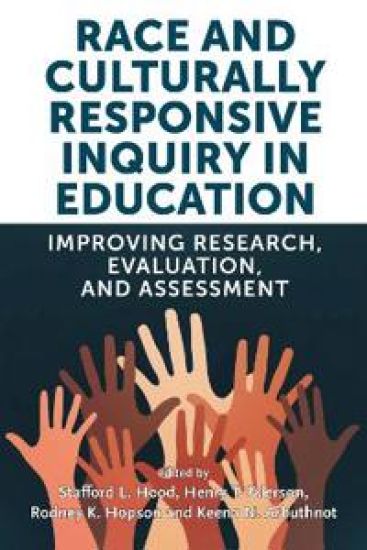
Race and Culturally Responsive Inquiry in Education

Race and Culturally Responsive Inquiry in Education

Stafford L. Hood; Rodney K. Hopson; Henry T. Frierson; Keena N. Arbuthnot; H. Richard Milner

Harvard Educational Publishing Group
2022
nidottu
Race and Culturally Responsive Inquiry in Education examines how assumptions about race and culture have shaped US education research and the interpretation and implementation of its results. This ambitious volume sheds light on the detrimental effects of educational praxis and policies that have characterized communities of color and historically underserved communities as deficient. It reveals how such bias has affected many facets of educational inquiry, from research design and planning to education policy making and evaluation practices. The provocative essays in this work challenge traditional suppositions about whose evidence matters, highlighting approaches for reframing educational inquiry and arguing for the adoption of a culturally responsive stance that can correct inequities by accounting for students’ diverse backgrounds and needs. Edited by Stafford L. Hood, Henry T. Frierson, Rodney K. Hopson, and Keena N. Arbuthnot and featuring contributions from leading and emerging scholars, the collection is organized around three key areas—education research, educational assessment, and program evaluation. The contributors identify provocative problems that exist at the intersection of race and education in these areas, and they illuminate the many ways in which education reform can address intersectionality. Calling for effective action, they suggest compelling solutions for consideration by policy makers and practitioners as well as researchers. Together, the essays in this volume make the case that culturally responsive methods that deepen our understanding of educational disparities, appropriately measure what students know and can do, and ensure that we have accurate information about the effectiveness of educational interventions can improve educational outcomes for diverse learners.
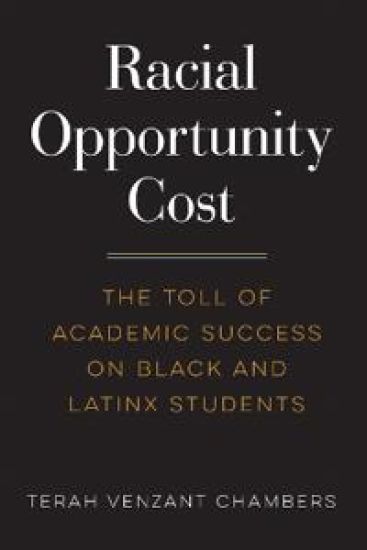
Racial Opportunity Cost

Racial Opportunity Cost

Terah Venzant Chambers; H. Richard Milner

Harvard Educational Publishing Group
2022
nidottu
Racial Opportunity Cost turns critical attention to the specific challenges faced by high-achieving students of color and gives educators a framework for recognizing and addressing these issues. Terah T. Venzant Chambers roots her discussion in the concept of racial opportunity cost, using a term borrowed from economics to refer to the obstacles faced and tradeoffs made by Black and Latinx students on the path to academic success. Gathering first-hand accounts from students, practitioners, and researchers, Chambers underscores a set of experiences common to academically successful students from racially minoritized backgrounds, especially those who attend predominantly white schools. These individual testimonies collectively show how, despite their successes, high-achieving students of color regularly encounter educational racism. As their experiences reveal, their academic progress may also be impeded by secondary stressors such as peer and cultural isolation and struggles with racial identity. These personal accounts illustrate the many ways in which the negative effects of racial opportunity cost extend from K–12 education into postsecondary academics and beyond. In this clarifying work, Chambers identifies the factors, such as school culture, intersectionality, and community acceptance that can increase or lessen racial opportunity cost across educational environments. She considers how the individual challenges that high-achieving and high-ability students of color confront reflect larger systemic problems. Chambers’ framework will help educators proactively cultivate change in their classrooms and schools so that they may lower racial opportunity cost and improve student experiences.
Equality or Equity

Equality or Equity

Jeffrey M. R. Duncan-Andrade; H. Richard Milner

Harvard Educational Publishing Group
2022
nidottu
Equality or Equity sets forth a compelling argument urging us to shift our understanding of the role of our education system from providing equal opportunity to building an equitable society. A leading scholar-practitioner and ardent proponent of culturally responsive forms of education, Jeffrey M. R. Duncan-Andrade aims to settle the debates over whether we should work toward a public education system built on the goal of equality, in which identical resources are provided for all students, or equity, in which different resources are offered in response to differences in student interests and needs. Duncan-Andrade centers his argument on the importance of creating meaningful education experiences for all students, particularly for low-income students of color and immigrant students, who have gained relatively fewer benefits from decades of equality-focused education reform. Drawing on research from across a range of disciplines, including neuroscience, social epidemiology, public health, and social work, Duncan-Andrade introduces three essential domains of a pedagogy that are both culturally and community responsive: relationships, relevance, and responsibility. He enlists the voices of practitioners to provide grounded examples of what community-responsive pedagogy looks like in each of these domains. These examples demonstrate how equitable classroom practices can enrich student engagement, enhance trauma responsiveness, and improve educational outcomes. Equality or Equity makes an urgent appeal for designing and implementing a truly equitable school system and shows us how we can begin to accomplish that goal.
Start Where You Are, But Don't Stay There

Start Where You Are, But Don't Stay There

H. Richard Milner; Gloria Ladson-Billings

Harvard Educational Publishing Group
2020
sidottu
In the thoroughly revised second edition of Start Where You Are, But Don't Stay There, H. Richard Milner IV addresses the knowledge and insights required on the part of teachers and school leaders to serve students of color. Milner focuses on a crucial issue in teacher training and professional education: the need to prepare teachers for the racially diverse student populations in their classrooms. The book, anchored in real world experiences, centers on case studies that exemplify the challenges, pitfalls, and opportunities facing teachers in diverse classrooms. The case studies- of teachers in urban and suburban settings- are presented amid current discussions about race and teaching. In addition, the second edition includes a new chapter dedicated to opportunity gaps in education and an expanded discussion of how Opportunity Centered Teaching can address these gaps. Start Where You Are, But Don't Stay There strives to help educators in the fight for social justice, equity, inclusion, and transformation for all students. It is a book urgently needed in today's increasingly diverse classrooms.
Race, Sports, and Education

Race, Sports, and Education

John N. Singer; H. Richard Milner

Harvard Educational Publishing Group
2019
nidottu
Race, Sports, and Education highlights the myriad ways in which organized collegiate sport has both positively contributed to and negatively detracted from the educational experiences of Black male college athletes. Specifically, John N. Singer examines the educational experiences, opportunities, and outcomes of Black males who have played NCAA Division I football and/or basketball at historically White colleges and universities. Singer is intensely aware of the ways in which many Black athletes have been shortchanged by the collegiate sport system. He describes how the colleges and universities have exploited athletes for the institutions' financial gain and deprived them of basic educational opportunities that ought to be enjoyed by all students. At the same time, Singer argues that sports do in fact offer genuine educational opportunities and benefits for many of these athletes. He is acutely attuned to the fact that these athletes love their sports, and that their participation in these sports makes unique educational experiences available to them. As Singer shows, to understand the situation and to chart realistic, fruitful reform measures requires a full appreciation of the complexity-indeed, of the many competing and contradictory elements-that characterizes intercollegiate sport and the experiences of Black athletes at the present time. The book brings to the fore the voices, stories, and perspectives of twelve Black male college athletes via a case study of teammates from a big-time college football program and individual reflective vignettes of athletes across several different college programs. Through his analysis of the system and his attention to student views and experiences, Singer crafts a valuable, nuanced account and points in the direction of reforms that would significantly improve the educational opportunities and experiences of these athletes. At a time when collegiate sports have attained unmistakable institutional value and generated unprecedented financial returns-all while largely failing the educational needs of its athletes-this book offers a clear, detailed vision of the current situation and suggestions for a more equitable way forward.
Race, Sports, and Education

Race, Sports, and Education

John N. Singer; H. Richard Milner

Harvard Educational Publishing Group
2019
sidottu
Race, Sports, and Education highlights the myriad ways in which organized collegiate sport has both positively contributed to and negatively detracted from the educational experiences of Black male college athletes. Specifically, John N. Singer examines the educational experiences, opportunities, and outcomes of Black males who have played NCAA Division I football and/or basketball at historically White colleges and universities. Singer is intensely aware of the ways in which many Black athletes have been shortchanged by the collegiate sport system. He describes how the colleges and universities have exploited athletes for the institutions' financial gain and deprived them of basic educational opportunities that ought to be enjoyed by all students. At the same time, Singer argues that sports do in fact offer genuine educational opportunities and benefits for many of these athletes. He is acutely attuned to the fact that these athletes love their sports, and that their participation in these sports makes unique educational experiences available to them. As Singer shows, to understand the situation and to chart realistic, fruitful reform measures requires a full appreciation of the complexity-indeed, of the many competing and contradictory elements-that characterizes intercollegiate sport and the experiences of Black athletes at the present time. The book brings to the fore the voices, stories, and perspectives of twelve Black male college athletes via a case study of teammates from a big-time college football program and individual reflective vignettes of athletes across several different college programs. Through his analysis of the system and his attention to student views and experiences, Singer crafts a valuable, nuanced account and points in the direction of reforms that would significantly improve the educational opportunities and experiences of these athletes. At a time when collegiate sports have attained unmistakable institutional value and generated unprecedented financial returns-all while largely failing the educational needs of its athletes-this book offers a clear, detailed vision of the current situation and suggestions for a more equitable way forward.
"These Kids Are Out of Control"

"These Kids Are Out of Control"

H. Richard Milner; Heather B. (Bossert) Cunningham; Lori Delale-O'Connor; Erika Gold Kestenberg

Corwin Press Inc
2018
nidottu
This is a practical, research based guide to rethinking classroom management that effectively serves the needs of diverse learners including children of color, English learners, and children from low-income households. It focuses on promising alternatives to traditional disciplinary practices including restorative justice.