Kirjojen hintavertailu – 12 903 725 kirjaa ja 27 kauppaa
Kirjailija
H. Richard Milner IV
Kirjat ja teokset yhdessä paikassa: 7 kirjaa, julkaisuja vuosilta 2010–2026, suosituimpiin kuuluu Designing Qualitative Research to Do No Harm. Vertaile teosten hintoja ja tarkista saatavuus suomalaisista kirjakaupoista.
Nimi esiintyy myös muodoissa: H. Richard Milner IV
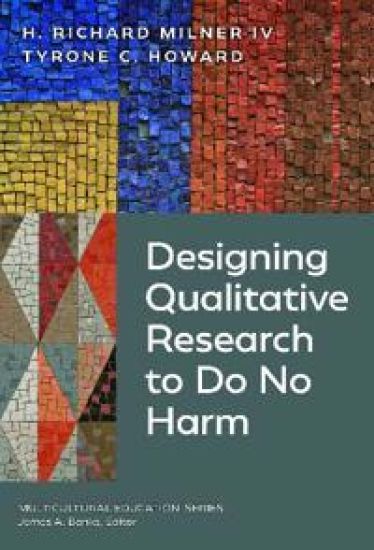
This book is for everyone who cares about how people, communities, and institutions are treated through research processes, and what we learn from research that impacts them. This accessible book helps researchers avoid unintentional harm to research participants, communities, institutions, and organizations. The book assists researchers in building knowledge, attitudes, dispositions, skills, and practices to co-construct knowledge with people and communities to inform policies and practices. Grounded in research and theory, the book focuses on three essential qualitative research methods: interviewing, observation, and document analyses. Readers are invited to employ ethical, compassionate, and rigorous practices committed to harm prevention, particularly important in today’s declining democracy. The authors explore how to collect evidence, build and substantiate knowledge, and disseminate it in ways that honor, protect, and work in partnership with research participants and communities to improve human conditions. While early career and veteran researchers will find the book useful, so should parents, activists, policymakers, and anyone who cares about the health and wellbeing of people who participate in research and what we learn from it. Book Features: Introduces a set of four commitments to “Do No Harm in Research” for readers to adopt and adapt to their own context and content. Written in an accessible tone and structure that is suitable for readers across different disciplines such as education, sociology, psychology, human development, health sciences, political science, ethnic studies, history, and social work. Offers real-life scenarios to help readers think about how they would approach aspects of their work differently by applying Do No Harm commitments in their own research planning and practices. Moves beyond philosophical debates and paradigm wars about the importance of qualitative research over other research traditions to focus on cultivating research practices and outcomes for equity and inclusion.

Through eight compelling stories of restorative literacies, Wolter explores the complex relationships among cognition, metacognition, identity, behavior in schools, and literacies. Based on the principles of restorative justice, restorative literacies are designed to help educators repair harm, restore relationships, and expand the concept of literacy for some of our most disenfranchised and disengaged students. Restorative literacies are not just about growing readers and writers per se. They are about creating a community of care that involves students, teachers, administrators, and families so that all students experience racially, culturally, linguistically, and economically responsive instruction in multiple forms of literacies. Drawing on the author's rich experiences cultivating a love of reading among her students and studying the practices of other educators, Restorative Literacies advances a provocative set of examples about centering the voice and stories of people in our quest to humanize and reimagine how we care for, about, and with others. Book Features:Presents a literacy model of restorative justice that includes participation from teachers, principals, administrators, and parents. Contains engaging narratives from elementary and secondary schools to illustrate concepts and strategies. Explores compassionate listening as a conscious process of assuring that all involved are fully heard, a skill that requires removing assumptions, judgement, and bias. Identifies practices that take a positive view of learners, as opposed to referring students to special education. Uses restoration as an alternative to pushout practices that are designed to control students and often prevent them from reaching their capacity.
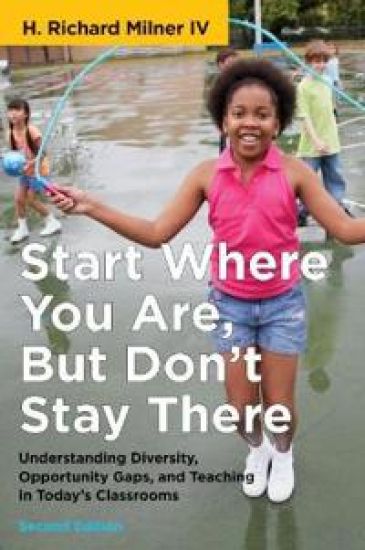
In the thoroughly revised second edition of Start Where You Are, But Don't Stay There, H. Richard Milner IV addresses the knowledge and insights required on the part of teachers and school leaders to serve students of color. Milner focuses on a crucial issue in teacher training and professional education: the need to prepare teachers for the racially diverse student populations in their classrooms. The book, anchored in real world experiences, centers on case studies that exemplify the challenges, pitfalls, and opportunities facing teachers in diverse classrooms. The case studies- of teachers in urban and suburban settings- are presented amid current discussions about race and teaching. In addition, the second edition includes a new chapter dedicated to opportunity gaps in education and an expanded discussion of how Opportunity Centered Teaching can address these gaps. Start Where You Are, But Don't Stay There strives to help educators in the fight for social justice, equity, inclusion, and transformation for all students. It is a book urgently needed in today's increasingly diverse classrooms.
In this incisive and practical book, H. Richard Milner IV provides educators with a crucial understanding of how to teach students of color who live in poverty. Milner looks carefully at the circumstances of these students’ lives and describes how those circumstances profoundly affect their experiences within schools and classrooms. In a series of detailed chapters, Milner proposes effective practices—at the district and school levels, and in individual classrooms—for school leaders and teachers who are committed to creating the best educational opportunities for these students. Building on established literature, new research, and a number of revelatory case studies, Milner casts essential light on the experiences of students and their families living in poverty, while pointing to educational strategies that are shaped with these students’ unique circumstances in mind. Milner’s astute and nuanced account will fundamentally change how school leaders and teachers think about race and poverty—and how they can best serve these students in their schools and classrooms.
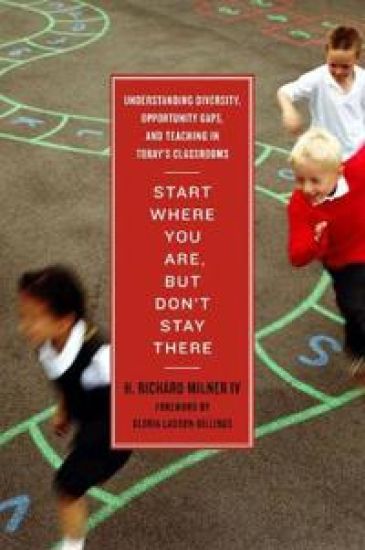
Start Where You Are, But Don’t Stay There addresses a crucial issue in teacher training and professional education: the need to prepare pre-service and in-service teachers for the racially diverse student populations in their classrooms. A down-to-earth book, it aims to help practitioners develop insights and skills for successfully educating diverse student bodies. The book centers on case studies that exemplify the challenges, pitfalls, and opportunities facing teachers in diverse classrooms. These case studies—of white and African American teachers working (and preparing to work) in urban and suburban settings—are presented amid more general discussions about race and teaching in contemporary schools. Informing these discussions and the cases themselves is their persistent attention to opportunity gaps that need to be fully grasped by teachers who aim to understand and promote the success of students of greatly varying backgrounds.