Kirjojen hintavertailu – 12 859 827 kirjaa ja 27 kauppaa
Kirjailija
H. Rider Haggard
Kirjat ja teokset yhdessä paikassa: 1 877 kirjaa, julkaisuja vuosilta 1924–2026, suosituimpiin kuuluu Jess. Vertaile teosten hintoja ja tarkista saatavuus suomalaisista kirjakaupoista.
Nimi esiintyy myös muodoissa: H Rider Haggard, H.Rider Haggard
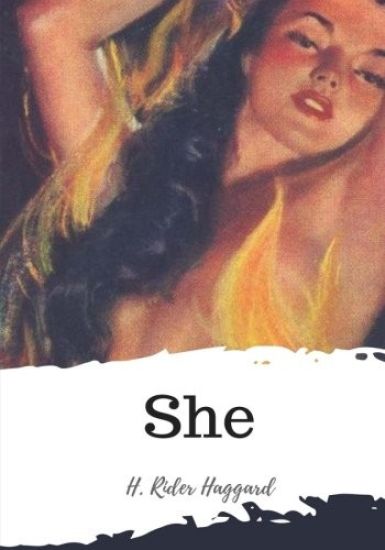
She follows the journey of Horace Holly and his ward, Leo Vincey, to a lost African kingdom where they meet the Amahagger people and the mysterious queen, Ayesha, who reigns as "She" or "She-who-must-be-obeyed."
Nada the Lily is the thrilling story of the brave Zulu warrior Umslopogaas and his love for the most beautiful of Zulu women, Nada the Lily. Young Umslopogaas, son of the bloodthirsty Zulu king Chaka, is forced to flee when Chaka orders his death. In the adventures that ensue, Umslopogaas is carried away by a lion and then rescued by Galazi, king of an army of ghost-wolves. Together, Umslopogaas and Galazi fight for glory and honour and to avenge their wrongs. With their fabled weapons, an axe called Groan-Maker and the club Watcher of the Woods, the two men become legendary warriors. But even these two unstoppable heroes may finally have met their match when the Zulu king sends his army of slayers to destroy them Although he is more famous for his romances King Solomon's Mines and She, the unjustly neglected Nada the Lily is one of Haggard's finest achievements. Nada the Lily is a dazzling blend of adventure, romance, fantasy, and the Gothic, brilliantly weaving fiction and history into an unforgettable tale.
The last pitiful shifts of shame, the last agonised doublings of despair when the net is about the head and the victor's trident at the throat- who can enjoy the story of such things as these? Yet because they rough-hewed the character of Rupert Ullershaw, because from his part in them he fashioned the steps whereby he climbed to that height of renunciation which was the only throne he ever knew, something of it must be told. A very little will suffice; the barest facts are all we need. Upon a certain July evening, Lord and Lady Devene sat at dinner alone in a very fine room of a very fine house in Portland Place. They were a striking couple, the husband much older than the wife; indeed, he was fifty years of age, and she in the prime of womanhood. The face of Lord Devene, neutral tinted, almost colourless, was full of strength and of a certain sardonic ability. His small grey eyes, set beneath shaggy, overhanging eyebrows that were sandy-coloured like his straight hair, seemed to pierce to the heart of men and things, and his talk, when he had anything to say upon a matter that moved him, was keen and uncompromising. It was a very bitter face, and his words were often very bitter words, which seems curious, as this man enjoyed good health, was rich, powerful, and set by birth and fortune far above the vast majority of other men.
Three Englishmen, marooned on a mysterious South Sea island, learn of the islanders' powerful god Oro, who has been sleeping for 250,000 years. They manage to wake him, along with his beautiful daughter, who is the spitting image of the hero's dead wife, while he is a ringer for her lost love. Other residents of an ancient Atlantean civilization are also returned to life in this tale of spirit travel, reincarnation, occult powers, teleportation, a subterranean city, the elixir of life, and considerable mythic depth. One of the last novels from the author of King Solomon's Mines.
On several previous occasions it has happened to this writer of romance to be justified of his romances by facts of startling similarity, subsequently brought to light and to his knowledge. In this tale occurs an instance of the sort, a "double-barrelled" instance indeed, that to him seems sufficiently curious to be worthy of telling. The People of the Mist of his adventure story worship a sacred crocodile to which they make sacrifice, but in the original draft of the book this crocodile was a snake-monstrum horrendum, informe, ingens. A friend of the writer, an African explorer of great experience who read that draft, suggested that the snake was altogether too unprecedented and impossible. Accordingly, also at his suggestion, a crocodile was substituted. Scarcely was this change effected, however, when Mr. R. T. Coryndon, the slayer of almost the last white rhinoceros, published in the African Review of February 17, 1894, an account of a huge and terrific serpent said to exist in the Dichwi district of Mashonaland, that in many particulars resembled the snake of the story, whose prototype, by the way, really lives and is adored as a divinity by certain natives in the remote province of Chiapas in Mexico. Still, the tale being in type, the alteration was suffered to stand. But now, if the Zoutpansberg Review may be believed, the author can take credit for his crocodile also, since that paper states that in the course of the recent campaign against Malaboch, a chief living in the north of the Transvaal, his fetish or god was captured, and that god, a crocodile fashioned in wood, to which offerings were made. Further, this journal says that among these people (as with the ancient Egyptians), the worship of the crocodile is a recognised cult. Also it congratulates the present writer on his intimate acquaintance with the more secret manifestations of African folklore and beast worship. He must disclaim the compliment in this instance as, when engaged in inventing the 'People of the Mist, ' he was totally ignorant that any of the Bantu tribes reverenced either snake or crocodile divinities. But the coincidence is strange, and once more shows, if further examples of the fact are needed, how impotent are the efforts of imagination to vie with hidden truths-even with the hidden truths of this small and trodden world
This classic work of fantasy begins with scholar Ludwig Horace Holly being visited by an old friend who is ailing. The friend passes the guardianship of his 5-year-old son on to Holly. Fast forward twenty-five years: the hapless orphan is now a handsome and capable young man (Leo) whose past holds a series of remarkable secrets. Holly and Leo travel to Africa to unravel Leo's family secrets and encounter a seemingly immortal tribal leader, Ayesha, whose power and influence are virtually impossible to overcome.
Leonard Outram, a young Englishman who's just lost his fortune along with and his fiancee's hand, makes an oath: he'll win back his home and live happily ever after. Really Well, sort of. Leonard ends up in Africa, which, at that point in history, was the place to win your fortune back for the gods of fate. Leonard rescues a maid from a slave-dealer - for a fee, of course - and then falls in love with her, complicating the heck out of his situation. Oh well: a great adventure ensues, taking them to places no one has ever heard of, then or now - leading to narrow escapes, love, intrigue, and of course, high adventure.
It may be remembered that in the last pages of his diary, written just before his death, Allan Quatermain makes allusion to his long dead wife, stating that he has written of her fully elsewhere. When his death was known, his papers were handed to myself as his literary executor. Among them I found two manuscripts, of which the following is one. The other is simply a record of events wherein Mr. Quatermain was not personally concerned - a Zulu novel, the story of which was told to him by the hero many years after the tragedy had occurred. But with this we have nothing to do at present.
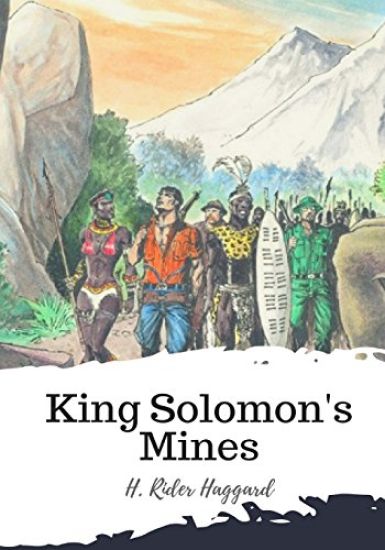
King Solomon's Mines tells a story of expedition and search in the unexplored region of Africa by a group of adventurers led by Allan Quatermain for the missing brother of one of the party. Haggard knew Africa well, having travelled deep within the continent during the Anglo-Zulu War and the First Boer War, where he had been impressed by South Africa's vast mineral wealth and by the ruins of ancient lost cities being uncovered, such as Great Zimbabwe.
Three men trek to the remote African interior in search of a lost friend - and reach, at the end of a perilous journey, an unknown land cut off from the world, where terrible dangers threaten anyone who ventures near the spectacular diamond mines of King Solomon.
Sitting beside entrancing Lady Ragnall while the smoke of an ancient Egyptian herb grows thick around them, Allan Quatermain finds himself departing the world he know and entering into his strangest adventure. In a mystic transformation, he comes to his senses in an earlier incarnation . . . as Shabaka, hunter of lions - scion of the rulers of ancient Egypt, and lover of the Lady Amada, the Priestess of Isis
This work has been selected by scholars as being culturally important, and is part of the knowledge base of civilization as we know it. This work was reproduced from the original artifact, and remains as true to the original work as possible. Therefore, you will see the original copyright references, library stamps (as most of these works have been housed in our most important libraries around the world), and other notations in the work. This work is in the public domain in the United States of America, and possibly other nations. Within the United States, you may freely copy and distribute this work, as no entity (individual or corporate) has a copyright on the body of the work. As a reproduction of a historical artifact, this work may contain missing or blurred pages, poor pictures, errant marks, etc. Scholars believe, and we concur, that this work is important enough to be preserved, reproduced, and made generally available to the public. We appreciate your support of the preservation process, and thank you for being an important part of keeping this knowledge alive and relevant.
Pearl-Maiden By H. Rider Haggard "I do not know; I only know this, that in that wall, as in others, a door will be found. Trouble not for the future, but leave it in the hand of Him Who shapes all futures. Sufficient to the day is the evil thereof. So He said. Accept the saying and be grateful. It is something to have gained the love of such a one as this Roman, for, unless the wisdom which I have gained through many years is at fault, he is true and honest; and that man must be good at heart who can be reared in Rome and in the worship of its gods and yet remain honest. We are delighted to publish this classic book as part of our extensive Classic Library collection. Many of the books in our collection have been out of print for decades, and therefore have not been accessible to the general public. The aim of our publishing program is to facilitate rapid access to this vast reservoir of literature, and our view is that this is a significant literary work, which deserves to be brought back into print after many decades. The contents of the vast majority of titles in the Classic Library have been scanned from the original works. To ensure a high quality product, each title has been meticulously hand curated by our staff. Our philosophy has been guided by a desire to provide the reader with a book that is as close as possible to ownership of the original work. We hope that you will enjoy this wonderful classic work, and that for you it becomes an enriching experience.
Though Beatrice is a significant departure from most of his literary output, critics and fans alike regard this fine novel as one of H. Rider Haggard's most accomplished works. A richly detailed account of an ill-fated but spiritually significant romance, the tale contains some of Haggard's most affecting writing in terms of emotional resonance and in-depth characterization.
This work has been selected by scholars as being culturally important, and is part of the knowledge base of civilization as we know it. This work was reproduced from the original artifact, and remains as true to the original work as possible. Therefore, you will see the original copyright references, library stamps (as most of these works have been housed in our most important libraries around the world), and other notations in the work. This work is in the public domain in the United States of America, and possibly other nations. Within the United States, you may freely copy and distribute this work, as no entity (individual or corporate) has a copyright on the body of the work. As a reproduction of a historical artifact, this work may contain missing or blurred pages, poor pictures, errant marks, etc. Scholars believe, and we concur, that this work is important enough to be preserved, reproduced, and made generally available to the public. We appreciate your support of the preservation process, and thank you for being an important part of keeping this knowledge alive and relevant.
A week had passed since the funeral of my poor boy Harry, and one evening I was in my room walking up and down and thinking, when there was a ring at the outer door. Going down the steps I opened it myself, and in came my old friends Sir Henry Curtis and Captain John Good, RN. They entered the vestibule and sat themselves down before the wide hearth, where, I remember, a particularly good fire of logs was burning.'It is very kind of you to come round, ' I said by way of making a remark; 'it must have been heavy walking in the snow.'They said nothing, but Sir Henry slowly filled his pipe and lit it with a burning ember. As he leant forward to do so the fire got hold of a gassy bit of pine and flared up brightly, throwing the whole scene into strong relief, and I thought, What a splendid-looking man he is Calm, powerful face, clear-cut features, large grey eyes, yellow beard and hair - altogether a magnificent specimen of the higher type of humanity. Nor did his form belie his face. I have never seen wider shoulders or a deeper chest. Indeed, Sir Henry's girth is so great that, though he is six feet two high, he does not strike one as a tall man. As I looked at him I could not help thinking what a curious contrast my little dried-up self presented to his grand face and form. Imagine to yourself a small, withered, yellow-faced man of sixty-three, with thin hands, large brown eyes, a head of grizzled hair cut short and standing up like a half-worn scrubbing-brush - total weight in my clothes, nine stone six - and you will get a very fair idea of Allan Quatermain, commonly called Hunter Quatermain, or by the natives 'Macumazahn' - Anglic/CHAR: e grave/, he who keeps a bright look-out at night, or, in vulgar English, a sharp fellow who is not to be taken in