
Kirjailija
H. Rider Haggard
Kirjat ja teokset yhdessä paikassa: 1 877 kirjaa, julkaisuja vuosilta 1924–2026, suosituimpiin kuuluu Jess. Vertaile teosten hintoja ja tarkista saatavuus suomalaisista kirjakaupoista.
Nimi esiintyy myös muodoissa: H Rider Haggard, H.Rider Haggard
1 877 kirjaa
Kirjojen julkaisuvuodet: 1924–2026.


Moon of Israel, A Tale of the Exodus
H. Rider Haggard
Createspace Independent Publishing Platform
2015
nidottu
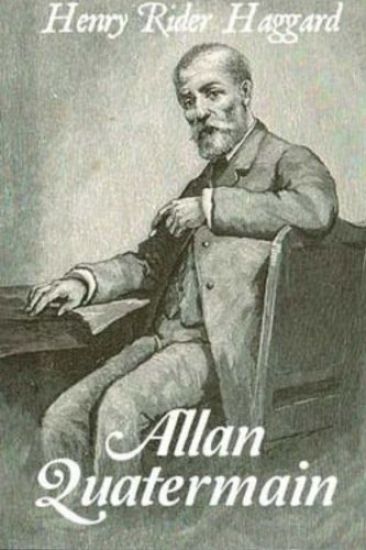
The character Quatermain (not "Quartermain", a common error) is an English-born professional big game hunter and occasional trader in southern Africa. He supports colonial efforts to spread civilization in the Dark Continent, and he also favours native Africans' having a say in their affairs. Quatermain is an imperial outdoorsman who finds English cities and climate unbearable. He prefers to spend most of his life in Africa, where he grew up under the care of his widower father, a Christian missionary. In the earliest-written novels, native Africans refer to Quatermain as Macumazahn, meaning "Watcher-by-Night," a reference to his nocturnal habits and keen instincts. In later-written novels, Macumazahn is said to be a short form of Macumazana, meaning "One who stands out." Quatermain is frequently accompanied by his native servant Hans, a wise and caring family retainer from his youth. His sarcastic comments offer a sharp critique of European conventions. In his final adventures, Quatermain is joined by two British companions, Sir Henry Curtis and Captain John Good of the Royal Navy, and by his African friend Umslopogaas.

She: A History of Adventure
H. Rider Haggard
Createspace Independent Publishing Platform
2015
nidottu

Thank you for checking out this book by Theophania Publishing. We appreciate your business and look forward to serving you soon. We have thousands of titles available, and we invite you to search for us by name, contact us via our website, or download our most recent catalogues. Allan Quatermain, an adventurer and white hunter based in Durban, in what is now South Africa, is approached by aristocrat Sir Henry Curtis and his friend Captain Good, seeking his help finding Sir Henry's brother, who was last seen travelling north into the unexplored interior on a quest for the fabled King Solomon's Mines. Quatermain has a mysterious map purporting to lead to the mines, but had never taken it seriously. However, he agrees to lead an expedition in return for a share of the treasure, or a stipend for his son if he is killed along the way. He has little hope they will return alive, but reasons that he has already outlived most people in his profession, so dying in this manner at least ensures that his son will be provided for. They also take along a mysterious native, Umbopa, who seems more regal, handsome and well-spoken than most porters of his class, but who is very anxious to join the party. Travelling by oxcart, they reach the edge of a desert, but not before a hunt in which a wounded elephant claims the life of a servant. They continue on foot across the desert, almost dying of thirst before finding the oasis shown halfway across on the map. Reaching a mountain range called Suliman Berg, they climb a peak (one of "Sheba's Breasts") and enter a cave where they find the frozen corpse of Jos Silvestre (also spelt Silvestra), the 16th-century Portuguese explorer who drew the map in his own blood. That night, a second servant dies from the cold, so they leave his body next to Silvestra's, to "give him a companion". They cross the mountains into a raised valley, lush and green, known as Kukuanaland. The inhabitants have a well-organised army and society and speak an ancient dialect of IsiZulu. Kukuanaland's capital is Loo, the destination of a magnificent road from ancient times. The city is dominated by a central royal kraal. They soon meet a party of Kukuana warriors who are about to kill them when Captain Good nervously fidgets with his false teeth, making the Kukuanas recoil in fear. Thereafter, to protect themselves, they style themselves "white men from the stars"-sorcerer-gods-and are required to give regular proof of their divinity, considerably straining both their nerves and their ingenuity.








Marie: An Episode in the Life of the Late Allan Quatermain
H. Rider Haggard
Createspace Independent Publishing Platform
2015
nidottu