Kirjojen hintavertailu – 12 859 818 kirjaa ja 27 kauppaa

Kirjailija

H. Rosi Song

Kirjat ja teokset yhdessä paikassa: 5 kirjaa, julkaisuja vuosilta 2016–2024, suosituimpiin kuuluu Lost in Transition: Constructing Memory in Contemporary Spain. Vertaile teosten hintoja ja tarkista saatavuus suomalaisista kirjakaupoista.

5 kirjaa

Kirjojen julkaisuvuodet: 2016–2024.

Digestible Governance

Digestible Governance

Jessica Boll; Robert Davidson; Suzanne Dunai; Luis Benito Garcia Alvarez; Silvina Schammah Gesser; Susy Gruss; Aitana Guia; F. Xavier Medina; Montserrat Miller; Alex Gomez del Moral; H. Rosi Song

VANDERBILT UNIVERSITY PRESS
2024
sidottu
The term “gastrocracy” refers to the appropriation of discourses and practices related to the sourcing, preparation, distribution, and consumption of food for political purposes. The intersections of gastronomy and governance, dating in Spain to the last quarter of the nineteenth century, have become highly visible over the past decade, when political debates around nationalism in its different forms have taken the guise of discussions about regional and local cuisines. Concomitant with the rise of the “slow food” movement and following UNESCO’s addition in 2011 of “Gastronomic Meal of the French” to its list of Intangible Cultural Heritage of Humanity, public and private associations all around Spain have been established with the goal of achieving recognition by UNESCO for Spanish, Catalan, and other national cuisines. In 2016, Gastro Marca EspaÑa—an association and a web portal—was launched to raise the profile of food in Spain’s national brand. Eliciting wide public participation, coopted for political purposes, regarded as a factor of economic development on any scale, and integrated into every so-called banal nationalism, the production, distribution, and consumption of food are highly relevant for historical analysis. Seeking to encourage a broader discussion about Peninsular gastrocracies, this book brings together an interdisciplinary group of scholars from different sides of the Atlantic and the Pacific who have spearheaded research on gastronomy and governance in Spain.
Digestible Governance

Digestible Governance

Jessica Boll; Robert Davidson; Suzanne Dunai; Luis Benito Garcia Alvarez; Silvina Schammah Gesser; Susy Gruss; Aitana Guia; F. Xavier Medina; Montserrat Miller; Alex Gomez del Moral; H. Rosi Song

VANDERBILT UNIVERSITY PRESS
2024
nidottu
The term “gastrocracy” refers to the appropriation of discourses and practices related to the sourcing, preparation, distribution, and consumption of food for political purposes. The intersections of gastronomy and governance, dating in Spain to the last quarter of the nineteenth century, have become highly visible over the past decade, when political debates around nationalism in its different forms have taken the guise of discussions about regional and local cuisines. Concomitant with the rise of the “slow food” movement and following UNESCO’s addition in 2011 of “Gastronomic Meal of the French” to its list of Intangible Cultural Heritage of Humanity, public and private associations all around Spain have been established with the goal of achieving recognition by UNESCO for Spanish, Catalan, and other national cuisines. In 2016, Gastro Marca EspaÑa—an association and a web portal—was launched to raise the profile of food in Spain’s national brand. Eliciting wide public participation, coopted for political purposes, regarded as a factor of economic development on any scale, and integrated into every so-called banal nationalism, the production, distribution, and consumption of food are highly relevant for historical analysis. Seeking to encourage a broader discussion about Peninsular gastrocracies, this book brings together an interdisciplinary group of scholars from different sides of the Atlantic and the Pacific who have spearheaded research on gastronomy and governance in Spain.
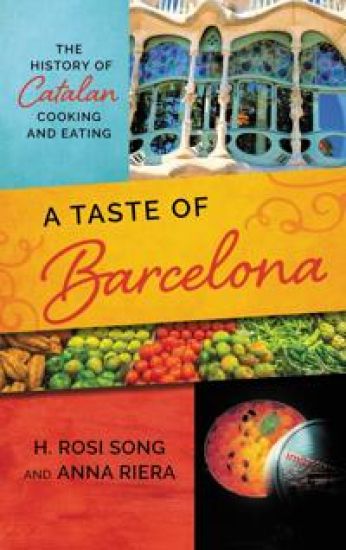
A Taste of Barcelona

A Taste of Barcelona

H. Rosi Song; Anna Riera

BLOOMSBURY PUBLISHING PLC
2023
nidottu
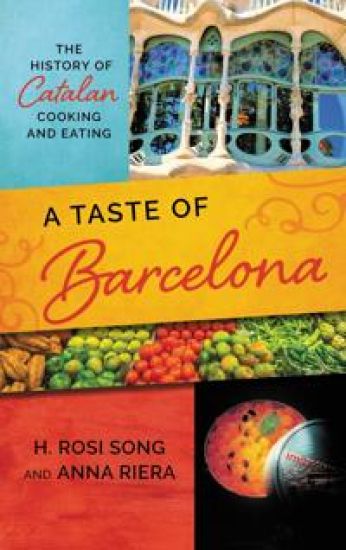
Widely associated with avant-garde gastronomy and lavish food markets, Barcelona has become a top destination for gourmands and chefs around the world, especially after the spectacular rise of chef Ferran Adrià of the famed elBulli, soon to be reborn as elBulli1846. Barcelona is a city that attracts millions of visitors in search of art and culinary experiences while cookery apprentices from around the world arrive looking to perfect their skills and expand their gastronomic horizon. The city offers an unequaled combination of restaurants, chefs, restauranteurs, media and local government initiatives to help those who arrive seeking an extraordinary culinary experience. But how has the city established itself as a global culinary referent while becoming synonymous with cutting-edge cuisine? This book narrates Barcelona’s urban and culinary development from the Middle Ages to the present, tracing the origins and the growth of the culinary prestige of this part of Catalonia. Barcelona has been a cosmopolitan center since the 1700s because of its location and busy port. The city has always been well supplied with food, and its residents built a strong culinary tradition enlivened by its contact with other cuisines and novel products afforded by its geographic location and the people who migrated to the area. With literature, painting, music and architecture, cooking has been a crucial activity in creating and maintaining a Catalan identity. Past, present and future visitors of the city will find a fascinating history of the unforgettable culinary importance of one of the most popular cities of Spain.
A Taste of Barcelona

A Taste of Barcelona

H. Rosi Song; Anna Riera

Rowman Littlefield
2019
sidottu
Widely associated with avant-garde gastronomy and lavish food markets, Barcelona has become a top destination for gourmands and chefs around the world, especially after the spectacular rise of chef Ferran Adrià of the famed elBulli, soon to be reborn as elBulli1846. Barcelona is a city that attracts millions of visitors in search of art and culinary experiences while cookery apprentices from around the world arrive looking to perfect their skills and expand their gastronomic horizon. The city offers an unequaled combination of restaurants, chefs, restauranteurs, media and local government initiatives to help those who arrive seeking an extraordinary culinary experience. But how has the city established itself as a global culinary referent while becoming synonymous with cutting-edge cuisine? This book narrates Barcelona’s urban and culinary development from the Middle Ages to the present, tracing the origins and the growth of the culinary prestige of this part of Catalonia. Barcelona has been a cosmopolitan center since the 1700s because of its location and busy port. The city has always been well supplied with food, and its residents built a strong culinary tradition enlivened by its contact with other cuisines and novel products afforded by its geographic location and the people who migrated to the area. With literature, painting, music and architecture, cooking has been a crucial activity in creating and maintaining a Catalan identity. Past, present and future visitors of the city will find a fascinating history of the unforgettable culinary importance of one of the most popular cities of Spain.
Lost in Transition: Constructing Memory in Contemporary Spain
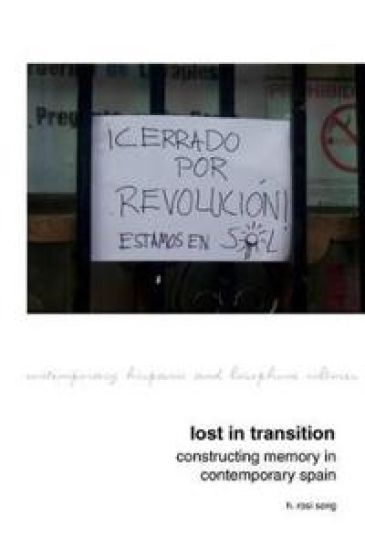
This book examines how the political period in Spain following Franco's death, known as the Transición, is being remembered by a group of writers, filmmakers and TV producers born in the sixties and early seventies. Reading against the dominant historical account that celebrates Spain’s successful democratisation, this study reveals how recent television, film and fiction recreate this past from a generational perspective, linking the experience of the Transición to the country’s present political and financial crises. Privileging above all an emotional connection, these artists use personal feelings about the past to analyse and revisit the history of their coming-of-age years. Lost in Transition considers the implications of adopting such a subjective positioning towards history that encourages an unending narrative, always in search of more meaningful and intimate connections with the past. Taking into account recent theoretical approaches to memory studies, this book proposes a new look at the production of memory in contemporary Spain and its close relationship to popular culture, shifting the focus from what is remembered to how the past is recalled affectively to be made part of an ongoing and enduring everyday experience.