Kirjojen hintavertailu – 12 903 725 kirjaa ja 27 kauppaa

Kirjailija

H. Willenegger

Kirjat ja teokset yhdessä paikassa: 7 kirjaa, julkaisuja vuosilta 1942–2012, suosituimpiin kuuluu Technique of Internal Fixation of Fractures. Vertaile teosten hintoja ja tarkista saatavuus suomalaisista kirjakaupoista.

7 kirjaa

Kirjojen julkaisuvuodet: 1942–2012.

Technique of Internal Fixation of Fractures

Technique of Internal Fixation of Fractures

M. E. Müller; W. Bandi; H. R. Bloch; M. Allgöwer; A. Mumenthaler; H. Willenegger; R. Schneider; S. Steinemann; F. Straumann; B. G. Weber

Springer-Verlag Berlin and Heidelberg GmbH Co. K
2012
nidottu
It is to the great and lasting credit of LORENZ BOHLER and his school that they have in the last decade developed and demonstrated so thoroughly the techniques for the conservative management of fractures. Nevertheless there have always been many, including some from BOHLER'S school, who have found considerable place for surgical management, and with the significant progress in general surgery seen in postwar years, a new stimulus has been given to this part of traumatic surgery, especially since bone injuries have become more complex and frequent. The concept of internal fixation is not new. The serious criticisms that have been levelled at it retain today their basic significance. Progress in the fields of asepsis, corrosion-free metal implants, operative experience and postoperative care has diminished the dangers but has not relieved the surgeon of responsibility. The Association for the Study of the Problems of Internal Fixation (AO) has devoted itself over a number of years to the basic principles and best methods of open treatment of fractures by means of extended clinical and scientific studies in order to determine in each individual case the most promising line of treatment. At the same time a well designed and tested instrument set has been developed with precise instructions for the appropriate techniques. As a result, the new observations about primary bone healing which have emerged from the practice of rigid internal fixation are as interesting as the uses to which they can be put in allowing early mobilization.
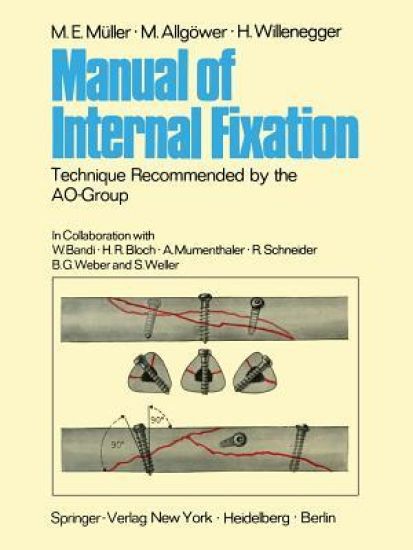
Manual of Internal Fixation

Manual of Internal Fixation

M. E. Müller; M. Allgöwer; H. Willenegger

Springer-Verlag Berlin and Heidelberg GmbH Co. K
2012
nidottu
The German edition of our book entitled "Operative Frakturen­ behandlung" by M. E. MÜLLER, M. ALLGÖWER and H. WILLENEGGER (Springer, Berlin . Göttingen . Heidelberg, 1963) has been out of print now for more than three years. We are planning a new edition which will deal with the collective experience of 14,000 new cases, all treated by internal fixation, and will include the newest developments in the field of internal fixa­ tion. However, it will be some time before this new edition can be published. Increasing demands for a description of the AO technique of internal fixation has stimulated us to publish this manual. In it we shall describe in a comprehensive but somewhat apodictic mann er the principles and techniques of the AO methods of fracture treatment and reconstructive surgery, which in our hands, have stood the test of time. The book is written in a somewhat abbreviated style. It cor­ responds in subject matter to the teaching given at the AO courses in Davos, but deals with each subject more thoroughly. We have dispensed with pictures of the instruments, as these may be found in the Synthes Catalogue *. This manual should be regarded as the product of collective experiencc, containing new thoughts and new discoveries from basic research. In considering the risks of mistakes and dangers, we can only reiterate what we have already stated in "Technique of Internal Fixation of Fractures": "Open treatment of fractures is a valuable but difficult method which involves much responsibility.
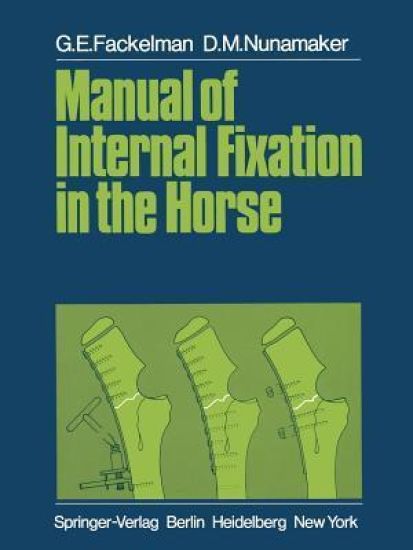
Manual of Internal Fixation in the Horse

Manual of Internal Fixation in the Horse

G. E. Fackelman; M. E. Müller; D. M. Nunamaker; M. Allgöwer; R. Schneider; H. Willenegger

Springer-Verlag Berlin and Heidelberg GmbH Co. K
2011
nidottu
It is with pleasure that we offer these introductory remarks for the Manual of Internal Fixation in the Horse, a book describing a further application of AO or ASIF techniques. The letters A-O stand for the Arbeitsgemeinschaft fUr Osteosynthesefragen and have been trans­ lated into the Association for the Study of Internal Fixation. The organization is truly a "study group", created in Switzerland, that met for the first time in 1958. The major goal was to establish a task of fracture treatment by force committed to the improvement osteosynthesis. The group's motivation arose out of the then prevailing unsound or inconsistently successful attempts at fracture treatment. According to statistics obtained from the Swiss National Health Insurance Program at the time, the so-called conservative treatment of fractures had resulted in a high rate of persistent morbidity. The problems encoun­ tered included: irreparable damage due to long-term immobilization; delayed union or pseudoarthrosis; malalignment; and, inadequate reduction of intraarticular fractures with resultant osteoarthritis. Accurate, stable osteosynthesis seemed the only practical way to address those various shortcomings. However, many of the osteosyn­ theses performed at that time had led to new problems, since most were not stable and, in some cases, actually worked to prevent healing.
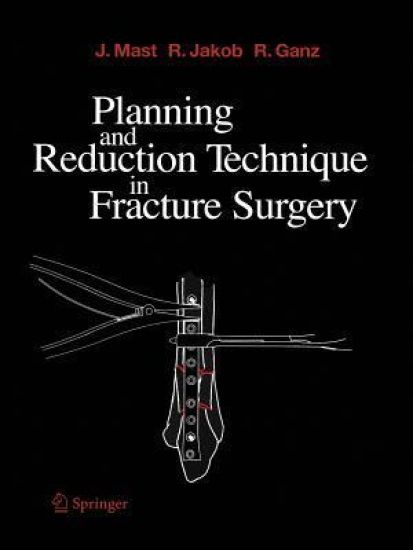
Planning and Reduction Technique in Fracture Surgery

Planning and Reduction Technique in Fracture Surgery

Jeffrey Mast; H. Willenegger; Roland Jakob; Reinhold Ganz

Springer-Verlag Berlin and Heidelberg GmbH Co. K
2011
nidottu
During the past 30 years, the Study Group for the Problems of Osteosyn­ thesis (AO) has made decisive contributions to the development of osteo­ synthesis as a surgical method. Through close cooperation among special­ ists in the fields of orthopedic and general surgery, basis research, metallurgy, and technical engineering, with consistently thorough follow­ up, it was possible to establish a solid scientific background for osteosyn­ thesis and to standardize this operative method, not only for the more ob­ vious applications in fracture treatment, but also in selective orthopedics where hardly any problems relating to bone, such as those with osteoto­ mies can be solved without surgical stabilization. Besides the objective aim, the AO was additionally stimulated by a spirit of open-minded friendship; each member of the group was recruited according to his pro­ fessional background and position, his skills, and his talent for improvisa­ tion. Against this backdrop without even mentioning the schooling program well known throughout the world I should like to add some personal and general comments. This book is written for clinicians, instructing them how to perform osteo­ synthesis with special reference to plating in all its varieties and in strict accordance with the biomechanical and biological aspects and facts. From this point of view, the chapter on preoperative planning merits par­ ticular emphasis. Not only is it conductive to optimal surgery, it will also contribute to self-education and may found a school.
Planning and Reduction Technique in Fracture Surgery

Planning and Reduction Technique in Fracture Surgery

Jeffrey Mast; H. Willenegger; Roland Jakob; Reinhold Ganz

Springer-Verlag Berlin and Heidelberg GmbH Co. K
1988
sidottu
During the past 30 years, the Study Group for the Problems of Osteosyn­ thesis (AO) has made decisive contributions to the development of osteo­ synthesis as a surgical method. Through close cooperation among special­ ists in the fields of orthopedic and general surgery, basis research, metallurgy, and technical engineering, with consistently thorough follow­ up, it was possible to establish a solid scientific background for osteosyn­ thesis and to standardize this operative method, not only for the more ob­ vious applications in fracture treatment, but also in selective orthopedics where hardly any problems relating to bone, such as those with osteoto­ mies can be solved without surgical stabilization. Besides the objective aim, the AO was additionally stimulated by a spirit of open-minded friendship; each member of the group was recruited according to his pro­ fessional background and position, his skills, and his talent for improvisa­ tion. Against this backdrop without even mentioning the schooling program well known throughout the world I should like to add some personal and general comments. This book is written for clinicians, instructing them how to perform osteo­ synthesis with special reference to plating in all its varieties and in strict accordance with the biomechanical and biological aspects and facts. From this point of view, the chapter on preoperative planning merits par­ ticular emphasis. Not only is it conductive to optimal surgery, it will also contribute to self-education and may found a school.
Beinleiden

Beinleiden

Karl Sigg; H. Willenegger

Springer-Verlag Berlin and Heidelberg GmbH Co. K
1976
nidottu
Uoter Beinleiden versteht der Patient meist die weitaus am haufigsten auftreten den Venenerkrankllngen der Beine, Krampfadern (Varizen), venose Beingeschwiire (Ulcera cruris) und Beinekzeme. Diese bilden den hauptsachlichen Gegenstand der nachstehenden Ausfiihrungen. AuBerdem wird auf Beinleiden nicht venoser Natur, wie arterielle und lymphatische Zirkulationsstorungen und auf Beingeschwiire aus dermatologischen Ursachen eingegangen. Die vorliegende Arbeit soll Krankenschwestern, arztlichem Hilfspersonal und besonders den betroffenen Patienten einen Begriff von der Erkrankung geben, da mit durch ihre verstandige Mithilfe die arztliche Betreuung moglichst wirksam un terstiitzt werden kann. Auch dem Arzt, z. B. dem Leiter von Kursen fUr Kranken schwestern und arztliches Hilfspersonal, kann sie einen kurzen Uberblick geben. Es wird deshalb in dieser Auflage ferner auf die Behandlungsgrundlagen der Va rizenverodung eingegangen. Wenn sich aber der Arzt eingehender mit der Therapie beschaftigen will, wird er mit Vorteil die fiir ihn bestimmte, ausfUhrlichere Darstel lung in "Varizen, Ulcus cruris und Thrombose"l beniitzen. Venose Beinleiden zahlen zu den meistverbreiteten Krankheiten. Sie iibertreffen an Haufigkeit bei weitem jede andere Erkrankung der Beine. In Zivilisationslandern leiden etwa 15 % der Bevolkerung an Krampfadern und 0,5 % an Beingeschwiiren. Diese Ulcera cruris stehen unter den Krankheiten, die den Patienten entweder teil weise oder ganz invalid machen, an der Spitze. 5-10 % aller Verstorbenen erliegen einer Embolie, deren Ursache immer eine Venenentziindung (Thrombose), meistens der Beine ist. 52 % aller Verstorbenen iiber 50 Jahre weisen bei der Sektion Folgen einer Thrombose und Lungenembolie auf."
Blutkonservierung und Transfusion von konserviertem Blut

Blutkonservierung und Transfusion von konserviertem Blut

O. Schürch; H. Willenegger; H. Knoll

Springer Verlag GmbH
1942
nidottu
Dieser Buchtitel ist Teil des Digitalisierungsprojekts Springer Book Archives mit Publikationen, die seit den Anfängen des Verlags von 1842 erschienen sind. Der Verlag stellt mit diesem Archiv Quellen für die historische wie auch die disziplingeschichtliche Forschung zur Verfügung, die jeweils im historischen Kontext betrachtet werden müssen. Dieser Titel erschien in der Zeit vor 1945 und wird daher in seiner zeittypischen politisch-ideologischen Ausrichtung vom Verlag nicht beworben.