Kirjojen hintavertailu – 12 859 818 kirjaa ja 27 kauppaa

Kirjailija

Haifa Zangana

Kirjat ja teokset yhdessä paikassa: 7 kirjaa, julkaisuja vuosilta 2006–2021, suosituimpiin kuuluu Not One More Death. Vertaile teosten hintoja ja tarkista saatavuus suomalaisista kirjakaupoista.

7 kirjaa

Kirjojen julkaisuvuodet: 2006–2021.

Not One More Death

Not One More Death

Brian Eno; Haifa Zangana; Harold Pinter; John le Carré; Michel Faber; Richard Dawkins

Verso Books
2006
nidottu
Aiming to lay bare the act of blatant state terrorism that is the invasion and occupation of Iraq, this book seeks to reveal the extraordinary tapestry of lies, distortions and gross media manipulation that underpin it. It looks at how public opinion is wilfully ignored and "democracy" used as a figleaf for the furthering of colonial ambitions.
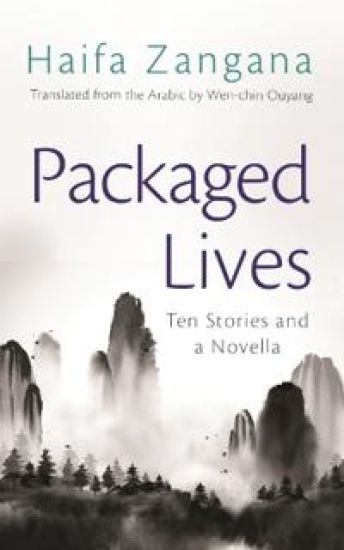
Packaged Lives

Packaged Lives

Haifa Zangana

Syracuse University Press
2021
nidottu
The carefully crafted, subtle, and humorous stories in Packaged Lives show Zangana at her best as a fiction writer. She portrays her subjects keenly, sensitively, and lovingly but without compromise. Iraqis living in exile come to life in her narratives as men and women who are caught between two worlds. They cannot return to their homeland and are forced to wait for news of Iraq from afar. At the same time, they are unable to fully adjust to life in Britain and make a new home for themselves. The question "What is home?" is at the heart of each story in this collection. Her protagonists, who are stuck in ready-made lives, or "packaged lives," struggle to set themselves free from a web of relationships in which they are entangled. Art, poetry, and nature provide lines of escape. The relief may be fleeting, but the peace of mind and serenity are reached through the moment of epiphany at the end of each story, a much-needed balm.
Dreaming Of Baghdad

Dreaming Of Baghdad

Haifa Zangana

Feminist Press at The City University of New York
2009
nidottu
"Deftly sketched, simple and poetic, Dreaming of Baghdad drags politics down from the realm of the abstract into the mud, fear, and loneliness of personal experience and psychological ruin that is life under dictatorship. This is a landscape of clandestine struggle and crushing political defeat, of familiar old streets and the alienating structures of exile. Zangana's story is heartbreaking, but her clarity and resilience inspire awe."--Christian Parenti In 1970s Iraq, the Ba'ath Party was at the height of its influence in the Middle East and popularity throughout the West. But a group of activists recognized the disastrous potential of the regime as its charismatic leader, Saddam Hussein, became more powerful. Haifa Zangana was among those resisters, a small group of whom were captured and imprisoned at Abu Ghraib. From the distance of time and place, Zangana writes during her first years of forced exile from her beloved country about the time of her incarceration, the agonizing loss of comrades to torture and death in prison, the haunted quality of life so far away from home and family, and the ways in which memory conspires to make us forget what sometimes is most dear to us.
City Of Widows

City Of Widows

Haifa Zangana

Seven Stories Press,U.S.
2009
nidottu
"Zangana writes with indignation of the recent hijacking of her country."--"Time Out New York""This angry, unforgiving and powerful book is as vital as it is hard to swallow."--"Publishers Weekly" (starred review)"What left me quaking was the power of internal perspective and history that she offers, and her informed explanations of both policy and practice."--"Feminist Review"In "City of Widows," Haifa Zangana tells the story of her country, from the early twentieth century through the US-UK invasion and the current occupation. She brings to light a sense of Iraq as a society mainly of secularists who have been denied, through years of sanctions, war, and occupation, a system within which to build the country according to their own values. She points to the long history of political activism and social participation of Iraqi women, and the fact that, before the recent invasion, they had been among the most liberated of their gender in the Middle East. Finally, she writes about Baghdad today as a city populated by bereaved women and children who have lost their loved ones and their land, but who are still emboldened by the native right to resist and liberate themselves to create an independent Iraq. In 1958, when Haifa Zangana was just eight years old, Iraqis flooded the streets in celebration of their newfound, hard-won freedom from British colonial rule that had begun in 1917. Zangana came of age in one of the most open societies in the Middle East--until it was shut down in the 1970s by the tyrannical, yet secular, Ba'ath Party. Joining in armed struggle against Saddam Hussein, Zangana was captured, imprisoned, and tortured as a young woman. She was released from Abu Ghraib after six months of detention, and has lived in exile ever since. Today, Haifa Zangana is a novelist, a weekly columnist for "Al-Quds" newspaper, and a political commentator for the "Guardian," "Red Pepper," and "Al-Ahram Weekly." She lives in London.

City Of Widows

City Of Widows

Haifa Zangana

Seven Stories Press,U.S.
2007
sidottu
Haifa Zangana, a former political prisoner of the Ba'ath regime, presents the first comprehensive history of women in modern Iraq through the US occupation. Positioning Iraqi women today in a long line of daring and vocal activists resisting foreign aggression and despotism, Zangana traces this lineage from the emergence of a handful of turn-of-the-century poets to women's mass membership in politically affiliated women's leagues, and finally confronts the paradox of women's rising status under decades of repressive Ba'ath rule, when they were the most educated in the Arab world. Zangana contradicts the passive role into which Western media have cast Iraqi women and presents a forceful critique of foreign women's organizations' attempts to hijack the initiatives of Iraqi women. Addressing the stark realities of Iraq today, Zangana reveals Baghdad as a "city of widows," where more than 300,000 women have been left to head households. Just as the sanctions disproportionately affected women and children, the war and occupation have destroyed their way of life. In the rebuilding of Iraq, as so often before, Zangana suggests, Iraqi women will be left to pick up the pieces of their country after yet another senseless imperial adventure. Haifa Zangana is an Iraqi political commentator, novelist, and former prisoner of Saddam Hussein's regime. She is a weekly columnist for "al-Quds" newspaper and a commentator for the "Guardian," " Red Pepper," and "al-Ahram""Weekly." She lives in London.
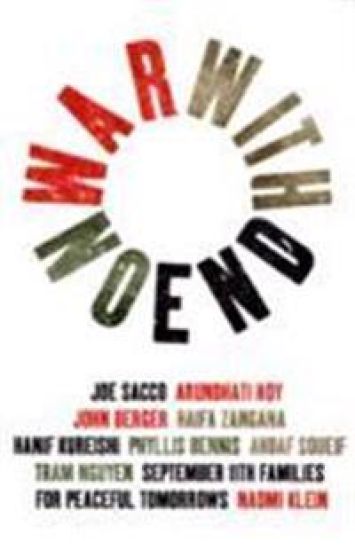
War With No End

War With No End

Ahdaf Soueif; Arundhati Roy; Haifa Zangana; Hanif Kureishi; Joe Sacco; John Berger; Naomi Klein; Phyllis Bennis; Tram Nguyen

Verso Books
2007
nidottu
On October 7th 2001, US-led forces invaded Afghanistan, marking the start of George Bush and Tony Blair's "War on Terror." Six years on, where have the policies of Bush and Blair left us? Bringing together some of the finest contemporary writers, this wide-ranging anthology, from reportage and "faction" to fiction, explores the impact of this "long war" throughout the world, from Palestine to Iraq, Abu Ghraib, the curtailment of civil liberties and manipulation of public opinion. Published in conjunction with Stop the War coalition and United for Peace and Justice, War With No End provides an urgent, necessary reflection on the causes and consequences of the ideological War on Terror.
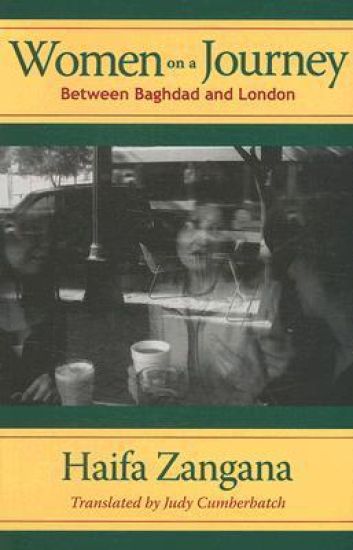
Women on a Journey

Women on a Journey

Haifa Zangana

University of Texas Press
2007
pokkari
Exiled, displaced, tortured, and grieving-each of the five Iraqi women whose lives and losses come to us through Haifa Zangana's skillfully wrought novel is searching in her own way for peace with a past that continually threatens to swallow up the present. Majda, the widow of a former Ba'ath party official who was killed by the government he served. Adiba, a political dissident tortured under Saddam Hussein's regime. Um Mohammed, a Kurdish refugee who fled her home for political asylum. Iqbal, a divorced mother whose family in Iraq is suffering the effects of Western economic sanctions. And Sahira, the wife of a Communist politician, struggling with his disillusionment and her own isolation. Bound to one another by a common Iraqi identity and a common location in 1990s London, these women come together across differences in politics, ethnic and class background, age, and even language. In narrating the friendship that develops among them, Zangana captures their warmth and humor as well as their sadness, their feelings of despair along with their search for hope, their sense of uprootedness, and their yearnings for home. Weaving between the women's memories of Iraq-nostalgic and nightmarish-and their lives as exiles in London, Zangana's novel gives voice to the richness and complexity of Iraqi women's experiences. Through their stories, the novel represents a powerful critique of the violence done to ordinary people by those who hold power both in Iraq and in the West.