Kirjojen hintavertailu – 12 859 828 kirjaa ja 27 kauppaa

Kirjailija

Haijun Zhang

Kirjat ja teokset yhdessä paikassa: 4 kirjaa, julkaisuja vuosilta 2013–2025, suosituimpiin kuuluu Deep Learning in Wireless Communications. Vertaile teosten hintoja ja tarkista saatavuus suomalaisista kirjakaupoista.

4 kirjaa

Kirjojen julkaisuvuodet: 2013–2025.

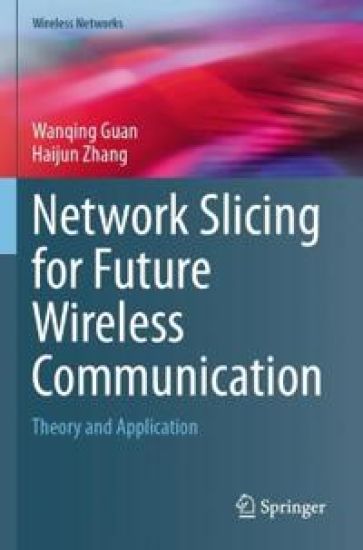
Network Slicing for Future Wireless Communication

Network Slicing for Future Wireless Communication

Wanqing Guan; Haijun Zhang

Springer International Publishing AG
2025
nidottu
This book comprehensively discusses the development, application and challenges of network slicing technology in wireless communications. Starting with the basic concept and enabling technologies of network slicing, this book introduces how to integrate AI (Artificial Intelligence) technology into the end-to-end deployment, resource allocation and performance enhancement for multi-tenant slicing. An in-depth exploration of managing multi-domain slices deployed in the federated infrastructure networks is presented, including on-demand cooperation among multiple infrastructure networks, distinct slice deployment, hierarchical slice orchestration and fast slice adaption. As a guide to leveraging AI to enhance traffic performance of multi-tenant slicing and customize resource slicing for industrial scenarios, this book provides insights, modeling, applications and research issues. A holistic perspective on prominent role of network slicing in managing wireless network resources is provided as well. Overall, network slicing as a key technology of wireless networks, enables to satisfy differentiated service demands of multiple tenants from vertical industries with the same shared physical infrastructure network. As future wireless networks are expected to facilitate the evolution of vertical industries, various vertical enterprises as tenants require an intelligent network slicing paradigm to provide highly customizable services. AI-based management system for network slicing excel at deploying slices rapidly, allocating resources efficiently and avoiding service quality degradation. With the increasing diversity of service demands and complexity of communication environment, incorporating AI into network slicing is a necessity for improving flexibility and automation of resource management. This book targets advanced-level students in information and communication sciences as a secondary textbook. Researchers and industry professionals working in various areas, such as wireless communication systems, network management and orchestration, resource allocation and AI-enabled wireless networks will also find this book useful as reference book.
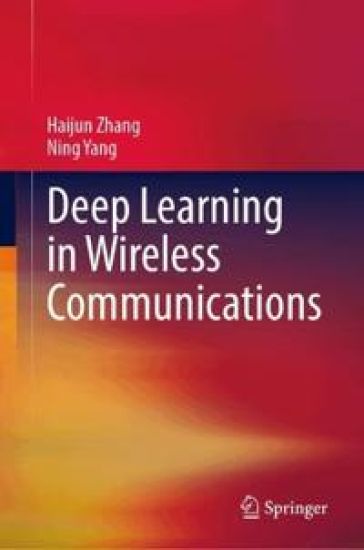
Deep Learning in Wireless Communications

Deep Learning in Wireless Communications

Haijun Zhang; Ning Yang

SPRINGER VERLAG, SINGAPORE
2024
sidottu
The book offers a focused examination of deep learning-based wireless communication systems and their applications. While both principles and engineering practice are explored, greater emphasis is placed on the latter. The book offers an in-depth exploration of major topics such as cognitive spectrum intelligence, learning resource allocation optimization, transmission intelligence, learning traffic and mobility prediction, and security in wireless communication. Notably, the book provides a comprehensive and systematic treatment of practical issues related to intelligent wireless communication, making it particularly useful for those seeking to learn about practical solutions in AI-based wireless resource management. This book is a valuable resource for researchers, engineers, and graduate students in the fields of wireless communication, telecommunications, and related areas.
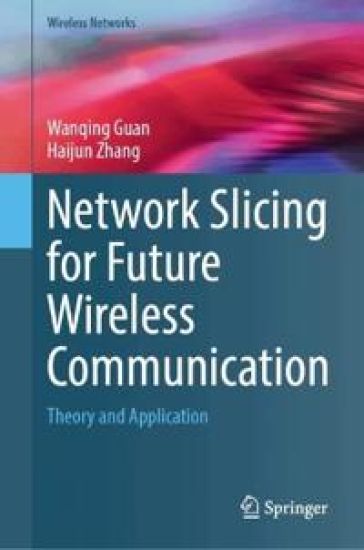
Network Slicing for Future Wireless Communication

Network Slicing for Future Wireless Communication

Wanqing Guan; Haijun Zhang

Springer International Publishing AG
2024
sidottu
This book comprehensively discusses the development, application and challenges of network slicing technology in wireless communications. Starting with the basic concept and enabling technologies of network slicing, this book introduces how to integrate AI (Artificial Intelligence) technology into the end-to-end deployment, resource allocation and performance enhancement for multi-tenant slicing. An in-depth exploration of managing multi-domain slices deployed in the federated infrastructure networks is presented, including on-demand cooperation among multiple infrastructure networks, distinct slice deployment, hierarchical slice orchestration and fast slice adaption. As a guide to leveraging AI to enhance traffic performance of multi-tenant slicing and customize resource slicing for industrial scenarios, this book provides insights, modeling, applications and research issues. A holistic perspective on prominent role of network slicing in managing wireless network resources is provided as well. Overall, network slicing as a key technology of wireless networks, enables to satisfy differentiated service demands of multiple tenants from vertical industries with the same shared physical infrastructure network. As future wireless networks are expected to facilitate the evolution of vertical industries, various vertical enterprises as tenants require an intelligent network slicing paradigm to provide highly customizable services. AI-based management system for network slicing excel at deploying slices rapidly, allocating resources efficiently and avoiding service quality degradation. With the increasing diversity of service demands and complexity of communication environment, incorporating AI into network slicing is a necessity for improving flexibility and automation of resource management. This book targets advanced-level students in information and communication sciences as a secondary textbook. Researchers and industry professionals working in various areas, such as wireless communication systems, network management and orchestration, resource allocation and AI-enabled wireless networks will also find this book useful as reference book.
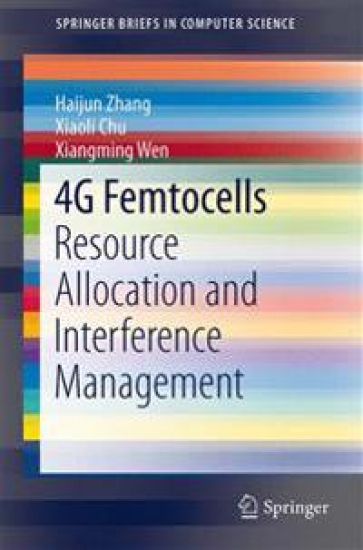
4G Femtocells

4G Femtocells

Haijun Zhang; Xiaoli Chu; Xiangming Wen

Springer-Verlag New York Inc.
2013
nidottu
This brief examines resource allocation and interference management for 4G femtocells. It introduces 4G femtocells in the context of 4G mobile networks and discusses related technical challenges in resource allocation and interference management. Topics include ant colony algorithm based downlink resource allocation, intelligent scheduling and power control, uplink and downlink for two-tier networks, quality of service (QoS) constraints and the cross-tier interference constraint. The authors present algorithms to alleviate common femtocell-related problems such as subchannel power allocation. The complexity of the proposed resource allocation algorithms is analyzed, and the effectiveness of the proposed algorithms is verified by simulations. This concise and practical book directly addresses common problems relating to femtocells and resource management. It serves as a useful tool for researchers in the field. Advanced-level students or professionals interested in femtocells and networks will also find the content helpful.