Kirjojen hintavertailu – 12 859 828 kirjaa ja 27 kauppaa
Kirjailija
Hajo Düchting
Kirjat ja teokset yhdessä paikassa: 16 kirjaa, julkaisuja vuosilta 2012–2025, suosituimpiin kuuluu Paul Klee. Vertaile teosten hintoja ja tarkista saatavuus suomalaisista kirjakaupoista.
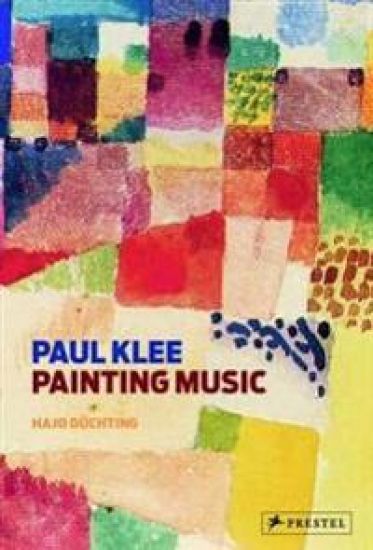
A talented violinist as well as a painter, Klee drew much of the inspiration for his abstract art from musical rhythms and structures. Like a composer, he developed and harmonized pictorial themes, weaving a complex series of signs and symbols into his painting. The book focuses on Klee's decade-long tenure at the Bauhaus, where the artist's theories and practices first merged. Illustrated throughout with full-colour reproductions of Klee's paintings and etchings, as well as entries from his diaries, this unique study sheds light on an important aspect of Klee's work while providing insights into his development as an abstract artist.
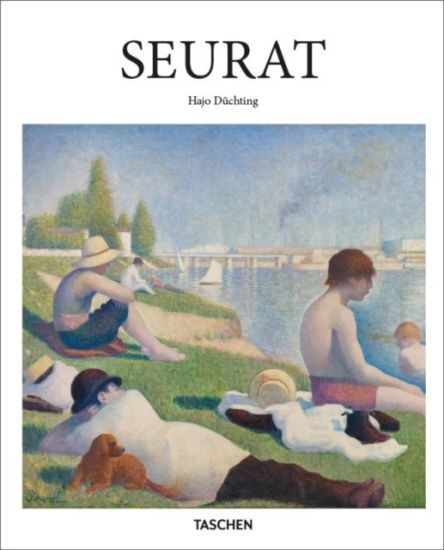
Georges Seurat (1859-1891) was only 31 when he died, but during his short life he created hundreds of drawings, oil sketches, and paintings on canvas that introduced a fresh perspective in European painting. As a student at the École des Beaux-Arts in Paris, he carefullly observed the work of Delacroix and became fascinated with the interplay between light and color. In doing so, he developed Divisionism, using small dabs of paint from the point of the brush to create pointilist images that shimmered with luminescence and hinted at movement. In this accessible introduction to Seurat, meet an artist driven by a need to capture nature and the simple pleasures of life through a new language of painting.
Designers have shaped our modern age, whether it's the chair we're sitting in, the computer we're reading on, or the house we're living in. Design is everywhere, and this volume profiles fifty of the most influential figures over the past one hundred years. From the first bentwood chairs by Thonet to the holistically designed worlds of Bauhaus and Le Corbusier, and from the signature styles of designers such as Charles and Ray Eames, Eileen Gray, and Philippe Starck to internationally- known brands like Swatch, Muji, and Apple, the designers presented here are profiled in double-page spreads packed with fascinating background information, photographs, and illustrations. As inspiring as it is informative, this far-reaching book celebrates the impact that design has on our daily life.
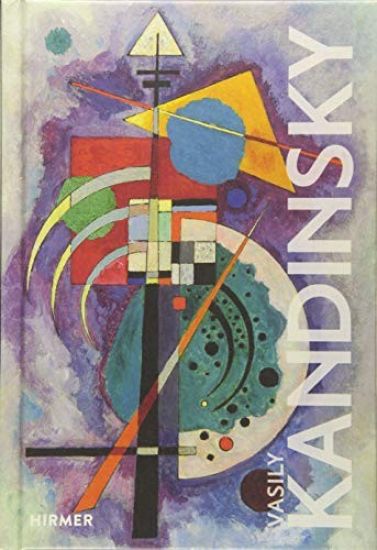
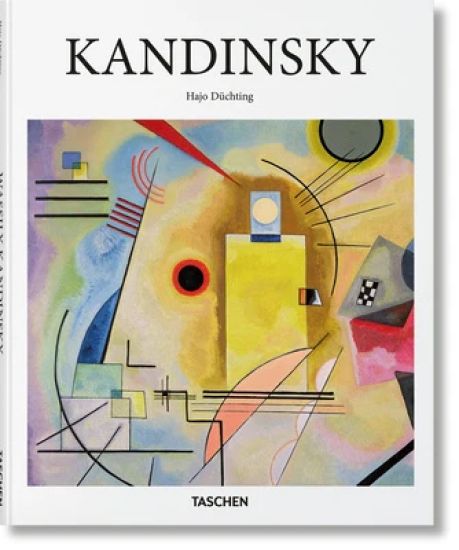
Vasily Kandinsky was one of the first painters of abstract art and a founding member of the Blue Rider movement. Although he trained as a lawyer, Kandinsky abandoned this career path to devote himself to art, both as a creator and an influential teacher and theorist at the Bauhaus. Over time, Kandinsky's works grew more abstract, and he is best known for large, expressive paintings that free color from form and line. The book covers the entire span of his career, focuses in particular on his time at the Bauhaus, where he collaborated with Lyonel Feininger and Paul Klee. Lively, accessible, and lavishly illustrated, this new book offers a concise introduction to the life and work of this great master of art.
Over the course of his artistic career, Wassily Kandinsky (1866–1944) transformed not only his own style, but the course of art history. From early figurative and landscape painting, he went on to pioneer a spiritual, emotive, rhythmic use of color and line and is today credited with creating the first purely abstract work. As much a teacher and theorist as he was a practicing artist, Kandinsky’s interests in music, theater, poetry, philosophy, ethnology, myth, and the occult, were all essential components to his painting and engraving. He was involved with both the influential Blaue Reiter and Bauhaus groups and left a legacy not only of dazzling visual work, but also of highly influential treatises such as Concerning the Spiritual in Art. Key tenets included the connections between painting, music and mystical experience, and the purification of art away from material realism and towards an emotional expression, condensed in particular by color. This book presents key Kandinsky works to introduce his repertoire of vivid colors, forms, and feelings. Tracing the artist’s radical stylistic development, it shows how one painter’s progression paved the way for generations of abstract expression to come.
Although it only lasted three turbulent years, the afterburn of the Blaue Reiter (1911–1914) movement exerted a tremendous influence on the development of modern European art. Named after a Kandinsky painting, The Blue Rider, this loose band of artists, grouped around Russian émigré Wassily Kandinsky and German painter Franz Marc, sought to reject establishment standards and charge into a new artistic unknown. Articulating spiritual values and concerns in an era of rapid industrialization, the artists of the Blaue Reiter were connected by a shared interest in painting, woodcuts, and prints, as well as the symbolic values of color and spontaneous approaches to artwork. Key pieces such as Franz Marc’s Blue Horse I (1911), Kandinsky’s Picture with a Black Arch (1912), and August Macke’s Woman in a Green Jacket (1913) reveal varying subjects, but all channel distorted perspectives, crude lines, and an emphatic, expressionist use of color. The Blaue Reiter was abruptly truncated by the onset of the First World War, which killed two of its leading artists, along with growing dissent between the group’s protagonists. This book reveals the movement’s remarkable influence despite its brevity, presenting key works, artists, and their reverberating effects.
Although it only lasted three turbulent years, the afterburn of the Blaue Reiter (1911–1914) movement exerted a tremendous influence on the development of modern European art. Named after a Kandinsky painting, The Blue Rider, this loose band of artists, grouped around Russian émigré Wassily Kandinsky and German painter Franz Marc, sought to reject establishment standards and charge into a new artistic unknown. Articulating spiritual values and concerns in an era of rapid industrialization, the artists of the Blaue Reiter were connected by a shared interest in painting, woodcuts, and prints, as well as the symbolic values of color and spontaneous approaches to artwork. Key pieces such as Franz Marc’s Blue Horse I (1911), Kandinsky’s Picture with a Black Arch (1912), and August Macke’s Woman in a Green Jacket (1913) reveal varying subjects, but all channel distorted perspectives, crude lines, and an emphatic, expressionist use of color. The Blaue Reiter was abruptly truncated by the onset of the First World War, which killed two of its leading artists, along with growing dissent between the group’s protagonists. This book reveals the movement’s remarkable influence despite its brevity, presenting key works, artists, and their reverberating effects.
Join the heady ride of Der Blaue Reiter, the group of artists who galloped just three years of the early 20th century together, but in their rejection of establishment standards and charge into a new artistic realm marked a major step in the evolution of European Expressionist and abstract art.
Although it only lasted three turbulent years, the afterburn of the Blaue Reiter (1911–1914) movement exerted a tremendous influence on the development of modern European art. Named after a Kandinsky painting, The Blue Rider, this loose band of artists, grouped around Russian émigré Wassily Kandinsky and German painter Franz Marc, sought to reject establishment standards and charge into a new artistic unknown. Articulating spiritual values and concerns in an era of rapid industrialization, the artists of the Blaue Reiter were connected by a shared interest in painting, woodcuts, and prints, as well as the symbolic values of color and spontaneous approaches to artwork. Key pieces such as Franz Marc’s Blue Horse I (1911), Kandinsky’s Picture with a Black Arch (1912), and August Macke’s Woman in a Green Jacket (1913) reveal varying subjects, but all channel distorted perspectives, crude lines, and an emphatic, expressionist use of color. The Blaue Reiter was abruptly truncated by the onset of the First World War, which killed two of its leading artists, along with growing dissent between the group’s protagonists. This book reveals the movement’s remarkable influence despite its brevity, presenting key works, artists, and their reverberating effects.
German text: He became the forerunner of abstract art, was a co-founder of the Blauer Reiter, an art theorist and influential teacher at the Bauhaus. When Wassily Kandinsky abandoned his promising career as a lawyer in favor of painting at the age of 30, no one could have guessed that a few years later he would help decisively to determine and revolutionize twentieth-century art.
Over the course of his artistic career, Wassily Kandinsky (1866–1944) transformed not only his own style, but the course of art history. From early figurative and landscape painting, he went on to pioneer a spiritual, emotive, rhythmic use of color and line and is today credited with creating the first purely abstract work. As much a teacher and theorist as he was a practicing artist, Kandinsky’s interests in music, theater, poetry, philosophy, ethnology, myth, and the occult, were all essential components to his painting and engraving. He was involved with both the influential Blaue Reiter and Bauhaus groups and left a legacy not only of dazzling visual work, but also of highly influential treatises such as Concerning the Spiritual in Art. Key tenets included the connections between painting, music and mystical experience, and the purification of art away from material realism and towards an emotional expression, condensed in particular by color. This book presents key Kandinsky works to introduce his repertoire of vivid colors, forms, and feelings. Tracing the artist’s radical stylistic development, it shows how one painter’s progression paved the way for generations of abstract expression to come.
Throughout his artistic career, Wassily Kandinsky transformed not only his own practice, but the course of art history itself. This essential guide traces Kandinskyâ??s rich repertoire to present the painter, engraver, teacher, and theorist credited with the first modern abstract painting and with one of the keenest theoretical minds of 20th-century art.
Over the course of his artistic career, Wassily Kandinsky (1866–1944) transformed not only his own style, but the course of art history. From early figurative and landscape painting, he went on to pioneer a spiritual, emotive, rhythmic use of color and line and is today credited with creating the first purely abstract work. As much a teacher and theorist as he was a practicing artist, Kandinsky’s interests in music, theater, poetry, philosophy, ethnology, myth, and the occult, were all essential components to his painting and engraving. He was involved with both the influential Blaue Reiter and Bauhaus groups and left a legacy not only of dazzling visual work, but also of highly influential treatises such as Concerning the Spiritual in Art. Key tenets included the connections between painting, music and mystical experience, and the purification of art away from material realism and towards an emotional expression, condensed in particular by color. This book presents key Kandinsky works to introduce his repertoire of vivid colors, forms, and feelings. Tracing the artist’s radical stylistic development, it shows how one painter’s progression paved the way for generations of abstract expression to come.
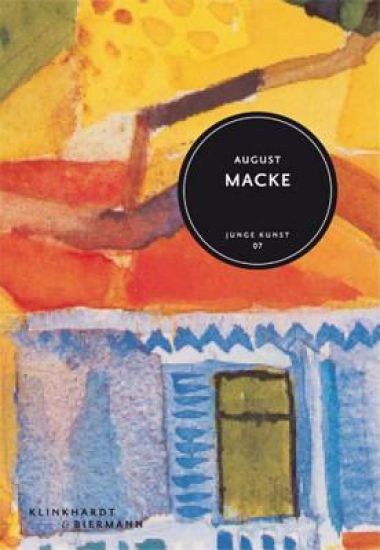
August Macke. In 1922 the art historian Walter Cohen wrote about August Macke in a "Junge Kunst" volume that Macke was the Benjamin of the "Blauer Reiter" circle, and that he was particularly popular because of his genuinely youthful character. At the age of 23 August Macke had met Franz Marc in 1910, and through him had become acquainted with the artists' group "Der Blaue Reiter." Following joint exhibitions in 1911 and 1912 Macke focused his attention on his own pictorial language. The watercolors that he painted during the legendary trip to Tunis with Paul Klee and Louis Moilliet were of particular importance to him. Unfortunately August Macke would have only a few months during which to incorporate the new realizations into his compositions, as he would die in France on September 26, 1914, during the first weeks of the First World War.