Kirjojen hintavertailu – 12 903 725 kirjaa ja 27 kauppaa

Kirjailija

Hajo Holborn

Kirjat ja teokset yhdessä paikassa: 11 kirjaa, julkaisuja vuosilta 1970–2013, suosituimpiin kuuluu Ulrich von Hutten and the German Reformation. Vertaile teosten hintoja ja tarkista saatavuus suomalaisista kirjakaupoista.

11 kirjaa

Kirjojen julkaisuvuodet: 1970–2013.

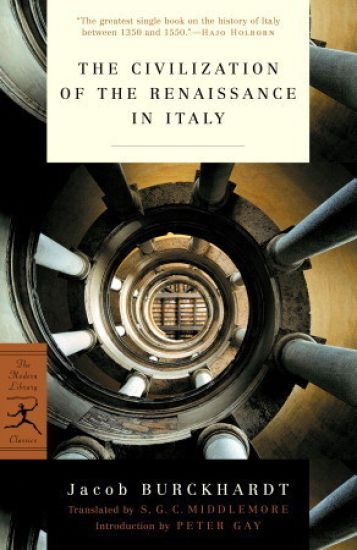
The Civilization of the Renaissance in Italy

The Civilization of the Renaissance in Italy

Jacob Burckhardt; Hajo Holborn

Modern Library Inc
2002
pokkari
Published in 1860, Burckhardt's work redefined our sense of the European past, wholly reinterpreting what has since been known simply as the Italian Renaissance. With unsurpassed erudition, Burckhardt illuminates a world of artistic and cultural ferment, innovation, and discovery; of revived humanism; of fierce tensions between church and empire; and of the birth of both the modern state and the modern individual. The Civilization of the Renaissance in Italy remains the single most important and influential account of this crucial moment in the history of the West.
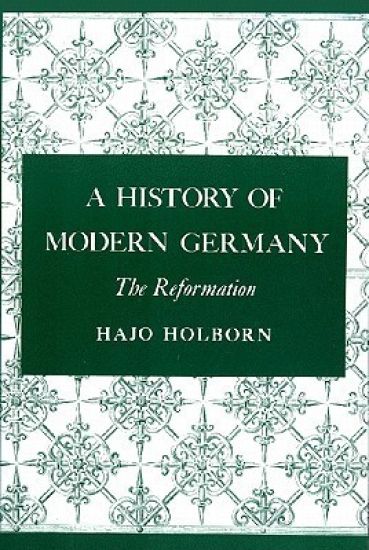
A History of Modern Germany, Volume 1

A History of Modern Germany, Volume 1

Hajo Holborn

Princeton University Press
1982
pokkari
This first volume of a major reassessment of the last five centuries of German history deals with that age of German history which had the widest effect on the rise of modern Western civilization. Against the background of medieval culture, the author shows the origins of Luther's religion and the growth of various Protestant churches, as well as the subsequent restoration of the Roman Catholic Church. The history of the religious movements of the Reformation and the Counter Reformation is closely co-ordinated with the great transformation simultaneously taking place in the social, economic, and intellectual institutions of Europe. Included are detailed discussions of the effects of the Black Death, the rise of the cities, Luther's social ethics, The Thirty Years' War, and the Peace of Westphalia in 1648.
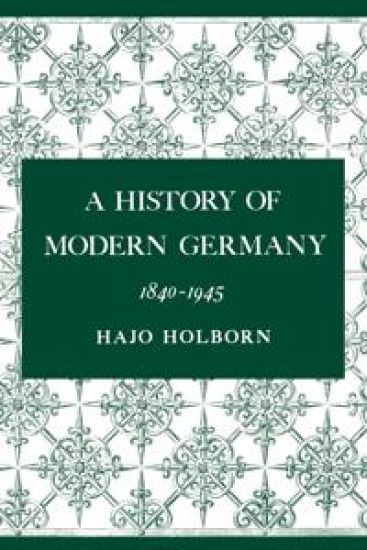
A History of Modern Germany, Volume 3

A History of Modern Germany, Volume 3

Hajo Holborn

Princeton University Press
1982
pokkari
This concluding volume of a three-volume reassessment of the last five centuries of German history develops the theme of power into what Gordon A. Craig calls a "masterly account of the dramatic, tragic and often shameful history of Germany in the most recent age" (New York Times Book Review). It deals with the period of nationalism and imperialism, from the abortive attempt of popular forces to found a liberal national state and Bismarck's German unification through the Prussian military monarchy to the expansionist programs of the age of William II and Hitler's world conquest.

A History of Modern Germany, Volume 2

A History of Modern Germany, Volume 2

Hajo Holborn

Princeton University Press
1982
pokkari
This second volume of a three-volume reassessment of the last five centuries of German history covers the two centuries from the crucial aftermath of the thirty years' war to the eve of the revolution of 1848-49. Dealing with the growth of absolutism, the author traces the founding of the Hapsburg empire and the rise of Bradenburg-Prussia, culminating in the conflict between Maria Theresa and Frederick the Great. Professor Holborn explores the impact of the French Revolution on Germany, its part in the collapse of the Holy Roman Empire, and the subsequent reorganization of the German states. In his section on the Congress of Vienna, he shows the struggle between the conservatism of Metternich and the incipient liberal and national movement. Students of German history will appreciate the attention given religious, intellectual, and social developments, colorfully presented in chapters on Baroque civilization and the age of Kant, Goethe, and Beethoven.
History of Modern Germany

History of Modern Germany

Hajo Holborn

Princeton University Press
1982
pokkari
This is a major reassessment of the last five centuries of German history, from the Reformation to the end of World War II. The first volume deals with that age of German history which had the widest effect on the rise of modern Western civilization. Against the background of medieval culture, the author shows the origins of Luther's religion and the growth of various Protestant churches, as well as the subsequent restoration of the Roman Catholic Church. The history of the religious movements of the Reformation and the Counter Reformation is closely co-ordinated with the great transformation simultaneously taking place in the social, economic, and intellectual institutions of Europe. Included are detailed discussions of the effects of the Black Death, the rise of the cities, Luther's social ethics, The Thirty Years' War, and the Peace of Westphalia in 1648. The second volume covers the two centuries from the crucial aftermath of the Thirty Years' War to the eve of the revolution of 1848-49. Dealing with the growth of absolutism, the author traces the founding of the Hapsburg empire and the rise of Bradenburg-Prussia, culminating in the conflict between Maria Theresa and Frederick the Great. Professor Holborn explores the impact of the French Revolution on Germany, its part in the collapse of the Holy Roman Empire, and the subsequent reorganization of the German states. In his section on the Congress of Vienna, he shows the struggle between the conservatism of Metternich and the incipient liberal and national movement. Students of German history will appreciate the attention given religious, intellectual, and social developments, colorfully presented in chapters on Baroque civilization and the age of Kant, Goethe, and Beethoven. The concluding volume develops the theme of power into what Gordon A. Craig calls a "masterly account of the dramatic, tragic and often shameful history of Germany in the most recent age" (New York Times Book Review). It deals with the period of nationalism and imperialism, from the abortive attempt of popular forces to found a liberal national state and Bismarck's German unification through the Prussian military monarchy to the expansionist programs of the age of William II and Hitler's world conquest.