Kirjojen hintavertailu – 12 903 725 kirjaa ja 27 kauppaa

Kirjailija

Håkan Karlsson

Kirjat ja teokset yhdessä paikassa: 14 kirjaa, julkaisuja vuosilta 2008–2023, suosituimpiin kuuluu The Johnson Administration's Cuba Policy. Vertaile teosten hintoja ja tarkista saatavuus suomalaisista kirjakaupoista.

Nimi esiintyy myös muodoissa: Hakan Karlsson

14 kirjaa

Kirjojen julkaisuvuodet: 2008–2023.

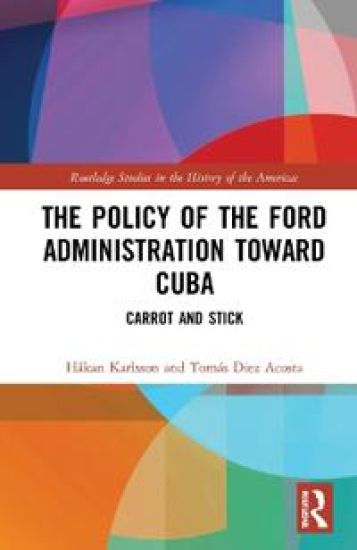
The Policy of the Ford Administration Toward Cuba

The Policy of the Ford Administration Toward Cuba

Håkan Karlsson; Tomás Diez Acosta

TAYLOR FRANCIS LTD
2023
nidottu
This book presents new aspects of the U. S. Cuba policy during Gerald R. Ford’s presidency (August 9, 1974-January 20, 1977). Based in governmental and other sources from the U. S. and Cuba, the book examines how the Ford administration broke with Nixon’s hostile policy when the diplomatic and economic isolation of Cuba was ended in the OAS, even when the U. S. economic blockade prevailed. In line with the detente policy towards the USSR, the Ford administration strived to normalize the relations with Cuba through secret discussions. However, the Cuban involvement in the Angolan civil war ended this process of normalization, and the U. S. returned to a confrontational policy. Within this framework, counterrevolutionary groups in the U. S. could act, more or less with impunity, towards Cuba, but also against Cuban and third-country targets both within and outside the U. S. The book describes the oscillating Cuba policy that was the hallmark of the Ford administration. The Cuban perspective adopted will complement and enrich the knowledge of the U. S. policy toward Cuba during Gerald Ford’s presidency. It is of relevance to everyone interested in the issue and especially for students and researchers within the disciplines of History and Political Science.
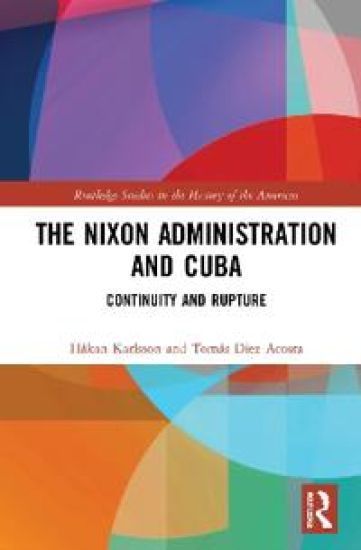
The Nixon Administration and Cuba

The Nixon Administration and Cuba

Håkan Karlsson; Tomás Diez Acosta

TAYLOR FRANCIS LTD
2023
nidottu
This book presents a detailed analysis of the U. S. policy that was adopted toward Cuba by the Richard M. Nixon administration between January 20, 1969, and August 8, 1974. Based on governmental, as well as other, sources from both the U. S. and Cuba, this book examines the rupture where the policy of “passive containment” was complemented with a policy of “dirty war.” President Nixon attempted to reestablish a confrontational and violent path of action, and once again, Cuba was exposed to a “dirty war” consisting of different forms of aggressive terrorist activities. Since the conditions for this violent route had changed dramatically both in the U. S. and in Cuba, a policy characterized by a continuity of the economic and psychological warfare came to be the central one for the Nixon administration. This book is unique since it is written from a Cuban perspective, and it therefore complements and enriches the knowledge of the U. S.–Cuban relationship during the end of the 1960s and the beginning of the 1970s, and the policy adopted by the Nixon administration. It is of relevance to everyone interested in the issue, and especially for students and researchers within the disciplines of history and political science.
The Johnson Administration's Cuba Policy

The Johnson Administration's Cuba Policy

Håkan Karlsson; Tomás Diez Acosta

TAYLOR FRANCIS LTD
2022
nidottu
This book presents the reader with a detailed analysis of the U. S. policy toward Cuba that was designed and adopted by the Lyndon B. Johnson administration. Based in governmental and other sources from both the U. S. and Cuba, the book analyzes the changes in the U. S. policy and its political and practical effects. Cuba still had to face a combination of "dirty war" and "passive containment," but during the course of the 1960s, the influence of the "dirty war" policy was weakened due to the failure of the tactics to overthrow the Cuban Revolution by violent means. Instead, the policy was directed towards "passive containment," characterized by its focus on an intensification of the economic blockade, the promotion of diplomatic isolation, and propaganda campaigns and psychological warfare. The book is unique since it is written from a Cuban perspective and it complements and enriches the knowledge of the U. S.-Cuban relationship during the 1960s, and the policy adopted by the Johnson administration.
The Policy of the Ford Administration Toward Cuba

The Policy of the Ford Administration Toward Cuba

Håkan Karlsson; Tomás Diez Acosta

TAYLOR FRANCIS LTD
2022
sidottu
This book presents new aspects of the U. S. Cuba policy during Gerald R. Ford’s presidency (August 9, 1974-January 20, 1977). Based in governmental and other sources from the U. S. and Cuba, the book examines how the Ford administration broke with Nixon’s hostile policy when the diplomatic and economic isolation of Cuba was ended in the OAS, even when the U. S. economic blockade prevailed. In line with the detente policy towards the USSR, the Ford administration strived to normalize the relations with Cuba through secret discussions. However, the Cuban involvement in the Angolan civil war ended this process of normalization, and the U. S. returned to a confrontational policy. Within this framework, counterrevolutionary groups in the U. S. could act, more or less with impunity, towards Cuba, but also against Cuban and third-country targets both within and outside the U. S. The book describes the oscillating Cuba policy that was the hallmark of the Ford administration. The Cuban perspective adopted will complement and enrich the knowledge of the U. S. policy toward Cuba during Gerald Ford’s presidency. It is of relevance to everyone interested in the issue and especially for students and researchers within the disciplines of History and Political Science.
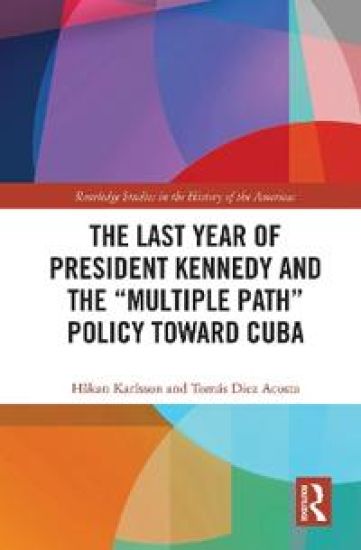
The Last Year of President Kennedy and the "Multiple Path" Policy Toward Cuba

The Last Year of President Kennedy and the "Multiple Path" Policy Toward Cuba

Håkan Karlsson; Tomás Diez Acosta

TAYLOR FRANCIS LTD
2021
nidottu
This book presents new aspects of the U. S. "multiple path" policy toward Cuba that was designed and adopted after the Missile Crisis (October 1962) until the assassination of President Kennedy on November 22, 1963, from a Cuban perspective. The policy was characterized by its contradictory profile, since simultaneously as aggressions were directed at Cuba, it also included the establishment of channels of communication with the Cuban government. The book also analyzes the Cuban–Soviet dispute during the same period. The Cuban experiences have still not been sufficiently discussed, and the aspects offered will enrich the knowledge of the U. S.–Cuban relationship during the mentioned period.
The Nixon Administration and Cuba

The Nixon Administration and Cuba

Håkan Karlsson; Tomás Diez Acosta

Routledge
2021
sidottu
This book presents a detailed analysis of the U. S. policy that was adopted toward Cuba by the Richard M. Nixon administration between January 20, 1969, and August 8, 1974. Based on governmental, as well as other, sources from both the U. S. and Cuba, this book examines the rupture where the policy of “passive containment” was complemented with a policy of “dirty war.” President Nixon attempted to reestablish a confrontational and violent path of action, and once again, Cuba was exposed to a “dirty war” consisting of different forms of aggressive terrorist activities. Since the conditions for this violent route had changed dramatically both in the U. S. and in Cuba, a policy characterized by a continuity of the economic and psychological warfare came to be the central one for the Nixon administration. This book is unique since it is written from a Cuban perspective, and it therefore complements and enriches the knowledge of the U. S.–Cuban relationship during the end of the 1960s and the beginning of the 1970s, and the policy adopted by the Nixon administration. It is of relevance to everyone interested in the issue, and especially for students and researchers within the disciplines of history and political science.
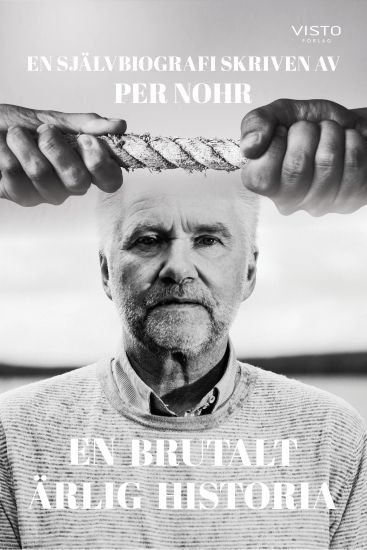
En brutalt ärlig historia : en självbiografi

En brutalt ärlig historia : en självbiografi

Per Nohr; Håkan Karlsson

Visto Förlag
2021
nidottu
Nu hade supandet gått så långt att det inte fanns någon återvändo. Jag hade redan skrivit ihop avskedsbrevet till mina söner. Nu handlade det bara om att hitta rätt tillvägagångssätt och rätt tillfälle att avsluta det man inte ens kunde kalla för ett liv. Jag hade ingen aning om vad en panikångestattack skulle utlösa den där sommardagen för 12 år sedan. Att livet kunde förändras så radikalt på bara några sekunder kunde jag aldrig föreställa mig och att den enda trösten och tryggheten fanns i alkoholen var också en helt ny upplevelse. Jag drack inte för att det var gott, jag drack inte för att jag ville, jag drack för att jag var tvungen. Per Nohr, 61 år, en profil inom uppländskt föreningsliv och bosatt i Uppsala, berättar öppet och ärligt om sina tuffa år som alkoholist. Per tar inga omvägar när han berättar om sina alkoholproblem med förhoppningen att du som läsare kommer att bli både berörd och illa till mods och frågan kommer att komma, hur kan ett normalt liv gå så käpprätt åt skogen så fort?
The Johnson Administration's Cuba Policy

The Johnson Administration's Cuba Policy

Håkan Karlsson; Tomás Diez Acosta

Routledge
2020
sidottu
This book presents the reader with a detailed analysis of the U. S. policy toward Cuba that was designed and adopted by the Lyndon B. Johnson administration. Based in governmental and other sources from both the U. S. and Cuba, the book analyzes the changes in the U. S. policy and its political and practical effects. Cuba still had to face a combination of "dirty war" and "passive containment," but during the course of the 1960s, the influence of the "dirty war" policy was weakened due to the failure of the tactics to overthrow the Cuban Revolution by violent means. Instead, the policy was directed towards "passive containment," characterized by its focus on an intensification of the economic blockade, the promotion of diplomatic isolation, and propaganda campaigns and psychological warfare. The book is unique since it is written from a Cuban perspective and it complements and enriches the knowledge of the U. S.-Cuban relationship during the 1960s, and the policy adopted by the Johnson administration.
The Missile Crisis from a Cuban Perspective

The Missile Crisis from a Cuban Perspective

Håkan Karlsson; Tomás Diez Acosta

Routledge
2020
nidottu
Previous works on the Cuban Missile Crisis (1962) have approached the topic from the point of view of the U. S. and its allies, while Cuban experiences have still not been sufficiently discussed. This book presents new aspects which have seldom – or never – been offered before, giving a detailed account of the crisis from a Cuban perspective. It also investigates the archaeological and anthropological aspects of the crisis, by exploring the tangible and intangible remains that still can be found on the former Soviet missile bases in the Cuban countryside, and through interviews which add a local, human dimension to the subject.
The Last Year of President Kennedy and the "Multiple Path" Policy Toward Cuba
This book presents new aspects of the U. S. "multiple path" policy toward Cuba that was designed and adopted after the Missile Crisis (October 1962) until the assassination of President Kennedy on November 22, 1963, from a Cuban perspective. The policy was characterized by its contradictory profile, since simultaneously as aggressions were directed at Cuba, it also included the establishment of channels of communication with the Cuban government. The book also analyzes the Cuban–Soviet dispute during the same period. The Cuban experiences have still not been sufficiently discussed, and the aspects offered will enrich the knowledge of the U. S.–Cuban relationship during the mentioned period.
The Missile Crisis from a Cuban Perspective

The Missile Crisis from a Cuban Perspective

Håkan Karlsson; Tomás Diez Acosta

Routledge
2019
sidottu
Previous works on the Cuban Missile Crisis (1962) have approached the topic from the point of view of the U. S. and its allies, while Cuban experiences have still not been sufficiently discussed. This book presents new aspects which have seldom – or never – been offered before, giving a detailed account of the crisis from a Cuban perspective. It also investigates the archaeological and anthropological aspects of the crisis, by exploring the tangible and intangible remains that still can be found on the former Soviet missile bases in the Cuban countryside, and through interviews which add a local, human dimension to the subject.
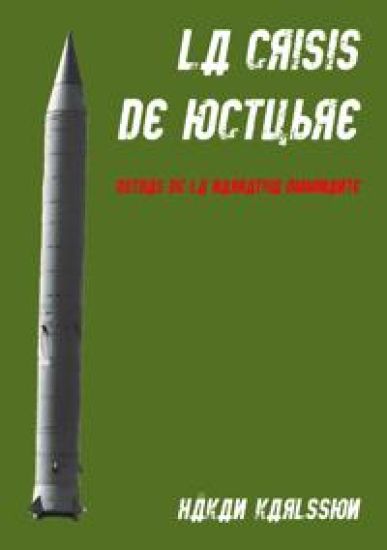
La crisis de octubre. Detrás de la narrativa dominante
This book offers a synthesis of the work conducted within the contemporary archaeology project “A world crisis from below” that studied the October Crisis (1962) for over ten years from its material remains in Cuba. A cooperation project between professionals in Sweden and Cuba that focused on the remains of Soviet missile bases and how locals are using them today. An approach from the community that challenges the dominant narratives with low profile voices that actually show how new ways of understanding the Cold War are possible. SPANISH DESCRIPTION: Este libro presenta al lector una síntesis del trabajo realizado hasta ahora en el proyecto de arqueología contemporánea Una Crisis mundial desde abajo que durante más de una década ha investigado la Crisis de Octubre (1962) y sus restos materiales e inmateriales en Cuba. El proyecto es una cooperación entre arqueólogos suecos y arqueólogos, historiadores y antropólogos cubanos, y desde el inicio el proyecto se ha focalizado en el material que permanece en las antiguas bases de misiles nucleares soviéticos, la reutilización del material desde las bases en el campo y los pueblos que rodean los sitios, los recuerdos y narraciones que sostienen las personas y las comunidades locales sobre la crisis y las bases, y los planes para este patrimonio cultural de los museos locales. Esto para permitir la expresión «voces de bajos perfiles» y los recuerdos y narraciones «de abajo» y contribuir con dimensiones más humanas y complementarias a la crisis y a la «narrativa dominante» de la misma. De esta manera, se pretende llegar a nuevas formas de conocimiento acerca de la Crisis de Octubre. El proyecto muestra que es posible complementar y desafiar la narrativa dominante de la crisis con restos materiales e inmateriales de este campo de batalla de la Guerra Fría.
En annan kärlek

En annan kärlek

Håkan Karlsson

Gnosjö Service Tryckeri AB /minbok.nu
2015
pokkari
Det plingar till i mobilen när Isak sitter och äter sin macka på det lilla lagret i bokaffären. Det är Mia som har skickat ett bildmeddelande från hennes mobiltelefon. Kortet är taget lite snett uppifrån ner på henne själv med en väl nerdragen urringning. ”Ska du med till båthuset ikväll? Puss” står det. Sommaren blåser liv i den lilla sommarstaden Norrtälje när sommargäster fyller gator, restauranger och torg. Ett möte på en efterlängtad semesterresa ställer Isaks lugna liv åt sidan och han dras mellan erotiska vindar och trygg kärlek. ”En annan kärlek” handlar om en ung mans kärlek till släkt, vänner, passionerad kärlek och ytlig erotik. Hans skrivande och mötet med en äldre kvinna. Att lämna allt och börja på något nytt. Och mitt i allt, relationen till hans bästa vän Tessan.
Kanon och kulturarv : historia och samtid i Danmark och Sverige

Kanon och kulturarv : historia och samtid i Danmark och Sverige

Inge Adriansen; Helen Avery; Stefan Bohman; Keld Buciek; Lars Elenius; Per Eliasson; Keld Grinder-Hansen; Håkan Karlsson; Carsten Tage Nielsen; Niels Kayser Nielsen; Carsten Paludan-Müller; Anne Krestina Povlsen; Katarina Saltzman; Anna Storm; Carl-Johan Svensson

Makadam förlag
2008
sidottu
Kanon och kulturarv har diskuterats intensivt i Danmark och Sverige under de senaste åren. I Danmark har regeringens beslut att definiera en dansk kanon väckt stor debatt. I Sverige har diskussionen varit hovsammare samtidigt som ordet kulturarv har ett starkt grepp om museer, kulturmiljövård och arkiv. I Danmark har diskussionen kretsat kring vad som är danskt, vem som ska definiera danskheten och vilka konsekvenser det ska tillåtas få. I Sverige har debattinläggen handlat om kulturarvens användbarhet. Förutom i lokal, regional och nationell identitetspolitik har kulturarv kommit till användning inom en rad andra områden som hälso- och sjukvård, regional- och lokalutveckling, turism och mångkultur. Gemensamt för de danska och svenska erfarenheterna är att varken kulturarv eller kanon kan frigöras från politiska aspekter, ett faktum som i olika grad är uppenbart i bokens artiklar. Att utse företeelser till kulturarv eller att föra upp dem på en kanonlista är att vilja något med dem. Men vad? Och vilka platser, föremål och berättelser utses? På vilka grunder? Och av vem? I Kanon och kulturarv skriver 17 forskare om olika sätt att aktivt förhålla sig till och använda det förflutna och vilka konsekvenser det får i olika sammanhang. Landskap, industrianläggningar, europeiska konventioner, musik, minnesparker, propositioner, läroplaner, fotbollsplaner och arkeologiska fyndplatser är några av de arenor som undersöks.