Kirjojen hintavertailu – 12 903 724 kirjaa ja 27 kauppaa
Kirjailija
Hal Foster
Kirjat ja teokset yhdessä paikassa: 65 kirjaa, julkaisuja vuosilta 1985–2026, suosituimpiin kuuluu Prosthetic Gods. Vertaile teosten hintoja ja tarkista saatavuus suomalaisista kirjakaupoista.
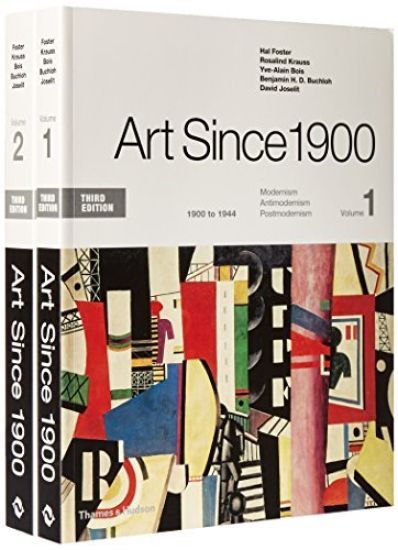
Art Since 1900 introduces students to the key theoretical approaches to modern and contemporary art. A flexible year-by-year structure and extensive cross-referencing allow teachers and students to pursue a chronological approach and/or to study the currents of art since 1900 by medium, theme, country, or region. This completely updated and expanded third edition contains over 125 essays, each focusing on a crucial event in the history of art from 1900 to the present. Ten new essays cover subjects such as Moscow conceptualism, abstract film, postmodern architecture, and queer art, as well as artists from emerging economies and the impact of the market on current art practice. Text boxes provide further information on key figures and issues. Five introductions explain the different methods of art history at work in the book. There are two roundtable discussions between the authors, and all reference material has been updated.
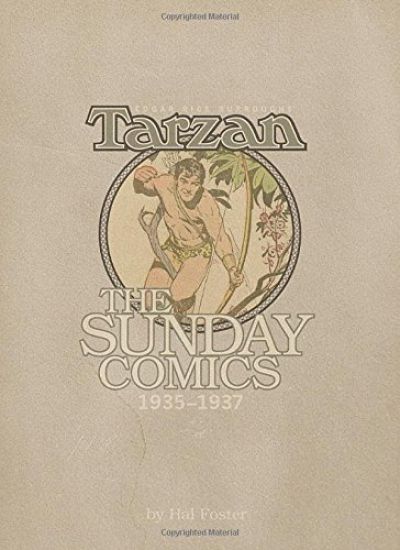
Hal Foster's legacy as one of the most celebrated comic creators of all time is cemented in this marvelous deluxe volume Collecting Foster's last two years of Tarzan Sunday strips, expertly restored and reproduced at giant size, this final volume in Dark Horse's comprehensive collections of Foster's Tarzan Sundays compiles dozens of strips in gorgeous color on archive quality paper, replicating their appearance when they were brand new, over seventy-five years ago This astonishing hardcover is a format that collectors should not miss
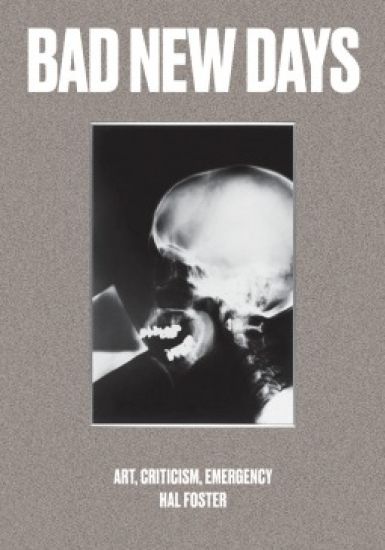
Bad New Days looks back at the last 25 years of artistic practice in Western Europe and North America, positioning it in relation to a general condition of emergency that neoliberalism and the war of terror have brought with them. Foster argues that art has actually anticipated this condition, at times miming the collapse of the social contract, at other times resisting it, and at still other times exacerbating it critically. Against the assumption that art no longer heeds any model, he also offers several paradigms of practice over this period, which he terms "abject," "archival," "mimetic," and "precarious."
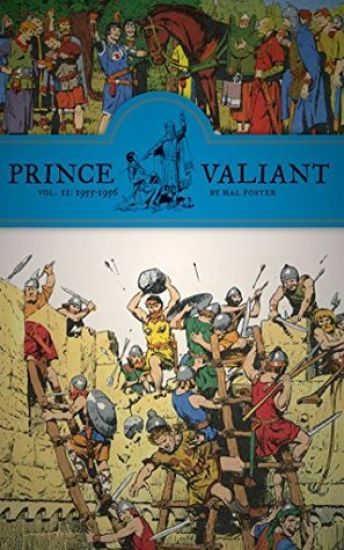
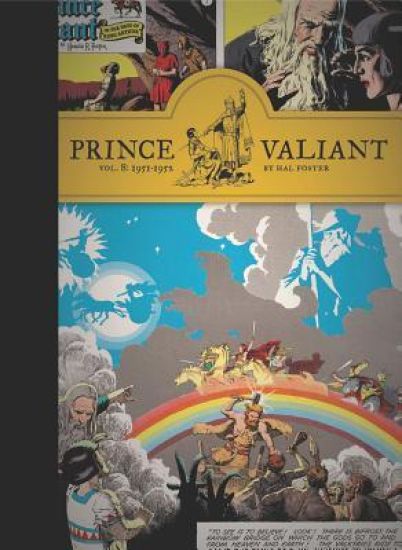
The eleventh volume of Fantagraphics award-winning Prince Valiant series concludes our heroes (TM) adventures in Cornwall, and marks the first appearance of Arvak the Red Stallion. At the Council of Kings, Prince Valiant stands alone in the decision to avoid a ruinous war. Val returns to Aleta, and the two are summoned to Camelot, where Queen Guinevere becomes jealous of Aleta (TM)s popularity. Meanwhile, Val leads a bloody campaign to secure the Eastern marches and learns the tragedies of war. As the book ends, Prince Valiant begins searching for Gawain. There may just be another adventure afoot. Bonus features include a gallery of Foster (TM)s rare and never-before-reprinted advertising art from the 1920s. Hal Foster (TM)s Prince Valiant is the most illustrious heroic saga ever written and drawn for the Sunday newspapers. In full, glorious, restored color, this is the finest reproduction of this enthralling, romantic adventure serial ever published.
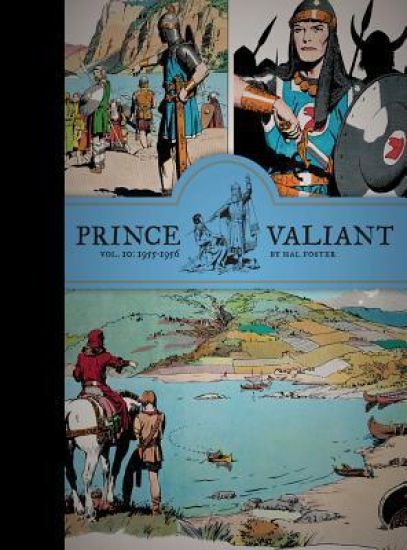
Our tenth volume finds our band of heroes making their way back to the Kingdom of Thule by way of Constantinople and Eastern Russia. Soon they are attacked by a tribe of barbarians who kidnap Aleta for the great Dragada Khan who wants to make her one of his wives. After nearly being killed in battle, Valiant returns to his homeland only to find the threat of hunger hovers over Thule. As Val explores new ways of feeding the kingdom's growing populace, raiders threaten the lives of his family and friends. The volume ends with Val's return to Camelot, a tournament of champions, and the threat of new treachery in Cornwall. This volume also includes an introduction by legendary comics artist Timothy Truman, and a special gallery containing more of Hal Foster's incredible Mountie paintings annotated by comics historian Brian M. Kane.
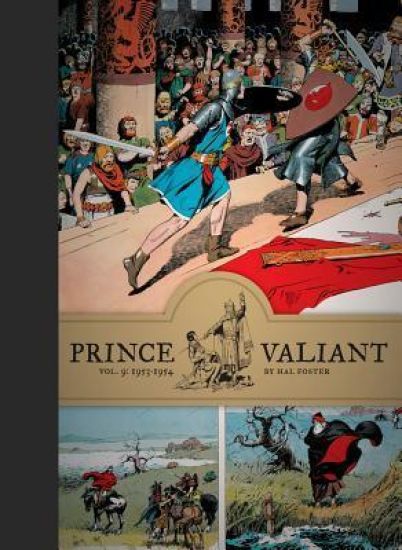
In our ninth volume of the collected illustrative Sunday comic pages, Arn tries his hand at being a warrior, Merlin is bewitched by Nimue, and Tillicum and Boltar have a son named Hatha the first interracial baby born in comics. Most of the second half of this volume follows Gawain and Val s pilgrimage to the holy city of Jerusalem, and Queen Aleta s return to the Misty Isles where treacherous nobles seek her throne and her death. Also featuring a look at Prince Valiant s 1954 escapades on both the large and small screens by Foster scholar Brian M. Kane. As with all the previous volumes in this highly acclaimed series, these pages are reproduced for the first time from Foster s personal set of color engraver s proofs, the most impeccably produced Prince Valiant series ever produced."
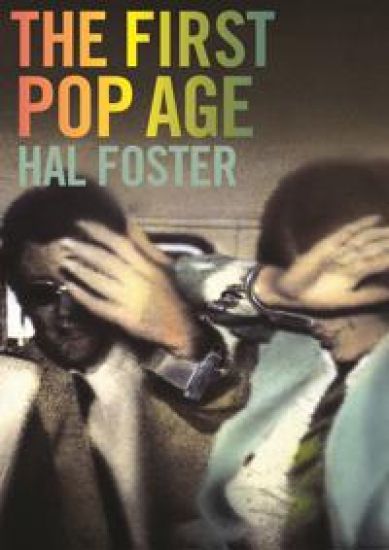
Who branded painting in the Pop age more brazenly than Richard Hamilton, Roy Lichtenstein, Andy Warhol, Gerhard Richter, and Ed Ruscha? And who probed the Pop revolution in image and identity more intensely than they? In The First Pop Age, leading critic and historian Hal Foster presents an exciting new interpretation of Pop art through the work of these Pop Five. Beautifully illustrated in color throughout, the book reveals how these seminal artists hold on to old forms of art while drawing on new subjects of media; how they strike an ambiguous attitude toward both high art and mass culture; and how they suggest that a heightened confusion between images and people is definitive of Pop culture at large. As The First Pop Age looks back to the early years of Pop art, it also raises important questions about the present: What has changed in the look of screened and scanned images today? Is our media environment qualitatively different from that described by Warhol and company? Have we moved beyond the Pop age, or do we live in its aftermath? A masterful account of one of the most important periods of twentieth-century art, this is a book that also sheds new light on our complex relationship to images today.
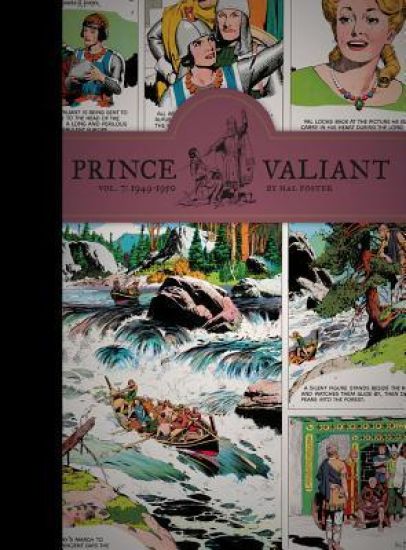
You might think that birth of Prince Valiant (TM)s son Arn at the end of the previous volume would have slowed down Val (TM)s adventuring, but you would be wrong. In Prince Valiant Vol. 7, after the baby has been christened, Valiant and Gawain are dispatched to investigate reports of black magic in Wales, ending up in pitched battle at the aptly named Castle Illwynde. Then it (TM)s off to Scotland to battle the Picts, and then home yet again for Val to visit his growing boy. Valiant now enters the 1950s: The Thule winter is hard and bleak, and a prince who has designs on Aleta must be dealt with. Then it (TM)s another epic-length story, oeThe Missionaries,  in which Val and several of his fellow knights and crew travel to Rome on a quest for teachers who might bring Christianity to Thule. The story also features an escape through the Alps, far too many red-headed girls, and a tragic, life-changing event for the young squire Geoffrey (a.k.a. oeArf ). And Foster charmingly ends the book with oeThe Prince Arn Story,  a three-week sequence narrated by the toddler.
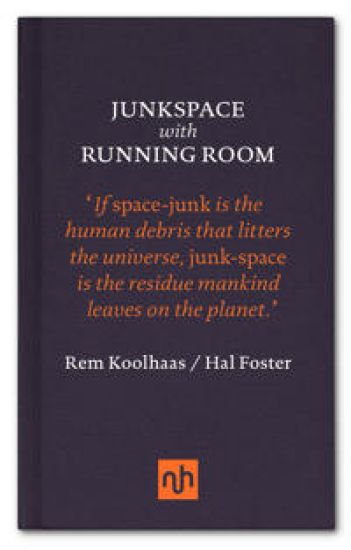
In Junkspace (2001), architect Rem Koolhaas itemises in delirious detail how our cities are being overwhelmed. His celebrated jeremiad is here updated and twinned with Running Room, a fresh response from architectural critic Hal Foster. 'The manifesto is a modernist mode, one that looks to the future… Junkspace makes no such claim: “Architecture disappeared in the twentieth century,” states Koolhaas matter-of-factly. Junkspace does a harder thing: it “foretells” the present, which is to say that it calls on us to recognize what is already everywhere around us.’ Hal Foster
You might think that birth of Prince Valiant's son Arn at the end of the previous volume would have slowed down Val's adventuring, but you would be wrong. In Prince Valiant Vol. 7, after the baby has been christened, Valiant and Gawain are dispatched to investigate reports of black magic in Wales, ending up in pitched battle at the aptly named Castle Illwynde. Then it's off to Scotland to battle the Picts, and then home yet again for Val to visit his growing boy. Valiant now enters the 1950s: The Thule winter is hard and bleak, and a prince who has designs on Aleta must be dealt with. Then it's another epic-length story, "The Missionaries," in which Val and several of his fellow knights and crew travel to Rome on a quest for teachers who might bring Christianity to Thule. The story also features an escape through the Alps, far too many red-headed girls, and a tragic, life-changing event for the young squire Geoffrey (a.k.a. "Arf "). And Foster charmingly ends the book with "The Prince Arn Story," a three-week sequence narrated by the toddler.
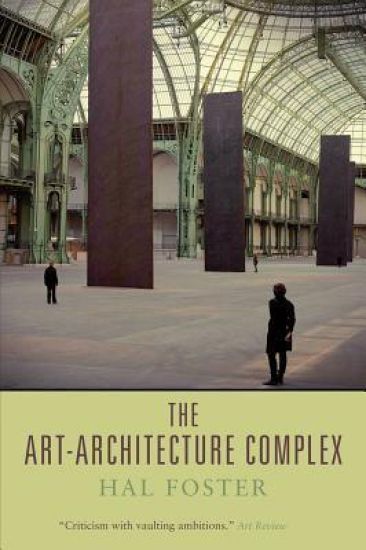
Hal Foster, author of the acclaimed Design and Crime, argues that a fusion of architecture and art is a defining feature of contemporary culture. He identifies a "global style" of architecture-as practiced by Norman Foster, Richard Rogers and Renzo Piano-analogous to the international style of Le Corbusier, Gropius and Mies. More than any art, today's global style conveys both the dreams and delusions of modernity. Foster demonstrates that a study of the "art-architecture complex" provides invaluable insight into broader social and economic trajectories in urgent need of analysis.
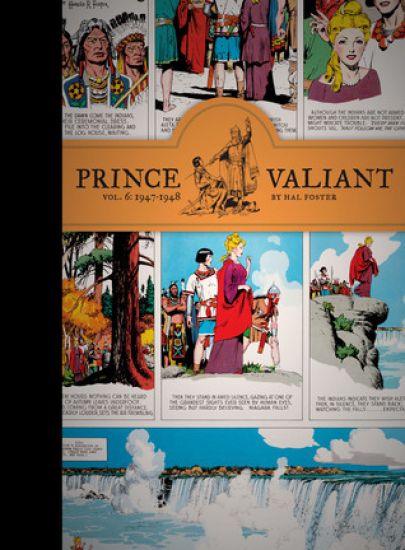
Hal Foster's masterpiece of adventure enters its second decade as Valiant and Aleta journey to "The New World" a 16-month epic that allows Foster to draw some of his spectacular native Canadian backgrounds, and during which Aleta gives birth to Arn and acquires her Indian nurse, Tillicum. Most of the rest of the book is taken up with the action-packed five-month sequence "The Mad King" during which Val, back at Camelot, confronts the evil, fat little King Tourien of Cornwall. This volume will be rounded off with an essay by Foster scholar Brian M. Kane (The Prince Valiant Companion) discussing Foster's depiction of "Indians" as it relates to other interpretations of the times, accompanied by various graphic goodies such as a previously unpublished camping cartoon by Foster from circa 1915, some of Foster's Mountie paintings, Foster's own map of Val's voyage to/from the New World, and more rare photos and art. As always, this volume is shot directly from Foster's personal collection of syndicate proofs, their glorious colors restored to create an unprecedentedly sumptuous reading experience.
Established following the 125th anniversary of the Chair of Fine Art at the University of Edinburgh and named after the painter Sir John Watson Gordon, the Watson Gordon Lectures Typify the long-standing positive collaboration between the University of Edinburgh and the National Galleries of Scotland: two partners in the Visual Arts Research Institute in Edinburgh. The fifth lecture was given by Hal Foster of Princeton University. Professor Foster is an acknowledged expert on modernist art and architecture, and has a particular fascination with Pop art. His wide-ranging lecture on Roy Lichtenstein is a gripping engagement with the multiple aspects of the artist's work: the conjunctions of art and technology, the satirical playing with previous modernist styles, and the sinister background of the military-industrial complex.
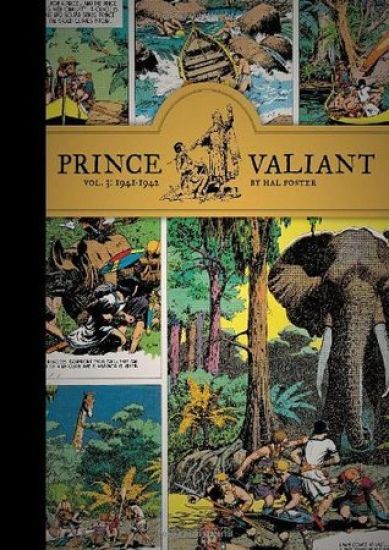
Almost the entirety of 1941's strips feature a single ten-month epic entitled "Fights for the Singing Sword," a globetrotting adventure fueled by Valiant's obsessive search for his bride-to-be Aleta throughout Northern Africa, with stops in Jerusalem, the Arabic deserts, and, inevitably, a harem which Val must infiltrate. Then finally, in "The Misty Isles" Valiant meets Aleta face to face but upon learning that she has had his crew killed (deservedly so, actually, but still), he flees in anger, vowing never to see her again." Homeward Bound," Valiant continues his travels, with stops in Athens (where he meets the boisterous Viking Boltar, who will become his friend for life), North Africa, and Gaul (where Valiant liberates Gawain), before finally returning to Camelot. But his joyous return is short-lived as an alliance of Picts and Vikings threatens Britain's security, and thus Valiant must journey forth with, as his ultimate destination, "The Roman Wall."
In these diatribes on the marketing of culture and the branding of identity, the development of spectacle-architecture and the rise of global cities, Hal Foster surveys our new political economy of design. Written in a lively style, Design and Crime explores the historical relations of modern art and modern museum, the conceptual vicissitudes of art history and visual studies, the recent travails of art criticism, and the double aftermath of modernism and postmodernism in an attempt to illuminate the conditions for critical culture in the present.
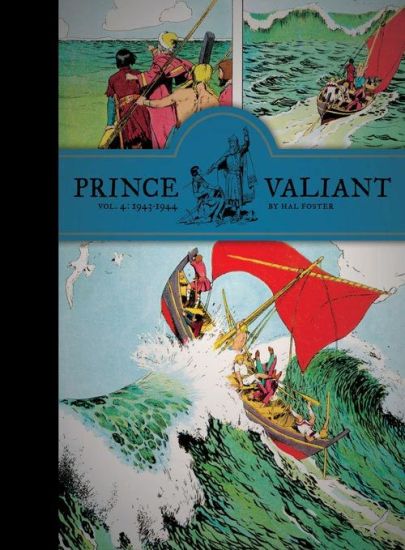
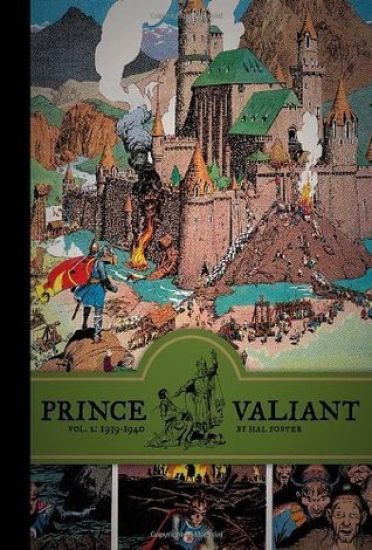
For 35 years, Hal Foster created epic adventure and romantic fantasy in his legendary Sunday strip, Prince Valiant. Realistic in its visual execution and noble in its subject, depicting a time in which the fabled warriors of history and legends fought together for the greater good, it remains one of the great masterpieces of the medium. In this second volume, Prince Valiant helps his father reclaim his throne in kingdom of Thule, fights alongside King Arthur, and is made a knight of the Round Table in recompense for his bravery and wit. Bored by the peace he helped to create, Val decides to independently pull together the forces to battle the Huns’ descent on Southern Europe. When Val’s army breaches the Huns’ stronghold, however, he discovers that corruption reigns still further west in Rome. Thus Val sets off with Sir Gawain and Tristam of Arthurian legend fame, and the familial kinship of the trio sees them through chivalrous escapades, false imprisonment and daring escapes. By the end of this volume, they go their separate ways, and Val boards a ship to Sicily—yet a storm approaches, throwing him off-course, as adventure follows him everywhere. Fantagraphics is proud to present these strips, which, thanks to the use of original proof sheets and advances in printing technology, are even brighter and crisper than when they were originally published 70 years ago. Foster’s work, painterly and sweeping, is finally treated to the grand depiction it deserves. These illustrative, time-honored comic strips will enthrall old readers and just as easily awe new ones. 112 pages of color comics
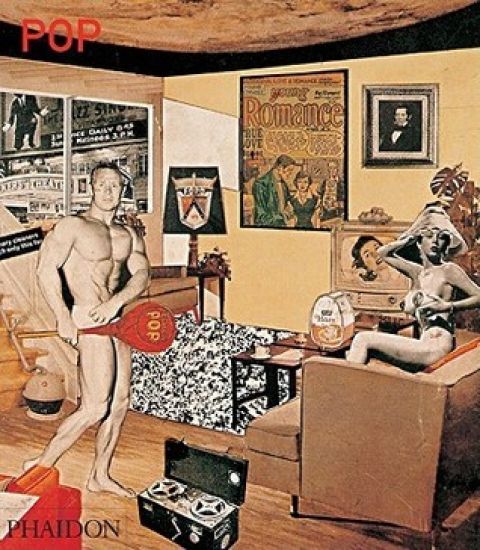
From the late 1950s to the late 1960s the word Pop described art, film, photography and architectural design which engaged with the new realities of mass production and the mass media. Unlike books which present Pop art in isolation, this is a comprehensive survey of Pop in all its forms across America, Britain and Europe. In addition to the key artworks by Andy Warhol, Roy Lichtenstein, Claes Oldenburg, Ed Ruscha, Richard Hamilton, Sigmar Polke, Martial Raysse and many others the book includes works of photography and avant-garde film, as well as what the critic Reyner Banham defined as Pop architecture, ranging from Alison and Peter Smithson’s House of the Future to Archigram’s Walking City and Robert Venturi and Denise Scott Brown’s Learning from Las Vegas. Editor Mark Francis was former Founding Director of the Andy Warhol Museum and editor of ‘Les Années Pop’ (Centre Georges Pompidou, 2001). Survey author Hal Foster is Professor of Art at Princeton University, author of The Return of the Real and editor of the bestselling The Anti-Aesthetic: Essays on Postmodern Culture and Recodings: Art, Spectacle, Cultural Politics.
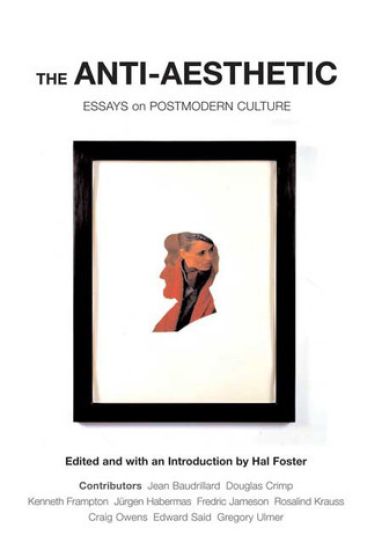
For the past thirty years, Hal Foster has pushed the boundaries of cultural criticism, establishing a vantage point from which the seemingly disparate agendas of artists, patrons, and critics have a telling coherence. In The Anti-Aesthetic, preeminent critics such as Jean Baudrillard, Rosalind Krauss, Fredric Jameson, and Edward Said consider the full range of postmodern cultural production, from the writing of John Cage, to Cindy Sherman's film stills, to Barbara Kruger's collages. With a redesigned cover and a new afterword that situates the book in relation to contemporary criticism, The Anti-Aesthetic provides a strong introduction for newcomers and a point of reference for those already engaged in discussions of postmodern art, culture, and criticism. Includes a new afterword by Hal Foster and 12 black and white photographs.
A Village Voice Best Book and a lucid and provocative work that allows us to glimpse stirrings and upheavals in the hothouse of modern art.' - Los Angeles Times'