Kirjojen hintavertailu – 12 859 824 kirjaa ja 27 kauppaa
Kirjailija
Hamlin Garland
Kirjat ja teokset yhdessä paikassa: 353 kirjaa, julkaisuja vuosilta 1899–2026, suosituimpiin kuuluu A Son of the Middle Border. Vertaile teosten hintoja ja tarkista saatavuus suomalaisista kirjakaupoista.
A spoil of office - a story of the modern West is an unchanged, high-quality reprint of the original edition of 1892. Hansebooks is editor of the literature on different topic areas such as research and science, travel and expeditions, cooking and nutrition, medicine, and other genres. As a publisher we focus on the preservation of historical literature. Many works of historical writers and scientists are available today as antiques only. Hansebooks newly publishes these books and contributes to the preservation of literature which has become rare and historical knowledge for the future.
Crumbling Idols is a collection of 12 essays written and completed by Hamlin Garland in 1894. Garland was one of the most prominent American authors of the early 20th century, and contributed heavily to the literary movement known as American Realism. His work, Crumbling Idols, expresses his views and manifesto as a veritist (realist) artist. In it, he repeatedly emphasizes the importance of a uniquely American literature, one that breaks away from tradition and the past and focuses on the present in order to depict reality through the artists own eyes. Crumbling Idols was decreed a controversial work by the general population and critics during the time of its publication as it attacked many of the features and ideas of nineteenth century literature. Three of his essays, "Provincialism", "Literary Centres", and "Literary Masters", were especially controversial and criticized as they heavily attacked the "imitated" literature of the east coast as well as the lack of innovation in American literature as a whole. Most of his other essays worked to promote realist ideals and values, such as local color and distinction and originality in art. Crumbling Idols was especially supported by fellow Realist authors, such as William Dean Howells and Stephen Crane.... Garland defines provincialism as the "dependence upon a mother country for models of art production." 1] Garland criticizes American writers of the early-mid 19th century for imitating the artistic styles of other nations, and called for a new and purely American art, especially in literature. He especially goes after the mid-western states, schools, and the middle class for refusing to accept new and evolving art forms. Garland says of the mid-western states, of where he was born, "Its literary clubs valiantly discuss dead issues in English literature, and vote in majority against the indigenous." 2] It disappoints him that the mid-west continues to settle for old, romantic literature rather than producing and supporting new forms of a distinctly mid-western art. Garland places much of the blame on American schools he charges with indoctrinating pupils in worshipping the past while turning a blind eye to new and upcoming literary movements. If students are to study authors such as Whitman, Howells, and Ibsen, they must do it on their own. The most provincial of us all, Garland asserts, is the middle class, as they are the product of the schools that teach conservatism in literature. Garland was a strong opponent of American provincialism and worked hard to advocate a strong, national literature that would be completely independent from other nations. The style doesn't necessarily need to be better, just different. He assures us, however, that there is hope. The fact that we study the past through such writers as Shakespeare is better than not engaging in literature at all. It is, as Garland says a, "sign of life, and not of death."... Hannibal Hamlin Garland (September 14, 1860 - March 4, 1940) was a Pulitzer prizewinning American novelist, poet, essayist, and short story writer, Georgist, and parapsychology skeptic/researcher. He is best known for his fiction involving hard-working Midwestern farmers. Hannibal Hamlin Garland was born on a farm near West Salem, Wisconsin, on September 14, 1860, the second of four children of Richard Garland of Maine and Charlotte Isabelle McClintock. The boy was named after Hannibal Hamlin, the candidate for vice-president under Abraham Lincoln. He lived on various Midwestern farms throughout his young life, but settled in Boston, Massachusetts, in 1884 to pursue a career in writing. He read diligently in the Boston Public Library. There he became enamored with the ideas of Henry George, and his Single Tax Movement. George's ideas came to influence a number of his works, such as Main-Travelled Roads (1891), Prairie Folks (1892), and his novel Jason Edwards (1892).....
Hannibal Hamlin Garland (September 14, 1860 - March 4, 1940) was a Pulitzer prizewinning American novelist, poet, essayist, and short story writer, Georgist, and parapsychology skeptic/researcher. He is best known for his fiction involving hard-working Midwestern farmers. Hannibal Hamlin Garland was born on a farm near West Salem, Wisconsin, on September 14, 1860, the second of four children of Richard Garland of Maine and Charlotte Isabelle McClintock. The boy was named after Hannibal Hamlin, the candidate for vice-president under Abraham Lincoln. He lived on various Midwestern farms throughout his young life, but settled in Boston, Massachusetts, in 1884 to pursue a career in writing. He read diligently in the Boston Public Library. There he became enamored with the ideas of Henry George, and his Single Tax Movement. George's ideas came to influence a number of his works, such as Main-Travelled Roads (1891), Prairie Folks (1892), and his novel Jason Edwards (1892). Main-Travelled Roads was his first major success. It was a collection of short stories inspired by his days on the farm. He serialized a biography of Ulysses S. Grant in McClure's Magazine before publishing it as a book in 1898. The same year, Garland traveled to the Yukon to witness the Klondike Gold Rush, which inspired The Trail of the Gold Seekers (1899). He lived on a farm between Osage, and St. Ansgar, Iowa for quite some time. Many of his writings are based on this era of his life. In Illinois, Garland married Zulime Taft, the sister of sculptor Lorado Taft, and began working as a teacher and a lecturer. A prolific writer, Garland continued to publish novels, short fiction, and essays. In 1917, he published his autobiography, A Son of the Middle Border. The book's success prompted a sequel, A Daughter of the Middle Border, for which Garland won the 1922 Pulitzer Prize for Biography. After two more volumes, Garland began a second series of memoirs based on his diary. Garland naturally became quite well known during his lifetime and had many friends in literary circles. He was made a member of the American Academy of Arts and Letters in 1918.... William Dean Howells ( March 1, 1837 - May 11, 1920) was an American realist novelist, literary critic, and playwright. Nicknamed "The Dean of American Letters", he was particularly known for his tenure as editor of The Atlantic Monthly as well as his own prolific writings, including the Christmas story "Christmas Every Day", and the novels The Rise of Silas Lapham and A Traveler from Altruria.
'A Son of the Middle Border' (1917) is the odyssey of a farm boy who - informed by the full brute force of a homesteaders' life on the vast unbroken prairie - would become a preeminent American writer of the early twentieth century. Pulitzer Prize-winner Hamlin Garland's captivating autobiography recounts his journey from a rural childhood to the study of literature and the sciences in Boston, his vital connections with such inspirations as William Dean Howell, and eventually his reclaimed sense of identity as a writer of the Midwest's beautiful yet hard land. This definitive book placed Garland among such regionalist writers as Willa Cather, Sherwood Anderson, and Theodore Dreiser. ... Hannibal Hamlin Garland (September 14, 1860 - March 4, 1940) was an American novelist, poet, essayist, and short story writer, Georgist, and parapsychology skeptic/researcher. He is best known for his fiction involving hard-working Midwestern farmers. Hannibal Hamlin Garland was born on a farm near West Salem, Wisconsin, on September 14, 1860, the second of four children of Richard Garland of Maine and Charlotte Isabelle McClintock. The boy was named after Hannibal Hamlin, the candidate for vice-president under Abraham Lincoln. He lived on various Midwestern farms throughout his young life, but settled in Boston, Massachusetts, in 1884 to pursue a career in writing. He read diligently in the Boston Public Library. There he became enamored with the ideas of Henry George, and his Single Tax Movement. George's ideas came to influence a number of his works, such as Main-Travelled Roads (1891), Prairie Folks (1892), and his novel Jason Edwards (1892). Main-Travelled Roads was his first major success. It was a collection of short stories inspired by his days on the farm. He serialized a biography of Ulysses S. Grant in McClure's Magazine before publishing it as a book in 1898. The same year, Garland traveled to the Yukon to witness the Klondike Gold Rush, which inspired The Trail of the Gold Seekers (1899). He lived on a farm between Osage, and St. Ansgar, Iowa for quite some time. Many of his writings are based on this era of his life. In Illinois, Garland married Zulime Taft, the sister of sculptor Lorado Taft, and began working as a teacher and a lecturer. A prolific writer, Garland continued to publish novels, short fiction, and essays. In 1917, he published his autobiography, A Son of the Middle Border. The book's success prompted a sequel, A Daughter of the Middle Border, for which Garland won the 1922 Pulitzer Prize for Biography. After two more volumes, Garland began a second series of memoirs based on his diary. Garland naturally became quite well known during his lifetime and had many friends in literary circles. He was made a member of the American Academy of Arts and Letters in 1918. After moving to Hollywood, California, in 1929, he devoted his remaining years to investigating psychic phenomena, an enthusiasm he first undertook in 1891. In his final book, The Mystery of the Buried Crosses (1939), he tried to defend such phenomena and prove the legitimacy of psychic mediums........ Alice Barber Stephens (July 1, 1858 - July 13, 1932) was an American painter and engraver, best remembered for her illustrations. She was born on a farm in Salem, New Jersey, and attended local schools. Her Quaker family moved to Philadelphia, Pennsylvania, and at age 15 she became a student at the Philadelphia School of Design for Women (now Moore College of Art). She entered the Pennsylvania Academy of the Fine Arts in 1876, where she studied under Thomas Eakins. She later studied at the Drexel Institute under Howard Pyle, and in Paris at the Acad mie Julian and the Acad mie Colarossi. She exhibited at the Paris Salon in 1887...
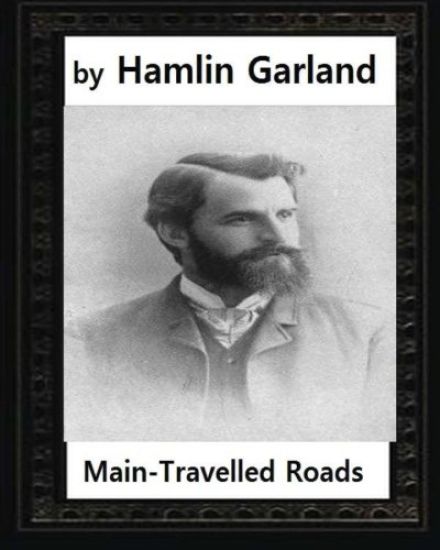
Hannibal Hamlin Garland (September 14, 1860 - March 4, 1940) was an American novelist, poet, essayist, and short story writer, Georgist, and parapsychology skeptic/researcher. He is best known for his fiction involving hard-working Midwestern farmers...... Main-Travelled Roads is a collection of short stories by the American author Hamlin Garland. First published in 1891, the stories are set in what the author refers to as the "Middle Border," the northwestern prairie states of Wisconsin, Nebraska, Iowa, Minnesota and South Dakota. In the book's eleven stories, Garland portrays the hardships of agrarian life, deconstructing the conventional myth of the American prairie while highlighting the economic and social conditions that characterized agricultural communities in the rural Midwest. Summary Main-Travelled Roads contains eleven semi-autobiographical short stories, including "A Branch Road", "Up the Coolly", "Among the Corn-Rows", "The Return of a Private", "Under the Lion's Paw", "The Creamery Man", "A Day's Pleasure", "Mrs. Ripley's Trip", "Uncle Ethan Ripley", "God's Ravens and A 'Good Fellow's' Wife". The tales inflect human drama into the harsh, spirit-crushing conditions Garland experienced as a boy, vividly portraying the "overwhelming forces in nature and social injustices" that mark rural existence. Garland's book dedication is a story in itself: "To my father and mother, whose half-century pilgrimage on the main travelled road of life has brought them only toil and deprivation, this book of stories is dedicated by a son to whom every day brings a deepening sense of his parents' silent heroism". As foreshadowed by the dedication, Garland's stories paint an unforgiving portrait of Midwestern farm life: unrelenting physical toil, harsh living conditions, widespread poverty and an overwhelming sense of hopelessness. In his introduction to Main-Travelled Roads, scholar Joseph B. McCullough recognizes Garland as one of the 19th century's most influential voices concerning the challenges of post Civil War agrarian society, especially the inequities of the tax system and the struggle for women's rights. Contents "A Branch Road" - lost and found love between a young farmer and the girl he left behind. "Up the Coolly" - an affluent New York City actor's mixed feelings of guilt and affection while visiting his family's Wisconsin farm. "Among the Corn-Rows" - an eager young homesteader's wooing of a Norwegian girl. "The Return of the Private" - the bittersweet homecoming of a wounded army private. "Under the Lion's Paw" - a hard-working farmer is victimized by a greedy landlord. "The Creamery Man" - a peddler's affections are thwarted by local gossip. "A Day's Pleasure" - a downtrodden farm wife's visit to town is made special by an invitation into a person's home. "Mrs. Ripley's Trip" - after twenty-three years away, an elderly farm wife longs to visit her childhood home. "Uncle Ethan Ripley" - a farmer trades signage space on his barn for "medicinal bitters," creating friction between him and his wife. "God's Ravens" - a family's initial prejudice towards their less cultured neighbors dissipates after being shown great kindness. "A Good Fellow's Wife" - after losing his depositors' money, a banker finds redemption by owning up to his mistakes and working with his clever wife to repay their debts. William Dean Howells (March 1, 1837 - May 11, 1920) was an American realist novelist, literary critic, and playwright. Nicknamed "The Dean of American Letters", he was particularly known for his tenure as editor of The Atlantic Monthly as well as his own prolific writings, including the Christmas story "Christmas Every Day", and the novels The Rise of Silas Lapham and A Traveler from Altruria.