Kirjojen hintavertailu – 12 859 818 kirjaa ja 27 kauppaa

Kirjailija

Hank Lazer

Kirjat ja teokset yhdessä paikassa: 8 kirjaa, julkaisuja vuosilta 2004–2025, suosituimpiin kuuluu Nowhere in Place. Vertaile teosten hintoja ja tarkista saatavuus suomalaisista kirjakaupoista.

8 kirjaa

Kirjojen julkaisuvuodet: 2004–2025.

Nowhere in Place

Nowhere in Place

Christopher Jordan; Hank Lazer

George F. Thompson
2021
sidottu
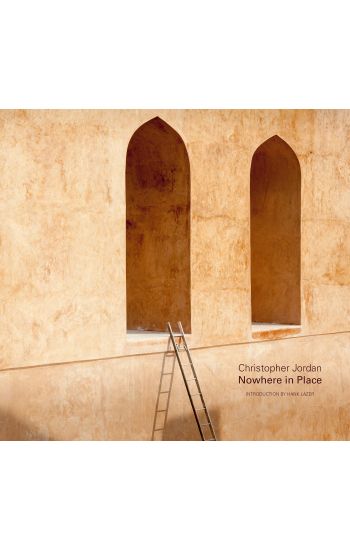
Photography and meditation are known to facilitate reflection and introspection. They teach us to see both the outer world and the mysterious landscape within. In Nowhere in Place, photographer Christopher Jordan explores the meeting place between meditation and photography and how this mirroring of outer and inner worlds plays upon both the surface of his consciousness and the sensor of his digital camera. Before Jordan ventures outside to make pictures, he spends time in quiet meditation. This is an important process of switching gears from the everyday noise of the cluttered mind to a more serene state of awareness. This reset allows Jordan to see the world in fresh ways, appreciating overlooked details that might escape a mind preoccupied with business-as-usual. The book starts in Tuscaloosa, where Jordan lives. For many, T-town is a place of Southern charms and Alabama football, but, for Jordan, it becomes a visual play of textures, colors, and abstract planes with nary a person in sight. The pictures reveal a placeless solitude within the frame of his camera. The book moves west to Boulder, another college town, where his contemplative eye continues to fix upon unusual shapes, colors, and textures while intersecting with an occasional figure. The book reaches full bloom in India, where the interplay between inner and outer landscapes knows no bounds, as his camera reveals a kaleidoscopic interplay of people, places, and things. Within each locale, Jordan photographed “nowhere” in particular, because, for him, the photograph becomes a place of its own being: a sanctuary for meditation, a record of what is seen and heard and felt, an opportunity to see a place and an image right now. For Jordan, the photograph is a medium of meditation and transcendence, providing a point of intersection where one recognizes our shared, common humanity.
Abundant Life: New & Selected Poems
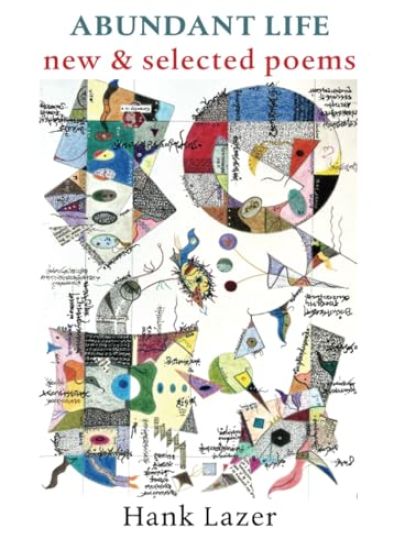
Portions, spirit, elegy, lyrics, awakenings, sutra, serendipity, loss, mindedness, rebelling, reveling, unraveling, sounderings, melody, offkey, noisily, rhythm, negation, improvisation, abandon, deflection, renewal, cascade, cadence, grace, weaving, enigma, shekinah: a door, a jar. These are a few of his favorite things. -- Charles Bernstein Hank Lazer's Abundant Life: New and Selected Poems shows how Lazer thinks with and through writing. All of it is literally experimental in that each new project is a challenge he gives himself, a way to experience life differently. Here we have his " shape writing" but also short, jagged lyrics reminiscent of Creeley, and long narrative poems about losing one's parents. What unites this work is Lazer's joint commitment to mindfulness (a quest to find the sacred within the everyday) and to relationality, to dialogue. His books arise and exist in conversation with others: philosophers-- such as Levinas and Merleau-Ponty-- as well as Zen monks, and admired poets including Emily Dickinson and Creeley. This work may be heady, but it is also deeply human. -- Rae Armantrout
Brush Mind

Brush Mind

Hank Lazer

Greencupbooks
2018
pokkari
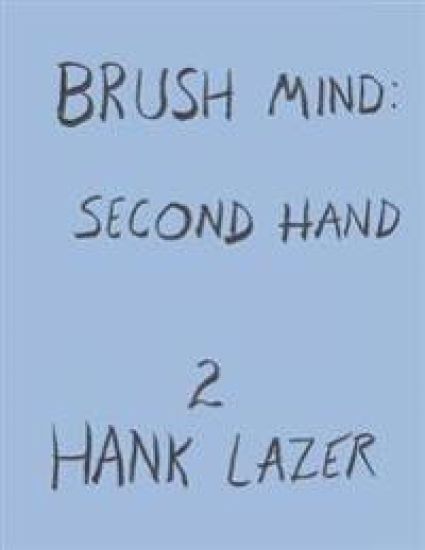
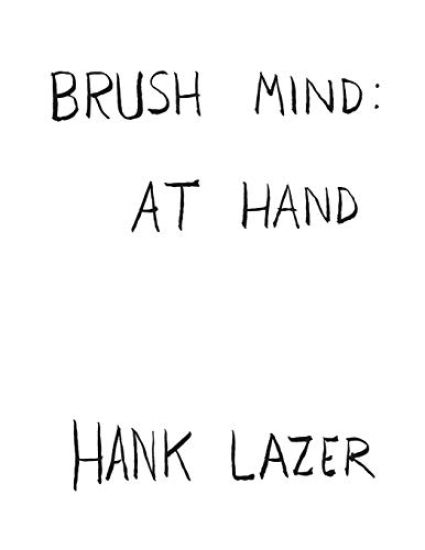
The second book in the Brush Mind series, poet Hank Lazer captures delicious moments with the literal strokes of his pen. Lazer has published twenty-two books of poetry. Brush Mind adds another dimension to Lazer's handwritten shape-writing Notebook project (see N24 and N18) with a casualness, freshness, rapidity, humor, and depth in a unique kind of flash poetry book; this book can be read cover to cover in seven minutes. Brush Mind began with a special brush pen given to the poet by Buddhist priest/poet Norman Fischer, and owes a debt to the calligraphy work of the great Kazuaki Tanahashi.
Lyric & Spirit

Lyric & Spirit

Hank Lazer

Omnidawn Publishing
2007
nidottu
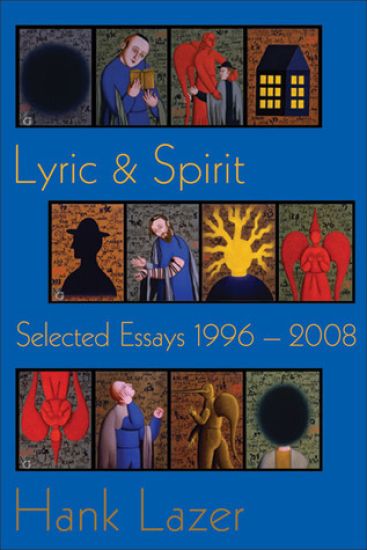
Offering 12 years of incisive writing about contentiously debated topics in modern poetry, these essays, interviews, and reflections focus on two central themes -- the changing nature of beauty in the lyric and the necessity of finding new ways to embody spirituality. Citing traditions such as language writing and Buddhist verse, this collection explores various approaches to writing about the spiritual experiences that have evolved in American poetry over the past 100 years, including perspectives from the jazz of Monk and Coltrane to the philosophies of Heidegger and Derrida. Accessible, engaging, and instructive, this book will challenge readers to examine both how they listen to the language of a poem and why they are listening in the first place.
Emancipating Pragmatism

Emancipating Pragmatism

Michael Magee; Charles Bernstein; Hank Lazer

The University of Alabama Press
2004
nidottu
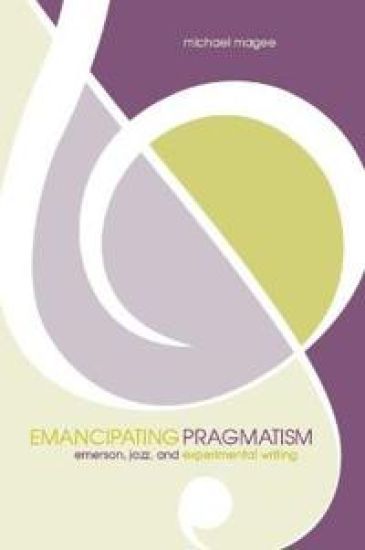
Emancipating Pragmatism is a radical rereading of Emerson that posits African-American culture, literature, and jazz as the very continuation and embodiment of pragmatic thought and democratic tradition. It traces Emerson's philosophical legacy through the 19th and 20th centuries to discover how Emersonian thought continues to inform issues of race, aesthetics, and poetic discourse. Emerson's pragmatism derives from his abolitionism, Michael Magee argues, and any pragmatic thought that aspires toward democracy cannot ignore and must reckon with its racial roots. Magee looks at the ties between pragmatism and African-American culture as they manifest themselves in key texts and movements, such as William Carlos Williams's poetry; Ralph Ellison's discourse in Invisible Man and Juneteenth and his essays on jazz; the poetic works of Robert Creeley, Amiri Baraka, and Frank O'Hara; as well as the ""new jazz"" being forged at clubs like The Five Spot in New York. Ultimately, Magee calls into question traditional maps of pragmatist lineage and ties pragmatism to the avant-garde American tradition.
Elegies & Vacations

Elegies & Vacations

Hank Lazer

Salt Publishing
2004
nidottu
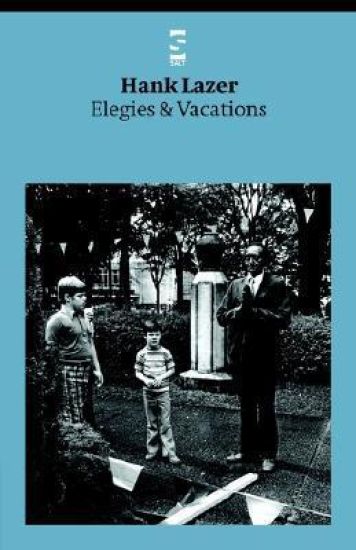
A book of intense emotional power, Elegies & Vacations marks Hank Lazer’s taking the resources of innovative poetry in new directions that are at once elegiac, skeptical, and spiritual. Eleven poems, no two alike, Elegies & Vacations is an ambitious attempt, in the words of Robert Duncan, “to recreate the heart of poetry itself.” Linking elegies to extended journal-like meditations, Elegies & Vacations asks “what the day may mean.” At the heart of the book is a long poem, “Deathwatch for My Father,” which tracks the poet’s father’s final months, testing out the capacities of innovative poetry in the face of the death of a loved one. The book explores relationships with the dead – from the poet’s father, to John Cage, to Kenneth Burke, to George Oppen – while also, through family vacations, projecting forward to ask “to what are we ancestral.” The opposed or apposed guiding lights of the book – John Ashbery and George Oppen – like the juxtaposed elegies and vacations, offer divergent modes of verbal and ethical grace. Informed by a Buddhist sensibility, as well as by the relativistic thinking of reform (and mystical) Judaism, Lazer’s poems move through varying terrains of form, textuality, and geography, from Suzhou (China) to the Abacos (the Bahamas), from Diamond Head (Oahu) to Orono (Maine), from an extended portrait to a journal, from children’s stories to a two-columned composition on the nature of literary history.