Kirjojen hintavertailu – 12 903 725 kirjaa ja 27 kauppaa

Kirjailija

Hannah Barker

Kirjat ja teokset yhdessä paikassa: 13 kirjaa, julkaisuja vuosilta 1998–2025, suosituimpiin kuuluu Faith in the Town. Vertaile teosten hintoja ja tarkista saatavuus suomalaisista kirjakaupoista.

13 kirjaa

Kirjojen julkaisuvuodet: 1998–2025.

Faith in the Town

Faith in the Town

Hannah Barker; Carys Brown; Kate Gibson; Jeremy Gregory

Oxford University Press
2025
sidottu
This is an open access title available under the terms of a CC BY-NC-ND 4.0 International licence. It is free to read on the Oxford Academic platform and offered as a free PDF download from OUP and selected open access locations. Across eighteenth- and early nineteenth-century northern England, religious faith continued to affect the lives of men, women, and children in profound ways. Rather than abandoning their faith in the face of increasing urbanisation and industrialisation - as is often assumed was the case - town dwellers across the social and denominational spectrum commonly understood their relationships with their families, households, and the world within a framework of religious duty and virtue. For urban middling and labouring individuals, religious practice and the influence of faith was not limited to time spent in church or chapel but extended into all areas of activity and experience: the workplace, the streets and other public spaces, and the home. The importance of faith in the lived experience of town dwellers was not something that existed in spite of change; faith was promoted by the new conditions of urban life. Faith in the Town explores key decades of this transformational period, encompassing almost a century of urban development between 1740 and 1830. By placing lay religious belief centre-stage, this book demonstrates that many of the developments associated with 'modernity', specifically industrialisation, urbanisation, population growth, and Enlightenment thinking, were not inimical to faith. Instead, religious belief and lay piety was a crucial element in the formation of urban economy, society, and culture during the 'long' eighteenth century, meaning that northern towns were not only places where faith could both be nourished and flourish, but that these urban centres were themselves shaped by faith.
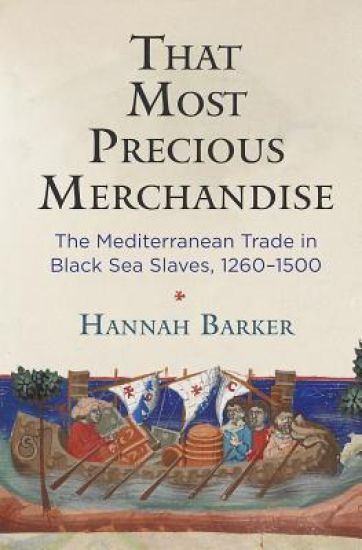
That Most Precious Merchandise

That Most Precious Merchandise

Hannah Barker

UNIVERSITY OF PENNSYLVANIA PRESS
2022
pokkari
The history of the Black Sea as a source of Mediterranean slaves stretches from ancient Greek colonies to human trafficking networks in the present day. At its height during the fourteenth and early fifteenth centuries, the Black Sea slave trade was not the sole source of Mediterranean slaves; Genoese, Venetian, and Egyptian merchants bought captives taken in conflicts throughout the region, from North Africa, sub-Saharan Africa, the Balkans, and the Aegean Sea. Yet the trade in Black Sea slaves provided merchants with profit and prestige; states with military recruits, tax revenue, and diplomatic influence; and households with the service of women, men, and children. Even though Genoa, Venice, and the Mamluk sultanate of Egypt and Greater Syria were the three most important strands in the web of the Black Sea slave trade, they have rarely been studied together. Examining Latin and Arabic sources in tandem, Hannah Barker shows that Christian and Muslim inhabitants of the Mediterranean shared a set of assumptions and practices that amounted to a common culture of slavery. Indeed, the Genoese, Venetian, and Mamluk slave trades were thoroughly entangled, with wide-ranging effects. Genoese and Venetian disruption of the Mamluk trade led to reprisals against Italian merchants living in Mamluk cities, while their participation in the trade led to scathing criticism by supporters of the crusade movement who demanded commercial powers use their leverage to weaken the force of Islam. Reading notarial registers, tax records, law, merchants' accounts, travelers' tales and letters, sermons, slave-buying manuals, and literary works as well as treaties governing the slave trade and crusade propaganda, Barker gives a rich picture of the context in which merchants traded and enslaved people met their fate.
The Very Silly Dinosaur, Sillysaurus!

The Very Silly Dinosaur, Sillysaurus!

Hannah Barker

Cherish Editions
2021
pokkari
When Sillysaurus disappears, strange things start to happen around Gio's house. Food from the fridge goes missing and mysterious footprints appear in his bedroom. Who could be responsible? Will the mystery of vanishing Sillysaurus be solved? Find out in this fun and colourful story This is a great addition to the growing collection of children's books that are working to normalize the presence of diverse characters. Being a mum of two children of mixed heritage, the author Hannah Barker saw first-hand the different experiences and struggles that her children faced, being from two cultures. Her first book, The Very Silly Dinosaur, Sillysaurus was inspired by her son. He didn't understand why it was so hard to find books featuring a protagonist that he could relate to, which she saw was disheartening. In writing about Gio and his dino friend, Hannah hopes to show the power a diverse picture book can have in promoting children's positive reading experiences. The Very Silly Dinosaur, Sillysaurus is a delightful and charming read that any child with a favourite toy can relate to ... and the mischievous Sillysaurus is sure to put a smile on your face. A fun story for both parent and child, it promotes diversity in picture books and, most importantly, the joy of reading.
That Most Precious Merchandise

That Most Precious Merchandise

Hannah Barker

University of Pennsylvania Press
2019
sidottu
The history of the Black Sea as a source of Mediterranean slaves stretches from ancient Greek colonies to human trafficking networks in the present day. At its height during the fourteenth and early fifteenth centuries, the Black Sea slave trade was not the sole source of Mediterranean slaves; Genoese, Venetian, and Egyptian merchants bought captives taken in conflicts throughout the region, from North Africa, sub-Saharan Africa, the Balkans, and the Aegean Sea. Yet the trade in Black Sea slaves provided merchants with profit and prestige; states with military recruits, tax revenue, and diplomatic influence; and households with the service of women, men, and children. Even though Genoa, Venice, and the Mamluk sultanate of Egypt and Greater Syria were the three most important strands in the web of the Black Sea slave trade, they have rarely been studied together. Examining Latin and Arabic sources in tandem, Hannah Barker shows that Christian and Muslim inhabitants of the Mediterranean shared a set of assumptions and practices that amounted to a common culture of slavery. Indeed, the Genoese, Venetian, and Mamluk slave trades were thoroughly entangled, with wide-ranging effects. Genoese and Venetian disruption of the Mamluk trade led to reprisals against Italian merchants living in Mamluk cities, while their participation in the trade led to scathing criticism by supporters of the crusade movement who demanded commercial powers use their leverage to weaken the force of Islam. Reading notarial registers, tax records, law, merchants' accounts, travelers' tales and letters, sermons, slave-buying manuals, and literary works as well as treaties governing the slave trade and crusade propaganda, Barker gives a rich picture of the context in which merchants traded and enslaved people met their fate.
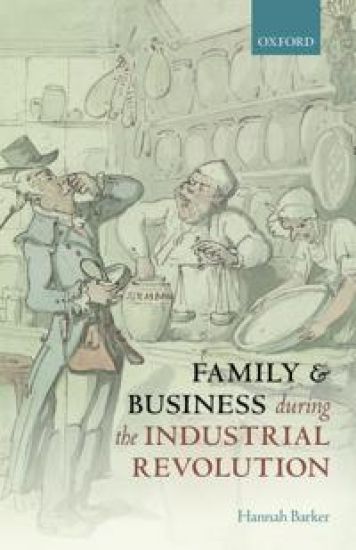
Family and Business during the Industrial Revolution

Family and Business during the Industrial Revolution

Hannah Barker

Oxford University Press
2017
sidottu
This is an open access title available under the terms of a CC BY-NC-ND 4.0 International licence. It is free to read at Oxford Scholarship Online and offered as a free PDF download from OUP and selected open access locations. Small businesses were at the heart of the economic growth and social transformation that characterized the industrial revolution in Britain. In towns across north-west England, shops and workshops dominated the streetscape, and helped to satisfy an increasing desire for consumer goods. Yet despite their significance, we know surprisingly little about these firms and the people who ran them, for whilst those engaged in craft-based manufacturing, retailing, and allied trades constituted a significant proportion of the urban population, they have been generally overlooked by historians. Instead, our view of the world of business is more usually taken up by narratives of particularly successful firms, and especially those involved in new modes of production. By examining some of the forgotten businesses of the industrial revolution, and the men and women who worked in them, Family and Business during the Industrial Revolution presents a largely unfamiliar commercial world. Its approach, which spans economic, social, and cultural history, as well as encompassing business history and the histories of the emotions, space, and material culture, alongside studies of personal testimony, testatory practice, and property ownership, tests current understandings of gender, work, family, class, and power in the late eighteenth and early nineteenth centuries. It provides us with new insights into the lives of ordinary men and women in trade, whose relatively mundane lives are easily overlooked, but who were central to the story of a pivotal period in British history.
Gender in Eighteenth-Century England

Gender in Eighteenth-Century England

Hannah Barker; Elaine Chalus

Routledge
2016
sidottu
A new collection of essays which challenges many existing assumptions, particularly the conventional models of separate spheres and economic change. All the essays are specifically written for a student market, making detailed research accessible to a wide readership and the opening chapter provides a comprehensive overview of the subject describing the development of gender history as a whole and the study of eighteenth-century England. This is an exciting collection which is a major revision of the subject.
Newspapers and English Society 1695-1855
This lively new study covers the dramatic expansion of the press from the seventeenth century to the mid nineteenth century. Hannah Barker explores the factors behind the rise of newspapers to a major force helping to reflect and shape public opinion and altering the way in which politics operated at every level of English life. Newspapers, Politics and English Society 1695-1855 provides a unique insight into the political and social history of eighteenth and nineteenth century England as well as an important study of the history of the media.
Stowaway

Stowaway

Analogue; Hannah Barker; Lewis Hetherington

Oberon Books Ltd
2016
nidottu
A man wakes, face down, sprawled across his single bed, the sunlight gently creeping through the window. Today is the day he will change his life. A Boeing 777 begins its descent towards Heathrow. The wheels unfold out of the belly of the plane. The frozen body of a stowaway is tipped out and cuts through the clear morning sky In the car park of B&Q, Andy looks up. Something is falling out of the sky. A man crash-lands on the ground in front of him. Stowaway is the story of a man from India who moves to the UAE for the promise of work and prosperity. When he finds himself trapped within a Dubai labour camp, with his passport and wages withheld from him, he hides in the wheel well of a plane bound for the UK, in a bid for a better life. It’s a story about invisible and physical borders and the people who transcend them. But what are the rules of telling someone else’s story when they come from a world so very different from our own; where telling their story could act to perpetuate an unresolved history of imperialism? With the skeleton of a plane cutting across the stage, Stowaway flies back and forth through time and place, looking at storytelling as a political act.
2401 Objects

2401 Objects

Analogue; Lewis Hetherington; Hannah Barker; Liam Jarvis

Oberon Books Ltd
2011
nidottu
2011 Fringe First Award Winner"Henry, are you awake?” Henry lives each day like the last. Exactly like the last. Every day, he tries to make sense of the world around him; the girl sitting on the lawn outside his window, the pages of a book filled with the same sentence, the 80 year old man looking at him in the mirror. In 2009 Patient H. M.’s brain is dissected live on the internet to a global audience of 400,000 people, cut into carefully preserved slices: manuscripts of tissue like the pages of a book. In 1953 Henry Molaison emerges from experimental brain surgery without any recollection of the last two years of his life or the ability to form new memories. In 1935 nine-year old Henry is knocked over by a bike, leaving him unconscious for five minutes. Following Analogue's critically acclaimed Mile End and Beachy Head and inspired by the world’s most important neuroscientific case-study, 2401 Objects tells the remarkable story of a man who could no longer remember, but who has proven impossible to forget.
Beachy Head

Beachy Head

Emma Tobin; Dan Rebellato; Lewis Hetherington; Liam Jarvis; Hannah Barker

Oberon Books Ltd
2011
nidottu
By mixing text, 3D animation and a dynamic physicality, this play is a powerful look at the ripple effects of one man’s decision.
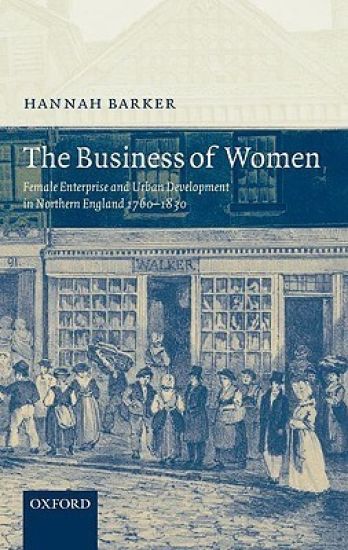
The Business of Women

The Business of Women

Hannah Barker

Oxford University Press
2006
sidottu
This study argues that businesswomen were central to urban society and to the operation and development of commerce in the late eighteenth and early nineteenth centuries. It presents a rich and complicated picture of lower-middling life and female enterprise in three northern English towns: Manchester, Leeds, and Sheffield. The stories told by a wide range of sources - including trade directories, newspaper advertisements, court records, correspondence, and diaries - demonstrate the very differing fortunes and levels of independence that individual businesswomen enjoyed. Yet, as a group, their involvement in the economic life of towns and, in particular, the manner in which they exploited and facilitated commercial development, force us to reassess our understanding of both gender relations and urban culture in late Georgian England. In contrast to the traditional historical consensus that the independent woman of business during this period - particularly those engaged in occupations deemed 'unfeminine' - was insignificant and no more than an oddity, businesswomen are presented here not as footnotes to the main narrative, but as central characters in a story of unprecedented social and economic transformation. The book reveals a complex picture of female participation in business. It shows that factors traditionally thought to discriminate against women's commercial activity - particularly property laws and ideas about gender and respectability - did have significant impacts upon female enterprise. Yet it is also evident that women were not automatically economically or socially marginalized as a result. The woman of business might be subject to various constraints, but at the same time, she could be blessed with a number of freedoms, and a degree of independence that set her apart from most other women - and many men - in late Georgian society.
Newspapers, Politics, and Public Opinion in Late Eighteenth-Century England
Historians have traditionally attributed great influence to newspapers in late eighteenth-century England, yet in spite of the power they were supposed to wield, very little is known about the newspaper press itself during this period. Newspapers, Politics, and Public Opinion in Late Eighteenth-Century England examines the ways in which both London and provincial newspapers operated, the fashioning of their politics, and their relationships with politicians, and, crucially, their readers. In particular, this book is concerned with the ways in which newspapers both represented and shaped public opinion. By concentrating on the late 1770s and early 1780s, and on events and debates surrounding the movement for political reform, these areas are brought into sharper focus; as are important and related issues such as the changing nature of popular political debate, the role of `the people' in politics, and the composition of the political nation.