Kirjojen hintavertailu – 12 859 819 kirjaa ja 27 kauppaa

Kirjailija

Hannibal Hamlin

Kirjat ja teokset yhdessä paikassa: 9 kirjaa, julkaisuja vuosilta 2004–2025, suosituimpiin kuuluu Speech of Mr. Hamlin, of Maine. Vertaile teosten hintoja ja tarkista saatavuus suomalaisista kirjakaupoista.

9 kirjaa

Kirjojen julkaisuvuodet: 2004–2025.

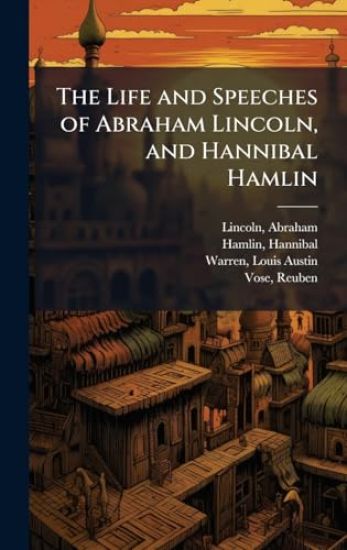
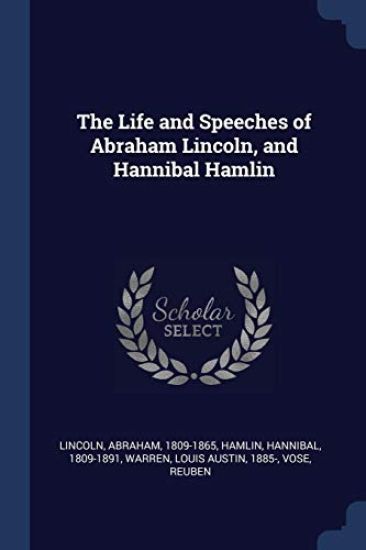
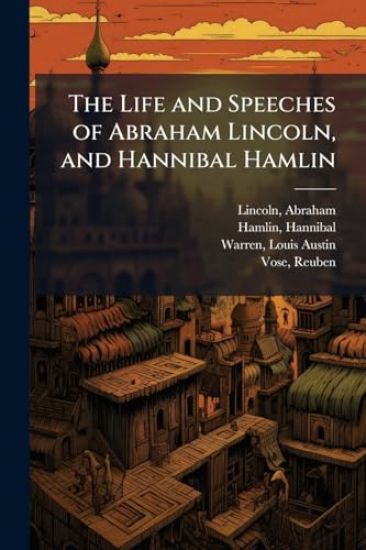
The Life and Speeches of Abraham Lincoln, and Hannibal Hamlin

The Life and Speeches of Abraham Lincoln, and Hannibal Hamlin

Abraham Lincoln; Hannibal Hamlin; Louis Austin Warren

Sagwan Press
2018
pokkari
This work has been selected by scholars as being culturally important, and is part of the knowledge base of civilization as we know it. This work was reproduced from the original artifact, and remains as true to the original work as possible. Therefore, you will see the original copyright references, library stamps (as most of these works have been housed in our most important libraries around the world), and other notations in the work. This work is in the public domain in the United States of America, and possibly other nations. Within the United States, you may freely copy and distribute this work, as no entity (individual or corporate) has a copyright on the body of the work. As a reproduction of a historical artifact, this work may contain missing or blurred pages, poor pictures, errant marks, etc. Scholars believe, and we concur, that this work is important enough to be preserved, reproduced, and made generally available to the public. We appreciate your support of the preservation process, and thank you for being an important part of keeping this knowledge alive and relevant.
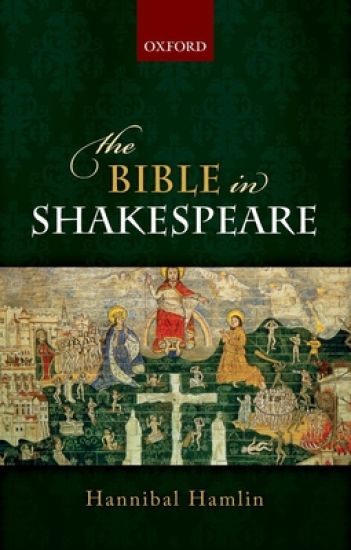
The Bible in Shakespeare

The Bible in Shakespeare

Hannibal Hamlin

Oxford University Press
2018
nidottu
Despite the widespread popular sense that the Bible and the works of Shakespeare are the two great pillars of English culture, and despite the long-standing critical recognition that the Bible was a major source of Shakespeare's allusions and references, there has never been a full-length, critical study of the Bible in Shakespeare's plays. The Bible in Shakespeare addresses this serious deficiency. Early chapters describe the post-Reformation explosion of Bible translation and the development of English biblical culture, compare the Church and the theater as cultural institutions (particularly in terms of the audience's auditory experience), and describe in general terms Shakespeare's allusive practice. Later chapters are devoted to interpreting Shakespeare's use of biblical allusion in a wide variety of plays, across the spectrum of genres: King Lear and Job, Macbeth and Revelation, the Crucifixion in the Roman Histories, Falstaff's anarchic biblical allusions, and variations on Adam, Eve, and the Fall throughout Shakespeare's dramatic career, from Romeo and Juliet to The Winter's Tale. The Bible in Shakespeare offers a significant new perspective on Shakespeare's plays, and reveals how the culture of early modern England was both dependent upon and fashioned out of a deep engagement with the interpreted Bible. The book's wide-ranging and interdisciplinary nature will interest scholars in a variety of fields: Shakespeare and English literature, allusion and intertextuality, theater studies, history, religious culture, and biblical interpretation. With growing scholarly interest in the impact of religion on early modern culture, the time is ripe for such a publication.

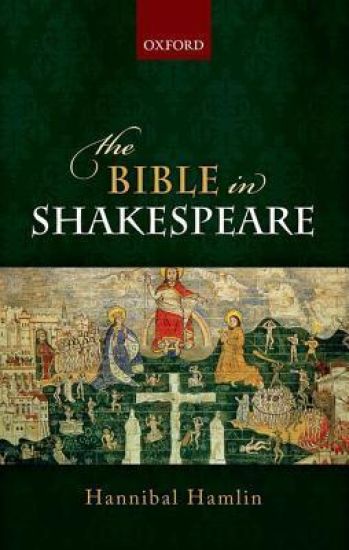
The Bible in Shakespeare

The Bible in Shakespeare

Hannibal Hamlin

Oxford University Press
2013
sidottu
Despite the widespread popular sense that the Bible and the works of Shakespeare are the two great pillars of English culture, and despite the long-standing critical recognition that the Bible was a major source of Shakespeare's allusions and references, there has never been a full-length, critical study of the Bible in Shakespeare's plays. The Bible in Shakespeare addresses this serious deficiency. Early chapters describe the post-Reformation explosion of Bible translation and the development of English biblical culture, compare the Church and the Theatre as cultural institutions (particularly in terms of the audience's auditory experience), and describe in general terms Shakespeare's allusive practice. Later chapters are devoted to interpreting Shakespeare's use of biblical allusion in a wide variety of plays, across the spectrum of genres: King Lear and Job, Macbeth and Revelation, the Crucifixion in the Roman Histories, Falstaff's anarchic biblical allusions, and variations on Adam, Eve, and the Fall throughout Shakespeare's dramatic career, from Romeo and Juliet to The Winter's Tale. The Bible in Shakespeare offers a significant new perspective on Shakespeare's plays, and reveals how the culture of early modern England was both dependent upon and fashioned out of a deep engagement with the interpreted Bible. The book's wide-ranging and interdisciplinary nature will interest scholars in a variety of fields: Shakespeare and English literature, allusion and intertextuality, theater studies, history, religious culture, and biblical interpretation. With growing scholarly interest in the impact of religion on early modern culture, the time is ripe for such a publication.
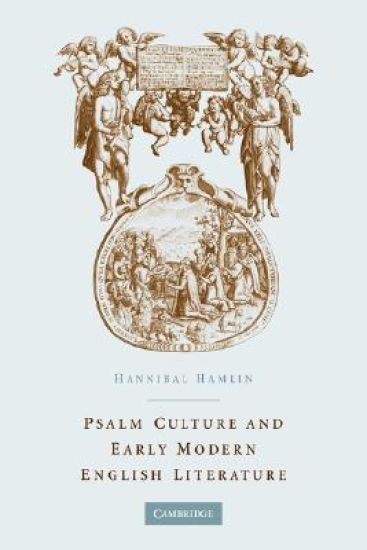
Psalm Culture and Early Modern English Literature

Psalm Culture and Early Modern English Literature

Hannibal Hamlin

Cambridge University Press
2007
pokkari
Psalm Culture and Early Modern English Literature examines the powerful influence of the biblical Psalms on sixteenth- and seventeenth-century English literature. It explores the imaginative, beautiful, ingenious and sometimes ludicrous and improbable ways in which the Psalms were 'translated' from ancient Israel to Renaissance and Reformation England. No biblical book was more often or more diversely translated than the Psalms during the period. In church psalters, sophisticated metrical paraphrases, poetic adaptations, meditations, sermons, commentaries, and through biblical allusions in secular poems, plays, and prose fiction, English men and women interpreted the Psalms, refashioning them according to their own personal, religious, political, or aesthetic agendas. The book focuses on literature from major writers like Shakespeare and Milton to less prominent ones like George Gascoigne, Mary Sidney Herbert and George Wither, but it also explores the adaptations of the Psalms in musical settings, emblems, works of theology and political polemic.
Psalm Culture and Early Modern English Literature

Psalm Culture and Early Modern English Literature

Hannibal Hamlin

Cambridge University Press
2004
sidottu
Psalm Culture and Early Modern English Literature examines the powerful influence of the biblical Psalms on sixteenth- and seventeenth-century English literature. It explores the imaginative, beautiful, ingenious and sometimes ludicrous and improbable ways in which the Psalms were 'translated' from ancient Israel to Renaissance and Reformation England. No biblical book was more often or more diversely translated than the Psalms during the period. In church psalters, sophisticated metrical paraphrases, poetic adaptations, meditations, sermons, commentaries, and through biblical allusions in secular poems, plays, and prose fiction, English men and women interpreted the Psalms, refashioning them according to their own personal, religious, political, or aesthetic agendas. The book focuses on literature from major writers like Shakespeare and Milton to less prominent ones like George Gascoigne, Mary Sidney Herbert and George Wither, but it also explores the adaptations of the Psalms in musical settings, emblems, works of theology and political polemic.