Kirjojen hintavertailu – 12 859 828 kirjaa ja 27 kauppaa

Kirjailija

Hans A. Baer

Kirjat ja teokset yhdessä paikassa: 25 kirjaa, julkaisuja vuosilta 2001–2025, suosituimpiin kuuluu Biomedicine and Alternative Healing Systems in America. Vertaile teosten hintoja ja tarkista saatavuus suomalaisista kirjakaupoista.

Nimi esiintyy myös muodoissa: Hans A Baer

25 kirjaa

Kirjojen julkaisuvuodet: 2001–2025.

Global Capitalism and Climate Change: The Need for an Alternative World System
Many progressive scholars, particularly in the social sciences, have increasingly come to acknowledge that anthropogenic climate change constitutes yet another contradiction of global capitalism. This book constitutes an effort to develop a critical social science of climate change, one that posits its roots in global capitalism with its emphasis on profit-making, a treadmill of production and consumption, heavy reliance on fossil fuels, and commitment to ongoing economic expansion. It explores the systemic changes necessary to create a more socially just and sustainable world system that would possibly start to move humanity toward a safer climate and discusses the role of a burgeoning climate movement in this effort.

Naturopathy Around the World

Naturopathy Around the World

Stephen Sporn; Hans A Baer

Nova Science Publishers Inc
2009
sidottu
Whereas various professionalised heterodox medical systems found in Western societies, such as homeopathy, chiropractic, osteopathy, Chinese traditional medicine, and even acupuncture have been the object of considerable historical and social scientific research, naturopathy has been, at best, spotty. This book constitutes the first effort to provide a broad social historical and ethonographic account, particularly in the United States, Canada, and Australia, but to a lesser extent in Germany, Britian, New Zealand and India. Naturopathy emerged in the early twentieth century under the leadership of Benedict Lust, a German immigrant to the United States who had studied under Father Kneipp (a strong proponent of water cure), as a highly eclectic therapeautic system that drew not only from hydropathy, but also herbalism, colonic irrigation, dietetics, fasting, exercise, iridology, and manipulative therapy. While some naturopaths advocate these modalities, others today draw upon homeopathy, vitamin and nutritional supplements, acupuncture, Ayurveda, and other therapies. Naturopaths or naturopathic physicians are the ultimate therapeutic eclectics within the broader confines of complementary and alternative medicine. Yet naturopathy is not a monolithic entity but has been shaped by historical developments in the larger plural medical systems and national sociopolitical contexts in which it is embedded. Like other medical systems, naturopathy is a cultural construction with fluid borders within specific countries across the globe.
Toward an Integrative Medicine

Toward an Integrative Medicine

Hans A. Baer

AltaMira Press,U.S.
2004
nidottu
This book chronicles the transformation of the holistic health movement over the past three decades, as it increasingly influences the delivery of health care in America. In it, he describes the battle for legitimacy by alternative therapeutic practitioners, and the biomedical profession's increasing interest in the possibilities of a complementary and integrative medical system. Baer examines a variety of professionalized and lay heterodox therapeutic systems, including chiropractors, naturopaths and acupuncturists, homeopaths, bodyworkers, and lay midwives. He shows, ironically, how the holistic movement may become more limited as it gains acceptance and becomes integrated into mainstream, professional medicine. This book is a valuable resource for instructors, students, professionals and others interested in public health issues, health policy, medical studies, health economics, medical anthropology and sociology.
African American Religion

African American Religion

Hans A. Baer

University of Tennessee Press
2002
nidottu
Now in an updated second edition, African American Religion remains an invaluable overview of the great diversity of religious groups within the modern African American community. This plethora of forms reflects a tension that has characterized African American religion since its beginnings—a tension between accommodation to and protest against white society's domination. Viewing African American sectarianism as a response to racism and social stratification in the larger society, the authors trace the history, beliefs, social organization, and ritual content of religious groups in four types of sects. These include the Black mainline churches; messianic-nationalist sects, such as the Nation of Islam; conversionist sects, such as the Holiness-Pentecostal groups and Primitive Baptists; and thaumaturgical sects, including the Spiritual churches. For this new edition, the authors have incorporated research that has appeared since the book’s original appearance in 1992 and have added two new chapters—“African Religious Healing and Folk Medicine” and “African American Sacred Music”—because of these topics’ enormous significance to the African American religious experience.
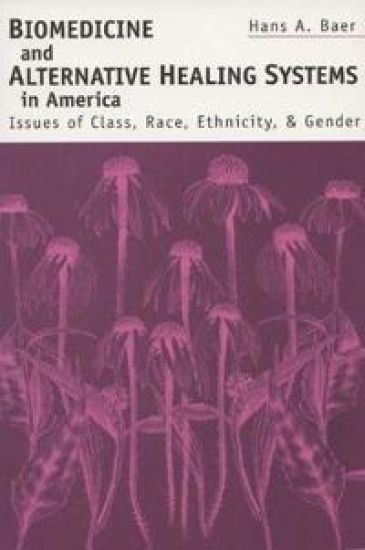
Biomedicine and Alternative Healing Systems in America

Biomedicine and Alternative Healing Systems in America

Hans A. Baer

University of Wisconsin Press
2001
nidottu
Examining medical pluralism in the United States from the Revolutionary War period through the end of the twentieth century, Hans Baer brings together in one convenient reference a vast array of information on healing systems as diverse as Christian Science, osteopathy, acupuncture, evangelical faith healing, Santeria, southern Appalachian herbalism, and Navajo healing. In a country where the dominant paradigm of biomedicine (medical schools, research hospitals, clinics staffed by M. D.s and R. N.s) has been long established and supported by laws and regulations, the continuing appeal of other medical systems and subsystems bears careful consideration. Distinctions of class, Baer emphasizes, as well as differences in race, ethnicity, and gender, are fundamental to the diversity of beliefs, techniques, and social organizations represented in the phenomenon of medical pluralism. Baer traces the simultaneous emergence in the nineteenth century of formalized biomedicine and of homeopathy, botanic medicine, hydropathy, Christian Science, osteopathy, and chiropractic. He examines present-day osteopathic medicine as a system parallel to biomedicine; chiropractic, naturopathy, and acupuncture as professionalized heterodox medical systems; homeopathy, herbalism, bodywork, and lay healing in the context of the holistic health movement; Anglo-American religious healing; and folk medical systems, particularly among racial and ethnic minorities. In closing, he focuses on the persistence of folk medical systems among working-class Americans and considers the growing interest of biomedical physicians, pharmaceutical and health care corporations, and government in the holistic health movement