
Kirjailija
Hans J. Nissen
Kirjat ja teokset yhdessä paikassa: 7 kirjaa, julkaisuja vuosilta 1990–2014, suosituimpiin kuuluu Archaische Texte Aus Uruk / Archaische Verwaltungstexte Aus Uruk. Vorderasiatisches Museum II. Vertaile teosten hintoja ja tarkista saatavuus suomalaisista kirjakaupoista.
Nimi esiintyy myös muodoissa: Hans J Nissen
7 kirjaa
Kirjojen julkaisuvuodet: 1990–2014.
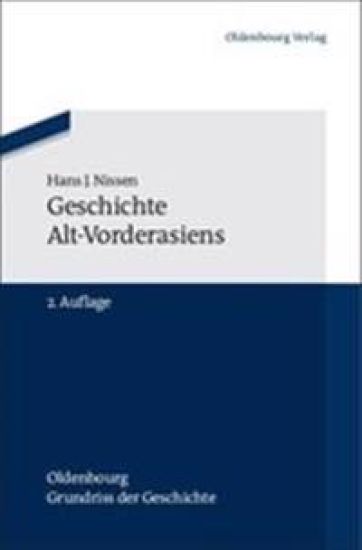
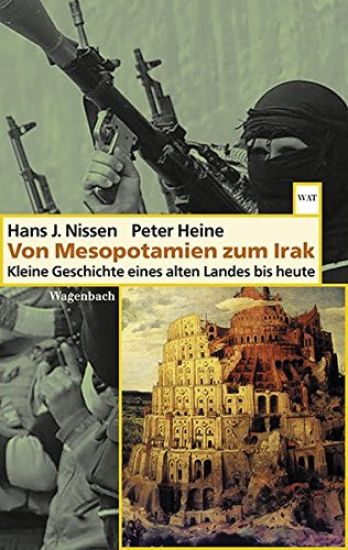
Jeder, der bei den Hochkulturen Vorderasiens nur an Mesopotamien denkt, wird durch Hans J. Nissen eines Besseren belehrt: Er konzentriert seinen Blick nicht starr auf Mesopotamien. Die gesamte Region wird als dynamisches Gebilde, dessen Einzelteile in intensiver Abh ngigkeit zueinander stehen, erfasst. Innerhalb eines Zeitraums von 8000 Jahren - von ihren Anf ngen bis zum Ende durch die Kriegsz ge Alexanders des Gro en - zeichnet er die Entwicklung dieses Gro raumes nach, dessen Au engrenzen und Machtschwerpunkte sich st ndig verschieben. Der offene Blick auf den gesamten vorderasiatischen Raum wirkt dem traditionellen Bild einer mesopotamischen Hochkultur entgegen. Es wird deutlich, dass erst durch die Wechselbeziehung zwischen den Kleinregionen eine der ltesten Hochkulturen der Welt entstehen konnte. F r die zweite Auflage hat der Autor sein Buch v llig berarbeitet und stark erweitert. Neben der Einbeziehung neuer Funde und Literatur wie der Fundkomplexe von Qatna (Syrien) und Jiroft (Iran) wurde vor allem die Geschichte der Nachbarl nder des alten Mesopotamien st rker herausgestellt. Dadurch werden die gegenseitigen Verflechtungen noch deutlicher. Eine ausf hrliche, thematisch gegliederte Bibliographie kommt in bew hrter Weise hinzu.
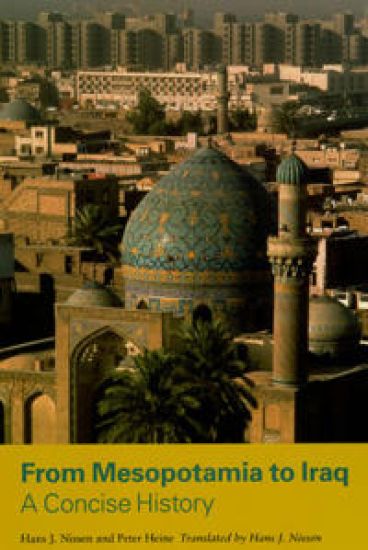
The recent reopening of Iraq's National Museum attracted worldwide attention, underscoring the country's dual image as both the cradle of civilization and a contemporary geopolitical battleground. A sweeping account of the rich history that has played out between these chronological poles, "From Mesopotamia to Iraq" looks back through ten thousand years of the region's deeply significant yet increasingly overshadowed past. Hans J. Nissen and Peter Heine begin by explaining how ancient Mesopotamian inventions - including urban society, a system of writing, and mathematical texts that anticipated Pythagoras - profoundly influenced the course of human history. These towering innovations, they go on to reveal, have sometimes obscured the major role Mesopotamia continued to play on the world stage. Alexander the Great, for example, was fascinated by Babylon and eventually died there. Seventh-century Muslim armies made the region one of their first conquests outside the Arabian peninsula. And the Arab caliphs who ruled for centuries after the invasion built the magnificent city of Baghdad, attracting legions of artists and scientists. Tracing the evolution of this vibrant country into a contested part of the Ottoman Empire, a twentieth-century British colony, a republic ruled by Saddam Hussein, and the democracy it has become, Nissen and Heine repair the fragmented image of Iraq that has come to dominate our collective imagination. In hardly any other continuously inhabited part of the globe can we chart such developments in politics, economy, and culture across so extended a period of time. By doing just that, the authors illuminate nothing less than the forces that have made the world what it is today.
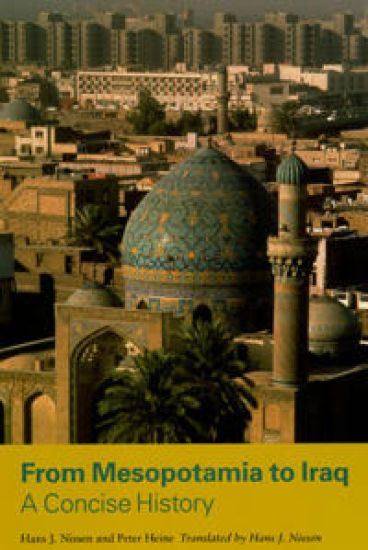
The recent reopening of Iraq's National Museum attracted worldwide attention, underscoring the country's dual image as both the cradle of civilization and a contemporary geopolitical battleground. A sweeping account of the rich history that has played out between these chronological poles, "From Mesopotamia to Iraq" looks back through ten thousand years of the region's deeply significant yet increasingly overshadowed past. Hans J. Nissen and Peter Heine begin by explaining how ancient Mesopotamian inventions - including urban society, a system of writing, and mathematical texts that anticipated Pythagoras - profoundly influenced the course of human history. These towering innovations, they go on to reveal, have sometimes obscured the major role Mesopotamia continued to play on the world stage. Alexander the Great, for example, was fascinated by Babylon and eventually died there. Seventh-century Muslim armies made the region one of their first conquests outside the Arabian peninsula. And the Arab caliphs who ruled for centuries after the invasion built the magnificent city of Baghdad, attracting legions of artists and scientists. Tracing the evolution of this vibrant country into a contested part of the Ottoman Empire, a twentieth-century British colony, a republic ruled by Saddam Hussein, and the democracy it has become, Nissen and Heine repair the fragmented image of Iraq that has come to dominate our collective imagination. In hardly any other continuously inhabited part of the globe can we chart such developments in politics, economy, and culture across so extended a period of time. By doing just that, the authors illuminate nothing less than the forces that have made the world what it is today.

Archaische Texte Aus Uruk / Archaische Verwaltungstexte Aus Uruk. Vorderasiatisches Museum II
Robert K. Englund; Hans J. Nissen
Gebruder Mann Verlag
2005
sidottu
This is the first publication of the archaic clay tablets, all shown in original as well as a transcription, which were discovered between 1933 and 1939 in the old town of Uruk in southern Iraq and are kept in the Museum of the Near East in Berlin. Die hier vorgelegten archaischen Tontafeln wurden zwischen den Jahren 1933 und 1939 in Uruk gefunden. Sie sind Zeugnisse der altesten uns gekannten Schrift. Im vorliegenden Band werden die Archaischen Tontafeln in Kopie und Umschrift veroffentlicht, die in den Jahren 1933 bis 1939 in der alten Stadt Uruk im heutigen Sudirak gefunden wurden und im Vorderasiatischen Museum in Berlin aufbewahrt werden. Sie sind Zeugnisse der altesten Schrift, die wir kennen; sie stammen aus den letzten Jahrhunderten des 4. vorchristlichen Jahrtausends. Es handelt sich um Aufzeichnungen aus dem Bereich einer zentralen Wirtschaftsverwaltung, deren Aufgabe es war, grosse Mengen von Lebensmitteln, aber auch von Rohstoffen und Fertigprodukten vorratig zu halten, ihre Einnahme zu verbuchen und sie an Berechtigte zu verteilen. Wir erfahren so zwar nichts uber historische, religiose oder allgemein geisteswissenschaftlich relevante Themen, aber wir gewinnen doch Einsichten in einen wichtigen Bereich der komplexen stadtischen Gesellschaft Babyloniens im ausgehenden 4. vorchristlichen Jahrtausend. Mit diesem sechsten Band ist die Veroffentlichung der in Deutschland aufbewahrten Archaischen Texte abgeschlossen. Die Reihe umfasst insgesamt sieben Bande.

Archaische Texte Aus Uruk / Archaische Verwaltungstexte Aus Uruk: Die Heidelberger Sammlung
Robert K. Englund; Hans J. Nissen
Gebruder Mann Verlag
2001
sidottu
Das Werk befasst sich mit achaologischen Textfunden aus Uruk.
The Early History of the Ancient Near East, 9000-2000 B.C.
Hans J. Nissen
University of Chicago Press
1990
nidottu
Hans J. Nissen here provides a much-needed overview of 7000 years of development in the ancient Near East from the beginning of settled life to the formation of the first regional states. His approach to the study of Mesopotamian civilization differs markedly from conventional orientations, which impose a sharp division between prehistoric and historic, literate, periods. Nissen argues that this approach is too rigid to explain the actual development of that civilization. He deemphasizes the invention of writing as a turning point, viewing it as simply one more phase in the evolution of social complexity and as the result of specific social, economic, and political factors. With a unique combination of material culture analysis written data, Nissan traces the emergence of the earliest isolated settlements, the growth of a network of towns, the emergence of city states, and finally the appearance of territorial states. From his synthesis of the prehistoric and literate periods comes a unified picture of the development of Mesopotamian economy, society, and culture. Lavishly illustrated, The Early History of the Ancient Near East, 9000-2000 B. C. is an authoritative work by one of the most insightful observers of the evolution and character of Mesopotamian civilization.