
Kirjailija
Hans Magnus Enzensberger
Kirjat ja teokset yhdessä paikassa: 63 kirjaa, julkaisuja vuosilta 1964–2025, suosituimpiin kuuluu Esterhazy. Vertaile teosten hintoja ja tarkista saatavuus suomalaisista kirjakaupoista.
63 kirjaa
Kirjojen julkaisuvuodet: 1964–2025.

Northern Spain is the only part of Western Europe where anarchism played a significant role in political life of the twentieth century. Enjoying wide-ranging support among both the urban and rural working class, its importance peaked during its “brief summer”—the civil war between the Republic and General Franco’s Falangists, during which anarchists even participated in the government of Catalonia. Anarchy’s Brief Summer brings anarchism to life by focusing on the charismatic leader Buenaventura Durruti (1896–1936), who became a key figure in the Spanish Civil War after a militant and adventurous youth. The basis of the book is a compilation of texts: personal testimony, interviews with survivors, contemporary documents, memoirs, and academic assessments. They are all linked by Enzenberger’s own assessment in a series of glosses—a literary form that is somewhere between retelling and reconstruction—with the contradiction between fiction and fact reflecting the political contradictions of the Spanish Revolution. On the trail of forgotten, half-suppressed struggles, Anarchy’s Brief Summer offers a unique portrait of a revolutionary movement that is largely unknown outside Spain.
»schreib alles was wahr ist auf«
Ingeborg Bachmann; Hans Magnus Enzensberger
SUHRKAMP VERLAG
2018
sidottu
Hans Magnus Enzensberger takes the title for this collection of daring short essays on topical themes politics, economics, religion, society not from Jeremy Bentham's famous prison but from a mid-1930s Cabinet of Curiosities opened in Germany by Karl Valentin. "There," writes Enzensberger, "viewers could admire, along with implements of torture, all manner of abnormalities and sensational inventions." And that's what he offers here: a wide-ranging, surprising look at all manner of strange aspects of our contemporary world. As masterly with the essay as he is with fiction and poetry, Enzensberger here presents complicated thoughts with a light touch, tying new iterations of old ideas to their antecedents, quoting liberally from his forebears, and presenting himself unapologetically as not an expert but a seeker. Enzensberger the essayist works in the mode of Montaigne, unafraid to take his reader in unexpected directions, knowing that the process of exploration is often in itself sufficient reward for following a line of thought. ? In an era that regularly laments the death of the public intellectual, Enzensberger is the real deal: a towering figure in German literature who refuses to let his mind or work be bound by the narrow world of the poetry or fiction section. Panopticon will thrill readers daring enough to accompany him.
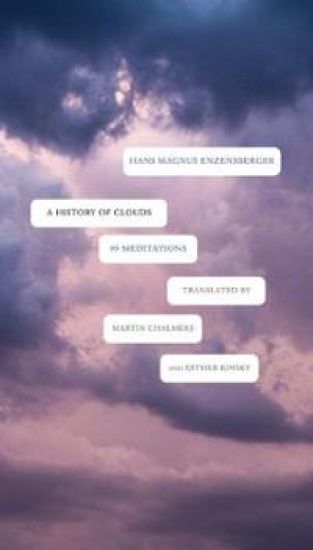
A History of Clouds
Hans Magnus Enzensberger
Seagull Books London Ltd
2018
nidottu
Halvin toimitettuna 26,00 €
In these 99 meditations, poet and novelist Hans Magnus Enzensberger celebrates the tenacity of the normal and routine in everyday life, where the survival of the objects we use without thinking—a pair of scissors, perhaps—is both a small, human victory and a quiet reminder of our own ephemeral nature. He sets his quotidian reflections against a broad historical and political backdrop: the cold war and its accompanying atomic threat; the German student revolt; would-be socialism in Cuba, China, and Africa; and World War II as experienced by the youthful poet. Enzensberger’s poems are conversational, skeptical, and serene; they culminate in the extended set of observations that gives the collection its title. Clouds, alien and yet symbols of human life, are for Enzensberger at once a central metaphor of the Western poetic tradition and “the most fleeting of all masterpieces.” “Cloud archaeology,” writes Enzensberger, is “a science for angels.” Praise for the German edition“After reading this wonderful volume of poetry one would like to call Enzensberger simply the lyric voice of transience.”— Sueddeutsche Zeitung “With this book Enzensberger reveals himself both as a spokesman of persistence and as a decelerator.”—Neue Zuercher Zeitung
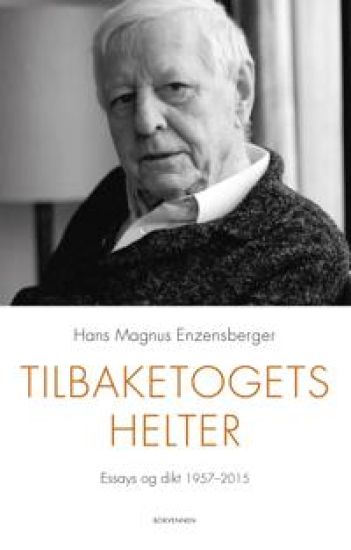
«Samme hvor uselvstendig de tenker, tror alle og enhver at deres bevissthet, deres tankeverden, er fri og uavhengig. Nå til dags blir ikke sjelen nevnt ofte, unntatt hos skriftefaren eller blant poeter og musikere. Bevisstheten gjelder derfor som subjektets siste tilfluktssted i en katastrofal verden, et citadell som kan motstå den daglige beleiringen. Selv under de mest ekstreme forhold av totalitært herredømme, ja nettopp der, vil ingen innrømme at deres tankeverden allerede er blitt okkupert. Ingen illusjon blir mer hardnakket forsvart. Dette er et godt eksempel på hvordan filosofien påvirker selv dem som forakter den. For ideen om at den enkelte i sin bevissthet er herre i eget hus, stammer fra filosofien - fra andrehands Descartes og avstumpet Husserl - som andrehands versjoner av borgerlig filosofi, som idealisme for hjemmebruk.» Fra essayet «Bevissthetsindustri». Tilbaketogets helter - essays og dikt 1957-2015 inneholder et skjønnsomt utvalg av Hans Magnus Enzens.bergers viktigste tekster, skrevet over en periode på nær seksti år, i redaksjon og oversettelse ved Rune Skarstein, førsteamanuensis emeritus i samfunnsøkonomi ved NTNU. Essayene særpreges ved sin aktualitet og ved forfatterens funksjon som sosial seismograf. Enzensberger fanger opp og analyser nye fenomener lenge før de blir allment erkjent. Utvalget er gjort i den tro at disse smakebitene vil friste leseren til å fatte større interesse ikke bare for Enzensbergers mangslungne forfatterskap, men også for Tysklands dramatiske historie, det tyske språket og tysk litteratur.
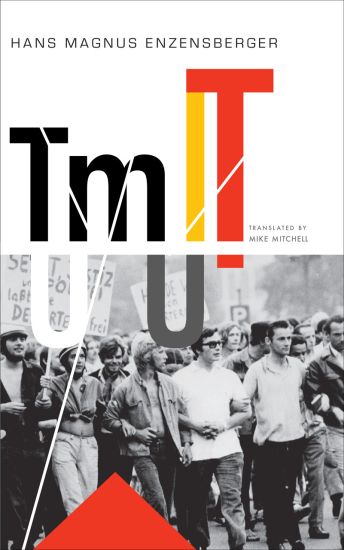
Hans Magnus Enzensberger, widely regarded as Germany's greatest living poet, was already well known in the 1960s, the tempestuous decade of which Tumult is an autobiographical record. Derived from old papers, notes, jottings, photos, and letters that the poet stumbled upon years later in his attic, the volume is not so much about the man, but rather the many places he visited and people whom he met on his travels through the Soviet Union and Cuba during the 1960s. The book is made up of four longform pieces written from 1963 to 1970, each episode concluding with a poem and postscript written in 2014. Tumult is based on Enzensberger's personal experience as a left-wing sympathizer during that tumultuous decade and focuses on political events and their participants. Translated by Mike Mitchell, the book is a lively and deftly written travelogue offering a glimpse into the history of leftist thought. Dedicated to "those who disappeared," Tumult is a document of that which remains one of humanity's headiest times. "Enzensberger is the most important postwar writer you have never read." London Review of Books
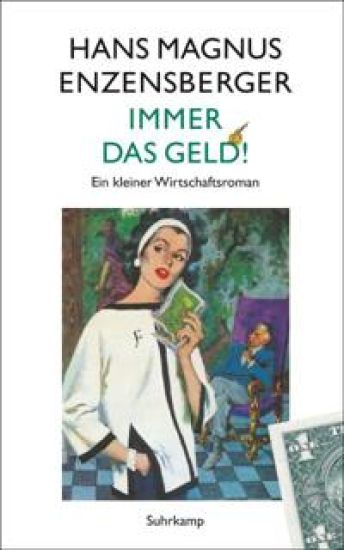
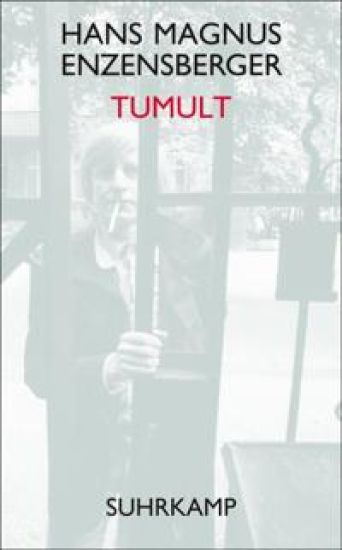
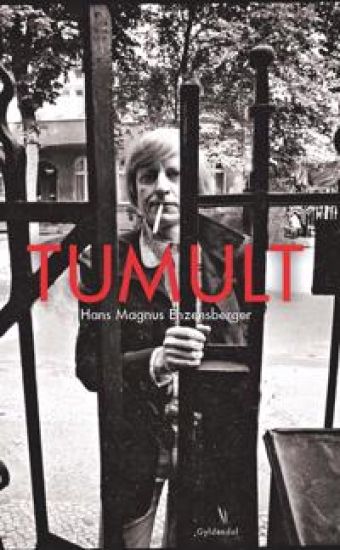
Hans Magnus Enzensberger er ikke kendt for at strø om sig med interviews eller udtalelser om personlige forhold i det hele taget. Tværtimod. Derfor vakte det opsigt i Tyskland, da ”Tumult” udkom sidste efterår og det stod klart, at Enzensberger havde skrevet en selvbiografi. ”Tumult” er et resultat af, at Enzensberger i sin kælder fandt en kasse med gamle notater, der bl.a. omhandler hans besøg i Krustjovs feriehus i 1963. Turene til U. S. S. R. blev også anledningen til skilsmissen fra hans første kone, da han mødte den russiske forfatter Maria Makarova, som han forelskede sig i og senere giftede sig med. I "Tumult" møder den ældre Enzensberger møder sig selv, som han var for 50 år siden, og læseren får indblik i tidens (60’ernes) politiske landskab samt forfatterens holdning til den unge Enzensberger.
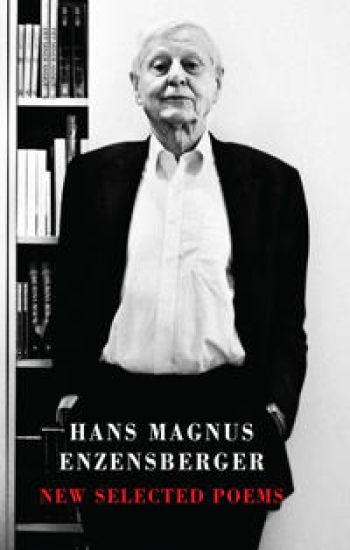
New Selected Poems
Hans Magnus Enzensberger
Bloodaxe Books Ltd
2015
nidottu
Halvin toimitettuna 25,20 €
As well as being Germany's most important poet, Hans Magnus Enzensberger is a provocative cultural essayist and one of Europe's leading political thinkers. No British poet can match him in his range of interests and his moral passion. Enzensberger is a cultured, learned, widely knowledgeable man, but his poems wear their knowledge, learning and culture very lightly. Perfectly at ease in a variety of poetic forms, he presents us again and again with things that matter. This is intelligent and pointed poetry in the tradition of Brecht, humanely political and generously engaged. The poems have the ease and the lightness of real mastery. They are moral in their insistence that human life can be lived well or badly, that it is up to us to choose well and to act wisely. Enzensberger is now writing with an increasing awareness of mortality, yet addresses social and political dangers and evils with undiminished urgency. This is a dual language edition expanding Enzensberger's earlier Bloodaxe Selected Poems with work from his later collections Kiosk, Lighter Than Air and A History of Clouds. The translations are by Enzensberger himself and by Michael Hamburger, David Constantine and Esther Kinsky.
Herrn Zetts Betrachtungen, oder Brosamen, die er fallen ließ, aufgelesen von seinen Zuhörern
Hans Magnus Enzensberger
SUHRKAMP VERLAG
2014
pokkari


Herrn Zetts Betrachtungen, oder Brosamen, die er fallen ließ, aufgelesen von seinen Zuhörern
Hans Magnus Enzensberger
SUHRKAMP VERLAG
2013
sidottu
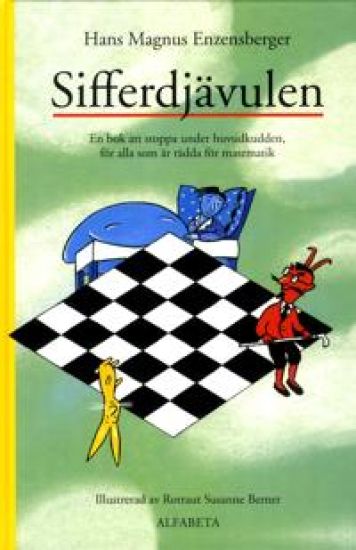
Sifferdjävulen : en bok om att stoppa under huvudkudden, för alla som är rädda för matematik
Hans Magnus Enzensberger
Alfabeta
2013
sidottu
Robert tycker att matte är plågsamt tråkigt. Men en natt dyker Sifferdjävulen upp i hans dröm. Och Sifferdjävulen jonglerar under tolv nätter så spännande och underhållande med de fördömda talen att det ena ljuset efter andra går upp för Robert och läsaren. Det djävulska är att allting passarihop, allting stämmer. Nej matematik är ingen mardröm. Följ Sifferdjävulen till siffrornas magiska värld. Nu kommer boken äntligen i lager igen efter stor efterfrågan.
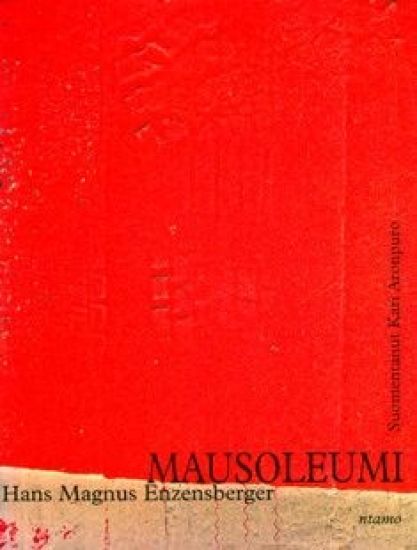
Mausoleumissa (1976) Hans Magnus Enzensberger asettaa häpeilemättä näytteille kolmenkymmenseitsemän läntisen perinteen ns. suurmiehen ruumiit - poikkeuksellisesti avattuina. Ironia ja satiiri ovat viiltäviä, mutta lukija pidetään tietoisena siitä, että myös nämä välineet tulevat kritikoidusta perinteestä: “Ase: mutta ketä vastaan? Työkalu: / mutta mihin?” - Mausoleumi on kiehtovaa, pelottavaa ja pelottavan kaunista luettavaa.