Kirjojen hintavertailu – 12 859 828 kirjaa ja 27 kauppaa

Kirjailija

Hans von Storch

Kirjat ja teokset yhdessä paikassa: 11 kirjaa, julkaisuja vuosilta 1999–2026, suosituimpiin kuuluu Global Energy Supply and Emissions. Vertaile teosten hintoja ja tarkista saatavuus suomalaisista kirjakaupoista.

11 kirjaa

Kirjojen julkaisuvuodet: 1999–2026.

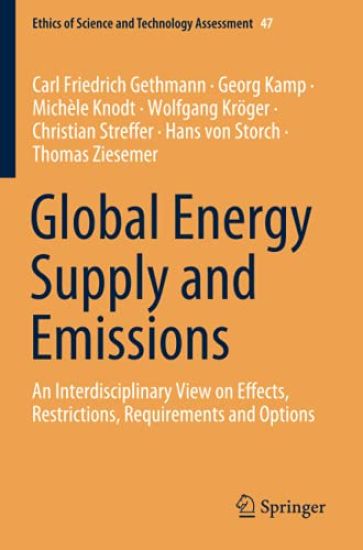
Global Energy Supply and Emissions

Global Energy Supply and Emissions

Carl Friedrich Gethmann; Georg Kamp; Michèle Knodt; Wolfgang Kröger; Christian Streffer; Hans von Storch; Thomas Ziesemer

Springer Nature Switzerland AG
2021
nidottu
This book offers an authoritative analysis of the state-of-the art in energy and climate research and policy. It starts by describing the current status of technologies that are expected to have an influence on the energy systems of the future. For an adequate evaluation, it presents the latest findings on the effects of energy supply and consumption as well as of the emissions on both the environment and people’s health. This is followed by an extensive discussion of the economic and social problems related to climate change, the need for energy transitions, and other issues that may require public investment and international agreements. The book reviews the problem of energy policy from a global perspective, providing readers with the technical, political, economic and ethical background needed to understand the current situation and work at better solutions for a sustainable, just and prospering world.

Climate Science Concepts Born in Hamburg

Climate Science Concepts Born in Hamburg

Hans von Storch; Martin Claussen; Martin Heimann; Robert Sausen; Eduardo Zorita

Springer International Publishing AG
2025
sidottu
Since the foundation of the Max Planck Institute in 1975 with the now-Nobel laureate Klaus Hasselmann as founding director, the climate science in Hamburg has seen a remarkable boost. Various ideas were brought forward, implemented and tested. Many of them ignited interest in the global scientific community, thus adding significant momentum to the development of modern climate science. The participants of the remarkable development since 1975 have come together to identify these concepts “born in Hamburg”. In an introductory chapter, the historical development, including other significant developments of climate science in the late 19th and early 20th century are addressed. The main part consists of chapters addressing the development of key innovative concepts. These are chosen to describe ideas which have been suggested by scientists while working in Hamburg and have been taken up by the international community in applications and advancements (such as the stochastic framing of dynamics and analysis, adding carbon cycles to climate models, multiple equilibria in climate models, anomaly coupling, downscaling, and constructed proxies). These ideas may not in all cases have been strictly new, or “firsts”, but they were the Hamburg publications which made the difference. The book is mostly a book on scientific concepts and ideas, less so a general history of climate science in Hamburg.
Die Wissenschaft in der Gesellschaft

Die Wissenschaft in der Gesellschaft

Nico Stehr; Hans von Storch

Springer
2023
sidottu
Als die Autoren – über die Grenzen zweier Wissenschaftskulturen hinweg – Anfang der 90er Jahre begannen, über die wissenschaftliche und populäre Wahrnehmung und Konstruktion des Phänomens Klima, Klimawandel, Klimapolitik und die Auswirkungen des Klimas auf die Gesellschaft nachzudenken, stießen sie auf erheblichen Widerstand, insbesondere als sie über die dringende Notwendigkeit einer gesellschaftlichen Anpassung an den Klimawandel schrieben. Die Autoren sehen sich als Pioniere in diesem Politikfeld. Viele, wenn nicht die meisten Maßnahmen für den Klimaschutz und gegen die Klimafolgen erfordern die Innovationskraft aller Wissenschaften und der Technik. Die künftige Umsetzung wissenschaftlicher Erkenntnisse in der Klimapolitik ist Schlüssel des erfolgreichen Umgangs der Gesellschaft mit den Folgen des Klimawandels. Dies geschieht jedoch nicht automatisch. Die Umsetzung von Wissenschaft in die Gesellschaft unterliegt ökonomischen, politischen und kulturellen Zwängen, und kann insbesondere durch den Mehrwert interdisziplinärer Zusammenarbeit von Wissenschaftlern, wie sie in diesem Band praktiziert wird, erreicht werden.
From Decoding Turbulence to Unveiling the Fingerprint of Climate Change
This open access book serves as a reference for the key elements and their significance of Klaus Hasselmann's work on climate science and on ocean wave research, all based on a rigorous and deeply physical thinking. It summarizes the original articles (mostly from the 1970 and 1980s; some of which are hard to find nowadays) and brings them in a present-day context. From 1975 until 2000, he was (founding) Director of the Max Planck Institute of Meteorology, which he made to one of the world-leading academic institutions. He first made the issue of anthropogenic climate change accessible to analysis and prediction and later transformed climate science into a significant factor in forming public policy. The book is written by co-workers and colleagues of Klaus Hasselmann, who—many under his immediate supervision—joined him in this effort. With this background, they present the key achievements and assess the significance of these for the present state of knowledge and scientific practice.
Global Energy Supply and Emissions

Global Energy Supply and Emissions

Carl Friedrich Gethmann; Georg Kamp; Michèle Knodt; Wolfgang Kröger; Christian Streffer; Hans von Storch; Thomas Ziesemer

Springer Nature Switzerland AG
2020
sidottu
This book offers an authoritative analysis of the state-of-the art in energy and climate research and policy. It starts by describing the current status of technologies that are expected to have an influence on the energy systems of the future. For an adequate evaluation, it presents the latest findings on the effects of energy supply and consumption as well as of the emissions on both the environment and people’s health. This is followed by an extensive discussion of the economic and social problems related to climate change, the need for energy transitions, and other issues that may require public investment and international agreements. The book reviews the problem of energy policy from a global perspective, providing readers with the technical, political, economic and ethical background needed to understand the current situation and work at better solutions for a sustainable, just and prospering world.

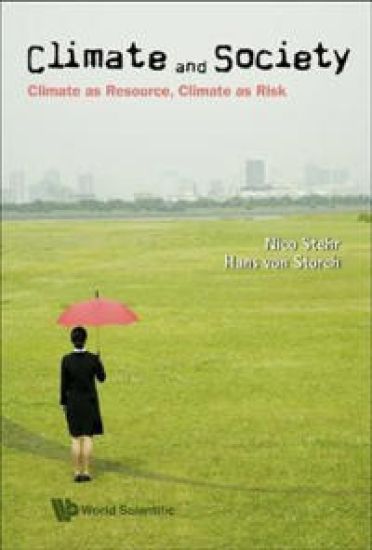
Climate And Society: Climate As Resource, Climate As Risk

Climate And Society: Climate As Resource, Climate As Risk

Nico Stehr; Hans Von Storch

World Scientific Publishing Co Pte Ltd
2009
sidottu
Climate and Society presents from a transdisciplinary view, climate and its changes, impact and perception. The history of climate and its different approaches over time — which are anthropocentric and more system-oriented, academic and application-driven — are reviewed, as are the possibilities of managing climate, in particular by steering the greenhouse gas emissions. Most importantly, the concepts of climate as a resource for societies are discussed and the emergence of climate non-constancy and its impact, studied. In essence, this book provides an absorbing account of the cultural history of climate and relates it to contemporary scientific knowledge about climate, climate change and its impact.
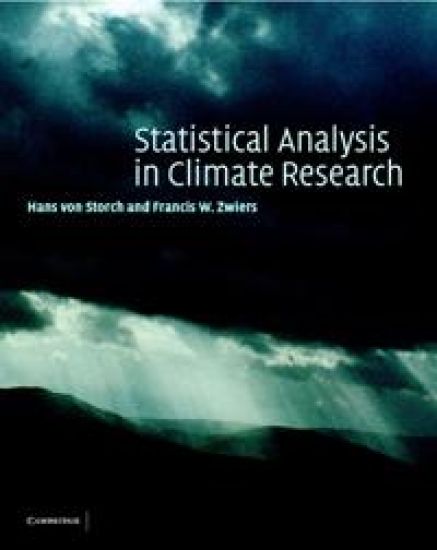
Statistical Analysis in Climate Research

Statistical Analysis in Climate Research

Hans von Storch; Francis W. Zwiers

Cambridge University Press
2002
pokkari
Climatology is, to a large degree, the study of the statistics of our climate. The powerful tools of mathematical statistics therefore find wide application in climatological research. The purpose of this book is to help the climatologist understand the basic precepts of the statistician’s art and to provide some of the background needed to apply statistical methodology correctly and usefully. The book is self contained: introductory material, standard advanced techniques, and the specialised techniques used specifically by climatologists are all contained within this one source. There are a wealth of real-world examples drawn from the climate literature to demonstrate the need, power and pitfalls of statistical analysis in climate research. Suitable for graduate courses on statistics for climatic, atmospheric and oceanic science, this book will also be valuable as a reference source for researchers in climatology, meteorology, atmospheric science, and oceanography.
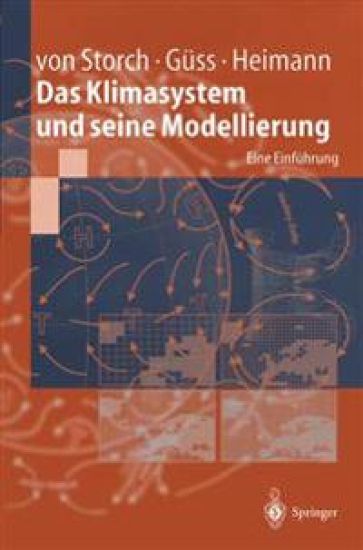
Das Klimasystem und seine Modellierung

Das Klimasystem und seine Modellierung

Hans von Storch; Stefan Güss; Martin Heimann

Springer-Verlag Berlin and Heidelberg GmbH Co. K
1999
nidottu
Das Buch bietet eine Einführung in die moderne Klimatologie mit ihren Prognose- und Interpretationsmodellen. Es gibt einen Überblick über die Vorstellungen, die man heute vom Klima und von klimarelevanten Prozessen hat, und wie man diese konzeptionell und quantitativ - also mit Modellen - zu beschreiben versucht. Der Text ist allgemein verständlich geschrieben und setzt keine besonderen Kenntnisse der Mathematik und Physik voraus. Dieses Lehrbuch basiert auf einer Vorlesung am Meteorologischen Institut der Universität Hamburg und richtet sich hauptsächlich an Studenten der Geowissenschaften und Physik, daneben an ebenfalls mit Klima befaßten Disziplinen der Land-, Forst- und Umweltwissenschaften.