Kirjojen hintavertailu – 12 859 819 kirjaa ja 27 kauppaa

Kirjailija

Hanspeter Kriesi

Kirjat ja teokset yhdessä paikassa: 18 kirjaa, julkaisuja vuosilta 1977–2025, suosituimpiin kuuluu Model for the Flow of Students Through the Swiss University System. Vertaile teosten hintoja ja tarkista saatavuus suomalaisista kirjakaupoista.

18 kirjaa

Kirjojen julkaisuvuodet: 1977–2025.

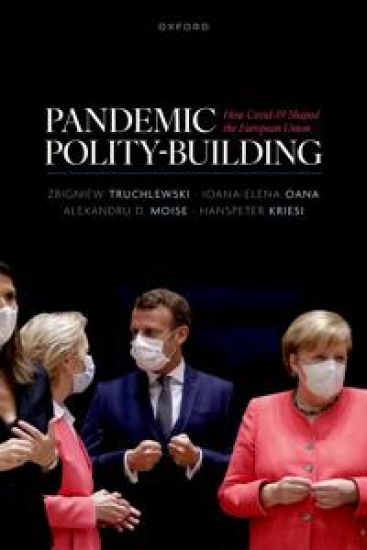
Pandemic Polity-Building

Pandemic Polity-Building

Zbigniew Truchlewski; Ioana- Elena Oana; Alexandru D. Moise; Hanspeter Kriesi

Oxford University Press
2025
sidottu
In 2020, the European Union faced the COVID-19 crisis. This book tells the unlikely story of how the European Union survived a crisis that arrived on the heels of a difficult decade during which the EU wrestled with repeated crises, from the Euro Area, to refugees, populism, and geopolitics. Against all odds, a divided polity with a weak centre and low competences in crucial policy domains, managed to overcome powerful disincentives to coordinate its way out of the pandemic and create central capacity building. Pandemic Polity-Building argues that this puzzling outcome stems from COVID-19's crisis characteristics and the EU's polity features. The relative symmetric nature of the pandemic and the deeply disruptive economic shocks revealed the potential long-term externalities of a lack of joint action at the European level. The EU coordinated a common vaccine procurement scheme and pooled its fiscal firepower. The polity perspective presented here shows how the EU overcame conflicts and managed to coordinate and create new capacity in its centre while relying on a new geography of solidarity within the EU. The polity approach allows the authors in this volume to show how the EU did not take a federal path to polity formation. Instead, it moved towards a polity that serves as an imperfect but solidaristic safety net for its member states. The polity approach thus allows this volume to present a firm analytical grasp over the complex crisis politics unleashed on the EU's compound polity. This is an open access title available under the terms of a CC BY-NC-ND 4.0 International licence. It is free to read at Oxford Scholarship Online and offered as a free PDF download from OUP and selected open access locations.
Crisis Policymaking in the EU

Crisis Policymaking in the EU

Hanspeter Kriesi

Cambridge University Press
2025
pokkari
This Element compares crisis-specific policymaking, its causes and consequences, at the two levels of the EU polity during the COVID-19 and the refugee crisis 2015–16. In both crises, EU policymaking responded to exogenous pressure and was dominated by executive decision-making. Still, it also differed in three critical aspects: it was much more salient, consensual, and effective during the COVID-19 than the refugee crisis. The present study accounts for both similarities and differences, which it attempts to explain by features of the nature of the crises. The key argument of the study is that the policymaking process during crises is, to a large extent, determined by the crisis situation – the crisis-specific functional problem pressure, the institutional context (of the EU polity), and the corresponding political pressure at the origin of a given crisis. This title is also available as Open Access on Cambridge Core.
Crisis Policymaking in the EU

Crisis Policymaking in the EU

Hanspeter Kriesi

Cambridge University Press
2025
sidottu
This Element compares crisis-specific policymaking, its causes and consequences, at the two levels of the EU polity during the COVID-19 and the refugee crisis 2015–16. In both crises, EU policymaking responded to exogenous pressure and was dominated by executive decision-making. Still, it also differed in three critical aspects: it was much more salient, consensual, and effective during the COVID-19 than the refugee crisis. The present study accounts for both similarities and differences, which it attempts to explain by features of the nature of the crises. The key argument of the study is that the policymaking process during crises is, to a large extent, determined by the crisis situation – the crisis-specific functional problem pressure, the institutional context (of the EU polity), and the corresponding political pressure at the origin of a given crisis. This title is also available as Open Access on Cambridge Core.
Coming to Terms with the European Refugee Crisis

Coming to Terms with the European Refugee Crisis

Hanspeter Kriesi; Argyrios Altiparmakis; Ábel Bojár; Ioana-Elena Oana

Cambridge University Press
2024
sidottu
The refugee crisis which hit the European Union and its member states during 2015–16 was just one in a series of recent crises, but perhaps the most critical for the EU's resilience. This book shows how policymakers in the EU polity have tried to come to terms with it. To explain how they reacted to the crisis domestically and jointly at the EU-level, the study relies on an original method to analyze political processes. It argues that the policy-specific institutional context and the specific crisis situation, defined in terms of asymmetrical problem and political pressure, largely shaped the crisis response. The authors suggest that the way in which the refugee crisis was managed has resulted in conflicts between member states, which have been further exacerbated in subsequent crises and will continue to haunt the EU in times to come. This title is also available as Open Access on Cambridge Core.
Coming to Terms with the European Refugee Crisis

Coming to Terms with the European Refugee Crisis

Hanspeter Kriesi; Argyrios Altiparmakis; Ábel Bojár; Ioana-Elena Oana

Cambridge University Press
2024
pokkari
The refugee crisis which hit the European Union and its member states during 2015–16 was just one in a series of recent crises, but perhaps the most critical for the EU's resilience. This book shows how policymakers in the EU polity have tried to come to terms with it. To explain how they reacted to the crisis domestically and jointly at the EU-level, the study relies on an original method to analyze political processes. It argues that the policy-specific institutional context and the specific crisis situation, defined in terms of asymmetrical problem and political pressure, largely shaped the crisis response. The authors suggest that the way in which the refugee crisis was managed has resulted in conflicts between member states, which have been further exacerbated in subsequent crises and will continue to haunt the EU in times to come. This title is also available as Open Access on Cambridge Core.
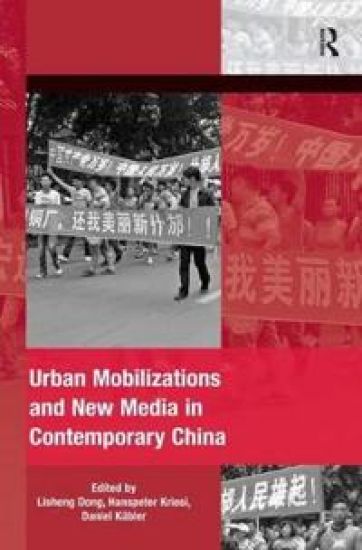
Urban Mobilizations and New Media in Contemporary China

Urban Mobilizations and New Media in Contemporary China

Lisheng Dong; Hanspeter Kriesi

Routledge
2020
nidottu
Popular protests are on the rise in China. However, since protesters rely on existing channels of participation and on patronage by elite backers, the state has been able to stymie attempts to generalize resistance and no large scale political movements have significantly challenged party rule. Yet the Chinese state is not monolithic. Decentralization has increased the power of local authorities, creating space for policy innovations and opening up the political opportunity structure. Popular protest in China - particularly in urban realm- not only benefits from the political fragmentation of the state, but also from the political communications revolution. The question of how and to what extent the internet can be used for mobilizing popular resistance in China is hotly debated. The government, virtual social organizations, and individual netizens both cooperate and compete with each other on the web. New media both increases the scope of the mobilizers and the mobilized (thereby creating new social capital), and provides the government with new means of social control (thereby limiting the political impact of the growing social capital). This volume is the first of its kind to assess the ways new media influence the mobilization of popular resistance and its possible effects in China today.
Urban Mobilizations and New Media in Contemporary China

Urban Mobilizations and New Media in Contemporary China

Lisheng Dong; Hanspeter Kriesi

Routledge
2015
sidottu
Popular protests are on the rise in China. However, since protesters rely on existing channels of participation and on patronage by elite backers, the state has been able to stymie attempts to generalize resistance and no large scale political movements have significantly challenged party rule. Yet the Chinese state is not monolithic. Decentralization has increased the power of local authorities, creating space for policy innovations and opening up the political opportunity structure. Popular protest in China - particularly in urban realm- not only benefits from the political fragmentation of the state, but also from the political communications revolution. The question of how and to what extent the internet can be used for mobilizing popular resistance in China is hotly debated. The government, virtual social organizations, and individual netizens both cooperate and compete with each other on the web. New media both increases the scope of the mobilizers and the mobilized (thereby creating new social capital), and provides the government with new means of social control (thereby limiting the political impact of the growing social capital). This volume is the first of its kind to assess the ways new media influence the mobilization of popular resistance and its possible effects in China today.
Democracy

Democracy

Hanspeter Kriesi

Lars Muller Publishers
2013
sidottu
"Democracy is the worst form of government - except for all those other forms that have been tried from time to time." Challenging Democracy tries to get to the bottom of the dilemma expressed in this world-famous quote from Winston Churchill. Designed as a visual reader that makes targeted use of the communicative power of the image, the book constitutes a comprehensive compendium on the history, development, and current debates on democracy. Are democracies more capable than other forms of government? What role is played today by digital media in democracies and democratization processes? Is globalization conducive to democracy? What forms of democracy are there? The visual reader delves into both fundamental and more topical issues and thus provides the key to a comprehensive understanding and an in-depth engagement with democracy from its origins to the present day. With contributions by Andre Bachtiger, Thomas Bernauer, Daniel Bochsler, Florin Buchel, Francis Cheneval, Frank Esser, Regula Hanggli, Jurg Helbling, Erik Jentges, Hanspeter Kriesi, Daniel Kubler, Andreas Ladner, Sandra Lavenex, Wolfgang Merkel, Frank Schimmelfennig, Marco Steenbergen, Manuel Vogt.
Political Conflict in Western Europe

Political Conflict in Western Europe

Hanspeter Kriesi; Edgar Grande; Martin Dolezal; Marc Helbling; Dominic Höglinger; Swen Hutter; Bruno Wüest

Cambridge University Press
2012
sidottu
What are the consequences of globalization for the structure of political conflicts in Western Europe? How are political conflicts organized and articulated in the twenty-first century? And how does the transformation of territorial boundaries affect the scope and content of political conflicts? This book sets out to answer these questions by analyzing the results of a study of national and European electoral campaigns, protest events and public debates in six West European countries. While the mobilization of the losers in the processes of globalization by new right populist parties is seen to be the driving force of the restructuring of West European politics, the book goes beyond party politics. It attempts to show how the cleavage coalitions that are shaping up under the impact of globalization extend to state actors, interest groups and social movement organizations, and how the new conflicts are framed by the various actors involved.
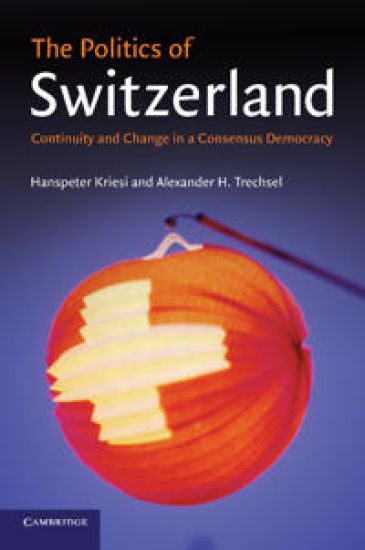
The Politics of Switzerland

The Politics of Switzerland

Hanspeter Kriesi; Alexander H. Trechsel

Cambridge University Press
2008
sidottu
Despite Switzerland's small size, its political system is one of the most complex and fascinating among contemporary democracies. The rich, complex mixture of centuries-old institutions and the refined political arrangements that exist today constitute a veritable laboratory for social scientists and their students. Often presented as the paradigmatic case of political integration, consensus democracy and multinational federalism, the Swiss model has become a benchmark case for analyses in comparative politics, political behaviour and other related fields. Written by two leading experts on Swiss politics, this book presents a definitive overview for scholars and students interested in Switzerland's political system at the beginning of the twenty-first century. By focusing on its intricacies but also taking in larger issues of general interest, the broad scope of this study will appeal to all those interested in contemporary European politics and democratic systems.
The Politics of Switzerland

The Politics of Switzerland

Hanspeter Kriesi; Alexander H. Trechsel

Cambridge University Press
2008
pokkari
Despite Switzerland's small size, its political system is one of the most complex and fascinating among contemporary democracies. The rich, complex mixture of centuries-old institutions and the refined political arrangements that exist today constitute a veritable laboratory for social scientists and their students. Often presented as the paradigmatic case of political integration, consensus democracy and multinational federalism, the Swiss model has become a benchmark case for analyses in comparative politics, political behaviour and other related fields. Written by two leading experts on Swiss politics, this book presents a definitive overview for scholars and students interested in Switzerland's political system at the beginning of the twenty-first century. By focusing on its intricacies but also taking in larger issues of general interest, the broad scope of this study will appeal to all those interested in contemporary European politics and democratic systems.
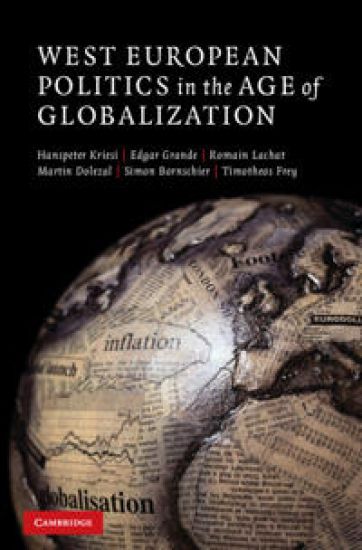
West European Politics in the Age of Globalization

West European Politics in the Age of Globalization

Hanspeter Kriesi; Edgar Grande; Romain Lachat; Martin Dolezal; Simon Bornschier; Timotheos Frey

Cambridge University Press
2008
sidottu
Over the past three decades the effects of globalization and denationalization have created a division between 'winners' and 'losers' in Western Europe. This study examines the transformation of party political systems in six countries (Austria, France, Germany, the Netherlands, Switzerland and the UK) using opinion surveys, as well as newly collected data on election campaigns. The authors argue that, as a result of structural transformations and the strategic repositioning of political parties, Europe has observed the emergence of a tripolar configuration of political power, comprising the left, the moderate right, and the new populist right. They suggest that, through an emphasis on cultural issues such as mass immigration and resistance to European integration, the traditional focus of political debate - the economy - has been downplayed or reinterpreted in terms of this new political cleavage. This new analysis of Western European politics will interest all students of European politics and political sociology.
Direct Democratic Choice

Direct Democratic Choice

Hanspeter Kriesi

Lexington Books
2008
nidottu
Direct Democratic Choice sets out to understand how the citizens actually decide in direct-democratic votes. Author Hanspeter Kriesi has analyzed nearly twenty years of post-election surveys in Switzerland (1981-1999), which he has contextualized according to the various political issues and the relevant arguments provided by the political elites. This book's core argument is that the citizens who participate in direct-democratic votes make competent choices. Kriesi's extensive empirical research shows that the majority of these voters arrive at their decisions on the basis of arguments about the advantages and disadvantages of the available options. The less competent and less interested citizens either do not vote or, if they do, employ heuristic shortcuts allowing them to make approximately reasonable decisions. Kriesi provides strong support for an optimistic view of direct-democratic decision-making but also indicates that this process, wherever it occurs, can be improved by proper institutional design and by appropriate strategies enacted by the political elite.
Direct Democratic Choice

Direct Democratic Choice

Hanspeter Kriesi

Lexington Books
2005
sidottu
Direct Democratic Choice sets out to understand how the citizens actually decide in direct-democratic votes. Author Hanspeter Kriesi has analyzed nearly twenty years of post-election surveys in Switzerland (1981-1999), which he has contextualized according to the various political issues and the relevant arguments provided by the political elites. This book's core argument is that the citizens who participate in direct-democratic votes make competent choices. Kriesi's extensive empirical research shows that the majority of these voters arrive at their decisions on the basis of arguments about the advantages and disadvantages of the available options. The less competent and less interested citizens either do not vote or, if they do, employ heuristic shortcuts allowing them to make approximately reasonable decisions. Kriesi provides strong support for an optimistic view of direct-democratic decision-making but also indicates that this process, wherever it occurs, can be improved by proper institutional design and by appropriate strategies enacted by the political elite.
Social Movements in a Globalising World

Social Movements in a Globalising World

Hanspeter Kriesi; Dieter Rucht

Palgrave Macmillan
1999
nidottu
The growing interdependence on a global scale which characterizes the human condition at the turn of the century constitutes a challenge for both the mobilization of social movements and social movement theory. The present volume makes an attempt to adjust the perspective of the political process approach to a world in which political opportunities, mobilizing structures, framing processes and collective action of social movements are no longer confined to national political contexts.
Social Movements in a Globalising World

Social Movements in a Globalising World

Hanspeter Kriesi; Dieter Rucht

Palgrave Macmillan
1999
sidottu
The growing interdependence on a global scale which characterizes the human condition at the turn of the century constitutes a challenge for both the mobilization of social movements and social movement theory. The present volume makes an attempt to adjust the perspective of the political process approach to a world in which political opportunities, mobilizing structures, framing processes and collective action of social movements are no longer confined to national political contexts.
New Social Movements in Western Europe

New Social Movements in Western Europe

Hanspeter Kriesi

University of Minnesota Press
1995
nidottu
Explores the ecology, gay rights, peace, and women’s movements in Western Europe. New social movements are defined as those that have arisen since the late sixties, and include the ecology, gay rights, peace, and women’s movements. This volume provides a cross-national comparison of the development, mobilization, and impact of new social movements in four Western European nations-France, Germany, the Netherlands, and Switzerland. Seeking to move beyond classical theories of collective behavior, this study suggests that social change affects political mobilization indirectly through a restructuring of existing power relations. The authors of this study employ empiricial analysis to demonstrate that the mobilization of social movements is closely linked to conventional politics in the parliamentary and extraparliamentary arenas of each of the countries under discussion. Copublished with University College. London
Model for the Flow of Students Through the Swiss University System
On the basis of data collected by a research team at the Preparatory Stage of the University of Educational Sciences at Aarau, Switzerland, a model for the flow of students through the Swiss University System is constructed which allows a concise description of the pertinent movements (changes of university and of subject studied, interruptions, rates of leaving at different levels etc.). The model also serves as a useful tool for prediction of future flows and for simulation of flows under specific assumptions.