Kirjojen hintavertailu – 12 903 724 kirjaa ja 27 kauppaa

Kirjailija

Hao Ni

Kirjat ja teokset yhdessä paikassa: 4 kirjaa, julkaisuja vuosilta 2018–2021, suosituimpiin kuuluu Introduction To Machine Learning In Quantitative Finance, An. Vertaile teosten hintoja ja tarkista saatavuus suomalaisista kirjakaupoista.

4 kirjaa

Kirjojen julkaisuvuodet: 2018–2021.

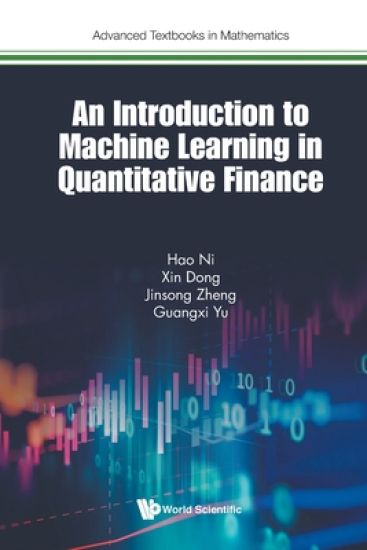
Introduction To Machine Learning In Quantitative Finance, An

Introduction To Machine Learning In Quantitative Finance, An

Hao Ni; Xin Dong; Jinsong Zheng; Guangxi Yu

World Scientific Europe Ltd
2021
nidottu
In today's world, we are increasingly exposed to the words 'machine learning' (ML), a term which sounds like a panacea designed to cure all problems ranging from image recognition to machine language translation. Over the past few years, ML has gradually permeated the financial sector, reshaping the landscape of quantitative finance as we know it. An Introduction to Machine Learning in Quantitative Finance aims to demystify ML by uncovering its underlying mathematics and showing how to apply ML methods to real-world financial data. In this book the authorsFeatured with the balance of mathematical theorems and practical code examples of ML, this book will help you acquire an in-depth understanding of ML algorithms as well as hands-on experience. After reading An Introduction to Machine Learning in Quantitative Finance, ML tools will not be a black box to you anymore, and you will feel confident in successfully applying what you have learnt to empirical financial data! The Python codes contained within An Introduction to Machine Learning in Quantitative Finance have been made publicly available on the author's GitHub: https://github.com/deepintomlf/mlfbook.git
Introduction To Machine Learning In Quantitative Finance, An

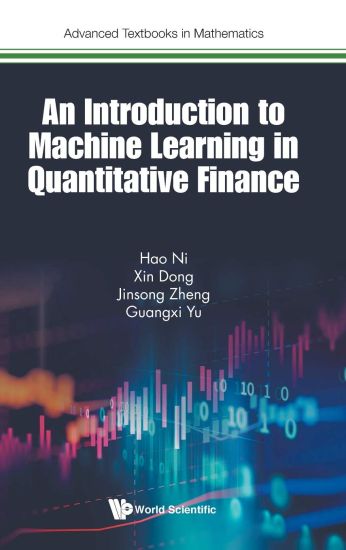
Introduction To Machine Learning In Quantitative Finance, An

Hao Ni; Xin Dong; Jinsong Zheng; Guangxi Yu

World Scientific Europe Ltd
2021
sidottu
In today's world, we are increasingly exposed to the words 'machine learning' (ML), a term which sounds like a panacea designed to cure all problems ranging from image recognition to machine language translation. Over the past few years, ML has gradually permeated the financial sector, reshaping the landscape of quantitative finance as we know it. An Introduction to Machine Learning in Quantitative Finance aims to demystify ML by uncovering its underlying mathematics and showing how to apply ML methods to real-world financial data. In this book the authorsFeatured with the balance of mathematical theorems and practical code examples of ML, this book will help you acquire an in-depth understanding of ML algorithms as well as hands-on experience. After reading An Introduction to Machine Learning in Quantitative Finance, ML tools will not be a black box to you anymore, and you will feel confident in successfully applying what you have learnt to empirical financial data! The Python codes contained within An Introduction to Machine Learning in Quantitative Finance have been made publicly available on the author's GitHub: https://github.com/deepintomlf/mlfbook.git
Educational Governance in China

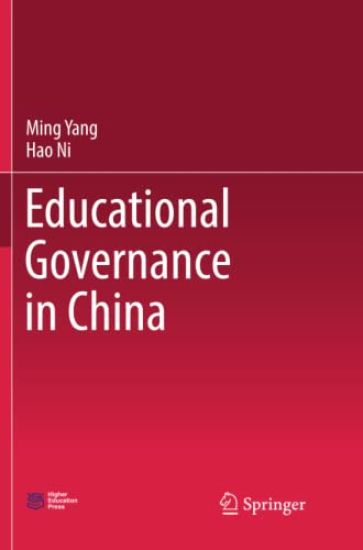
Educational Governance in China

Ming Yang; Hao Ni

Springer Verlag, Singapore
2019
nidottu
This book presents a comprehensive and cutting-edge overview of the educational governance reform trajectory and the latest issues in China, addressing several important topics such as administration, internal management, provision, enrollment, employment, financing, examinations, evaluation and quality assurance. In addition, this important and timely book discusses the educational system at all levels, from primary and secondary schools to colleges and universities, and each chapter ends with a discussion of the status quo, problems facing China and coping strategies for further reform. The past 68 years (1949-2016) have seen a sea change in social, economic, cultural, political and educational fields. Systematically describing the educational landscape in China, the book also reveals how the massive changes in China have shaped education, and how education has responded to the new demands placed on it. Offering essential insights into educational reform in China, the book represents a valuable resource, especially for researchers and graduate students in the field of education.
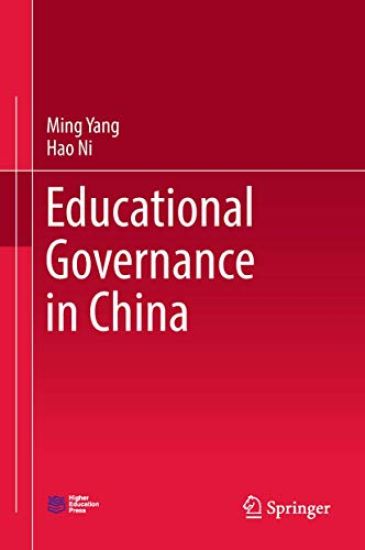
Educational Governance in China

Educational Governance in China

Ming Yang; Hao Ni

Springer Verlag, Singapore
2018
sidottu
This book presents a comprehensive and cutting-edge overview of the educational governance reform trajectory and the latest issues in China, addressing several important topics such as administration, internal management, provision, enrollment, employment, financing, examinations, evaluation and quality assurance. In addition, this important and timely book discusses the educational system at all levels, from primary and secondary schools to colleges and universities, and each chapter ends with a discussion of the status quo, problems facing China and coping strategies for further reform. The past 68 years (1949-2016) have seen a sea change in social, economic, cultural, political and educational fields. Systematically describing the educational landscape in China, the book also reveals how the massive changes in China have shaped education, and how education has responded to the new demands placed on it. Offering essential insights into educational reform in China, the book represents a valuable resource, especially for researchers and graduate students in the field of education.