
Kirjojen hintavertailu – 12 903 724 kirjaa ja 27 kauppaa

Kirjailija

Haomin Gong

Kirjat ja teokset yhdessä paikassa: 3 kirjaa, julkaisuja vuosilta 2011–2018, suosituimpiin kuuluu Reconfiguring Class, Gender, Ethnicity and Ethics in Chinese Internet Culture. Vertaile teosten hintoja ja tarkista saatavuus suomalaisista kirjakaupoista.

3 kirjaa

Kirjojen julkaisuvuodet: 2011–2018.

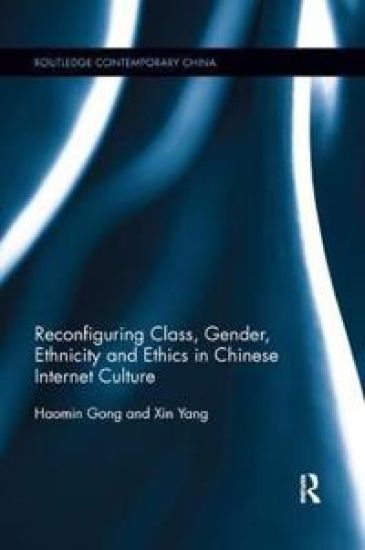
Reconfiguring Class, Gender, Ethnicity and Ethics in Chinese Internet Culture
New information technologies have, to an unprecedented degree, come to reshape human relations, identities and communities both online and offline. As Internet narratives including online fiction, poetry and films reflect and represent ambivalent politics in China, the Chinese state wishes to enable the formidable soft power of this new medium whilst at the same time handling the ideological uncertainties it inevitably entails. This book investigates the ways in which class, gender, ethnicity and ethics are reconfigured, complicated and enriched by the closely intertwined online and offline realities in China. It combs through a wide range of theories on Internet culture, intellectual history, and literary, film, and cultural studies, and explores a variety of online cultural materials, including digitized spoofing, microblog fictions, micro-films, online fictions, web dramas, photographs, flash mobs, popular literature and films. These materials have played an important role in shaping the contemporary cultural scene, but have so far received little critical attention. Here, the authors demonstrate how Chinese Internet culture has provided a means to intervene in the otherwise monolithic narratives of identity and community. Offering an important contribution to the rapidly growing field of Internet studies, this book will also be of interest to students and scholars of Chinese culture, literary and film studies, media and communication studies, and Chinese society.
Reconfiguring Class, Gender, Ethnicity and Ethics in Chinese Internet Culture
New information technologies have, to an unprecedented degree, come to reshape human relations, identities and communities both online and offline. As Internet narratives including online fiction, poetry and films reflect and represent ambivalent politics in China, the Chinese state wishes to enable the formidable soft power of this new medium whilst at the same time handling the ideological uncertainties it inevitably entails. This book investigates the ways in which class, gender, ethnicity and ethics are reconfigured, complicated and enriched by the closely intertwined online and offline realities in China. It combs through a wide range of theories on Internet culture, intellectual history, and literary, film, and cultural studies, and explores a variety of online cultural materials, including digitized spoofing, microblog fictions, micro-films, online fictions, web dramas, photographs, flash mobs, popular literature and films. These materials have played an important role in shaping the contemporary cultural scene, but have so far received little critical attention. Here, the authors demonstrate how Chinese Internet culture has provided a means to intervene in the otherwise monolithic narratives of identity and community. Offering an important contribution to the rapidly growing field of Internet studies, this book will also be of interest to students and scholars of Chinese culture, literary and film studies, media and communication studies, and Chinese society.
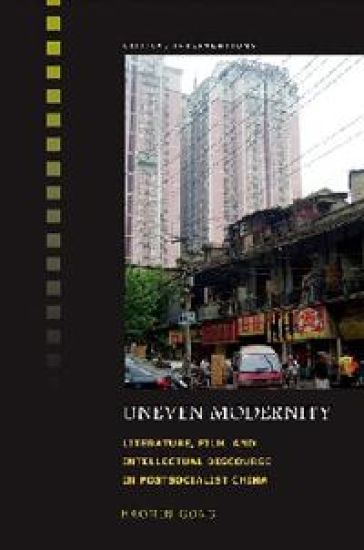
Uneven Modernity

Uneven Modernity

Haomin Gong

University of Hawai'i Press
2011
sidottu
Postsocialist China is marked by paradoxes: economic boom, political conservatism, cultural complexity. Haomin Gong’s dynamic study of these paradoxes, or “unevenness,” provides a unique and seminal approach to contemporary China. Reading unevenness as a problem and an opportunity simultaneously, Gong investigates how this dialectical social situation shapes cultural production. He begins his investigation of “uneven modernity” in China by constructing a critical framework of unevenness among different theoretical schools and expounding on how dialectical thinking points to a metaphysical paradox in capitalism and modernity: the inevitable tension between a constant pursuit of infinite fullness and a break of fullness (unevenness) as the means of this pursuit. In the Chinese context, this paradox is created in the “uneven developmentalism” that most manifestly characterizes the postsocialist period. Gong goes on to investigate manifestations of the dialectics of unevenness in specific cultural events. Four case studies address respectively but not exclusively literature (the prose of Yu Qiuyu), popular fiction (Chi Li’s neorealist fiction), commercial cinema (the movies of Feng Xiaogang), and art-house cinema (Wang Xiaoshuai’s filmmaking). Representing different aspects of cultural production in postsocialist China, these writers and directors deal with the same social condition of uneven development, and their works clearly exhibit the problematics of this age. Uneven Modernity makes a significant contribution to the burgeoning field of China studies as well as the study of uneven development in general. It addresses some of the most popular, yet understudied, cultural phenomena in contemporary China. Specialists and students will find its insights admirable and its style accessible.