Kirjojen hintavertailu – 12 903 725 kirjaa ja 27 kauppaa
Kirjailija
Harald Bodenschatz
Kirjat ja teokset yhdessä paikassa: 6 kirjaa, julkaisuja vuosilta 2015–2025, suosituimpiin kuuluu Histories in Conflict: The Haus der Kunst and the Ideological Uses of Art, 1937-1955. Vertaile teosten hintoja ja tarkista saatavuus suomalaisista kirjakaupoista.
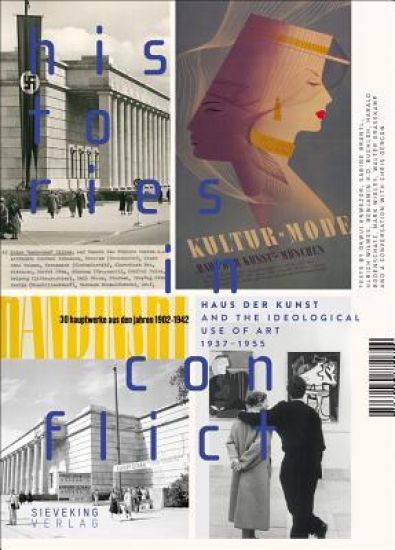
For the Haus der Kunst in Munich, the question of how to deal with its own past arose directly after the end of the Second World War, when the building once again served as an exhibition space . This richly illustrated volume spans the key historical dates during which a social and political development took place, at whose beginning stood the ideology of the National Socialists and whose end marked the start of Germany's transformation into a democratic state. In this time period, it was not only the orientation of the Haus der Kunst's content that changed; as a result of the cultural-historical upheavals of this time, the basis for the building's development as an international exhibition venue was also laid. Today the Haus der Kunst plays a formative role in the discussion of relevant positions in contemporary art. It documents the historical developments within the context of political and cultural transformations, as well as their international parallels and references. Large exhibitions that were influential for the topography of the art of the twentieth century such as the World Exposition in Paris in 1937, the biennials in Venice, and the first documenta in 1955 provide the coordinates for the international dimension of the Haus der Kunst's story.
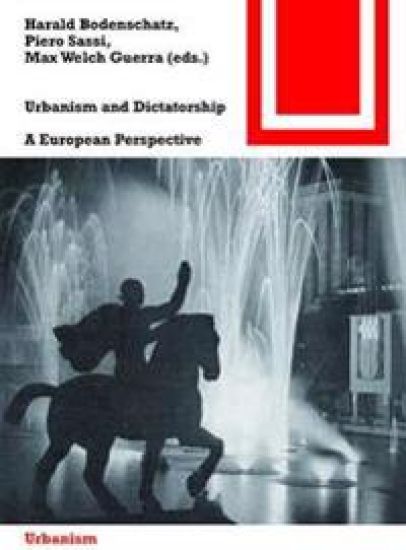
In the first half of the twentieth century, urban design under the influence of European dictatorships not only served to support the rulers in their own country, but also to gain the recognition of the democratic states. After the National Socialist regime came to power in Germany, urban design increasingly became the trump card in the competition amongst the large dictatorships in Europe - almost as in the time of absolutism. Irrespective of all conflicts and political orientations, there was an intense exchange of ideas amongst the states in Europe. It is therefore not adequate to make an assessment just from the point of view of the dictatorships. The overarching view helps to understand the special characteristics of each dictatorship and also disproves some simplified interpretations of their respective approaches to urban design. That is not just of historic interest; the discussion of the issue of dictatorships is always also an expression of our social condition, our commemorative culture, our ability to recognize old and new forms of dictatorship - even today! The book discusses the state of research into urban design under five dictatorships during the first half of the twentieth century, and presents new research results based on examples.