Kirjojen hintavertailu – 12 903 735 kirjaa ja 27 kauppaa

Kirjailija

Haris Doukas

Kirjat ja teokset yhdessä paikassa: 6 kirjaa, julkaisuja vuosilta 2020–2026, suosituimpiin kuuluu Artificial Intelligence for Energy Systems. Vertaile teosten hintoja ja tarkista saatavuus suomalaisista kirjakaupoista.

6 kirjaa

Kirjojen julkaisuvuodet: 2020–2026.

Artificial Intelligence for Energy Systems

Artificial Intelligence for Energy Systems

Elissaios Sarmas; Vangelis Marinakis; Haris Doukas

Springer International Publishing AG
2026
Nidottu
This book focuses on creating an integrated library of learning models and optimization techniques to assist decision-making on issues in the energy and building sector. It provides modern solutions to energy management and efficiency while addressing a scientific gap in the development of advanced algorithmic methods to solve these problems. More specifically, the focus is on the development of models and algorithms for problems falling into three broader categories, namely: (a) Distributed Energy Generation, (b) Microgrid Flexibility, and (c) Building Energy Efficiency. Artificial Intelligence models and mathematical optimization techniques are developed and presented for applications related to each of these categories, through a thorough analysis of the fundamental parameters of each application as well as the interactions among them. Professors, researchers, scientists, engineers, and students in energy sector-related disciplines are expected to be inspired and benefit from this book, along with readers from other disciplines wishing to learn more about this exciting new field of research.
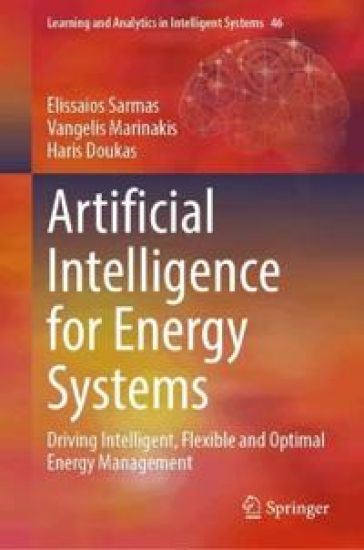
Artificial Intelligence for Energy Systems

Artificial Intelligence for Energy Systems

Elissaios Sarmas; Vangelis Marinakis; Haris Doukas

Springer International Publishing AG
2025
sidottu
This book focuses on creating an integrated library of learning models and optimization techniques to assist decision-making on issues in the energy and building sector. It provides modern solutions to energy management and efficiency while addressing a scientific gap in the development of advanced algorithmic methods to solve these problems. More specifically, the focus is on the development of models and algorithms for problems falling into three broader categories, namely: (a) Distributed Energy Generation, (b) Microgrid Flexibility, and (c) Building Energy Efficiency. Artificial Intelligence models and mathematical optimization techniques are developed and presented for applications related to each of these categories, through a thorough analysis of the fundamental parameters of each application as well as the interactions among them. Professors, researchers, scientists, engineers, and students in energy sector-related disciplines are expected to be inspired and benefit from this book, along with readers from other disciplines wishing to learn more about this exciting new field of research.
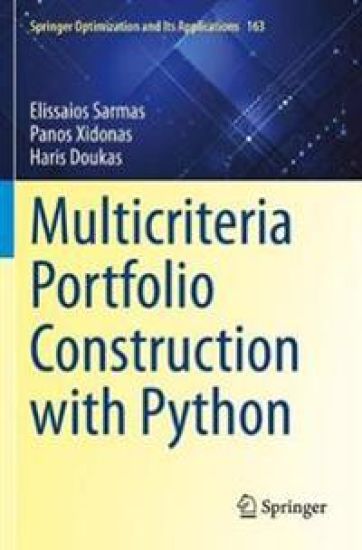
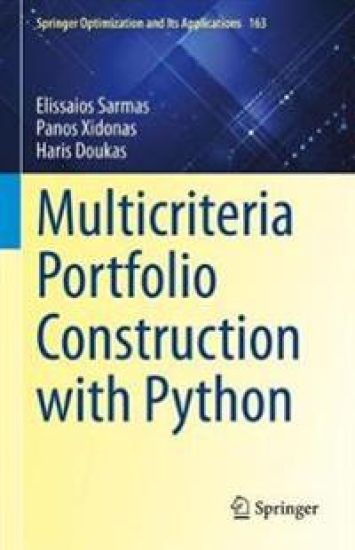
Multicriteria Portfolio Construction with Python

Multicriteria Portfolio Construction with Python

Elissaios Sarmas; Panos Xidonas; Haris Doukas

Springer Nature Switzerland AG
2021
nidottu
This book covers topics in portfolio management and multicriteria decision analysis (MCDA), presenting a transparent and unified methodology for the portfolio construction process. The most important feature of the book includes the proposed methodological framework that integrates two individual subsystems, the portfolio selection subsystem and the portfolio optimization subsystem. An additional highlight of the book includes the detailed, step-by-step implementation of the proposed multicriteria algorithms in Python. The implementation is presented in detail; each step is elaborately described, from the input of the data to the extraction of the results. Algorithms are organized into small cells of code, accompanied by targeted remarks and comments, in order to help the reader to fully understand their mechanics. Readers are provided with a link to access the source code through GitHub. This Work may also be considered as a reference which presents the state-of-art research on portfolio construction with multiple and complex investment objectives and constraints. The book consists of eight chapters. A brief introduction is provided in Chapter 1. The fundamental issues of modern portfolio theory are discussed in Chapter 2. In Chapter 3, the various multicriteria decision aid methods, either discrete or continuous, are concisely described. In Chapter 4, a comprehensive review of the published literature in the field of multicriteria portfolio management is considered. In Chapter 5, an integrated and original multicriteria portfolio construction methodology is developed. Chapter 6 presents the web-based information system, in which the suggested methodological framework has been implemented. In Chapter 7, the experimental application of the proposed methodology is discussed and in Chapter 8, the authors provide overall conclusions. The readership of the book aims to be a diverse group, including fund managers, risk managers, investment advisors, bankers, private investors, analytics scientists, operations researchers scientists, and computer engineers, to name just several. Portions of the book may be used as instructional for either advanced undergraduate or post-graduate courses in investment analysis, portfolio engineering, decision science, computer science, or financial engineering.
Multicriteria Portfolio Construction with Python

Multicriteria Portfolio Construction with Python

Elissaios Sarmas; Panos Xidonas; Haris Doukas

Springer Nature Switzerland AG
2020
sidottu
This book covers topics in portfolio management and multicriteria decision analysis (MCDA), presenting a transparent and unified methodology for the portfolio construction process. The most important feature of the book includes the proposed methodological framework that integrates two individual subsystems, the portfolio selection subsystem and the portfolio optimization subsystem. An additional highlight of the book includes the detailed, step-by-step implementation of the proposed multicriteria algorithms in Python. The implementation is presented in detail; each step is elaborately described, from the input of the data to the extraction of the results. Algorithms are organized into small cells of code, accompanied by targeted remarks and comments, in order to help the reader to fully understand their mechanics. Readers are provided with a link to access the source code through GitHub. This Work may also be considered as a reference which presents the state-of-art research on portfolio construction with multiple and complex investment objectives and constraints. The book consists of eight chapters. A brief introduction is provided in Chapter 1. The fundamental issues of modern portfolio theory are discussed in Chapter 2. In Chapter 3, the various multicriteria decision aid methods, either discrete or continuous, are concisely described. In Chapter 4, a comprehensive review of the published literature in the field of multicriteria portfolio management is considered. In Chapter 5, an integrated and original multicriteria portfolio construction methodology is developed. Chapter 6 presents the web-based information system, in which the suggested methodological framework has been implemented. In Chapter 7, the experimental application of the proposed methodology is discussed and in Chapter 8, the authors provide overall conclusions. The readership of the book aims to be a diverse group, including fund managers, risk managers, investment advisors, bankers, private investors, analytics scientists, operations researchers scientists, and computer engineers, to name just several. Portions of the book may be used as instructional for either advanced undergraduate or post-graduate courses in investment analysis, portfolio engineering, decision science, computer science, or financial engineering.
Understanding Risks and Uncertainties in Energy and Climate Policy

Understanding Risks and Uncertainties in Energy and Climate Policy

Jenny Lieu; Alexandros Flamos; Haris Doukas

Saint Philip Street Press
2020
pokkari
This open access book analyzes and seeks to consolidate the use of robust quantitative tools and qualitative methods for the design and assessment of energy and climate policies. In particular, it examines energy and climate policy performance and associated risks, as well as public acceptance and portfolio analysis in climate policy, and presents methods for evaluating the costs and benefits of flexible policy implementation as well as new framings for business and market actors. In turn, it discusses the development of alternative policy pathways and the identification of optimal switching points, drawing on concrete examples to do so. Lastly, it discusses climate change mitigation policies' implications for the agricultural, food, building, transportation, service and manufacturing sectors.; Open Access Presents a comprehensive tool set of methods for devising energy and climate policies Focuses on methods that are robust and adaptive enough to mitigate risks Investigates implications of climate change mitigation policies to various sectors This work was published by Saint Philip Street Press pursuant to a Creative Commons license permitting commercial use. All rights not granted by the work's license are retained by the author or authors.
Understanding Risks and Uncertainties in Energy and Climate Policy

Understanding Risks and Uncertainties in Energy and Climate Policy

Jenny Lieu; Alexandros Flamos; Haris Doukas

Saint Philip Street Press
2020
sidottu
This open access book analyzes and seeks to consolidate the use of robust quantitative tools and qualitative methods for the design and assessment of energy and climate policies. In particular, it examines energy and climate policy performance and associated risks, as well as public acceptance and portfolio analysis in climate policy, and presents methods for evaluating the costs and benefits of flexible policy implementation as well as new framings for business and market actors. In turn, it discusses the development of alternative policy pathways and the identification of optimal switching points, drawing on concrete examples to do so. Lastly, it discusses climate change mitigation policies' implications for the agricultural, food, building, transportation, service and manufacturing sectors.; Open Access Presents a comprehensive tool set of methods for devising energy and climate policies Focuses on methods that are robust and adaptive enough to mitigate risks Investigates implications of climate change mitigation policies to various sectors This work was published by Saint Philip Street Press pursuant to a Creative Commons license permitting commercial use. All rights not granted by the work's license are retained by the author or authors.