Kirjailija
Harold Bloom
Kirjat ja teokset yhdessä paikassa: 58 kirjaa, julkaisuja vuosilta 1971–2026, suosituimpiin kuuluu Native Son - Richard Wright. Vertaile teosten hintoja ja tarkista saatavuus suomalaisista kirjakaupoista.
58 kirjaa
Kirjojen julkaisuvuodet: 1971–2026.
From Bloom's now-canonical book "Shakespeare: The Invention of the Human" come individual meditations on two of Shakespeare's most famous plays, each with the play's original text.
A paperback original, Bloom's stand-alone introduction to The Best Poems of the English Language. A notable feature of Harold Bloom's poetry anthology The Best Poems English Language is his lengthy introductory essay, here reprinted as a separate book. For the first time Bloom gives his readers an elegant guide to reading poetry--a master critic's distillation of a lifetime of teaching and criticism. He tackles such subjects as poetic voice, the nature of metaphor and allusion, and the nature of poetic value itself. Bloom writes "the work of great poetry is to aid us to become free artists of ourselves." This essay is an invaluable guide to poetry. This edition will also include a recommended reading list of poems.
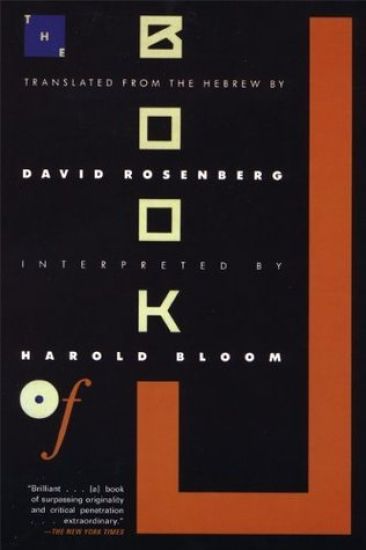
The Book of J
Harold Bloom
Grove Press / Atlantic Monthly Press
2004
nidottu
Halvin toimitettuna 20,30 €
J is the title that scholars ascribe to the nameless writer they believe is responsible for the text, written between 950 and 900 BCE, on which Genesis, Exodus and Numbers is based. In The Book of J, Bloom and Rosenberg draw the J text out of the surrounding material and present it as the seminal classic that it is. In addition to Rosenberg's original translations, Bloom argues in several essays that "J" was not a religious writer but a fierce ironist and a woman living in the court of King Solomon. He also argues that J is a writer on par with Homer, Shakespeare and Tolstoy. Bloom also offers historical context, a discussion of the theory of how the different texts came together to create the Bible, and translation notes. Rosenberg's translations from the Hebrew bring J's stories to life and reveal her towering originality and grasp of humanity.
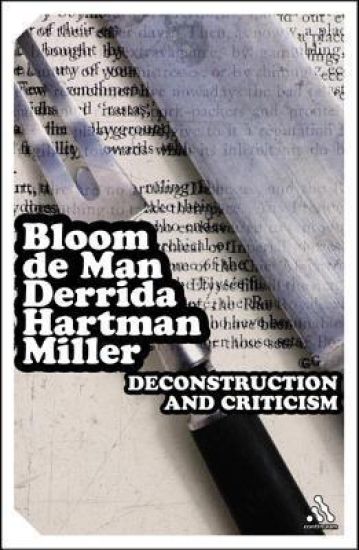
Deconstruction and Criticism
Harold Bloom; Jacques Derrida
Continuum International Publishing Group Ltd.
2004
nidottu
Five essential and challenging essays by leading post-modern theorists on the art and nature of interpretation: Jacques Derrida, Harold Bloom, Geoffrey Hartman, Paul de Man, and J. Hillis Miller.
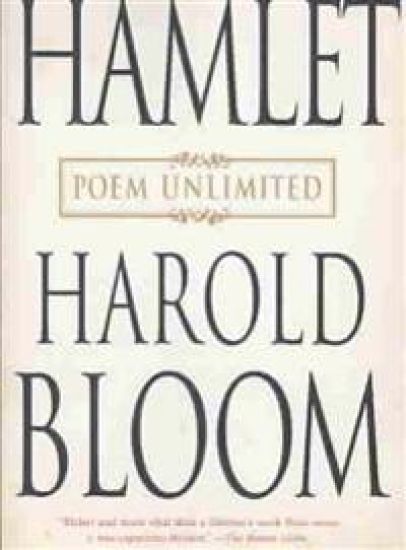
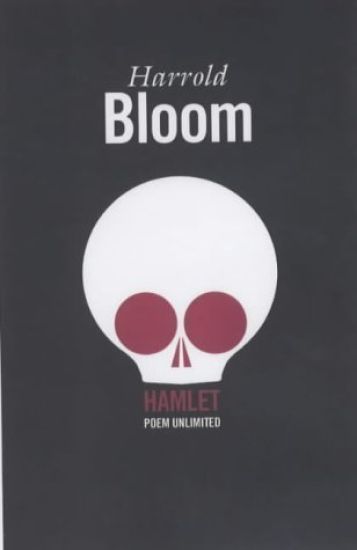
In Harold Bloom's New York Times bestselling Shakespeare: The Invention of the Human, the world's foremost literary critic theorized on the authorship of the historic play Hamlet. In this engaging new stand-alone work, he offers a full and warmly personal account of the play itself, explores its extraordinary impact throughout the history of western literature, and seeks to uncover the mystery at its heart.
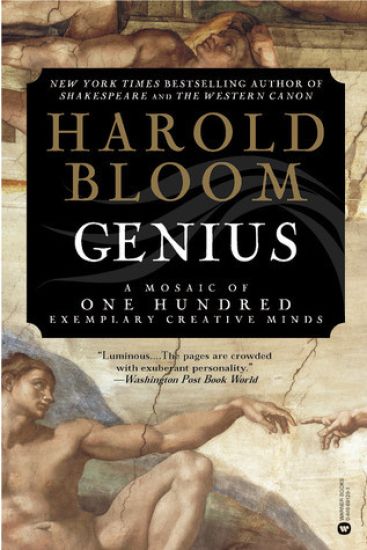
Genius: A Mosaic of One Hundred Exemplary Creative Minds
Harold Bloom
Grand Central Publishing
2003
nidottu
What is genius? It is the trait, says Harold Bloom, of standing both of and above an age, the ancient principle that recognizes and hallows the God within us, and the gift of breathing life into what is best in every living person. Now, in a monumental achievement of scholarship, America's preeminent literary critic presents an unprecedented celebration of one hundred of the most creative literary minds in history. From the Bible to Socrates, through the transcendent masterpieces of Shakespeare and Dante, down through the ages to Hemingway, Faulkner, and Ralph Ellison, Harold Bloom explores the many parallels among his chosen geniuses and the surprising ways in which they have influenced one another over the centuries. Accompanied by revealing excerpts from their works that continue to astonish, enchant, and move readers, Bloom's insightful and spirited analyses illuminate and enlarge our common understanding of Western literary and spiritual culture…and offer us a grand yet intimate tour of it in one magnificent volume.
In the bestselling Shakespeare: The Invention of the Human, Harold Bloom showed us how Shakespeare shaped human consciousness, and addressed the question of authorship in Hamlet. In Hamlet: Poem Unlimited, America's most celebrated critic turns his attention to a reading of the play itself and to Shakespeare's most enigmatic and memorable character. This is Bloom's attempt to uncover the mystery of both Prince Hamlet and the play, how both prince and drama are able to break through the conventions of theatrical mimesis and the representation of character, making us question the very nature of theatrical illusion. Hamlet: Poem Unlimited is a hugely insightful and yet highly accessible exploration of Shakespeare's crowning achievement by a critic who is seen by many as his greatest living champion.
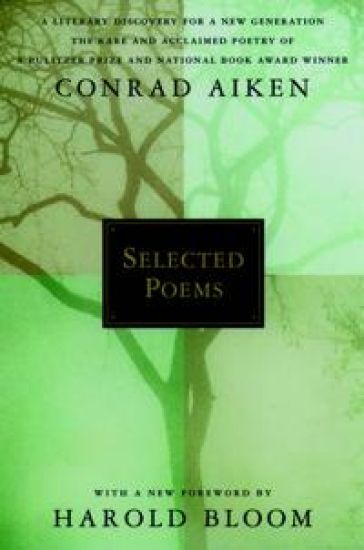
Poet, short story writer, critic and novelist, Conrad Aiken (1889-1973) has been called the most metaphysical, the most learned, and the most modern of poets. With writing that reflects an intense interest in psychological, philosophical, and scientific issues, Aiken remains a unique influence upon modern writers and critics today. In his lifetime, Aiken received many awards including the Pulitzer Prize for Poetry in 1930 and the National Book Award for Poetry in 1954. He served as the Consultant in Poetry at the Library of Congress from 1950-1952. Selected Poems contains Aiken's own choice of the best and most representative of his poems, spanning more than forty years of his work. Harold Bloom has contributed a new Foreword to reintroduce Aiken to a new generation of readers. The inclusion of several pivotal poems from previous editions broadens the scope of the work to represent Aiken's legacy.
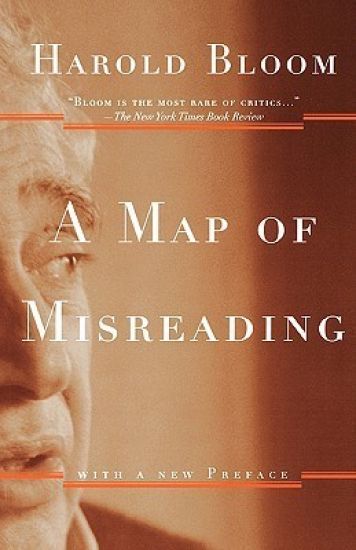
In print for twenty-seven years, A Map of Misreading serves as a companion volume to Bloom's other seminal work, The Anxiety of Influence. In this finely crafted text, Bloom offers instruction in how to read a poem, using his theory that patterns of imagery in poems represent both a response to and a defense against the influence of precursor poems. Influence, as Bloom conceives it, means that there are no texts, but only relationships between texts. Bloom discusses British and American poets including Milton, Wordsworth, Shelley, Keats, Tennyson, Browning, Whitman, Dickinson, Stevens, Warren, Ammons and Ashbery. A full-scale reading of one poem, Browning's "Childe Roland to the Dark Tower Came," represents this struggle between one poet and his precursors, the poem serving as a map for readers through the many versions of influence from Milton to modern poets. For the first time, in a new preface, Bloom will consider the map of misreading drawn by contemporary poets such as Ann Carson and Henri Cole. Bloom's new exploration of contemporary poetry over the last twenty years will illuminate how modern texts relate to previous texts, and contribute to the literary legacy of their predecessors.
Stories and Poems for Extremely Intelligent Children of All Ages
Harold Bloom
Simon Schuster
2002
pokkari
Halvin toimitettuna 23,00 €
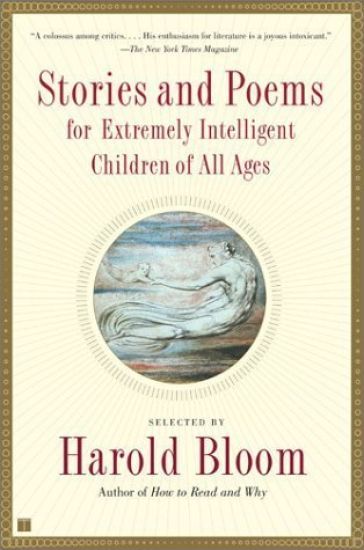
"If readers are to come to Shakespeare and to Chekhov, to Henry James and to Jane Austen, then they are best prepared if they have read Lewis Carroll and Edward Lear, Robert Louis Stevenson and Rudyard Kipling," writes Harold Bloom in his introduction to this enchanting and much-needed anthology of exceptional stories and poems selected to inspire a lifelong love of reading. As television, video games, and the Internet threaten to distract young people from the solitary pleasures of reading, Bloom presents a volume that will amuse, challenge, and beguile readers with its myriad voices and subjects. Here are old favorites by beloved writers of children's literature, as well as exciting rediscoveries and wonderful works penned by writers better known for their adult classics, such as Herman Melville, Leo Tolstoy, Edith Wharton, and Walt Whitman. Encompassing the natural world and the supernatural; childhood, romance, and death; pets, wild animals, and goblins; mystery, adventure, and humor; the selections reflect the passion and erudition of our most revered literary critic. Arranged by season, Stories and Poems for Extremely Intelligent Children of All Ages is a must-have anthology, sure to delight readers young and old for years to come.
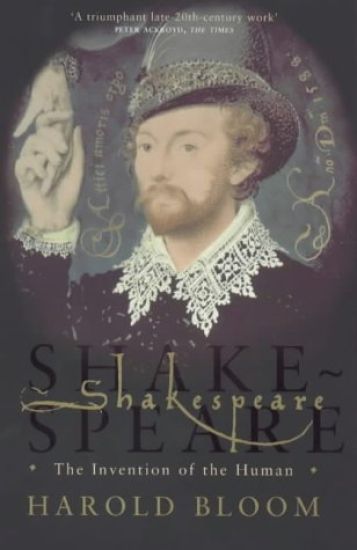
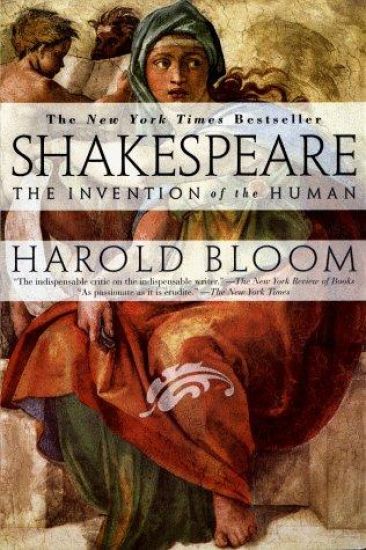
A summation of Harold Bloom's reading of Shakespeare, in which he expounds a far reaching critical theory; that Shakespeare was, through his dramatic characters, the inventor of human personality as we understand it. In a chronological survey of each of the plays Bloom explores the supra-human personalities of Shakespeare's protagonists.
A world-renowned literary critic discusses all of Shakespeare's plays, arguing that Shakespeare invented the English language and essentially shaped human nature. A National Book Award & National Book Critics Circle Finalist. Reprint. NYT. K.
The Anxiety of Influence
Harold Bloom
Oxford University Press Inc
1997
nidottu
Halvin toimitettuna 30,40 €
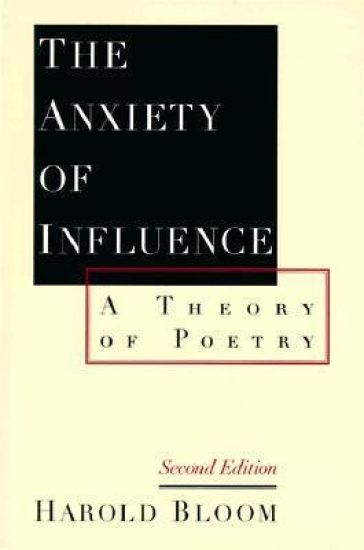
Bloom's The Anxiety of Influence, an insightful study of Romantic poets and the relation between tradition and the individual artist, has sold over 17,000 copies in paperback since 1984 and remains a central work of criticism for students of literature. For the second edition, Bloom offers a new introduction which explains the genesis of his thinking and the subsequent influence of the book on literary criticism of the past twenty years.
Zakhor
Yosef Hayim Yerushalmi; Harold Bloom
University of Washington Press
1996
pokkari
Halvin toimitettuna 39,60 €
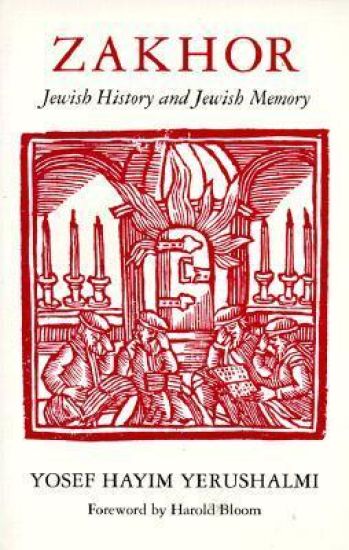
"Mr. Yerushalmi's previous writings . . . established him as one of the Jewish community's most important historians. His latest book should establish him as one of its most important critics. Zakhor is historical thinking of a very high order - mature speculation based on massive scholarship." - New York Times Book Review
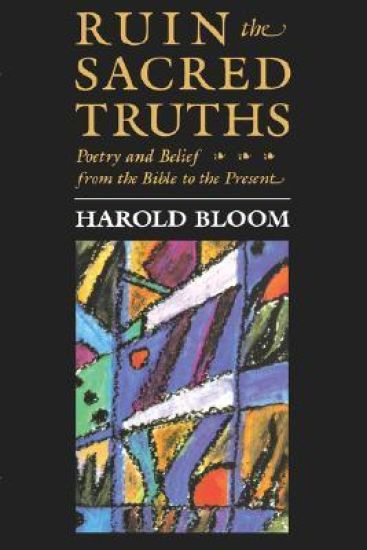
Harold Bloom surveys with majestic view the literature of the West from the Old Testament to Samuel Beckett. He provocatively rereads the Yahwist (or J) writer, Jeremiah, Job, Jonah, the Iliad, the Aeneid, Dante’s Divine Comedy, Hamlet, King Lear, Othello, the Henry IV plays, Paradise Lost, Blake’s Milton, Wordsworth’s Prelude, and works by Freud, Kafka, and Beckett. In so doing, he uncovers the truth that all our attempts to call any strong work more sacred than another are merely political and social formulations. This is criticism at its best.
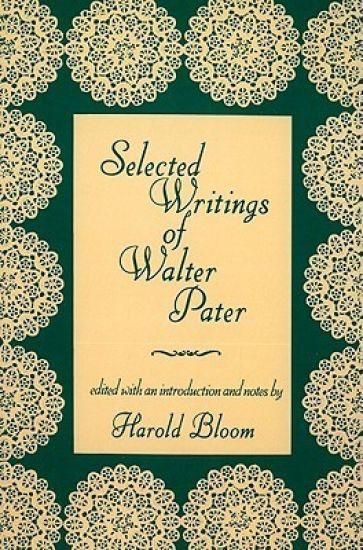
Harold Bloom's selection of Pater's writings brings together in one volume the most important sections and passages from The Renaissance, Imaginary Portraits, Appreciations, Plato and Platonism, Greek Studies, and Sketches and Reviews, as well as "The Child in the House." Pater, the chief aesthetician and literary critic of Victorian England, brought his powerful imagination to bear on a wide range of subjects: from the drama of Euripides to the painters of the Renaissance, from the Romantic poets to the pre-Raphaelites, from Plato to Oscar Wilde. In the twentieth century, Pater's theories of art and literature exerted a strong inluence on the work of Yeats, Pound, Eliot, Joyce, and Stevens.
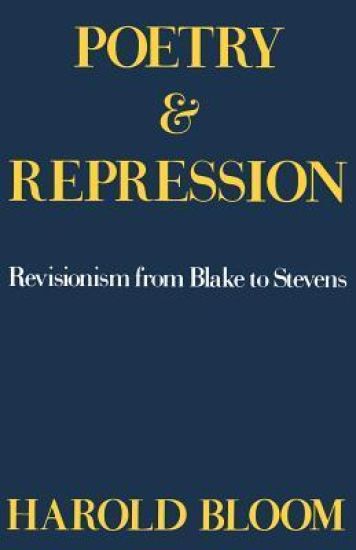
This reinterpretation of the full sweep of English and American romantic poetry offers close readings of poems of Blake, Wordsworth, Shelley, Keats, Tennyson, Browning, Whitman, Yeats, and Stevens. It also reviews the crucial ideas of Emerson, Nietzsche, and in particular Freud, whose psychoanalytic theory of repression and defense Bloom undertakes to revise for purposes of literary criticism. "Bloom offers a fully defined alternative to the principal modes of contemporary criticism, from Freudian literary criticism (which he insists is neither Freudian nor literary criticism) to the New Criticism and structuralist and archetypal approaches. It is an original, vigorous, and passionate study which is both compelling and provocative."-The British Studies Monitor "Show me but one paragraph of Bloom's approaches to texts, and I'm hooked. . . . I find sheer delight in his ingenious ways."-Kenneth Burke "Bloom has made a remarkable contribution to poetic theory."-Phoebe Pettingell, The New Leader
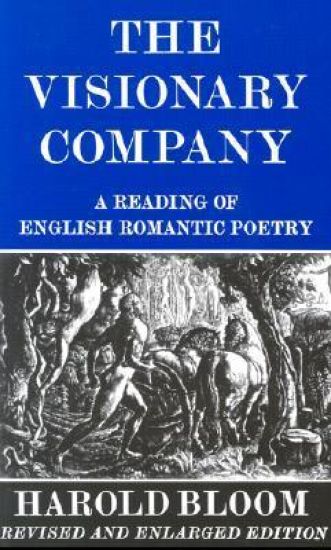
This is a revised and enlarged edition of the most extensive and detailed critical reading of English Romantic poetry ever attempted in a single volume. It is both a valuable introduction to the Romantics and an influential work of literary criticism. The perceptive interpretations of the major poems of Blake, Wordsworth, Coleridge, Byron, Shelley, Keats, Beddoes, Clare, and Darley develop the themes of Romantic myth-making and the dialectical relationship between nature and imagination. For this new edition, Harold Bloom has added an introductory essay on the historical backgrounds of English Romantic poetry and an epilogue relating his book to literary trends.