Kirjojen hintavertailu – 12 859 818 kirjaa ja 27 kauppaa

Kirjailija

Harriet Bulkeley

Kirjat ja teokset yhdessä paikassa: 17 kirjaa, julkaisuja vuosilta 2002–2024, suosituimpiin kuuluu An Urban Politics of Climate Change. Vertaile teosten hintoja ja tarkista saatavuus suomalaisista kirjakaupoista.

17 kirjaa

Kirjojen julkaisuvuodet: 2002–2024.

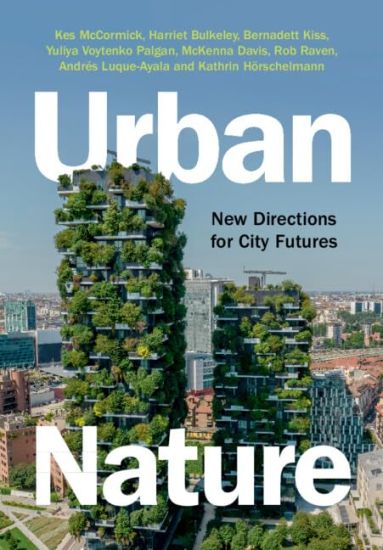
Urban Nature

Urban Nature

Kes McCormick; Bernadett Kiss; Yuliya Voytenko Palgan; Harriet Bulkeley; McKenna Davis; Rob Raven; Andrés Luque-Ayala; Kathrin Hörschelmann

Cambridge University Press
2024
pokkari

Halvin toimitettuna 52,50 €

This introductory textbook with a global scope aims to train students of geography, sustainability, and urban and environmental studies to re-imagine and transform cities to meet climate, biodiversity, and sustainability challenges. A dedicated team of authors critically examine the relationships between nature and urban areas, sharing an inspiring account of how nature helps us re-think our cities and their futures. Prior to this textbook, literature for courses covering urban nature was written by and for practitioners, whereas this textbook is written by experienced course instructors specifically to be accessible to diverse students. The textbook is illustrated with numerous photos and figures which bring key topics, challenges, and opportunities to life. It contains focus boxes and case studies from every continent, offering students an international scope and multiple entry points into the field. Chapters conclude with thought-provoking follow-up questions and recommended reading. The authors provide an array of supplementary online resources.
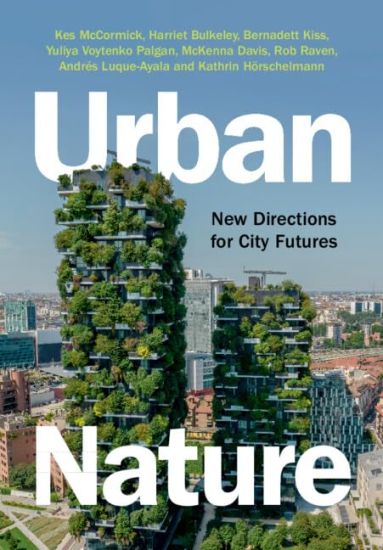
Urban Nature

Urban Nature

Kes McCormick; Bernadett Kiss; Yuliya Voytenko Palgan; Harriet Bulkeley; McKenna Davis; Rob Raven; Andrés Luque-Ayala; Kathrin Hörschelmann

Cambridge University Press
2024
sidottu
This introductory textbook with a global scope aims to train students of geography, sustainability, and urban and environmental studies to re-imagine and transform cities to meet climate, biodiversity, and sustainability challenges. A dedicated team of authors critically examine the relationships between nature and urban areas, sharing an inspiring account of how nature helps us re-think our cities and their futures. Prior to this textbook, literature for courses covering urban nature was written by and for practitioners, whereas this textbook is written by experienced course instructors specifically to be accessible to diverse students. The textbook is illustrated with numerous photos and figures which bring key topics, challenges, and opportunities to life. It contains focus boxes and case studies from every continent, offering students an international scope and multiple entry points into the field. Chapters conclude with thought-provoking follow-up questions and recommended reading. The authors provide an array of supplementary online resources.
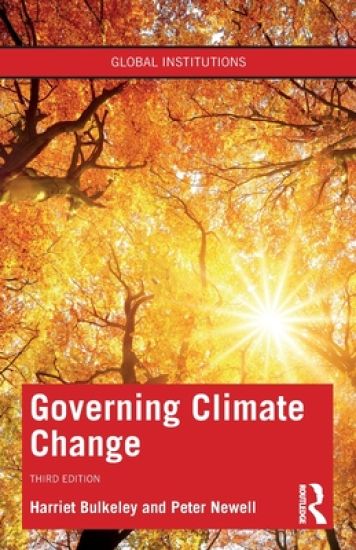
Governing Climate Change

Governing Climate Change

Harriet Bulkeley; Peter Newell

TAYLOR FRANCIS LTD
2023
nidottu

Halvin toimitettuna 51,00 €

This fully revised and expanded new edition provides a short and accessible introduction to how climate change is governed by an increasingly diverse range of actors, from civil society and business actors to multilateral development banks, donors, and cities. The issue of global climate change has risen to the top of the international political agenda. Despite ongoing contestation about the science informing policy, the economic costs of action and the allocation of responsibility for addressing the issue within and between nations, it is clear that climate change will continue to be one of the most pressing and challenging issues facing humanity for many years to come. The book: Evaluates the role of states and non-state actors in governing climate change at multiple levels of political organization: local, national, and global Provides a discussion of theoretical debates on climate change governance, moving beyond analytical approaches focused solely on nation-states and international negotiations Examines a range of key topical issues in the politics of climate change Includes multiple examples from both the north and the global southProviding an inter-disciplinary perspective drawing on geography, politics, international relations, and development studies, this book is essential reading for all those concerned not only with the climate governance but with the future of the environment in general.
Governing Climate Change

Governing Climate Change

Harriet Bulkeley; Peter Newell

TAYLOR FRANCIS LTD
2023
sidottu

Halvin toimitettuna 228,60 €

This fully revised and expanded new edition provides a short and accessible introduction to how climate change is governed by an increasingly diverse range of actors, from civil society and business actors to multilateral development banks, donors, and cities. The issue of global climate change has risen to the top of the international political agenda. Despite ongoing contestation about the science informing policy, the economic costs of action and the allocation of responsibility for addressing the issue within and between nations, it is clear that climate change will continue to be one of the most pressing and challenging issues facing humanity for many years to come. The book: Evaluates the role of states and non-state actors in governing climate change at multiple levels of political organization: local, national, and global Provides a discussion of theoretical debates on climate change governance, moving beyond analytical approaches focused solely on nation-states and international negotiations Examines a range of key topical issues in the politics of climate change Includes multiple examples from both the north and the global southProviding an inter-disciplinary perspective drawing on geography, politics, international relations, and development studies, this book is essential reading for all those concerned not only with the climate governance but with the future of the environment in general.
Decarbonising Economies

Decarbonising Economies

Harriet Bulkeley; Johannes Stripple; Lars J. Nilsson; Bregje van Veelen; Agni Kalfagianni; Fredric Bauer; Mariësse van Sluisveld

Cambridge University Press
2022
pokkari
Based on an interdisciplinary investigation of future visions, scenarios, and case-studies of low carbon innovation taking place across economic domains, Decarbonising Economies analyses the ways in which questions of agency, power, geography and materiality shape the conditions of possibility for a low carbon future. It explores how and why the challenge of changing our economies are variously ascribed to a lack of finance, a lack of technology, a lack of policy and a lack of public engagement, and shows how the realities constraining change are more fundamentally tied to the inertia of our existing high carbon society and limited visions for what a future low carbon world might become. Through showcasing the first seeds of innovation seeking to enable transformative change, Decarbonising Economies will also chart a course for future research and policy action towards our climate goals. This title is also available as Open Access on Cambridge Core.
Accomplishing Climate Governance

Accomplishing Climate Governance

Harriet Bulkeley

Cambridge University Press
2019
pokkari
This book provides a new approach to thinking about the politics and geographies of climate governance. It argues that in order to understand the nature and potential of the range of new responses to climate change emerging at multiple scales we need to examine how governance is accomplished - how it is undertaken, practised and contested. Through a range of case studies drawn from communities, corporations and local government, the book examines how climate change comes to be governed and made to matter as an issue with which diverse publics should be concerned. It concludes that rather than seeking the solution to climate change once and for all, we need to engage with the ways in which we can channel our intentions to ameliorate the climate problem to more progressive ends. The book will be of interest to researchers, advanced students and policy makers across the social sciences.
Energy and Society

Energy and Society

Gavin Bridge; Stewart Barr; Stefan Bouzarovski; Michael Bradshaw; Ed Brown; Harriet Bulkeley; Gordon Walker

Routledge
2018
nidottu
Energy and Society is the first major text to provide an extensive critical treatment of energy issues informed by recent research on energy in the social sciences. Written in an engaging and accessible style it draws new thinking on uneven development, consumption, vulnerability and transition together to illustrate the social significance of energy systems in the global North and South. The book features case studies, examples, discussion questions, activities, recommended reading and more, to facilitate its use in teaching. Energy and Society deploys contemporary geographical concepts and approaches but is not narrowly disciplinary. Its critical perspective highlights connections between energy and significant socio-economic and political processes, such as globalisation, urban isation, international development and social justice, and connects important issues that are often treated in isolation, such as resource availability, energy security, energy access and low-carbon transition. Co-authored by leading researchers and based on current research and thinking in the social sciences, Energy and Society presents a distinctive geographical approach to contemporary energy issues. It is an essential resource for upperlevel undergraduates and Master’s students in geography, environmental studies, urban studies, energy studies and related fields.
Energy and Society

Energy and Society

Gavin Bridge; Stewart Barr; Stefan Bouzarovski; Michael Bradshaw; Ed Brown; Harriet Bulkeley; Gordon Walker

Routledge
2018
sidottu
Energy and Society is the first major text to provide an extensive critical treatment of energy issues informed by recent research on energy in the social sciences. Written in an engaging and accessible style it draws new thinking on uneven development, consumption, vulnerability and transition together to illustrate the social significance of energy systems in the global North and South. The book features case studies, examples, discussion questions, activities, recommended reading and more, to facilitate its use in teaching. Energy and Society deploys contemporary geographical concepts and approaches but is not narrowly disciplinary. Its critical perspective highlights connections between energy and significant socio-economic and political processes, such as globalisation, urban isation, international development and social justice, and connects important issues that are often treated in isolation, such as resource availability, energy security, energy access and low-carbon transition. Co-authored by leading researchers and based on current research and thinking in the social sciences, Energy and Society presents a distinctive geographical approach to contemporary energy issues. It is an essential resource for upperlevel undergraduates and Master’s students in geography, environmental studies, urban studies, energy studies and related fields.
Transnational Climate Change Governance

Transnational Climate Change Governance

Harriet Bulkeley; Liliana B. Andonova; Michele M. Betsill; Daniel Compagnon; Thomas Hale; Matthew J. Hoffmann; Peter Newell; Matthew Paterson; Charles Roger; Stacy D. VanDeveer

Cambridge University Press
2018
pokkari
The world of climate politics is increasingly no longer confined to the activities of national governments and international negotiations. Critical to this transformation of the politics of climate change has been the emergence of new forms of transnational governance that cut across traditional state-based jurisdictions and operate across public and private divides. This book provides the first comprehensive, cutting-edge account of the world of transnational climate change governance. Co-authored by a team of the world's leading experts in the field and based on a survey of sixty case studies, the book traces the emergence, nature and consequences of this phenomenon, and assesses the implications for the field of global environmental politics. It will prove invaluable for researchers, graduate students and policy makers in climate change, political science, international relations, human geography, sociology and ecological economics.
Accomplishing Climate Governance

Accomplishing Climate Governance

Harriet Bulkeley

Cambridge University Press
2015
sidottu
This book provides a new approach to thinking about the politics and geographies of climate governance. It argues that in order to understand the nature and potential of the range of new responses to climate change emerging at multiple scales we need to examine how governance is accomplished - how it is undertaken, practised and contested. Through a range of case studies drawn from communities, corporations and local government, the book examines how climate change comes to be governed and made to matter as an issue with which diverse publics should be concerned. It concludes that rather than seeking the solution to climate change once and for all, we need to engage with the ways in which we can channel our intentions to ameliorate the climate problem to more progressive ends. The book will be of interest to researchers, advanced students and policy makers across the social sciences.
An Urban Politics of Climate Change

An Urban Politics of Climate Change

Harriet Bulkeley; Vanesa Broto; Gareth Edwards

Routledge
2014
sidottu
The confluence of global climate change, growing levels of energy consumption and rapid urbanization has led the international policy community to regard urban responses to climate change as ‘an urgent agenda’ (World Bank 2010). The contribution of cities to rising levels of greenhouse gas emissions coupled with concerns about the vulnerability of urban places and communities to the impacts of climate change have led to a relatively recent and rapidly proliferating interest amongst both academic and policy communities in how cities might be able to respond to mitigation and adaptation. Attention has focused on the potential for municipal authorities to develop policy and plans that can address these twin issues, and the challenges of capacity, resource and politics that have been encountered. While this literature has captured some of the essential means through which the urban response to climate change is being forged, is that it has failed to take account of the multiple sites and spaces of climate change response that are emerging in cities ‘off-plan’. An Urban Politics of Climate Change provides the first account of urban responses to climate change that moves beyond the boundary of municipal institutions to critically examine the governing of climate change in the city as a matter of both public and private authority, and to engage with the ways in which this is bound up with the politics and practices of urban infrastructure. The book draws on cases from multiple cities in both developed and emerging economies to providing new insight into the potential and limitations of urban responses to climate change, as well as new conceptual direction for our understanding of the politics of environmental governance.
An Urban Politics of Climate Change

An Urban Politics of Climate Change

Harriet Bulkeley; Vanesa Broto; Gareth Edwards

Routledge
2014
nidottu
The confluence of global climate change, growing levels of energy consumption and rapid urbanization has led the international policy community to regard urban responses to climate change as ‘an urgent agenda’ (World Bank 2010). The contribution of cities to rising levels of greenhouse gas emissions coupled with concerns about the vulnerability of urban places and communities to the impacts of climate change have led to a relatively recent and rapidly proliferating interest amongst both academic and policy communities in how cities might be able to respond to mitigation and adaptation. Attention has focused on the potential for municipal authorities to develop policy and plans that can address these twin issues, and the challenges of capacity, resource and politics that have been encountered. While this literature has captured some of the essential means through which the urban response to climate change is being forged, is that it has failed to take account of the multiple sites and spaces of climate change response that are emerging in cities ‘off-plan’. An Urban Politics of Climate Change provides the first account of urban responses to climate change that moves beyond the boundary of municipal institutions to critically examine the governing of climate change in the city as a matter of both public and private authority, and to engage with the ways in which this is bound up with the politics and practices of urban infrastructure. The book draws on cases from multiple cities in both developed and emerging economies to providing new insight into the potential and limitations of urban responses to climate change, as well as new conceptual direction for our understanding of the politics of environmental governance.
Transnational Climate Change Governance

Transnational Climate Change Governance

Harriet Bulkeley; Liliana B. Andonova; Michele M. Betsill; Daniel Compagnon; Thomas Hale; Matthew J. Hoffmann; Peter Newell; Matthew Paterson; Charles Roger; Stacy D. VanDeveer

Cambridge University Press
2014
sidottu
The world of climate politics is increasingly no longer confined to the activities of national governments and international negotiations. Critical to this transformation of the politics of climate change has been the emergence of new forms of transnational governance that cut across traditional state-based jurisdictions and operate across public and private divides. This book provides the first comprehensive, cutting-edge account of the world of transnational climate change governance. Co-authored by a team of the world's leading experts in the field and based on a survey of sixty case studies, the book traces the emergence, nature and consequences of this phenomenon, and assesses the implications for the field of global environmental politics. It will prove invaluable for researchers, graduate students and policy makers in climate change, political science, international relations, human geography, sociology and ecological economics.
Cities and Climate Change

Cities and Climate Change

Harriet Bulkeley

Routledge
2012
sidottu
Climate change is one of the most significant global challenges facing the world today. It is also a critical issue for the world’s cities. Now home to over half the world’s population, urban areas are significant sources of greenhouse gas emissions and are vulnerable to the impacts of climate change. Responding to climate change is a profound challenge. A variety of actors are involved in urban climate governance, with municipal governments, international organisations, and funding bodies pointing to cities as key arenas for response. This book provides the first critical introduction to these challenges, giving an overview of the science and policy of climate change at the global level and the emergence of climate change as an urban policy issue. It considers the challenges of governing climate change in the city in the context of the changing nature of urban politics, economics, society and infrastructures. It looks at how responses for mitigation and adaptation have emerged within the city, and the implications of climate change for social and environmental justice. Drawing on examples from cities in the north and south, and richly illustrated with detailed case-studies, this book will enable students to understand the potential and limits of addressing climate change at the urban level and to explore the consequences for our future cities. It will be essential reading for undergraduate students across the disciplines of geography, politics, sociology, urban studies, planning and science and technology studies.
Cities and Climate Change

Cities and Climate Change

Harriet Bulkeley

Routledge
2012
nidottu
Climate change is one of the most significant global challenges facing the world today. It is also a critical issue for the world’s cities. Now home to over half the world’s population, urban areas are significant sources of greenhouse gas emissions and are vulnerable to the impacts of climate change. Responding to climate change is a profound challenge. A variety of actors are involved in urban climate governance, with municipal governments, international organisations, and funding bodies pointing to cities as key arenas for response. This book provides the first critical introduction to these challenges, giving an overview of the science and policy of climate change at the global level and the emergence of climate change as an urban policy issue. It considers the challenges of governing climate change in the city in the context of the changing nature of urban politics, economics, society and infrastructures. It looks at how responses for mitigation and adaptation have emerged within the city, and the implications of climate change for social and environmental justice. Drawing on examples from cities in the north and south, and richly illustrated with detailed case-studies, this book will enable students to understand the potential and limits of addressing climate change at the urban level and to explore the consequences for our future cities. It will be essential reading for undergraduate students across the disciplines of geography, politics, sociology, urban studies, planning and science and technology studies.
Cities and Climate Change

Cities and Climate Change

Michelle Betsill; Harriet Bulkeley

Routledge
2005
nidottu
Climate change is one of the most challenging issues of our time. As key sites in the production and management of emissions of greenhouse gases, cities will be crucial for the implementation of international agreements and national policies on climate change. This book provides a critical analysis of the role of cities in addressing climate change and the prospects for urban sustainability. Cities and Climate Change is the first in-depth analysis of the role of cities in addressing climate change. The book argues that key challenges concerning the resources and powers of local government, as well as conflicts between local goals for economic development and climate change mitigation, have restricted the level of local action on climate change. These findings have significant implications for the prospects of mitigating climate change and achieving urban sustainability. This book provides a valuable interdisciplinary analysis of these issues, and will appeal to students and researchers interested in sustainability at local and global scales.
Cities and Climate Change

Cities and Climate Change

Michelle Betsill; Harriet Bulkeley

Routledge
2002
sidottu
Climate change is one of the most challenging issues of our time. As key sites in the production and management of emissions of greenhouse gases, cities will be crucial for the implementation of international agreements and national policies on climate change. This book provides a critical analysis of the role of cities in addressing climate change and the prospects for urban sustainability. Cities and Climate Change is the first in-depth analysis of the role of cities in addressing climate change. The book argues that key challenges concerning the resources and powers of local government, as well as conflicts between local goals for economic development and climate change mitigation, have restricted the level of local action on climate change. These findings have significant implications for the prospects of mitigating climate change and achieving urban sustainability. This book provides a valuable interdisciplinary analysis of these issues, and will appeal to students and researchers interested in sustainability at local and global scales.