
Kirjailija
Harry Browne
Kirjat ja teokset yhdessä paikassa: 10 kirjaa, julkaisuja vuosilta 1994–2021, suosituimpiin kuuluu For Richer, For Poorer. Vertaile teosten hintoja ja tarkista saatavuus suomalaisista kirjakaupoista.
10 kirjaa
Kirjojen julkaisuvuodet: 1994–2021.

La Inversión a Prueba de Errores: 17 reglas simples para la seguridad financiera
Harry Browne
Coleccion Baelo
2021
nidottu

A further selection of pieces by Harry Browne, written in the company of the Inkslingers

This book is a critique of the public sphere, both as the centrepiece of some liberal theory about political communications, and as a description of actually existing media practice in Ireland and beyond - in traditional commercial news media and in social media. Written in an accessible style, it is a call to more and deeper critical thinking about media, old and new, as well as a consideration of the communicative needs of a present and future movement for transformative political and economic change. Our media systems, many argue, have moved from an economics of information to an economics of attention, whereby getting us to look, to click, is the constant and central objective. Donald Trump got our attention like perhaps no one has ever done before. Ironically, for all that he is a symptom of democratic and media decay, he is also the nearest thing we have had to a centre point for a global public sphere. The first chapter of the book introduces the public sphere as an historic idea and ideal, a place where proto-democratic and even truly democratic subjects deliberate and ensure civil society has a voice at the table of state. It challenges that idea, in terms of its theoretical limitations and elisions and its ultimately technocratic-consensual model of how politics works, its evasion of `the ineradicability of antagonism'. The next chapter examines, among other things, what we can and can't learn by looking at media behaviour through the lens of proprietors' commercial interests. The biases of broadcasters and newspapers in the recent economic crisis are considered, along with the pressures and consequences of declining print circulation and migration of advertising online, as well as some initial questions about pluralism and the continuing important role of the public service media, in Ireland and elsewhere. This chapter includes an extensive review of previously unpublished results of a study into newspaper coverage of the Irish movement against the Iraq war. The final part of the book moves the discussion online, where, though nearly infinite pluralism appears to rule the day, power and freedom are more elusive. Under the regime of `communicative capitalism', we are all `content providers', generally without remuneration - unless we are lucky enough to be bestowed with the neological title of `social influencers'. Browne asks what we need to do to ensure our media actions and activism really do have a positive social influence.

This study offers a succinct analysis of a critical period in Spain's history. It assesses the causes and course of the Civil War and covers Franco's New Spain. For the Second Edition there is a fuller examination of the politics of the Second Republic and the regional and social bases of Spain's political parties. There is also a more detailed account of the military conduct of the war and of the extent of international involvement.
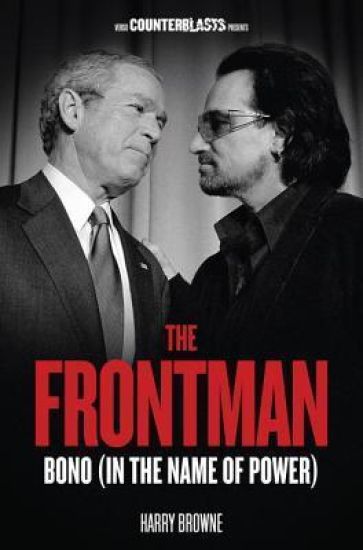
Celebrity philanthropy comes in many guises, but no single figure better encapsulates its delusions, pretensions and wrongheadedness than U2's iconic frontman, Bono-a fact neither sunglasses nor leather pants can hide. More than a mere philanthropist-indeed, he lags behind many of his peers when it comes to parting with his own money-Bono is better described as an advocate, one who has become an unwitting symbol of a complacent wealthy Western elite. The Frontman reveals how Bono moved his investments to Amsterdam to evade Irish taxes; his paternalistic and often bullying advocacy of neoliberal solutions in Africa; his multinational business interests; and his hobnobbing with Paul Wolfowitz and shock-doctrine economist Jeffrey Sachs. Carefully dissecting the rhetoric and actions of Bono the political operator, The Frontman shows him to be an ambassador for imperial exploitation, a man who has turned his attention to a world of savage injustice, inequality and exploitation-and helped make it worse.
How You Can Profit from the Coming Devaluation
Harry Browne
Lipton Financial Services, Inc.
2012
nidottu
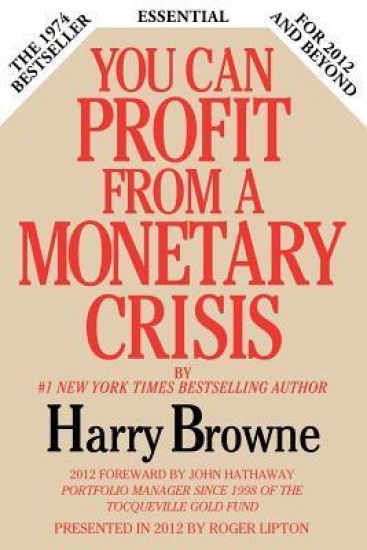
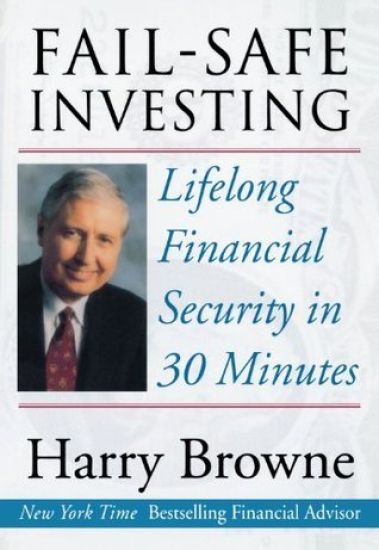
Do you worry that you're not paying enough attention to your investments? Do you feel left out when you hear about the clever things other investors seem to be doing? Relax. You don't have to become an investment genius to protect your savings. Distilling the wisdom of his thirty years' experience into lessons that can be applied in thirty minutes, Harry Browne shows you what you need to know to make your savings and investments safe and profitable, no matter what the economy and the investment markets do. There are no secret trading systems here, no jargon to learn. Instead, Harry Browne teaches you in simple terms to, among other things: -Build your wealth on your career-Make your own decisions-Build a bulletproof portfolio for protection-Take advantage of tax-reduction plans-Enjoy yourself with a budget for pleasure