Kirjojen hintavertailu – 12 903 724 kirjaa ja 27 kauppaa

Kirjailija

Harry Yang

Kirjat ja teokset yhdessä paikassa: 7 kirjaa, julkaisuja vuosilta 2015–2025, suosituimpiin kuuluu Statistical Methods for Immunogenicity Assessment. Vertaile teosten hintoja ja tarkista saatavuus suomalaisista kirjakaupoista.

7 kirjaa

Kirjojen julkaisuvuodet: 2015–2025.

Clinical Trial Modernization

Clinical Trial Modernization

Harry Yang; Liang Zhao

TAYLOR FRANCIS LTD
2025
sidottu
As the pharmaceutical industry navigates this new era of technological innovation, the integration of AI, big data, and advanced analytics into clinical trials holds immense potential to transform drug development. Clinical Trial Modernization: Technological, Operational, and Regulatory Advances provides a comprehensive overview of the current trends, challenges, and opportunities in modernizing clinical trials, offering a roadmap for stakeholders in this evolving field. This book serves as a valuable resource for professionals, researchers, and regulators, providing actionable insights into the future of clinical trials and their critical role in bringing new therapies to market faster and more effectively.
Statistical Methods for Immunogenicity Assessment

Statistical Methods for Immunogenicity Assessment

Harry Yang; Jianchun Zhang; Binbing Yu; Wei Zhao

CRC Press
2020
nidottu
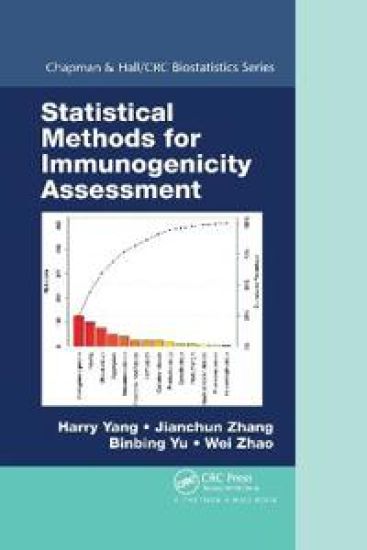
Develop Effective Immunogenicity Risk Mitigation StrategiesImmunogenicity assessment is a prerequisite for the successful development of biopharmaceuticals, including safety and efficacy evaluation. Using advanced statistical methods in the study design and analysis stages is therefore essential to immunogenicity risk assessment and mitigation strategies. Statistical Methods for Immunogenicity Assessment provides a single source of information on statistical concepts, principles, methods, and strategies for detection, quantification, assessment, and control of immunogenicity. The book first gives an overview of the impact of immunogenicity on biopharmaceutical development, regulatory requirements, and statistical methods and strategies used for immunogenicity detection, quantification, and risk assessment and mitigation. It then covers anti-drug antibody (ADA) assay development, optimization, validation, and transfer as well as the analysis of cut point, a key assay performance parameter in ADA assay development and validation. The authors illustrate how to apply statistical modeling approaches to establish associations between ADA and clinical outcomes, predict immunogenicity risk, and develop risk mitigation strategies. They also present various strategies for immunogenicity risk control. The book concludes with an explanation of the computer codes and algorithms of the statistical methods. A critical issue in the development of biologics, immunogenicity can cause early termination or limited use of the products if not managed well. This book shows how to use robust statistical methods for detecting, quantifying, assessing, and mitigating immunogenicity risk. It is an invaluable resource for anyone involved in immunogenicity risk assessment and control in both non-clinical and clinical biopharmaceutical development.
Statistical Methods for Immunogenicity Assessment

Statistical Methods for Immunogenicity Assessment

Harry Yang; Jianchun Zhang; Binbing Yu; Wei Zhao

Productivity Press
2015
sidottu
Develop Effective Immunogenicity Risk Mitigation StrategiesImmunogenicity assessment is a prerequisite for the successful development of biopharmaceuticals, including safety and efficacy evaluation. Using advanced statistical methods in the study design and analysis stages is therefore essential to immunogenicity risk assessment and mitigation strategies. Statistical Methods for Immunogenicity Assessment provides a single source of information on statistical concepts, principles, methods, and strategies for detection, quantification, assessment, and control of immunogenicity. The book first gives an overview of the impact of immunogenicity on biopharmaceutical development, regulatory requirements, and statistical methods and strategies used for immunogenicity detection, quantification, and risk assessment and mitigation. It then covers anti-drug antibody (ADA) assay development, optimization, validation, and transfer as well as the analysis of cut point, a key assay performance parameter in ADA assay development and validation. The authors illustrate how to apply statistical modeling approaches to establish associations between ADA and clinical outcomes, predict immunogenicity risk, and develop risk mitigation strategies. They also present various strategies for immunogenicity risk control. The book concludes with an explanation of the computer codes and algorithms of the statistical methods. A critical issue in the development of biologics, immunogenicity can cause early termination or limited use of the products if not managed well. This book shows how to use robust statistical methods for detecting, quantifying, assessing, and mitigating immunogenicity risk. It is an invaluable resource for anyone involved in immunogenicity risk assessment and control in both non-clinical and clinical biopharmaceutical development.
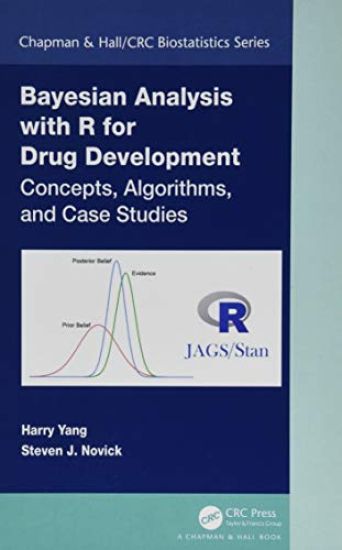
Bayesian Analysis with R for Drug Development

Bayesian Analysis with R for Drug Development

Harry Yang; Steven Novick

TAYLOR FRANCIS LTD
2021
nidottu
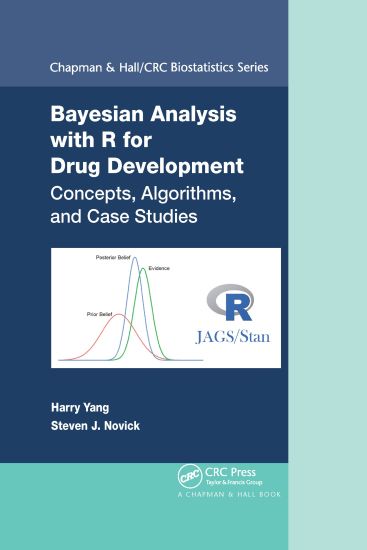
Drug development is an iterative process. The recent publications of regulatory guidelines further entail a lifecycle approach. Blending data from disparate sources, the Bayesian approach provides a flexible framework for drug development. Despite its advantages, the uptake of Bayesian methodologies is lagging behind in the field of pharmaceutical development. Written specifically for pharmaceutical practitioners, Bayesian Analysis with R for Drug Development: Concepts, Algorithms, and Case Studies, describes a wide range of Bayesian applications to problems throughout pre-clinical, clinical, and Chemistry, Manufacturing, and Control (CMC) development. Authored by two seasoned statisticians in the pharmaceutical industry, the book provides detailed Bayesian solutions to a broad array of pharmaceutical problems. Features Provides a single source of information on Bayesian statistics for drug development Covers a wide spectrum of pre-clinical, clinical, and CMC topics Demonstrates proper Bayesian applications using real-life examples Includes easy-to-follow R code with Bayesian Markov Chain Monte Carlo performed in both JAGS and Stan Bayesian software platforms Offers sufficient background for each problem and detailed description of solutions suitable for practitioners with limited Bayesian knowledgeHarry Yang, Ph. D., is Senior Director and Head of Statistical Sciences at AstraZeneca. He has 24 years of experience across all aspects of drug research and development and extensive global regulatory experiences. He has published 6 statistical books, 15 book chapters, and over 90 peer-reviewed papers on diverse scientific and statistical subjects, including 15 joint statistical works with Dr. Novick. He is a frequent invited speaker at national and international conferences. He also developed statistical courses and conducted training at the FDA and USP as well as Peking University. Steven Novick, Ph. D., is Director of Statistical Sciences at AstraZeneca. He has extensively contributed statistical methods to the biopharmaceutical literature. Novick is a skilled Bayesian computer programmer and is frequently invited to speak at conferences, having developed and taught courses in several areas, including drug-combination analysis and Bayesian methods in clinical areas. Novick served on IPAC-RS and has chaired several national statistical conferences.

Emerging Non-Clinical Biostatistics in Biopharmaceutical Development and Manufacturing
The premise of Quality by Design (QbD) is that the quality of the pharmaceutical product should be based upon a thorough understanding of both the product and the manufacturing process. This state-of-the-art book provides a single source of information on emerging statistical approaches to QbD and risk-based pharmaceutical development. A comprehensive resource, it combines in-depth explanations of advanced statistical methods with real-life case studies that illustrate practical applications of these methods in QbD implementation.
Bayesian Analysis with R for Drug Development

Bayesian Analysis with R for Drug Development

Harry Yang; Steven Novick

CRC Press
2019
sidottu
Drug development is an iterative process. The recent publications of regulatory guidelines further entail a lifecycle approach. Blending data from disparate sources, the Bayesian approach provides a flexible framework for drug development. Despite its advantages, the uptake of Bayesian methodologies is lagging behind in the field of pharmaceutical development. Written specifically for pharmaceutical practitioners, Bayesian Analysis with R for Drug Development: Concepts, Algorithms, and Case Studies, describes a wide range of Bayesian applications to problems throughout pre-clinical, clinical, and Chemistry, Manufacturing, and Control (CMC) development. Authored by two seasoned statisticians in the pharmaceutical industry, the book provides detailed Bayesian solutions to a broad array of pharmaceutical problems. Features Provides a single source of information on Bayesian statistics for drug development Covers a wide spectrum of pre-clinical, clinical, and CMC topics Demonstrates proper Bayesian applications using real-life examples Includes easy-to-follow R code with Bayesian Markov Chain Monte Carlo performed in both JAGS and Stan Bayesian software platforms Offers sufficient background for each problem and detailed description of solutions suitable for practitioners with limited Bayesian knowledgeHarry Yang, Ph. D., is Senior Director and Head of Statistical Sciences at AstraZeneca. He has 24 years of experience across all aspects of drug research and development and extensive global regulatory experiences. He has published 6 statistical books, 15 book chapters, and over 90 peer-reviewed papers on diverse scientific and statistical subjects, including 15 joint statistical works with Dr. Novick. He is a frequent invited speaker at national and international conferences. He also developed statistical courses and conducted training at the FDA and USP as well as Peking University. Steven Novick, Ph. D., is Director of Statistical Sciences at AstraZeneca. He has extensively contributed statistical methods to the biopharmaceutical literature. Novick is a skilled Bayesian computer programmer and is frequently invited to speak at conferences, having developed and taught courses in several areas, including drug-combination analysis and Bayesian methods in clinical areas. Novick served on IPAC-RS and has chaired several national statistical conferences.
Emerging Non-Clinical Biostatistics in Biopharmaceutical Development and Manufacturing
The premise of Quality by Design (QbD) is that the quality of the pharmaceutical product should be based upon a thorough understanding of both the product and the manufacturing process. This state-of-the-art book provides a single source of information on emerging statistical approaches to QbD and risk-based pharmaceutical development. A comprehensive resource, it combines in-depth explanations of advanced statistical methods with real-life case studies that illustrate practical applications of these methods in QbD implementation.