Kirjailija
Harsh V. Pant
Kirjat ja teokset yhdessä paikassa: 13 kirjaa, julkaisuja vuosilta 2008–2023, suosituimpiin kuuluu Indian Foreign Policy. Vertaile teosten hintoja ja tarkista saatavuus suomalaisista kirjakaupoista.
Nimi esiintyy myös muodoissa: Harsh V Pant
13 kirjaa
Kirjojen julkaisuvuodet: 2008–2023.
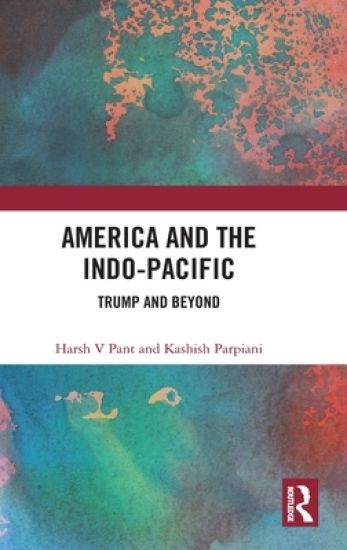
This book offers an extensive account of Donald Trump’s foreign policy record in the Indo-Pacific region. Set against the backdrop of Trump’s policy of sustained US confrontation with China, it recounts his administration’s efforts to shore up America’s position with the Indo-Pacific strategy. It also reviews Trump’s record with allies and partners in the Indo-Pacific and the South Asian subregion in context of the ‘great power competition’ between China and the United States. Amidst the ongoing conversations on the declining currency of American internationalism, the volume showcases the seeming insularity of the Indo-Pacific region from forces that are informing an America in retreat. In noting Trump’s record to have been a consequential one, the authors also offer insights into the prospects for US policy continuity under Joe Biden. This timely book will be of great interest to scholars, teachers, and students of politics and international relations, Asia studies, US-China studies, area studies, foreign policy, maritime studies, and world politics. It is a recommended read for all watchers of US foreign policy and the evolving US-China rivalry.
Politics & Geopolitics : Decoding India's Neighbourhood Challenge
Harsh V. Pant
Rupa Publications India Pvt. Ltd
2021
sidottu
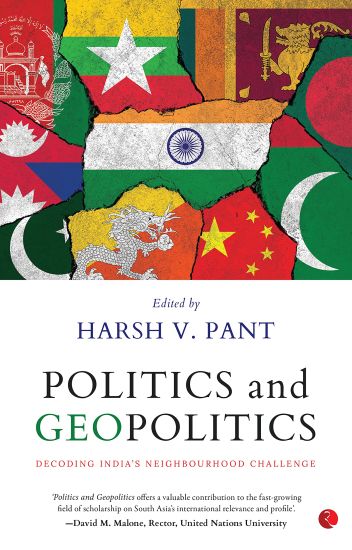
India's South Asia policy, by its very nature, has to be extremely dynamic and nimble. The Narendra Modi government has also articulated an ambitious 'Neighbourhood First' approach and has invested significant diplomatic capital in it over the last few years. But the underlying factors that have traditionally framed India's difficulties in getting its neighbourhood policy right remain as potent as ever. Against this backdrop, Politics and Geopolitics brings together some of the finest thinkers in the country to deliberate on the gamut of political, diplomatic and economic issues that India is facing in its neighbourhood beyond Chinese hostilities and the perennial lack of trust with Pakistan. Each chapter provides an overview of the last few years under the Modi government and evaluates the state of the relationship as it exists today, touching upon the main areas of disputes and charting out a way forward for the bilateral engagement. This extremely timely and crucial compilation provides a kaleidoscopic view of India's neighbourhood challenge. Politics and Geopolitics offers a valuable contribution to the fast-growing field of scholarship on South Asia's international relevance and profile, the drivers of national and regional decision-making in each of its countries, their various relationships with China, and the geo-strategic implications thereof. It explores the possibilities for forward bilateral engagement in the strategic neighbourhood with the hindsight of challenges, and suggests workable options for policymakers in what might well turn out to be the defining decade for Indian foreign policy in a re-defined neigh bourhood. This compilation provides a ringside view of India's neighbourhood challenge at a critical juncture when Sino-Indian contestation is sharpening by the day and South Asia is emerging as the central node in the wider Indo-Pacific. As India's ambitions soar on the global stage in accordance with its desire to establish itself as 'leading power' in the international order, getting its neighbourhood right is perhaps more vital than ever.
This book offers an extensive account of Donald Trump’s foreign policy record in the Indo-Pacific region. Set against the backdrop of Trump’s policy of sustained US confrontation with China, it recounts his administration’s efforts to shore up America’s position with the Indo-Pacific strategy. It also reviews Trump’s record with allies and partners in the Indo-Pacific and the South Asian subregion in context of the ‘great power competition’ between China and the United States. Amidst the ongoing conversations on the declining currency of American internationalism, the volume showcases the seeming insularity of the Indo-Pacific region from forces that are informing an America in retreat. In noting Trump’s record to have been a consequential one, the authors also offer insights into the prospects for US policy continuity under Joe Biden. This timely book will be of great interest to scholars, teachers, and students of politics and international relations, Asia studies, US-China studies, area studies, foreign policy, maritime studies, and world politics. It is a recommended read for all watchers of US foreign policy and the evolving US-China rivalry.
Indian foreign policy has undergone a remarkable transformation in a short span of five years since the coming to office of the Narendra Modi government in May 2014. This is reflected in the academic and policy debates that have emerged in the last few years. No Prime Minister before has generated the kind of voluminous literature that Prime Minister Modi's foreign policy has in such a short span, forcing even the critics to concede that something has indeed shifted on the foreign policy front. This book is a collection of author's articles written over a period of five years covering various aspects of Modi government's foreign policy. They provide a vivid trajectory of the evolution of Indian foreign policy priorities over the last five years and underscore the shifts and continuities in Prime Minister Modi's global outreach. The writings in this volume cover the author's assessment of the Modi government's foreign policy since May 2014, thereby allowing the readers to engage with the broader arc of Indian diplomacy. Hopefully, it will also allow academics and practitioners to have a more meaningful debate on the substantive shifts in Indian foreign policy over the last few years.
India's Evolving Nuclear Force and its Implications for U.S. Strategy in the Asia-Pacific
Strategic Studies Institute (SSI); Yogesh Joshi; Frank O'Donnell; Harsh V. Pant
Lulu.com
2016
nidottu
As India rises in the international system, its foreign and defense policies are attaining greater influence in shaping global security. This Letort Paper explores Indian nuclear policy approaches and views, and makes a major contribution to our understanding of this factor of growing significance in Asian security. India's nuclear arsenal development is generating new technical options for its nuclear strategy. India is developing intercontinental ballistic missile (ICBM)-range Agni-V and Agni-VI ballistic missiles, and is claiming that these will be able to host multiple nuclear warheads. It is also building a new generation of short-range and potentially nuclear-capable ballistic missiles, and fielding an indigenous naval nuclear force. However, as these advancements interact with those of India's strategic rivals, China and Pakistan, they threaten to blur nuclear thresholds and elevate the risk of inadvertent nuclear escalation due to misperception.
Leading academics from around the world, who specialize in analysing maritime strategic issues, deliberate the impact of the American 'pivot' or 're-balance' strategy, and the 'Air-Sea Battle' operational concept, on the maritime power and posture of a number of selected states. Intending to strengthen US economic, diplomatic, and security engagement throughout the Asia-Pacific, both bilaterally and multilaterally, the re-balance stands out as one of the Obama administration's most far-sighted and ambitious foreign policy initiatives.
The Growing Complexity of Sino-Indian Ties
Strategic Studies Institute; Harsh V. Pant
Lulu.com
2014
nidottu
With the world riveted by Chinese aggressiveness against Japan and Southeast Asian states in recent years, one country has not been particularly surprised: India. After all, New Delhi has been grappling with the challenge of China's rapid rise for some time now. An uneasiness exists between the two Asian giants, as they continue their ascent in the global interstate hierarchy. Even as they sign loftily worded documents year after year, the distrust between the two is actually growing at an alarming rate. True, economic cooperation and bilateral political as well as sociocultural exchanges are at an all-time high; China is India's largest trading partner. Yet this cooperation has done little to assuage each country's concerns about the other's intentions. The two sides are locked in a classic security dilemma, where any action taken by one is immediately interpreted by the other as a threat to its interests.
India's Changing Afghanistan Policy: Regional and Global Implications (Enlarged Edition)
Harsh V. Pant; U.S. Army War College; Strategic Studies Institute
Lulu.com
2013
nidottu
Contemporary Debates in Indian Foreign and Security Policy
Harsh V. Pant
Palgrave Macmillan
2012
nidottu
As India's attempts to carve out a foreign policy that is in sync with the irrising international stature,they are having to deal with a range of issues that are controversial but central to the future of an Indian global strategy. This book examines these issues and deduces major trends in Indian foreign policy.
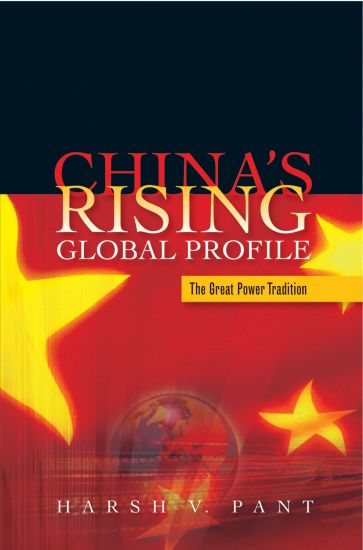
China is an emerging superpower with growing economic and political interests worldwide that need to be preserved and enhanced. As China becomes economically powerful, it has also become more ambitious and assertive. Its foreign policy strategy is aimed at protecting the country from external threats as it pursues its geopolitical interests, allowing China to continue with economic reforms as well as the acquisition of comprehensive national power. China initially shied away from playing an active role in international affairs commensurate with its economic weight. This was primarily because the political leadership made a strategic choice to concentrate on economic development at home without attempting a more interventionist global role lest it distract from the number one priority of economic development. But the last few years have seen China shun this reticence like a traditional great power and signal that it is no longer willing to watch international events unfold from the sidelines, thereby promoting its new status as a global player of significance. It is this evolving global profile of China that is the focus of this book as Harsh V Pant examines the growing role of China in various parts of the world -- Asia-Pacific, South Asia, Africa, Middle East, Indian Ocean and Europe -- and the tough diplomatic choices that it is having to make as it goes about asserting its interests.
Contemporary Debates in Indian Foreign and Security Policy
Harsh V. Pant
Palgrave Macmillan
2008
sidottu
As India's attempts to carve out a foreign policy that is in sync with the irrising international stature,they are having to deal with a range of issues that are controversial but central to the future of an Indian global strategy. This book examines these issues and deduces major trends in Indian foreign policy.