
Kirjailija
Hart Crane
Kirjat ja teokset yhdessä paikassa: 13 kirjaa, julkaisuja vuosilta 1992–2026, suosituimpiin kuuluu Il Ponte / La Torre Spezzata. Vertaile teosten hintoja ja tarkista saatavuus suomalaisista kirjakaupoista.
13 kirjaa
Kirjojen julkaisuvuodet: 1992–2026.
"Hart Crane may well remain as the greatest poet produced by America since Walt Whitman and Emily Dickinson. . . . His imaginative intensity, his flashes of imagery, his Elizabethan grandeur, make his rich blank verse eclipse most of the poetry written in English since Yeats." --Henri Peyre, New York Times Book Review A key figure in American modernist poetry, Hart Crane (1899-1932) was a visionary American poet known for his rich, imagistic language and bold exploration of themes such as identity, spirituality, and human connection. His celebrated work, The Bridge, is an epic meditation on America, using the Brooklyn Bridge metaphorically--connecting America's past with its industrialized future of innovation, progress, and hope within the American Dream. In White Buildings, his lyrical intensity is revealed in poems exploring the complexities of love, loss, and artistic ambition, along with his openness to queer themes. His experimental approach to poetry has solidified his place as a significant voice in twentieth-century poetry. Despite his tragically short life, Crane's works continue to inspire readers and writers alike, offering profound insights into the struggles and aspirations of the human spirit.
Hart Crane (1899-1932) är ett av den poetiska modernismens stjärnskott, vars förtätade poesi och komplicerade liv nu får sin första riktiga presentation på svenska. Med diktsamlingarna White Buildings (1926) och The Bridge (1930) väckte han nytt liv i den amerikanska poesin, och i sina många brevväxlingar framträder bilden av en högst medveten estet som var före sin tid och stod på kant med det litterära etablissemanget.
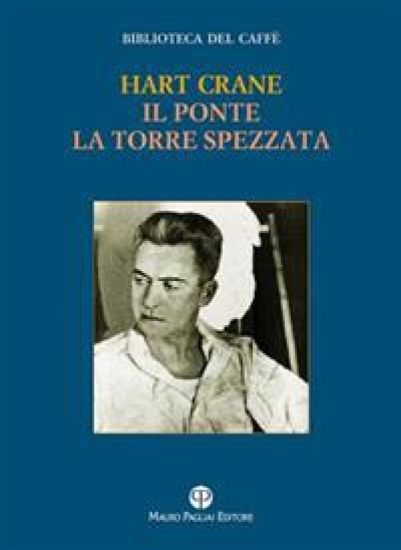
The sense of pain and the aspiration for transcendence, the transfiguring power of art and the spiritual quest for a higher dimension of consciousness, love as a force capable of redeeming the drama of existence: these are universal themes that Hart Crane expresses with his intense voice in The Bridge (1930) and in The Broken Tower (1932). Crane's noble and undefended individuality, unable to deal with life (he committed suicide by drowning when he was thirty-two), also discovers the principle of a magnificent poetic word, sublime and vivid at the same time, dazzling with its tragic splendor. This book, offering a new translation of Hart Crane's two major works, retraces the artistic and existential experience of one of the greatest American writers of the Twentieth century, comparable in his highest achievements to T. S. Eliot and Ezra Pound. The Broken Tower, so far unpublished in Italy, is the poem from which the actor and writer James Franco has recently drawn the inspiration and the title for a film about the poet's life.
The Letters of Hart Crane, 1916-1932 is a collection of personal letters written by the American poet Hart Crane. The book covers a period of sixteen years, starting from Crane's early years as a struggling writer in New York City to his eventual rise to fame as one of the most important poets of the 20th century. The letters provide a unique insight into the life and mind of Crane, revealing his struggles with depression, alcoholism, and his sexuality, as well as his deep love of poetry and literature. They also offer a glimpse into the literary and artistic scene of the time, with Crane corresponding with luminaries such as T. S. Eliot, Ezra Pound, and William Carlos Williams. The book is edited by Brom Weber, a leading expert on Crane's life and work, and includes a detailed introduction and annotations that provide context and background information on the people and events mentioned in the letters. The Letters of Hart Crane, 1916-1932 is an essential read for anyone interested in the life and work of this important American poet. This scarce antiquarian book is a facsimile reprint of the old original and may contain some imperfections such as library marks and notations. Because we believe this work is culturally important, we have made it available as part of our commitment for protecting, preserving, and promoting the world's literature in affordable, high quality, modern editions, that are true to their original work.
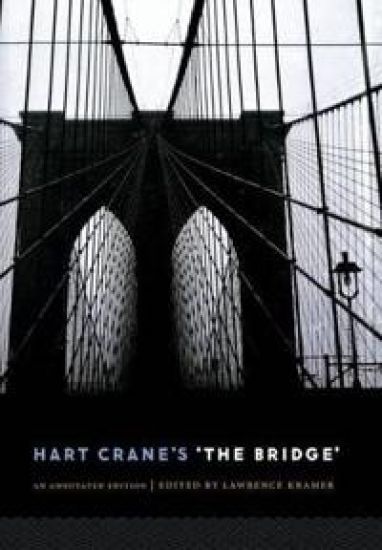
Hart Crane's 'the Bridge'
Hart Crane
FORDHAM UNIVERSITY PRESS
2011
sidottu
Halvin toimitettuna 44,20 €
Hart Crane's long poem The Bridge has steadily grown in stature since it was published in 1930. At first branded a noble failure by a few influential critics— a charge that became conventional wisdom—this panoramic work is now widely regarded as one of the finest achievements of twentieth-century American poetry. It unites mythology and modernity as a means of coming to terms with the promises, both kept and broken, of American experience. The Bridge is also very difficult. It is well loved but not well understood. Obscure and indirect allusions abound in it, some of them at surprisingly fine levels of detail. The many references to matters of everyday life in the 1920s may baffle or elude today's readers. The elaborate compound metaphors that distinguish Crane's style bring together diverse sources in ways that make it hard to say what, if anything, is "going on" in the text. The poem is replete with topical and geographical references that demand explication as well as identification. Many passages are simply incomprehensible without special knowledge, often special knowledge of a sort that is not readily available even today, when Google and Wikipedia are only a click away. Until now, there has been no single source to which a reader can go for help in understanding and enjoying Crane's vision. There has been no convenient guide to the poem's labyrinthine complexities and to its dense network of allusions—the "thousands of strands" that, Crane boasted, "had to be sorted out, researched, and interwoven" to compose the work. This book is that guide. Its detailed and far-reaching annotations make The Bridge fully accessible, for the first time, to its readers, whether they are scholars, students, or simply lovers of poetry.
Complete Poems of Hart Crane
Hart Crane
Liveright Publishing Corporation
2001
nidottu
Halvin toimitettuna 26,10 €
This edition features a new introduction by Harold Bloom as a centenary tribute to the visionary of White Buildings (1926) and The Bridge (1930). Hart Crane, prodigiously gifted and tragically doom-eager, was the American peer of Shelley, Rimbaud, and Lorca. Born in Garrettsville, Ohio, on July 21, 1899, Crane died at sea on April 27, 1932, an apparent suicide. A born poet, totally devoted to his art, Crane suffered his warring parents as well as long periods of a hand-to-mouth existence. He suffered also from his honesty as a homosexual poet and lover during a period in American life unsympathetic to his sexual orientation. Despite much critical misunderstanding and neglect, in his own time and in ours, Crane achieved a superb poetic style, idiosyncratic yet central to American tradition. His visionary epic, The Bridge, is the most ambitious and accomplished long poem since Walt Whitman's Song of Myself. Marc Simon's text is accepted as the most authoritative presentation of Hart Crane's work available to us. For this centennial edition, Harold Bloom, who was introduced to poetry by falling in love with Crane's work while still a child, has contributed a new introduction.
This first book of poems by hart Crane, one of his three major collections, was originally published in 1926. The themes in White Buildings are abstract and metaphysical, but Crane's associations and images spring from the American scene. Eugene O'Neill wrote: "Hart Crane's poems are profound and deep-seeking. In them he reveals, with a new insight and unique power, the mystic undertones of beauty which move words to express vision." "Genius is a mystery resistant to reductive analysis, whether sociobiological, psychological, or historical. Like Milton, Pope, and Tennyson, the youthful Crane was a consecrated poet before he was an adolescent."—Harold Bloom "Crane's poems are as distinct from those of other contemporary American poets as one metal from another. This man is a mystical maker: he belongs to a group of poets who create their world, rather than arrange it, and who employ the idiom of their fellows with divine arbitrariness to model the vision of themselves."—The New Republic "In single lines of arresting and luminous quality and in whole poems Mr. Crane reveals that his originality is profound."—Times Literary Supplement "The line structure is so beautiful in itself, the images so vividly conceived, and the general aura of poetry so indelibly felt that the intelligent reader will move pleasurably among the impenetrable nuances."—New York Times
This edition features a new introduction by Harold Bloom as a centenary tribute to the visionary of White Buildings (1926) and The Bridge (1930). Hart Crane, prodigiously gifted and tragically doom-eager, was the American peer of Shelley, Rimbaud, and Lorca. Born in Garrettsville, Ohio, on July 21, 1899, Crane died at sea on April 27, 1932, an apparent suicide. A born poet, totally devoted to his art, Crane suffered his warring parents as well as long periods of a hand-to-mouth existence. He suffered also from his honesty as a homosexual poet and lover during a period in American life unsympathetic to his sexual orientation. Despite much critical misunderstanding and neglect, in his own time and in ours, Crane achieved a superb poetic style, idiosyncratic yet central to American tradition. His visionary epic, The Bridge, is the most ambitious and accomplished long poem since Walt Whitman's Song of Myself. Marc Simon's text is accepted as the most authoritative presentation of Hart Crane's work available to us. For this centennial edition, Harold Bloom, who was introduced to poetry by falling in love with Crane's work while still a child, has contributed a new introduction.
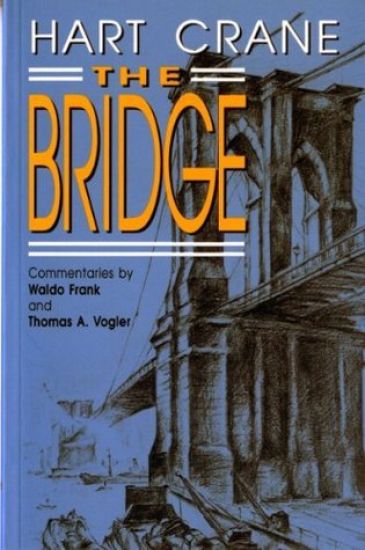
Begun in 1923 and published 1930, The Bridge is Crane's major work. "Very roughly," he wrote a friend, "it concerns a mystical synthesis of 'America' . . . The initial impulses of 'our people' will have to be gathered up toward the climax of the bridge, symbol of our constructive future, our unique identity."