
Kirjailija
Harvey D Egan
Kirjat ja teokset yhdessä paikassa: 11 kirjaa, julkaisuja vuosilta 1991–2021, suosituimpiin kuuluu The Spiritual Exercises and the Ignatian Mystical Horizon. Vertaile teosten hintoja ja tarkista saatavuus suomalaisista kirjakaupoista.
Nimi esiintyy myös muodoissa: Harvey D. Egan
11 kirjaa
Kirjojen julkaisuvuodet: 1991–2021.
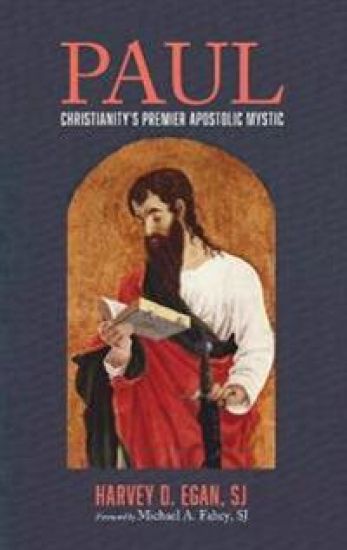
Paul: Christianity's Premier Apostolic Mystic
Harvey D Egan; Michael A Fahey
Cascade Books
2021
sidottu
Harvey Egan argues that the apostle Paul was Christianity's earliest mystic, and the world's greatest missionary, one whom scholars estimate walked over fifteen hundred miles--not to mention his dangerous sea journeys--to plant the flag of Lord Jesus in Roman colonies where Caesar was supposedly lord. This book stresses Paul's mystical consciousness and mystical life--the explicit and direct consciousness of the immediate and direct presence of the Trinity and/or Jesus-Messiah. It underscores mystical experience not only as discrete, individual experiences but also as experience in the sense that an experienced musician instinctively knows and loves music. From the light issuing from the risen Jesus-Messiah, whom he encountered on the Damascus road, Paul mystically read the Jewish Scriptures and comprehended that God consummated Israel's history through the sending of Jesus-Messiah and the Holy Spirit. Paul's letters are paradigmatic of the earliest use of the word "mystical," that is, how the Jewish Scriptures disclose Jesus-Messiah. Thus, Paul, the zealous Jewish Pharisee, grew to understand Christianity as Judaism perfected.
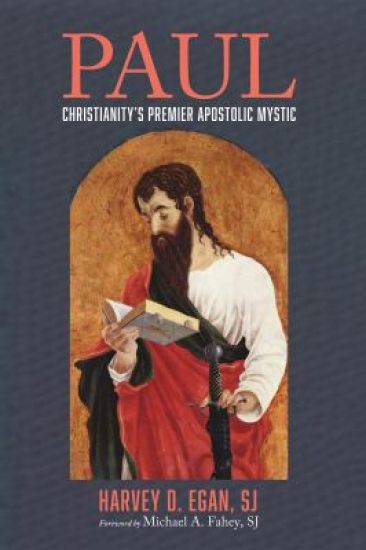
Paul: Christianity's Premier Apostolic Mystic
Harvey D Egan; Michael A Fahey
Cascade Books
2021
pokkari
Harvey Egan argues that the apostle Paul was Christianity's earliest mystic, and the world's greatest missionary, one whom scholars estimate walked over fifteen hundred miles--not to mention his dangerous sea journeys--to plant the flag of Lord Jesus in Roman colonies where Caesar was supposedly lord. This book stresses Paul's mystical consciousness and mystical life--the explicit and direct consciousness of the immediate and direct presence of the Trinity and/or Jesus-Messiah. It underscores mystical experience not only as discrete, individual experiences but also as experience in the sense that an experienced musician instinctively knows and loves music. From the light issuing from the risen Jesus-Messiah, whom he encountered on the Damascus road, Paul mystically read the Jewish Scriptures and comprehended that God consummated Israel's history through the sending of Jesus-Messiah and the Holy Spirit. Paul's letters are paradigmatic of the earliest use of the word "mystical," that is, how the Jewish Scriptures disclose Jesus-Messiah. Thus, Paul, the zealous Jewish Pharisee, grew to understand Christianity as Judaism perfected.
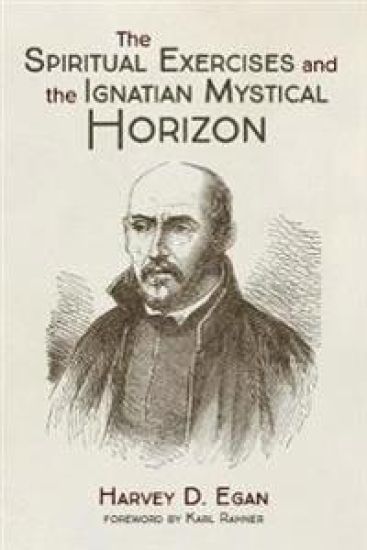
The Spiritual Exercises and the Ignatian Mystical Horizon
Harvey D Egan; Karl Rahner
Wipf Stock Publishers
2020
pokkari
This book is a revision and condensation of a doctoral dissertation which its author wrote under the direction of the well-known Father Karl Rahner at the University of Munster. It focuses on the importance of St. Ignatius' small book, the Spiritual Exercises, as a source of theological investigation. Thus it stems from Rahner's own "conviction," as he states in his foreword, "that the real theological (and not only the spiritual) significance of Ignatius' Spiritual Exercises . . . presents a non-yet accomplished task to today's theology." Absorbing, synthesizing, and completing past studies on the Exercises, Father Egan summarizes the finding of modern scholars such as Przwara, Fessard, Karl Rahner, Hugo Rahner, Marxer, Cusson, Gil, Bakker, and Gonzalez de Mendoza--all hitherto relatively unavailable in English--and then presents his own fresh viewpoint. His quest is for Ignatius' mystical horizon, "the lived internal unity, . . . the roots of all of Ignatius' experiences, knowledge, and love." Applying the contemporary methodology in theology to the study of the Ignatian Exercises, the author offers a penetrating and comprehensive treatment of Ignatius' "consolation without previous cause," of the "Three Times of Election," including intellectual and affective discernment, the trinitarian dimensions of the Exercises, and other important Ignatian themes. The book is scholarly and extensively documented and seems to be the most comprehensive and up to date theological commentary in English on the Exercises. One experienced critic has called it "one of the greatest contributions to the present commentary on the Exercises."
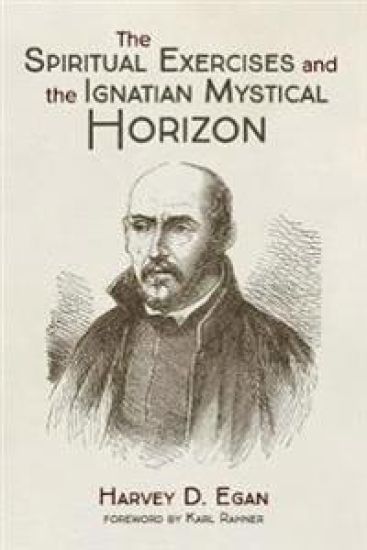
The Spiritual Exercises and the Ignatian Mystical Horizon
Harvey D Egan; Karl Rahner
Wipf Stock Publishers
2020
sidottu
This book is a revision and condensation of a doctoral dissertation which its author wrote under the direction of the well-known Father Karl Rahner at the University of Munster. It focuses on the importance of St. Ignatius' small book, the Spiritual Exercises, as a source of theological investigation. Thus it stems from Rahner's own ""conviction,"" as he states in his foreword, ""that the real theological (and not only the spiritual) significance of Ignatius' Spiritual Exercises . . . presents a non-yet accomplished task to today's theology."" Absorbing, synthesizing, and completing past studies on the Exercises, Father Egan summarizes the finding of modern scholars such as Przwara, Fessard, Karl Rahner, Hugo Rahner, Marxer, Cusson, Gil, Bakker, and Gonzalez de Mendoza--all hitherto relatively unavailable in English--and then presents his own fresh viewpoint. His quest is for Ignatius' mystical horizon, ""the lived internal unity, . . . the roots of all of Ignatius' experiences, knowledge, and love."" Applying the contemporary methodology in theology to the study of the Ignatian Exercises, the author offers a penetrating and comprehensive treatment of Ignatius' ""consolation without previous cause,"" of the ""Three Times of Election,"" including intellectual and affective discernment, the trinitarian dimensions of the Exercises, and other important Ignatian themes. The book is scholarly and extensively documented and seems to be the most comprehensive and up to date theological commentary in English on the Exercises. One experienced critic has called it ""one of the greatest contributions to the present commentary on the Exercises.""
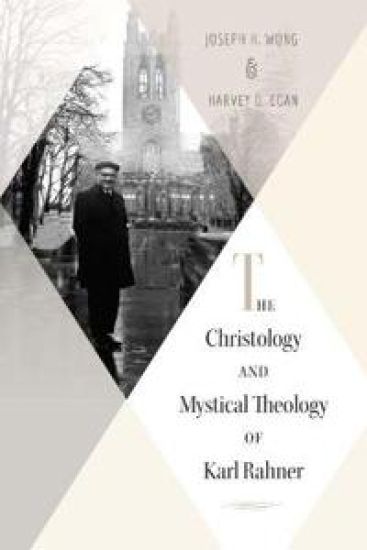
Christology and Mystical Theology of Karl Rahner
Harvey D. Egan; Joesph H. Wong
Herder Herder
2020
nidottu
The Christology and Mystical Theology of Karl Rahner delineates what Rahner means by the mysticism of daily life, the mysticism of the masses, the mysticism of the classical masters, the difference between infused and awakened contemplation, the relation of mysticism to Christian perfection, and Rahner's controversial view that the mystical life does not require a special grace. It explores how Rahner embraces the person of Jesus Christ - whom Rahner sees as Christianity's center - both with his acute theological mind but also with his Jesuit heart. Who has better defined the human person as the ability to be God in the world, understood Jesus' humanity as God's human in the world, and boldly stated the difference between Jesus and other human beings that is only he is God's humanity in the world. The book also looks at Rahner's view of Jesus as the absolute savior, his ascending and descending Christology, his creative re-interpretation of Christ's death and resurrection, his seeking Christology, and his controversial anonymous Christian theory. Finally, it emphasizes the influence of St. Ignatius of Loyola on Rahner's thinking. Ignatius's Spiritual Exercises, especially their emphasis on God working immediately with the person, its Christology, and the rules for the discernment of spirits plays a key role in Rahner's overall theological view. Few Catholic theologians have taken Christian saints and mystics as theological sources as seriously as Rahner has.
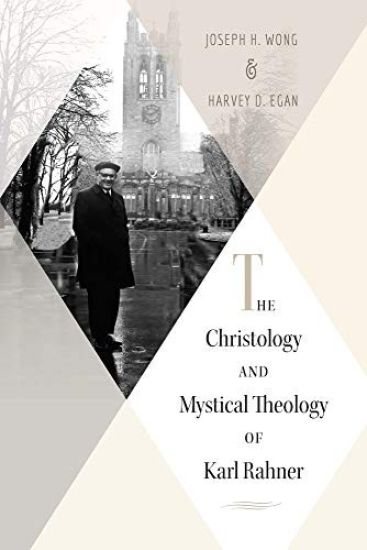
The Christology and Mystical Theology of Karl Rahner
Harvey D. Egan; Joesph H. Wong
Herder Herder
2020
sidottu
The Christology and Mystical Theology of Karl Rahner delineates what Rahner means by the mysticism of daily life, the mysticism of the masses, the mysticism of the classical masters, the difference between infused and awakened contemplation, the relation of mysticism to Christian perfection, and Rahner's controversial view that the mystical life does not require a special grace. It explores how Rahner embraces the person of Jesus Christ - whom Rahner sees as Christianity's center - both with his acute theological mind but also with his Jesuit heart. Who has better defined the human person as the ability to be God in the world, understood Jesus' humanity as God's human in the world, and boldly stated the difference between Jesus and other human beings that is only he is God's humanity in the world. The book also looks at Rahner's view of Jesus as the absolute savior, his ascending and descending Christology, his creative re-interpretation of Christ's death and resurrection, his seeking Christology, and his controversial anonymous Christian theory. Finally, it emphasizes the influence of St. Ignatius of Loyola on Rahner's thinking. Ignatius's Spiritual Exercises, especially their emphasis on God working immediately with the person, its Christology, and the rules for the discernment of spirits plays a key role in Rahner's overall theological view. Few Catholic theologians have taken Christian saints and mystics as theological sources as seriously as Rahner has.
Called in a special way to listen to God's whispers, the mystics amplify not only what it means to be baptized into the life, death, and resurrection of Jesus Christ 'and to having the Trinity living in them 'but also what is deepest in the human spirit. Mystics experience themselves as an infinite question to which only God is the answer; as an immense longing that only Love can quench; as a nothing in the face of the No-Thing. They are God's fools, troubadours 'the great artists and poets of the interior life whose learned ignorance" articulates the art of loving God, neighbor, self, the Church, and the world. In Soundings in the Christian Mystical Tradition Harvey Egan draws on fifty years of reading and teaching the mystics to sketch the varieties and passion of the mystical life across more than two millennia. Through their stories and words Egan reveals that all were conscious of the paradox of human identity 'supremely and unsurpassably manifested in the God-Man 'that the genuinely human is disclosed only through surrender to God and that the search for God cannot bypass the genuinely human.
Karl Rahner was the most influential Catholic theologian of the 20th century. His writings helped prepare the way for Vatican II and did much to shape the Church in the post-conciliar period. Because of his intellectual influence, however, his significant contributions to spirituality are often overlooked. In this book, a colleague of Rahner’s (and fellow Jesuit) presents short passages of Rahner’s work with clear and engaging explanation of Rahner’s Christian mystical vision.
This comprehensive anthology will serve both as a text for serious students of mysticism and a reflective collection for those first exploring its thought. Biographical and historical data, as well as the mystic's key ideas and information about why the particular text was selected introduce each mystic to the reader. Fifty-five mystics or mystical theologians, ancient and modern, are represented, including: Origen, Augustine of Hippo, Hildegard of Bingen, Francis of Assisi, Bonaventure, Angela of Foligno, Catherine of Siena, the anonymous author of Cloud of Unknowing, Thomas a' Kempis, Teresa of Avila, John of the Cross, Francis de Sales, Therese of Lisieux, Elizabeth of the Trinity, Pierre Teilhard de Chardin, Thomas Merton, and Karl Rahner.