Kirjojen hintavertailu – 12 859 829 kirjaa ja 27 kauppaa
Kirjailija
Harwinder Singh
Kirjat ja teokset yhdessä paikassa: 25 kirjaa, julkaisuja vuosilta 2010–2022, suosituimpiin kuuluu Melhorar a utilização de novas tecnologias na indústria de manufatura. Vertaile teosten hintoja ja tarkista saatavuus suomalaisista kirjakaupoista.
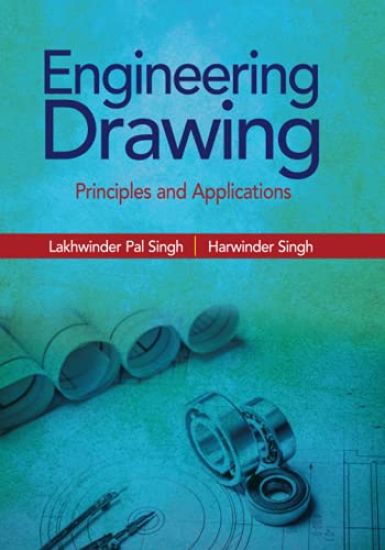
This student friendly and self-explanatory textbook attempts to help readers, engineering students in India, grasp the basic concepts of engineering drawing clearly and easily. Care has been taken to include topics that mesh well with the syllabi of most universities, colleges and polytechnic institutes in India. Important topics, such as projection of solids, auxiliary projections, section of solids, isometric projections, orthographic projections and projection of planes, have been discussed comprehensively. Heavy emphasis has also been put on the actual figures described in the text, both from the first angle and third angle projection methods. A chapter on computer graphics further integrates these concepts with modern manual computer aided design. Finally, hundreds of solved examples, practice problems and objective-type questions with answers have been added to ensure the learning objectives of each chapter have been achieved.
In the contemporary automotive manufacturing industry, service providers are continuously working to improve system optimization in order to remain competitive in the market and deliver quality products to satisfy their customers. With this comes the possibility of failure, rejection and reworking of the components or services in the system, which can incur high costs and impact the reputation of an organization. This book uses Failure Mode and Effect Analysis (FMEA) to assess, investigate and predict the Risk Priority Number (RPN) of potential failures for three companies within the manufacturing industry: A metal component supplier in the automotive sectorPart manufacturer for the automobile and engineering industriesManufacturer of suspension components for commercial vehicles Integrating human expertise and artificial intelligence on a single platform, the authors use fuzzy logic as a tool to overcome the vagueness associated with traditional methods of assessing potential failures. The book also details the procedure and scales of how to conduct FMEA, offering guidance on how to input and rank each risk within manufacturing processes across a range of sectors's. Each of the three real-world cases offer suggested improvements for the companies themselves, alongside takeaways for researchers and professionals within the fields of manufacturing and supply chain management.
This book covers the strategic use of continuous improvement (CI) techniques for manufacturing performance improvement. It focuses primarily on strategies that can be adopted by small and middle-sized enterprises in manufacturing in order to meet the global challenges and competition. The book begins with an introduction to CI (or Kaizen), explaining different CI approaches and strategies. Chapter 2 offers a literature review of CI, examining conceptual frameworks, case studies, and surveys. Next, the book deals with the design of the study, detailing the work done in each phase along with the tools, techniques and models. Chapter 4 presents a detailed survey to determine the present status of continuous improvement strategies in the Indian manufacturing industry, to assess the important barriers that effect the implementation of CI strategies, and to also assess the role of key enablers leading to improve the performance of manufacturing operations. Chapter 5 is comprised of detailedcase studies to further analyze the application of the discussed CI strategies. The purpose of Chapter 6 is to develop the relationship among the different identified most important barriers in implementing CI approach using interpretive structural modeling (ISM) and classify these barriers depending upon their driving and dependence power. Finally Chapter 7 provides conclusions, addresses potential limitations, and also looks to the future.