Kirjojen hintavertailu – 12 859 818 kirjaa ja 27 kauppaa
Kirjailija
Hayden White
Kirjat ja teokset yhdessä paikassa: 16 kirjaa, julkaisuja vuosilta 1978–2024, suosituimpiin kuuluu Metaistorija. Istoricheskoe voobrazhenie v Evrope XIX veka. Vertaile teosten hintoja ja tarkista saatavuus suomalaisista kirjakaupoista.
The second volume of The Ethics of Narrative completes the project of bringing together nearly all of Hayden White's uncollected essays from the last two decades of his life, including articles, essays, and previously unpublished lectures. As in the first volume, volume 2 features White's trenchant articulations of his influential theories, as well as his explorations of a wide range of ideas and authors at the frontiers of critical theory, literature, and historical studies. These include the concept of utopia in history, modernism and postmodernism, constructivism, the conceptualization of historical periods such as "the Sixties" and "the Enlightenment," the representation of the Holocaust in scholarly and literary writing, as well as essays on Frank Kermode, Saul Friedländer, and Krzysztof Pomian.
The second volume of The Ethics of Narrative completes the project of bringing together nearly all of Hayden White's uncollected essays from the last two decades of his life, including articles, essays, and previously unpublished lectures. As in the first volume, volume 2 features White's trenchant articulations of his influential theories, as well as his explorations of a wide range of ideas and authors at the frontiers of critical theory, literature, and historical studies. These include the concept of utopia in history, modernism and postmodernism, constructivism, the conceptualization of historical periods such as "the Sixties" and "the Enlightenment," the representation of the Holocaust in scholarly and literary writing, as well as essays on Frank Kermode, Saul Friedländer, and Krzysztof Pomian.
Kniga posvjaschena analizu osobennostej istoricheskogo soznanija i narrativa, prisuschikh istoriografii i filosofii istorii v Evrope XIX veka. Istorija istoricheskogo myshlenija XIX veka opisyvaet polnyj krug: ot vosstanija protiv Ironicheskogo istoricheskogo mirovozzrenija pozdnego Prosveschenija do vozvraschenija k skhozhemu Ironicheskomu mirovozzreniju nakanune XX veka. Klassicheskaja epokha evropejskoj istoricheskoj mysli ot Gegelja do Kroche predstavljala soboj popytku konstituirovat istoriju kak osnovu dlja "realisticheskoj" nauki o cheloveke, obschestve i kulture. Etot realizm dolzhen byl osnovyvatsja na soznanii, osvobozhdennom ot vrozhdennogo stsientizma i pessimizma Ironii pozdnego Prosveschenija, s odnoj storony, i ot kognitivno bezotvetstvennoj very rannego Romanticheskogo dvizhenija - s drugoj. No v trudakh svoikh naibolee vydajuschikhsja istorikov i filosofov istorii Evropa XIX veka preuspela lish v porozhdenii mnozhestva konfliktujuschikh "realizmov", kazhdyj iz kotorykh byl snabzhen teoreticheskim apparatom i podkreplen eruditsiej, ne pozvoljavshimi otvergnut ego pretenzii khotja by na predvaritelnoe priznanie. (Khejden Uajt) Redaktor: Trubina E. G., Kharitonov V. V.
Whitei sõnul alustavad ajaloolased oma tööd sündmuste kroonika koostamisest, mis tuleb organiseerida ühtseks looks. Need on kaks eeletappi enne materjali töötlemist süzheeks, mis väidetavalt väljendab ideoloogiat. Seega on ajalooteos "verbaalne struktuur narratiivse proosajutustuse vormis, mis väidetavalt on minevikustruktuuride ja protsesside mudel või ikoon, et selgitada, millised need olid, neid esindades".
Hayden White is widely considered to be the most influential historical theorist of the twentieth century. The Ethics of Narrative brings together nearly all of White's uncollected essays from the last two decades of his life, revealing a lesser-known side of White: that of the public intellectual. From modern patriotism and European identity to Hannah Arendt's writings on totalitarianism, from the idea of the historical museum and the theme of melancholy in art history to trenchant readings of Leo Tolstoy and Primo Levi, the first volume of The Ethics of Narrative shows White at his most engaging, topical, and capacious. Expertly introduced by editor Robert Doran, who lucidly explains the major themes, sources, and frames of reference of White's thought, this volume features five previously unpublished lectures, as well as more complete versions of several published essays, thereby giving the reader unique access to White's late thought. In addition to historical theorists and intellectual historians, The Ethics of Narrative will appeal to students and scholars across the humanities in such fields as literary and cultural studies, art history and visual studies, and media studies.
Hayden White is widely considered to be the most influential historical theorist of the twentieth century. The Ethics of Narrative brings together nearly all of White's uncollected essays from the last two decades of his life, revealing a lesser-known side of White: that of the public intellectual. From modern patriotism and European identity to Hannah Arendt's writings on totalitarianism, from the idea of the historical museum and the theme of melancholy in art history to trenchant readings of Leo Tolstoy and Primo Levi, the first volume of The Ethics of Narrative shows White at his most engaging, topical, and capacious. Expertly introduced by editor Robert Doran, who lucidly explains the major themes, sources, and frames of reference of White's thought, this volume features five previously unpublished lectures, as well as more complete versions of several published essays, thereby giving the reader unique access to White's late thought. In addition to historical theorists and intellectual historians, The Ethics of Narrative will appeal to students and scholars across the humanities in such fields as literary and cultural studies, art history and visual studies, and media studies.
Originally published in 1998. In his earlier books such as Tropics of Discourse and The Content of the Form, Hayden White focused on the conventions of historical writing and on the ordering of historical consciousness. In Figural Realism, White collects eight interrelated essays primarily concerned with the treatment of history in recent literary critical discourse. "'History' is not only an object we can study," writes White, "it is also and even primarily a certain kind of relationship to 'the past' mediated by a distinctive kind of written discourse. It is because historical discourse is actualized in its culturally significant form as a specific kind of writing that we may consider the relevance of literary theory to both the theory and the practice of historiography."
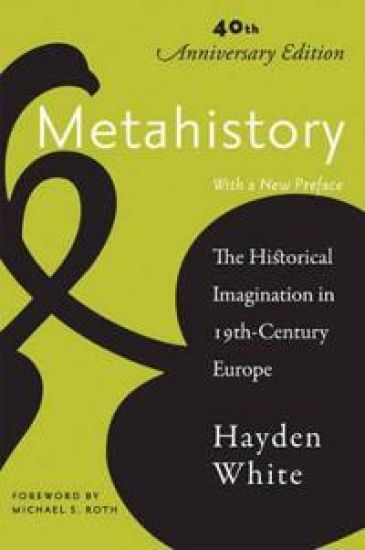
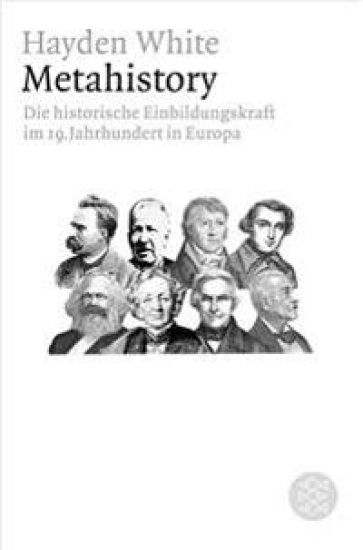
Since its initial publication in 1973, Hayden White's Metahistory has remained an essential book for understanding the nature of historical writing. In this classic work, White argues that a deep structural content lies beyond the surface level of historical texts. This latent poetic and linguistic content - which White dubs the "metahistorical element" - essentially serves as a paradigm for what an "appropriate" historical explanation should be. To support his thesis, White analyzes the complex writing styles of historians like Michelet, Ranke, Tocqueville, and Burckhardt, and philosophers of history such as Marx, Hegel, Nietzsche, and Croce. The first work in the history of historiography to concentrate on historical writing as writing, Metahistory sets out to deprive history of its status as a bedrock of factual truth, to redeem narrative as the substance of historicality, and to identify the extent to which any distinction between history and ideology on the basis of the presumed scientificity of the former is spurious. This fortieth-anniversary edition includes a new preface in which White explains his motivation for writing Metahistory and discusses how reactions to the book informed his later writing. In a new foreword, Michael S. Roth, a former student of White's and the current president of Wesleyan University, reflects on the significance of the book across a broad range of fields, including history, literary theory, and philosophy. This book will be of interest to anyone-in any discipline-who takes the past as a serious object of study.
Hayden White borrows the title for The Practical Past from philosopher Michael Oakeshott, who used the term to describe the accessible material and literary-artistic artifacts that individuals and institutions draw on for guidance in quotidian affairs. The Practical Past, then, forms both a summa of White's work to be drawn upon and a new direction in his thinking about the writing of history. White's monumental Metahistory: The Historical Imagination in Nineteenth-Century Europe (1973) challenged many of the commonplaces of professional historical writing and wider assumptions about the ontology of history itself. It formed the basis of his argument that we can never recover ""what actually happened""in the past and cannot really access even material culture in context. Forty years on, White sees ""professional history"" as falling prey to narrow specialization, and he calls upon historians to take seriously the practical past of explicitly ""artistic"" works, such as novels and dramas, and literary theorists likewise to engage historians.
Hayden White is celebrated as one of the great minds in the humanities. Since the publication of his groundbreaking monograph, Metahistory, in 1973, White's work has been crucial to disciplines where narrative is of primary concern, including history, literary studies, anthropology, philosophy, art history, and film and media studies. This volume, deftly introduced by Robert Doran, gathers in one place White's important-and often hard-to-find-essays exploring his revolutionary theories of historical writing and narrative. These texts find White at his most essayistic, engaging a wide range of topics and thinkers with characteristic insight and elegance. The Fiction of Narrative traces the arc and evolution of White's field-defining thought and will become standard reading for students and scholars of historiography, the theory of history, and literary studies.
Hayden White is celebrated as one of the great minds in the humanities. Since the publication of his groundbreaking monograph, Metahistory, in 1973, White's work has been crucial to disciplines where narrative is of primary concern, including history, literary studies, anthropology, philosophy, art history, and film and media studies. This volume, deftly introduced by Robert Doran, gathers in one place White's important-and often hard-to-find-essays exploring his revolutionary theories of historical writing and narrative. These texts find White at his most essayistic, engaging a wide range of topics and thinkers with characteristic insight and elegance. The Fiction of Narrative traces the arc and evolution of White's field-defining thought and will become standard reading for students and scholars of historiography, the theory of history, and literary studies.
Ausgehend von seiner Untersuchung der großen Historiographen des 19. Jahrhunderts entwirft Hayden White eine formale Theorie der Arbeit des Historikers, die den unvermeidlich poetischen Charakter der Geschichtsschreibung herausarbeitet. Die Debatte, die mit diesem großen Buch angestoßen wurde, wirkt bis heute nach.
Originally published in 1980, this now classic work of literary theory explores the wilderness of positions that grew out of the collision between Anglo-American practical criticism and Continental philosophic criticism. This second edition includes a new preface by the author as well as a foreword by Hayden White.“A key text for understanding ‘the fate of reading’ in the Anglophone world over the last fifty years.”—Hayden White, from the Foreword“Criticism in the Wilderness may be the best, most brilliant, most broadly useful book yet written by an American about the sudden swerve from the safety of established decorum toward bravely theoretical, mainly European forms of literary criticism.”—Terrence Des Pres, Nation“A polemical survey that reaffirms the value of the Continental tradition of philosophical literary criticism.”—Notable Books of the Year, New York Times Book Review
Nothing has generated more controversy in the social sciences than the turn toward culture, variously known as the linguistic turn, culturalism, or postmodernism. This book examines the impact of the cultural turn on two prominent social science disciplines, history and sociology, and proposes new directions in the theory and practice of historical research. The editors provide an introduction analyzing the origins and implications of the cultural turn and its postmodernist critiques of knowledge. Essays by leading historians and historical sociologists reflect on the uses of cultural theories and show both their promise and their limitations. The afterword by Hayden White provides an assessment of the trend toward culturalism by one its most influential proponents. "Beyond the Cultural Turn" offers fresh theoretical readings of the most persistent issues created by the cultural turn and provocative empirical studies focusing on diverse social practices, the uses of narrative, and the body and self as critical junctures where culture and society intersect.
Hayden White probes the notion of authority in art and literature and examines the problems of meaning - its production, distribution, and consumption-in different historical epochs. In the end, he suggests, the only meaning that history can have is the kind that a narrative imagination gives to it. The secret of the process by which consciousness invests history with meaning resides in "the content of the form," in the way our narrative capacities transform the present into a fulfillment of a past from which we would wish to have descended.
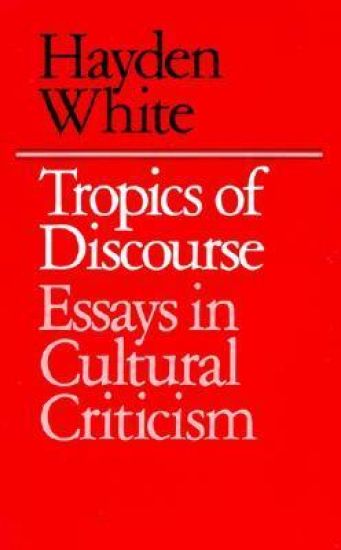
Tropics of Discourse develops White's ideas on interpretation in history, on the relationship between history and the novel, and on history and historicism. Vico, Croce, Derrida, and Foucault are among the figures he assesses in this work, which also offers original interpretations of a number of literary themes, including the Wild Man and the Noble Savage. White's commentary ranges from a reappraisal of Enlightenment history to a reflective summary of the current state of literary criticism.