
Kirjojen hintavertailu – 12 859 827 kirjaa ja 27 kauppaa

Kirjailija

Hayward Area Historical Society

Kirjat ja teokset yhdessä paikassa: 2 kirjaa, julkaisuja vuosilta 2009–2013, suosituimpiin kuuluu Legendary Locals of Castro Valley, Hayward, and San Lorenzo, California. Vertaile teosten hintoja ja tarkista saatavuus suomalaisista kirjakaupoista.

2 kirjaa

Kirjojen julkaisuvuodet: 2009–2013.

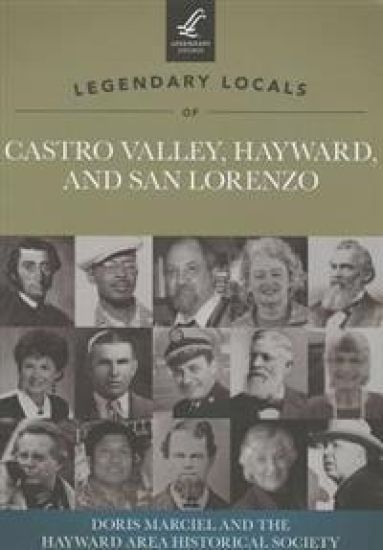
Legendary Locals of Castro Valley, Hayward, and San Lorenzo, California

Legendary Locals of Castro Valley, Hayward, and San Lorenzo, California

Doris Marciel; Hayward Area Historical Society

Arcadia Publishing (SC)
2013
nidottu
The Hayward area is a region in California made up of a city, Hayward, and two unincorporated towns, San Lorenzo and Castro Valley. The three communities share a common history, but each has unique individual stories--such as failed gold miner and entrepreneur William Hayward, who established a stagecoach stop and boardinghouse in 1851 that quickly attracted a diverse group of settlers and led to the establishment of the city of Hayward. Other legendary locals include Castro Valley historian Lucille Lorge, whose grandfather owned the first business in Castro Valley; English sailor Harry Rowell, who jumped ship in San Francisco Bay and was later known as the King of the Rodeo for his rodeo stock; and San Lorenzo Village developer David Bohannon, who changed the San Lorenzo farming area into a sprawling suburban center and the first planned community during World War II.
Russell City

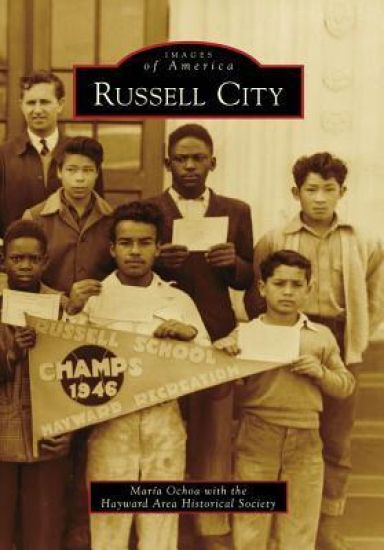
Russell City

María Ochoa; Hayward Area Historical Society

Arcadia Publishing (SC)
2009
nidottu
Between 1853 and 1964, on the western shore of what is now the city of Hayward, there existed a small rural community. This pictorial history traces the role that this region, which became known as Russell City, played in the development of the East Bay. Named for Joel Russell, a New England teacher who came to California during the Gold Rush and found success as a judge, political activist, and businessman, Russell City later became a destination point for diverse migrant and immigrant groups including Spaniards, Danes, Germans, Italians, African Americans, and Mexicans. While the economic means of the residents were never great, social riches abounded in the cultural and religious traditions that were practiced. A plan to create an industrial park on Russell City land emerged during the 1950s, and by 1964 the residents and businesses were entirely removed through eminent domain. An annual reunion picnic, begun in 1978, serves as a reminder of the community once built and then tossed to the winds. In the words of the former residents, The city may be gone, but the memories live on.