Kirjojen hintavertailu – 12 859 818 kirjaa ja 27 kauppaa

Kirjailija

Heather A. Conley

Kirjat ja teokset yhdessä paikassa: 7 kirjaa, julkaisuja vuosilta 2013–2022, suosituimpiin kuuluu The Kremlin Playbook. Vertaile teosten hintoja ja tarkista saatavuus suomalaisista kirjakaupoista.

7 kirjaa

Kirjojen julkaisuvuodet: 2013–2022.

The Kremlin Playbook 3

The Kremlin Playbook 3

Heather A. Conley; Donatienne Ruy

BLOOMSBURY PUBLISHING PLC
2022
nidottu
This latest and final report in the Kremlin Playbook series explores how the United States and its European allies can protect the religious beliefs and values of their citizens from malign influence at a time when transatlantic societies are grappling with the speed of societal change. Societal anxiety and fear related to these rapid economic, demographic, and generational shifts—and the subsequent politics and political figures that seek to capitalize on them—have fueled societal divisions around the so-called cultural wars in Western societies. Through two main channels, the Orthodox world and the traditional values ecosystem, the Kremlin has taken advantage of these fears to accentuate societal wedges in Europe and Eurasia.
America's Arctic Moment

America's Arctic Moment

Heather A. Conley; Matthew Melino

BLOOMSBURY PUBLISHING PLC
2021
nidottu
In July 2018, CSIS embarked on a major analytical assessment that centered on the following research question: What will be the strategic consequences for the United States by 2050 if America’s two near-peer military competitors, China and Russia, continue to develop their long-term economic and security interests in the Arctic, but the United States does not? Russia’s growing economic and military ambitions in the Arctic, as well as China’s increased physical presence in the region, underscore that both nations have long-term strategic designs for the Arctic region. Data analysis, satellite imagery, and scenario development all demonstrate the continued growth of Russian and Chinese presence in the Arctic and heighten the sense of stasis in the U. S. military and economic presence. Unless the United States wishes to lose access to portions of the Arctic and have increasingly diminished capabilities to defend and deter attack against the homeland, the United States must return to the Arctic.
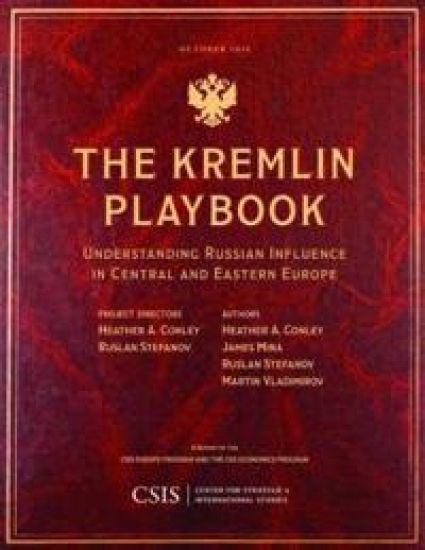
The Kremlin Playbook

The Kremlin Playbook

Heather A. Conley; James Mina; Ruslan Stefanov; Martin Vladimirov

Centre for Strategic International Studies,U.S.
2016
nidottu
Russia has cultivated an opaque web of economic and political patronage across the Central and Eastern European region that the Kremlin uses to influence and direct decisionmaking. This report from the CSIS Europe Program, in partnership with the Bulgarian Center for the Study of Democracy, is the result of a 16-month study on the nature of Russian influence in five case countries: Hungary, Slovakia, Bulgaria, Latvia, and Serbia.
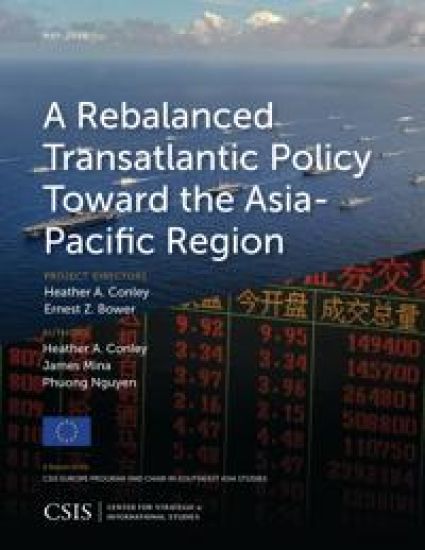
A Rebalanced Transatlantic Policy Toward the Asia-Pacific Region

A Rebalanced Transatlantic Policy Toward the Asia-Pacific Region

Heather A. Conley; James Mina; Phuong Nguyen

Centre for Strategic International Studies,U.S.
2016
nidottu
In 2014, the CSIS Europe and Southeast Asia Programs embarked on a two-year initiative to create a new and enduring EU-U. S. collaborative mechanism to enhance transatlantic Asia-Pacific policy coordination and understanding. This report is the culmination of this two-year study and presents the findings of the research while also offering actionable recommendations for U. S. and EU policymakers.
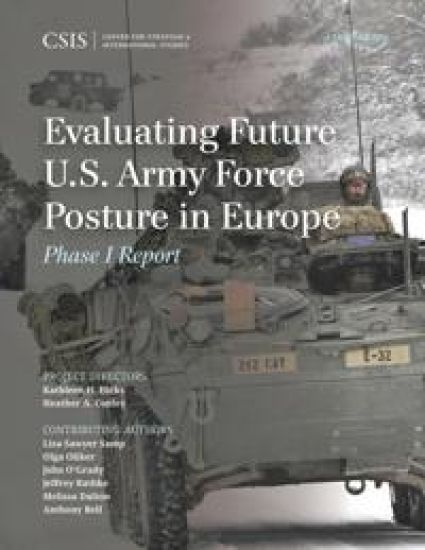
Evaluating Future U.S. Army Force Posture in Europe

Evaluating Future U.S. Army Force Posture in Europe

Kathleen H. Hicks; Heather A. Conley

Centre for Strategic International Studies,U.S.
2016
nidottu
This report offers a reexamination of U. S. Army posture in Europe amid heightened tensions between the United States and Russia over the geopolitical orientation of Ukraine. This study reviews Russian military capabilities; considers alternative U. S. force posture arrangements; assesses how to determine whether assurance and deterrence goals are being met; and offers concrete recommendations in order to optimize the U. S. Army’s presence in Europe to deter Russian aggression against the most vulnerable NATO members.
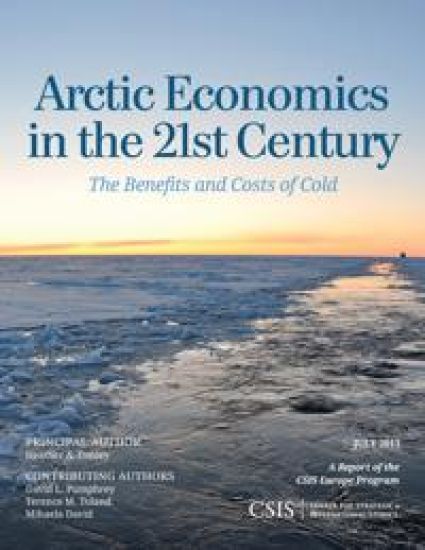
Arctic Economics in the 21st Century

Arctic Economics in the 21st Century

Heather A. Conley

Centre for Strategic International Studies,U.S.
2013
nidottu
Arctic Economics in the 21st Century explores the key economic dynamics at play in the rapidly changing Arctic region. This report evaluates both the economic benefits of an increasingly open Arctic region and the costs of exploring the riches of the American Arctic. It frames an economic strategy built upon six critical economic components: mineral resources, oil and gas development, shipping, fisheries, tourism, and finally, the regional infrastructure required to support and sustain the first five components. The report analyzes the increasingly prominent role of the private sector in Arctic development and its interplay with the potentially diminished traditional role of governments in the region.
The New Foreign Policy Frontier

The New Foreign Policy Frontier

Heather A. Conley

Centre for Strategic International Studies,U.S.
2013
nidottu
Since World War II, the Arctic has been a region of geostrategic importance to the United States. As unprecedented environmental transformation occurs in the Arctic, this region will increase in significance. When historians look back at this critical opportunity to develop U. S. Arctic policy, we do not want the question to be posed, “Who lost the Arctic?” but rather, “How did the United States win the Arctic?” Crafting U. S. policy toward the Arctic, however, is a complex and challenging undertaking. Arctic policy must respond to the economic, environmental, security, and geopolitical concerns that confront the region. When the Barack Obama administration came into office in January 2009, it accepted and left unchanged the recently adopted Arctic strategy of the George W. Bush administration. In its second term, it is now time for the Obama administration to enhance U. S. Arctic policy by updating and prioritizing National Security Presidential Directive 66/Homeland Security Presidential Directive 25 (NSPD-66/HSPD-25), improving interagency cooperation, enhancing U. S. international and public diplomacy related to the Arctic, and increasing the focus of senior U. S. officials. These activities must begin now if the United States is to prepare for and fully maximize its chairmanship of the Arctic Council beginning in 2015.