Kirjojen hintavertailu – 12 903 725 kirjaa ja 27 kauppaa

Kirjailija

Heather Ann Thompson

Kirjat ja teokset yhdessä paikassa: 9 kirjaa, julkaisuja vuosilta 2017–2026, suosituimpiin kuuluu The Attica Turkey Shoot. Vertaile teosten hintoja ja tarkista saatavuus suomalaisista kirjakaupoista.

9 kirjaa

Kirjojen julkaisuvuodet: 2017–2026.

Fear and Fury: Bernie Goetz, the Reagan '80s, and the Rebirth of White Rage

Fear and Fury: Bernie Goetz, the Reagan '80s, and the Rebirth of White Rage

Heather Ann Thompson

Pantheon Books
2026
sidottu

Halvin toimitettuna 32,40 €

In this masterful, groundbreaking work, Pulitzer Prize-winning author Heather Ann Thompson shines surprising new light on an infamous 1984 New York subway shooting that would unveil simmering racial resentments and would lead, in unexpected ways, to a fractured future and a new era of rage and violence. On December 22, 1984, in a graffiti-covered New York City subway car, passengers looked on in horror as a white loner named Bernhard Goetz shot four Black teens, Darrell Cabey, Barry Allen, Troy Canty, and James Ramseur, at point-blank range. He then disappeared into a dark tunnel. After an intense manhunt, and his eventual surrender in New Hampshire, the man the tabloid media had dubbed the "Death Wish Vigilante" would become a celebrity and a hero to countless ordinary Americans who had been frustrated with the economic fallout of the Reagan 80s. Overnight, Goetz's young victims would become villains. Out of this dramatic moment would emerge an angry nation, in which Rupert Murdoch's New York Post and later Fox News Network stoked the fear and the fury of a stunning number of Americans. Drawing from never-before-seen archival materials, legal files, and more, Heather Ann Thompson narrates the Bernie Goetz Subway shootings and their decades-long reverberations, while deftly recovering the lives of the boys whom too many decided didn't matter. Fear and Fury is the remarkable account and a searing indictment of a crucial turning point in American history.
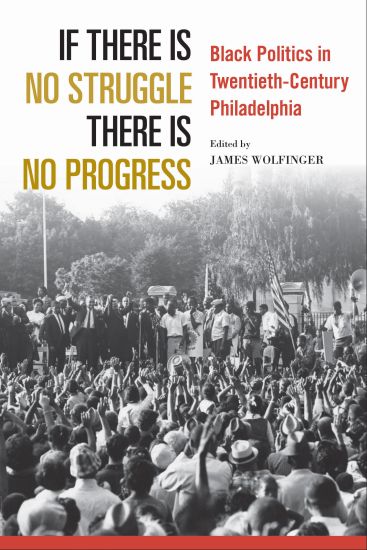
If There Is No Struggle There Is No Progress

If There Is No Struggle There Is No Progress

Heather Ann Thompson

TEMPLE UNIVERSITY PRESS,U.S.
2022
sidottu
Philadelphia has long been a crucial site for the development of Black politics across the nation. If There Is No Struggle There Is No Progress provides an in-depth historical analysis-from the days of the Great Migration to the present-of the people and movements that made the city a center of political activism. The editor and contributors show how Black activists have long protested against police abuse, pushed for education reform, challenged job and housing discrimination, and put presidents in the White House. If There Is No Struggle There Is No Progress emphasizes the strength of political strategies such as the “Don’t Buy Where You Can’t Work” movement and the Double V campaign. It demonstrates how Black activism helped shift Philadelphia from the Republican machine to Democratic leaders in the 1950s and highlights the election of politicians like Robert N. C. Nix, Sr., the first African American representative from Philadelphia. In addition, it focuses on grassroots movements and the intersection of race, gender, class, and politics in the 1960s, and shows how African Americans from the 1970s to the present challenged Mayor Frank Rizzo and helped elect Mayors Wilson Goode, John Street, and Michael Nutter. If There Is No Struggle There Is No Progress cogently makes the case that Black activism has long been a powerful force in Philadelphia politics.
If There Is No Struggle There Is No Progress

If There Is No Struggle There Is No Progress

Heather Ann Thompson

TEMPLE UNIVERSITY PRESS,U.S.
2022
nidottu
Philadelphia has long been a crucial site for the development of Black politics across the nation. If There Is No Struggle There Is No Progress provides an in-depth historical analysis-from the days of the Great Migration to the present-of the people and movements that made the city a center of political activism. The editor and contributors show how Black activists have long protested against police abuse, pushed for education reform, challenged job and housing discrimination, and put presidents in the White House. If There Is No Struggle There Is No Progress emphasizes the strength of political strategies such as the “Don’t Buy Where You Can’t Work” movement and the Double V campaign. It demonstrates how Black activism helped shift Philadelphia from the Republican machine to Democratic leaders in the 1950s and highlights the election of politicians like Robert N. C. Nix, Sr., the first African American representative from Philadelphia. In addition, it focuses on grassroots movements and the intersection of race, gender, class, and politics in the 1960s, and shows how African Americans from the 1970s to the present challenged Mayor Frank Rizzo and helped elect Mayors Wilson Goode, John Street, and Michael Nutter. If There Is No Struggle There Is No Progress cogently makes the case that Black activism has long been a powerful force in Philadelphia politics.
Voter Suppression in U.S. Elections

Voter Suppression in U.S. Elections

Stacey Abrams; Carol Anderson; Kevin M. Kruse; Heather Cox Richardson; Heather Ann Thompson

University of Georgia Press
2020
pokkari
Historians have long been engaged in telling the story of the struggle for the vote. In the wake of recent contested elections, the suppression of the vote has returned to the headlines, as awareness of the deep structural barriers to the ballot, particularly for poor, black, and Latino voters, has called attention to the historical roots of issues related to voting access. Perhaps most notably, former state legislator Stacey Abrams’s campaign for Georgia's gubernatorial race drew national attention after she narrowly lost to then-secretary of state Brian Kemp, who had removed hundreds of thousands of voters from the official rolls. After her loss, Abrams created Fair Fight, a multimillion-dollar initiative to combat voter suppression in twenty states. At an annual conference of the Organization of American Historians, leading scholars Carol Anderson, Kevin M. Kruse, Heather Cox Richardson, and Heather Anne Thompson had a conversation with Abrams about the long history of voter suppression at the Library Company of Philadelphia. This book is a transcript of that extraordinary conversation, edited by Jim Downs. Voter Suppression in U. S. Elections offers an enlightening, history-informed conversation about voter disenfranchisement in the United States. By gathering scholars and activists whose work has provided sharp analyses of this issue, we see how historians in general explore contentious topics and provide historical context for students and the broader public. The book also includes a “top ten” selection of essays and articles by such writers as journalist Ari Berman, Pulitzer Prize–winning historian David Blight, and civil rights icon John Lewis.
Voter Suppression in U.S. Elections

Voter Suppression in U.S. Elections

Stacey Abrams; Carol Anderson; Kevin M. Kruse; Heather Cox Richardson; Heather Ann Thompson

University of Georgia Press
2020
sidottu
Historians have long been engaged in telling the story of the struggle for the vote. In the wake of recent contested elections, the suppression of the vote has returned to the headlines, as awareness of the deep structural barriers to the ballot, particularly for poor, black, and Latino voters, has called attention to the historical roots of issues related to voting access. Perhaps most notably, former state legislator Stacey Abrams’s campaign for Georgia's gubernatorial race drew national attention after she narrowly lost to then-secretary of state Brian Kemp, who had removed hundreds of thousands of voters from the official rolls. After her loss, Abrams created Fair Fight, a multimillion-dollar initiative to combat voter suppression in twenty states. At an annual conference of the Organization of American Historians, leading scholars Carol Anderson, Kevin M. Kruse, Heather Cox Richardson, and Heather Anne Thompson had a conversation with Abrams about the long history of voter suppression at the Library Company of Philadelphia. This book is a transcript of that extraordinary conversation, edited by Jim Downs. Voter Suppression in U. S. Elections offers an enlightening, history-informed conversation about voter disenfranchisement in the United States. By gathering scholars and activists whose work has provided sharp analyses of this issue, we see how historians in general explore contentious topics and provide historical context for students and the broader public. The book also includes a “top ten” selection of essays and articles by such writers as journalist Ari Berman, Pulitzer Prize–winning historian David Blight, and civil rights icon John Lewis.
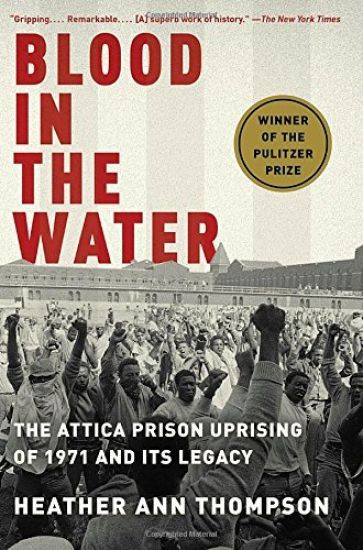
Blood in the Water: The Attica Prison Uprising of 1971 and Its Legacy

Blood in the Water: The Attica Prison Uprising of 1971 and Its Legacy

Heather Ann Thompson

VINTAGE
2017
nidottu

Halvin toimitettuna 23,20 €

PULITZER PRIZE WINNER - The definitive history of the infamous 1971 Attica Prison uprising, the state's violent response, and the victim's decades-long quest for justice. - Thompson served as the Historical Consultant on the Academy Award-nominated documentary feature ATTICA "Gripping ... deals with racial conflict, mass incarceration, police brutality and dissembling politicians ... Makes us understand why this one group of prisoners rebelled], and how many others shared the cost." --The New York Times On September 9, 1971, nearly 1,300 prisoners took over the Attica Correctional Facility in upstate New York to protest years of mistreatment. Holding guards and civilian employees hostage, the prisoners negotiated with officials for improved conditions during the four long days and nights that followed. On September 13, the state abruptly sent hundreds of heavily armed troopers and correction officers to retake the prison by force. Their gunfire killed thirty-nine men--hostages as well as prisoners--and severely wounded more than one hundred others. In the ensuing hours, weeks, and months, troopers and officers brutally retaliated against the prisoners. And, ultimately, New York State authorities prosecuted only the prisoners, never once bringing charges against the officials involved in the retaking and its aftermath and neglecting to provide support to the survivors and the families of the men who had been killed. Drawing from more than a decade of extensive research, historian Heather Ann Thompson sheds new light on every aspect of the uprising and its legacy, giving voice to all those who took part in this forty-five-year fight for justice: prisoners, former hostages, families of the victims, lawyers and judges, and state officials and members of law enforcement. Blood in the Water is the searing and indelible account of one of the most important civil rights stories of the last century. (With black-and-white photos throughout)
The Attica Turkey Shoot

The Attica Turkey Shoot

Malcolm Bell; Heather Ann Thompson

Skyhorse Publishing
2017
sidottu
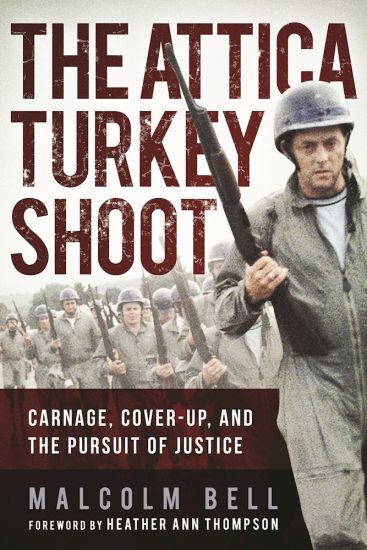
The Attica Turkey Shoot tells a story that New York State did not want you to know. In 1971, following a prison riot at the Attica Correctional Facility, state police and prison guards slaughtered thirty-nine hostages and inmates and tortured more than one thousand men after they had surrendered. State officials pretended that they could not successfully prosecute the law officers who perpetrated this carnage, and then those same officials scurried for shelter when a prosecutor named Malcolm Bell exposed the cover-up. Bell traveled a rocky road to a justice of sorts as he sought to prosecute without fear or favor?in spite of a deck that the officials had stacked to keep the police from facing the same justice that had filled the Attica prison in the first place. His insider’s account illuminates the all-too-common contrast between the justice of the privileged and the justice of the rest. The book also includes evidence from recently uncovered tapes that Governor Nelson Rockefeller knew his order for troopers to attack could cost the lives of hundreds of inmates and all those hostages. The Attica Turkey Shoot highlights the hypocrisy of a criminal justice system that decides who goes to prison and who enjoys impunity in a nation where no one is said to be above the law.
Whose Detroit?

Whose Detroit?

Heather Ann Thompson

Cornell University Press
2017
pokkari
"Thompson's engrossing book is essential for any collection on the history, politics, or society of post–World War II America."â• Library Journal In Whose Detroit?, Heather Ann Thompson focuses in detail on the African American struggles for full equality and equal justice under the law that shaped the Motor City during the 1960s and 1970s. Even after Great Society liberals committed themselves to improving conditions in Detroit, Thompson argues, poverty and police brutality continued to plague both neighborhoods and workplaces. Frustration with entrenched discrimination and the lack of meaningful remedies not only led black residents to erupt in the infamous urban uprising of 1967, but it also sparked myriad grassroots challenges to postwar liberalism in the wake of that rebellion. With deft attention to the historical background and to the dramatic struggles of Detroit's residents, and with a new prologue that argues for the ways in which the War on Crime and mass incarceration also devastated the Motor City over time, Thompson has written a biography of an entire nation at a time of crisis.
Whose Detroit?

Whose Detroit?

Heather Ann Thompson

Cornell University Press
2017
sidottu
America's urbanites have engaged in many tumultuous struggles for civil and worker rights since the Second World War. In Whose Detroit?, Heather Ann Thompson focuses in detail on the struggles of Motor City residents during the 1960s and early 1970s and finds that conflict continued to plague the inner city and its workplaces even after Great Society liberals committed themselves to improving conditions. Using the contested urban center of Detroit as a model, Thompson assesses the role of such upheaval in shaping the future of America's cities. She argues that the glaring persistence of injustice and inequality led directly to explosions of unrest in this period. Thompson finds that unrest as dramatic as that witnessed during Detroit's infamous riot of 1967 by no means doomed the inner city, nor in any way sealed its fate. The politics of liberalism continued to serve as a catalyst for both polarization and radical new possibilities and Detroit remained a contested, and thus politically vibrant, urban center. Thompson's account of the post-World War II fate of Detroit casts new light on contemporary urban issues, including white flight, police brutality, civic and shop floor rebellion, labor decline, and the dramatic reshaping of the American political order. Throughout, the author tells the stories of real events and individuals, including James Johnson, Jr., who, after years of suffering racial discrimination in Detroit's auto industry, went on trial in 1971 for the shooting deaths of two foremen and another worker at a Chrysler plant. Bringing the labor movement into the context of the literature of Sixties radicalism, Whose Detroit? integrates the history of the 1960s into the broader political history of the postwar period. Urban, labor, political, and African-American history are blended into Thompson's comprehensive portrayal of Detroit's reaction to pressures felt throughout the nation. With deft attention to the historical background and preoccupations of Detroit's residents, Thompson has written a biography of an entire city at a time of crisis.