Kirjojen hintavertailu – 12 903 725 kirjaa ja 27 kauppaa
Kirjailija
Heather Cox Richardson
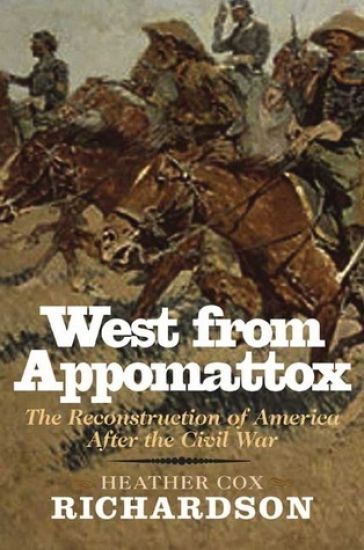
Kirjat ja teokset yhdessä paikassa: 11 kirjaa, julkaisuja vuosilta 1997–2024, suosituimpiin kuuluu West from Appomattox. Vertaile teosten hintoja ja tarkista saatavuus suomalaisista kirjakaupoista.
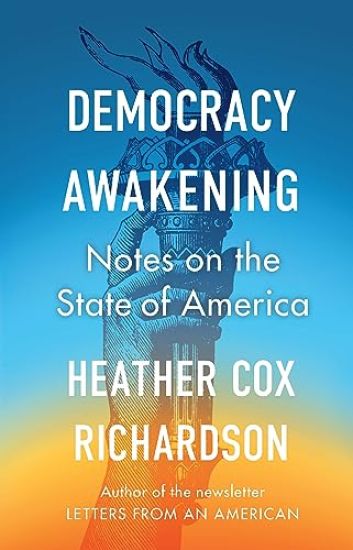
A New York Times Bestseller A vital and urgent call to action about the precarious state of American democracy, charting its historical challenges and current threats, from one of our era's most important and insightful historians, with a new afterword by the author. "Magisterial." -The Washington Post "An excellent primer for anyone who needs the important facts of the last 150 years of American history-and how they got us to the sorry place we inhabit today." -Guardian At a time when the very foundations of American democracy seem under threat, the lessons of the past offer a road map for navigating a moment of political crisis. In Democracy Awakening, acclaimed historian Heather Cox Richardson delves into the tumultuous journey of American democracy, tracing the roots of Donald Trump's "authoritarian experiment" to the earliest days of the republic. She examines the historical forces that have led to the current political climate, showing how modern conservatism has preyed upon a disaffected population, weaponizing language and promoting false history to consolidate power. With remarkable clarity and the same accessible voice that brings millions to her newsletter, Letters from an American, Richardson wrangles a chaotic news feed into a story that pivots effortlessly from the Founders to the abolitionists to Nixon to the January 6 insurrection. An essential read for anyone concerned about the state of America, Democracy Awakening is more than a history book; it's a call to action. Richardson reminds us that democracy requires constant vigilance and participation from all of us, showing how we, as a nation, can take the lessons of the past to secure a more just and equitable future.
From historian and author of the popular daily newsletter LETTERS FROM AN AMERICAN, a vital narrative that explains how America, once a beacon of democracy, now teeters on the brink of autocracy -- and how we can turn back. In the midst of the impeachment crisis of 2019, Heather Cox Richardson launched a daily Facebook essay providing the historical background of the daily torrent of news. The essays soon turned into a newsletter and, spread by word of mouth, its readership ballooned to more than 2 million dedicated readers who rely on its plainspoken and informed take on the present and past in America. In Democracy Awakening, Richardson crafts a compelling and original narrative, explaining how, over the decades, a small group of wealthy people have made war on American ideals. By weaponizing language and promoting false history they have led us into authoritarianism -- creating a disaffected population and then promising to recreate an imagined past where those people could feel important again. She argues that taking our country back starts by remembering the elements of the nation's true history that marginalized Americans have always upheld. Their dedication to the principles on which this nation was founded has enabled us to renew and expand our commitment to democracy in the past. Richardson sees this history as a roadmap for the nation's future. Richardson's unique talent is to wrangle our giant, meandering, confusing news feed into a coherent story that singles out what we should pay attention to, what the historical roots and precedents are, and what possible paths lie ahead. Writing in her trademark calm prose, she manages to be both realistic and optimistic about the future of democracy. Richardson's easy command of history allows her to pivot effortlessly from the Founders to the abolitionists to Reconstruction to Goldwater to Mitch McConnell, highlighting the political legacies of the New Deal, the lingering fears of socialism, the death of the liberal consensus and birth of "movement conservatism." There are many books that tell us what has happened over the last five years. Democracy Awakening explains how we got to this perilous point, what our history really tells us about ourselves, and what the future of democracy can be.
** #4 New York Times bestseller **In Democracy Awakening, American historian Heather Cox Richardson examines how, over the decades, an elite minority have made war on American ideals. By weaponising language and promoting false history, they are leading Americans into authoritarianism and creating a disaffected population. Many books tell us what has happened over the last five years. In Democracy Awakening, Richardson wrangles America's meandering and confusing news feed into a coherent story to explain how America got to this perilous point, what we should pay attention to, and what the future of democracy holds.
From historian and author of the popular daily newsletter LETTERS FROM AN AMERICAN, a vital narrative that explains how America, once a beacon of democracy, now teeters on the brink of autocracy -- and how we can turn back. In the midst of the impeachment crisis of 2019, Heather Cox Richardson launched a daily Facebook essay providing the historical background of the daily torrent of news. It soon turned into a newsletter and its readership ballooned to more than 2 million dedicated readers who rely on her plainspoken and informed take on the present and past in America. In Democracy Awakening, Richardson crafts a compelling and original narrative, explaining how, over the decades, a small group of wealthy people have made war on American ideals. By weaponizing language and promoting false history they have led us into authoritarianism -- creating a disaffected population and then promising to recreate an imagined past where those people could feel important again. She argues that taking our country back starts by remembering the elements of the nation's true history that marginalized Americans have always upheld. Their dedication to the principles on which this nation was founded has enabled us to renew and expand our commitment to democracy in the past. Richardson sees this history as a roadmap for the nation's future. Richardson's talent is to wrangle our giant, meandering, and confusing news feed into a coherent story that singles out what we should pay attention to, what the precedents are, and what possible paths lie ahead. In her trademark calm prose, she is realistic and optimistic about the future of democracy. Her command of history allows her to pivot effortlessly from the Founders to the abolitionists to Reconstruction to Goldwater to Mitch McConnell, highlighting the political legacies of the New Deal, the lingering fears of socialism, the death of the liberal consensus and birth of "movement conservatism." Many books tell us what has happened over the last five years. Democracy Awakening explains how we got to this perilous point, what our history really tells us about ourselves, and what the future of democracy can be.
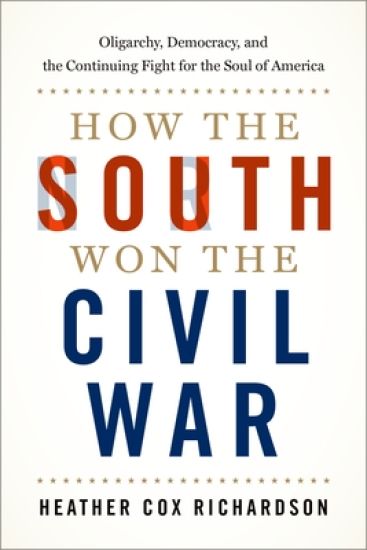
Named one of The Washington Post's 50 Notable Works of Nonfiction While the North prevailed in the Civil War, ending slavery and giving the country a "new birth of freedom," Heather Cox Richardson argues in this provocative work that democracy's blood-soaked victory was ephemeral. The system that had sustained the defeated South moved westward and there established a foothold. It was a natural fit. Settlers from the East had for decades been pushing into the West, where the seizure of Mexican lands at the end of the Mexican-American War and treatment of Native Americans cemented racial hierarchies. The South and West equally depended on extractive industries-cotton in the former and mining, cattle, and oil in the latter-giving rise a new birth of white male oligarchy, despite the guarantees provided by the 13th, 14th, and 15th Amendments, and the economic opportunities afforded by expansion. To reveal why this happened, How the South Won the Civil War traces the story of the American paradox, the competing claims of equality and subordination woven into the nation's fabric and identity. At the nation's founding, it was the Eastern "yeoman farmer" who galvanized and symbolized the American Revolution. After the Civil War, that mantle was assumed by the Western cowboy, singlehandedly defending his land against barbarians and savages as well as from a rapacious government. New states entered the Union in the late nineteenth century and western and southern leaders found yet more common ground. As resources and people streamed into the West during the New Deal and World War II, the region's influence grew. "Movement Conservatives," led by westerners Barry Goldwater, Richard Nixon, and Ronald Reagan, claimed to embody cowboy individualism and worked with Dixiecrats to embrace the ideology of the Confederacy. Richardson's searing book seizes upon the soul of the country and its ongoing struggle to provide equal opportunity to all. Debunking the myth that the Civil War released the nation from the grip of oligarchy, expunging the sins of the Founding, it reveals how and why the Old South not only survived in the West, but thrived.
In this provocative new work, Heather Cox Richardson argues that while the North won the Civil War, ending slavery, oligarchy, and giving the country a "new birth of freedom," the victory was short-lived. Settlers from the East pushed into the West, where the seizure of Mexican lands at the end of the Mexican-American War and treatment of Native Americans cemented racial hierarchies. The Old South found a new home in the West. Both depended on extractive industries--cotton in the former and mining, cattle, and oil in the latter--giving rise to a white ruling elite, one that thrived despite the abolition of slavery, the assurances provided by the 13th, 14th, and 15th Amendments, and the economic opportunities afforded by Western expansion. How the South Won the Civil War traces the story of the American paradox, the competing claims of equality and white domination that were woven into the nation's fabric from the beginning. Who was the archetypal "new American"? At the nation's founding it was Eastern "yeoman farmer," independent and freedom-loving, who had galvanized and symbolized the Revolution. After the Civil War the mantle was taken up by the cowboy, singlehandedly defending his land and his women against "savages," and protecting his country from its own government. As new states entered the Union in the late nineteenth century, western and southern leaders found common ground. Resources, including massive amounts of federal money, and migrants continued to stream into the West during the New Deal and World War II. "Movement Conservatives"--starting with Barry Goldwater--claimed to embody cowboy individualism, working with Dixiecrats to renew the ideology of the Confederacy. The "Southern strategy" worked. The essence of the Old South never died and the fight for equality endures.
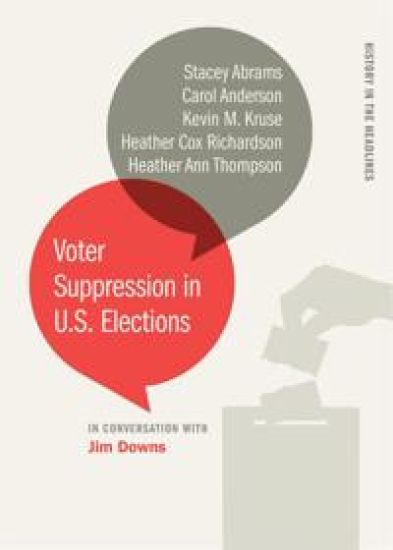
Historians have long been engaged in telling the story of the struggle for the vote. In the wake of recent contested elections, the suppression of the vote has returned to the headlines, as awareness of the deep structural barriers to the ballot, particularly for poor, black, and Latino voters, has called attention to the historical roots of issues related to voting access. Perhaps most notably, former state legislator Stacey Abrams’s campaign for Georgia's gubernatorial race drew national attention after she narrowly lost to then-secretary of state Brian Kemp, who had removed hundreds of thousands of voters from the official rolls. After her loss, Abrams created Fair Fight, a multimillion-dollar initiative to combat voter suppression in twenty states. At an annual conference of the Organization of American Historians, leading scholars Carol Anderson, Kevin M. Kruse, Heather Cox Richardson, and Heather Anne Thompson had a conversation with Abrams about the long history of voter suppression at the Library Company of Philadelphia. This book is a transcript of that extraordinary conversation, edited by Jim Downs. Voter Suppression in U. S. Elections offers an enlightening, history-informed conversation about voter disenfranchisement in the United States. By gathering scholars and activists whose work has provided sharp analyses of this issue, we see how historians in general explore contentious topics and provide historical context for students and the broader public. The book also includes a “top ten” selection of essays and articles by such writers as journalist Ari Berman, Pulitzer Prize–winning historian David Blight, and civil rights icon John Lewis.
From the author of the popular "Letters from an American" newsletter: a sweeping story of how Northerners, Southerners, and Westerners together created modern America in the years from Abraham Lincoln to Theodore RooseveltA Wall Street Journal Bestseller The story of Reconstruction is not simply about the rebuilding of the South after the Civil War. Instead, the late nineteenth century defined modern America, as Southerners, Northerners, and Westerners gradually hammered out a national identity that united three regions into a country that could become a world power. Ultimately, the story of Reconstruction is about how a middle class formed in America and how its members defined what the nation would stand for, both at home and abroad, for the next century and beyond. A sweeping history of the United States from the era of Abraham Lincoln to the presidency of Theodore Roosevelt, this engaging book stretches the boundaries of our understanding of Reconstruction. Historian Heather Cox Richardson—whose daily "Letters From an American" Substack newsletter has attracted a wide following—ties the North and West into the post–Civil War story that usually focuses narrowly on the South, encompassing the significant people and events of this profoundly important era. By weaving together the experiences of real individuals—from a plantation mistress, a Native American warrior, and a labor organizer to Andrew Carnegie, Julia Ward Howe, Booker T. Washington, and Sitting Bull—who lived during the decades following the Civil War and who left records in their own words, Richardson tells a story about the creation of modern America.
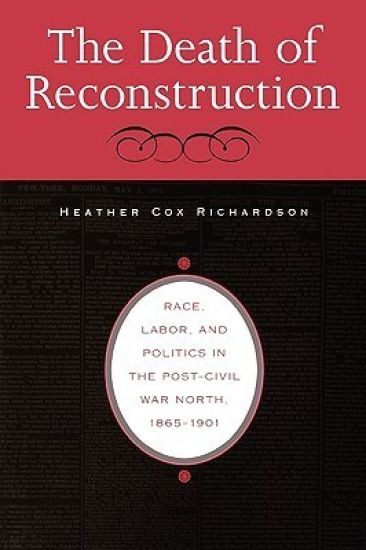
Historians overwhelmingly have blamed the demise of Reconstruction on Southerners' persistent racism. Heather Cox Richardson argues instead that class, along with race, was critical to Reconstruction's end. Northern support for freed blacks and Reconstruction weakened in the wake of growing critiques of the economy and calls for a redistribution of wealth. Using newspapers, public speeches, popular tracts, Congressional reports, and private correspondence, Richardson traces the changing Northern attitudes toward African-Americans from the Republicans' idealized image of black workers in 1861 through the 1901 publication of Booker T. Washington's Up from Slavery. She examines such issues as black suffrage, disenfranchisement, taxation, westward migration, lynching, and civil rights to detect the trajectory of Northern disenchantment with Reconstruction. She reveals a growing backlash from Northerners against those who believed that inequalities should be addressed through working-class action, and the emergence of an American middle class that championed individual productivity and saw African-Americans as a threat to their prosperity. The Death of Reconstruction offers a new perspective on American race and labor and demonstrates the importance of class in the post-Civil War struggle to integrate African-Americans into a progressive and prospering nation.
While fighting a war for the Union, the Republican party attempted to construct the world’s most powerful and most socially advanced nation. Rejecting the common assumption that wartime domestic legislation was a series of piecemeal reactions to wartime necessities, Heather Cox Richardson argues that party members systematically engineered pathbreaking laws to promote their distinctive theory of political economy. Republicans were a dynamic, progressive party, the author shows, that championed a specific type of economic growth. They floated billions of dollars in bonds, developed a national currency and banking system, imposed income taxes and high tariffs, passed homestead legislation, launched the Union Pacific railroad, and eventually called for the end of slavery. Their aim was to encourage the economic success of individual Americans and to create a millennium for American farmers, laborers, and small capitalists. However, Richardson demonstrates, while Republicans were trying to construct a nation of prosperous individuals, they were laying the foundation for rapid industrial expansion, corporate corruption, and popular protest. They created a newly active national government that they determined to use only to promote unregulated economic development. Unwittingly, they ushered in the Gilded Age.