
Kirjailija
Heike Behrend
Kirjat ja teokset yhdessä paikassa: 8 kirjaa, julkaisuja vuosilta 2000–2025, suosituimpiin kuuluu Nicht Alles Verstehen: Wege Und Umwege in Der Deutschen Ethnologie. Vertaile teosten hintoja ja tarkista saatavuus suomalaisista kirjakaupoista.
8 kirjaa
Kirjojen julkaisuvuodet: 2000–2025.

The Savage Hits Back Revisited: Art and Alterity in the Colonial Encounter
Heike Behrend; Cora Bender; Michael Harbsmeier
Dietrich Reimer
2024
nidottu
In recent years, not only ethnographic collections, but also the European canon of art history have come under siege. The colonial history and Eurocentric bias of both the museums and the academy have increasingly been put at center stage in a fierce discussion of the legitimacy and significance of scientific, curatorial, and artistic practices in a globalized world. In a largely forgotten intervention, the curator and ethnologist Julius Lips inverted the "colonial gaze" by collecting images of Europeans from colonial contact zones. Published in exile in 1937, "The Savage Hits Back" forged a contemporaneity of artistic works and opposed the aesthetics and narratives of Primitivism and Salvage Anthropology, subverting colonial power. The volume provides a fresh view of Lips' biography and work spanning three decades and four political systems in the transatlantic world. The contributors look at prewar ethnology, art history, and museum practice and explore the traces of an inverted gaze in global art and the possibility of a symmetric anthropology and art history. With an inventory catalogue of Lips' collection at the Rautenstrauch-Joest-Museum Cologne.

Nicht Alles Verstehen: Wege Und Umwege in Der Deutschen Ethnologie
Gerhard Baer; Heike Behrend; Christian Feest
Dietrich Reimer
2019
nidottu
Wie kam ich zur Ethnologie? Was hat sich seitdem verandert? Wie sehe ich das Fach heute? - Auf diese Fragen haben deutschsprachige Ethnolog_innen wie Hans Fischer, Fritz Kramer, Mark Munzel und Heike Behrendt geantwortet. In den hier zusammengestellten Texten erzahlen sie von ihren Wegen zur und in der Ethnologie. So entsteht das Bild einer vielschichtigen Disziplin, von der schon immer eine besondere Anziehung ausging und die sich zugleich bis heute in einer prekaren Lage befindet. Denn es werden zunehmend Stimmen laut, die die Berechtigung nicht nur der fruheren Volkerkundemuseen, sondern auch des Faches insgesamt infrage stellen. Daher ist es an der Zeit, einige seiner Vertreter_innen zu Wort kommen zu lassen.
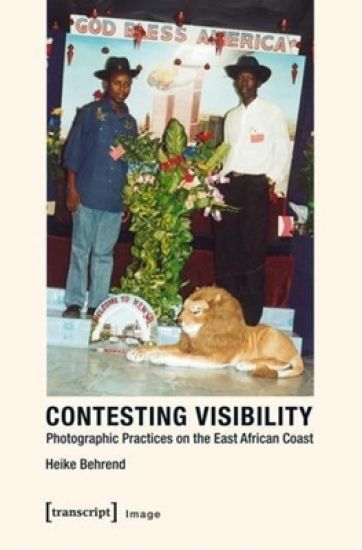
Since the introduction of photography by commercial studio photographers and the colonial state in Kenya, this global medium has been intensely debated and contested among Muslims on the cosmopolitan East African coast. This book does not only explore the making, circulation, and consumption of popular photographs, but also the other side, their rejection and obliteration, an essential aspect of a medium's history that should not be neglected. It deals with various »social spaces of refusal« in the local Muslim milieu and in that of »traditional« spirit mediums in which (gendered) visibility was (and is) contested in various and creative ways. It focuses on the »aesthetics of withdrawal«: the various ways and techniques that process the photographic act as well as the photographic image to theatricalize the surface of the image in new ways by veiling, masking, and concealing. In a fragmented historical perspective, Heike Behrend seeks to complement, decenter, and counter the history of photography as it has been told by the West and to narrate another history beginning with preceding local media such as textiles and spirit possession.
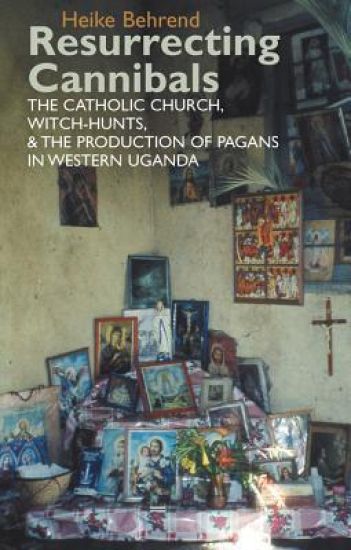
This is the first ethnography of the Uganda Martyrs Guild [UMG], a lay movement of the Catholic Church, and its organized witch-hunts in the kingdom of Tooro, Western Uganda. This book explores cannibalism, food, eating and being eaten in its many variations. It deals with people who feel threatened by cannibals, churches who combat cannibals and anthropologists who find themselves suspected of being cannibals. It describes how different African and European images of the cannibal intersected and influenced each other in Tooro, Western Uganda, where the figure of the resurrecting cannibal draws on both pre-Christian ideas andchurch dogma of the bodily resurrection and the ritual of Holy Communion. In Tooro cannibals are witches: they bewitch people so that they die only to be resurrected and eaten. This is how they were perceived in the 1990s when a lay movement of the Catholic Church, the Uganda Martyrs Guild [UMG] organized witch-hunts to cleanse the country. The UMG was responding to an extended crisis: growing poverty, the retreat and corruption of the local government, a guerrilla war, a high death rate through AIDS, accompanied by an upsurge of occult forces in the form of cannibal witches. By trying to deal, explain and "heal" the situation of "internal terror", the UMG reinforced the perception of the reality of witches and cannibals while at the same time containing violence and regaining power for the Catholic Church in competition for "lost souls" with other Pentecostal churches and movements. This volumeincludes the DVD of a video film by Armin Linke and Heike Behrend showing a "crusade" to identify and cleanse witches and cannibals organized by the UMG in the rural area of Kyamiaga in 2002. With a heightened awareness and reflective use of the medium, UMG members created a domesticated version of their crusade for Western (and local) consumption as part of a "shared ethnography". Heike Behrend is Professor of Anthropology and African Studies at the University of Cologne, Germany, the author of Alice Lakwena and the Holy Spirits [James Currey, 1999], and co-editor of Spirit Possession, Modernity and Power in Africa[James Currey, 1999]
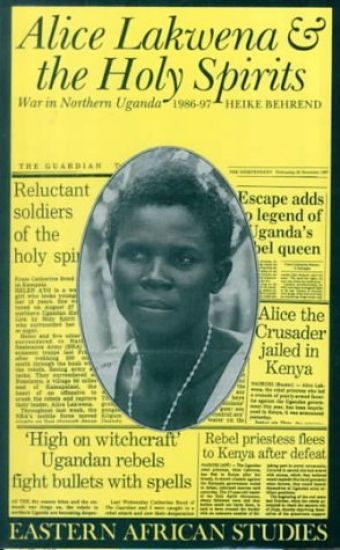
In August 1986, Alice Auma, a young Acholi woman in northern Uganda, proclaiming herself under the orders of a Christian spirit named Lakwena, raised an army called the "Holy Spirit Mobile Forces." With it she waged a war against perceived evil, not only an external enemy represented by the National Resistance Army of the government, but internal enemies in the form of "impure" soldiers, witches, and sorcerers. She came very close to her goal of overthrowing the government but was defeated and fled to Kenya. This book provides a unique view of Alice's movement, based on interviews with its members and including their own writings, examining their perceptions of the threat of external and internal evil. It concludes with an account of the successor movements into which Alice's forces fragmented and which still are active in the civil wars of the Sudan and Uganda.
In August 1986, Alice Auma, a young Acholi woman in northern Uganda, proclaiming herself under the orders of a Christian spirit named Lakwena, raised an army called the "Holy Spirit Mobile Forces." With it she waged a war against perceived evil, not only an external enemy represented by the National Resistance Army of the government, but internal enemies in the form of "impure" soldiers, witches, and sorcerers. She came very close to her goal of overthrowing the government but was defeated and fled to Kenya. This book provides a unique view of Alice's movement, based on interviews with its members and including their own writings, examining their perceptions of the threat of external and internal evil. It concludes with an account of the successor movements into which Alice's forces fragmented and which still are active in the civil wars of the Sudan and Uganda.