

Kirjailija
Heike Mayer
Kirjat ja teokset yhdessä paikassa: 9 kirjaa, julkaisuja vuosilta 2009–2022, suosituimpiin kuuluu Hinfallen und aufstehen. Vertaile teosten hintoja ja tarkista saatavuus suomalaisista kirjakaupoista.
9 kirjaa
Kirjojen julkaisuvuodet: 2009–2022.
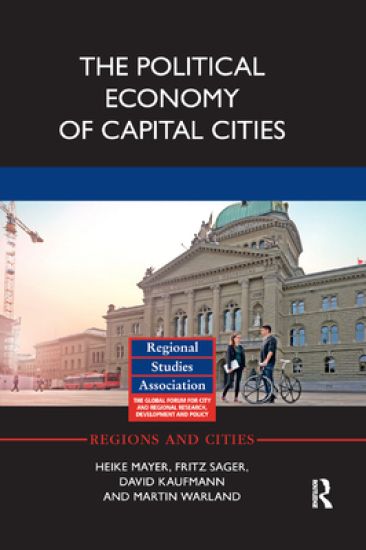
The Political Economy of Capital Cities
Heike Mayer; Fritz Sager; David Kaufmann; Martin Warland
Routledge
2019
nidottu
Capital cities that are not the dominant economic centers of their nations – so-called ‘secondary capital cities’ (SCCs) – tend to be overlooked in the fields of economic geography and political science. Yet, capital cities play an important role in shaping the political, economic, social and cultural identity of a nation. As the seat of power and decision-making, capital cities represent a nation’s identity not only through their symbolic architecture but also through their economies and through the ways in which they position themselves in national urban networks. The Political Economy of Capital Cities aims to address this gap by presenting the dynamics that influence policy and economic development in four in-depth case studies examining the SCCs of Bern, Ottawa, The Hague and Washington, D. C. In contrast to traditional accounts of capital cities, this book conceptualizes the modern national capital as an innovation-driven economy influenced by national, local and regional actors. Nationally, overarching trends in the direction of outsourcing and tertiarization of the public-sector influence the fate of capital cities. Regional policymakers in all four of the highlighted cities leverage the presence of national government agencies and stimulate the economy by way of various locational policy strategies. While accounting for their secondary status, this book illustrates how capital-city actors such as firms, national, regional and local governments, policymakers and planning practitioners are keenly aware of the unique status of their city. The conclusion provides practical recommendations for policymakers in SCCs and highlights ways in which they can help to promote economic development.


The Political Economy of Capital Cities
Heike Mayer; Fritz Sager; David Kaufmann; Martin Warland
Routledge
2017
sidottu
Capital cities that are not the dominant economic centers of their nations – so-called ‘secondary capital cities’ (SCCs) – tend to be overlooked in the fields of economic geography and political science. Yet, capital cities play an important role in shaping the political, economic, social and cultural identity of a nation. As the seat of power and decision-making, capital cities represent a nation’s identity not only through their symbolic architecture but also through their economies and through the ways in which they position themselves in national urban networks. The Political Economy of Capital Cities aims to address this gap by presenting the dynamics that influence policy and economic development in four in-depth case studies examining the SCCs of Bern, Ottawa, The Hague and Washington, D. C. In contrast to traditional accounts of capital cities, this book conceptualizes the modern national capital as an innovation-driven economy influenced by national, local and regional actors. Nationally, overarching trends in the direction of outsourcing and tertiarization of the public-sector influence the fate of capital cities. Regional policymakers in all four of the highlighted cities leverage the presence of national government agencies and stimulate the economy by way of various locational policy strategies. While accounting for their secondary status, this book illustrates how capital-city actors such as firms, national, regional and local governments, policymakers and planning practitioners are keenly aware of the unique status of their city. The conclusion provides practical recommendations for policymakers in SCCs and highlights ways in which they can help to promote economic development.

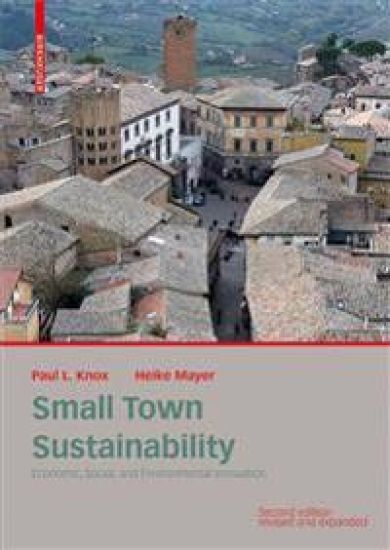
In an age where the globalization process is threatening the uniqueness and vitality of small towns, and where most urban planning discourse is directed at topics such as metropol-regions or mega-regions and world cities, the authors here emphasize the need to critically reflect on the potential of small towns. They illustrate how small towns can meet the challenge of a fast-paced, globalized world, and based on case studies, movements, programs, and strategies, present the local cultures that effectively and sustainably promote traditions and identities. Small towns often play a critical role in regional economies. When small towns focus on their specific characteristics and exploit their opportunities, they can become stable niches within regional, national, and global economies, and thus contribute significantly to shaping their future. The second edition is expanded to cover the intensive development of small towns in China and Korea. In addition, the authors examine the impact of the economic crisis on small towns and the recent development of the Slow City movement.

Entrepreneurship and Innovation in Second Tier Regions
Heike Mayer
Edward Elgar Publishing Ltd
2011
sidottu
Second tier high-tech regions are taking a different path than their well-known counterparts such as Silicon Valley or Route 128 around Boston. They may lack many prerequisites of growth such as a world-class research university or high levels of venture capital funding. Often, however, they can successfully leverage anchor firms and entrepreneurial spinoffs. This book explores the evolution of these regions in the United States. The author critically examines how they evolved as knowledge-based economies, how they leveraged entrepreneurship and innovation, and ultimately how they employed public policy to support economic growth. Filling a gap in the literature, the book speaks to researchers and policy makers across the fields of entrepreneurship, economic geography and economic development planning. Entrepreneurship researchers will find this book interesting because it focuses on the role of new venture creation in regional economic development.

In an era in which the individuality and vitality of small towns are under threat from globalization, and city planning discussions tend to center on topics like metropolitan regions, megaregions, and global cities, the authors of this volume see a need to reflect critically on the potential of small towns. They show how small towns can meet the challenge of a fast-paced, globalized world, and they use case studies to introduce movements, programs, and strategies capable of effectively promoting local cultures, traditions, identities, and sustainability. Small towns often play critical roles in regional economic systems. When small towns focus on their specific characteristics and take advantage of their opportunities, they can become stable niches within regional, national, and global economies and take on an important role in shaping a sustainable future.