Kirjojen hintavertailu – 12 903 724 kirjaa ja 27 kauppaa

Kirjailija

Heila Lotz-Sisitka

Kirjat ja teokset yhdessä paikassa: 5 kirjaa, julkaisuja vuosilta 2019–2026, suosituimpiin kuuluu Transforming Education for Sustainable Futures. Vertaile teosten hintoja ja tarkista saatavuus suomalaisista kirjakaupoista.

5 kirjaa

Kirjojen julkaisuvuodet: 2019–2026.

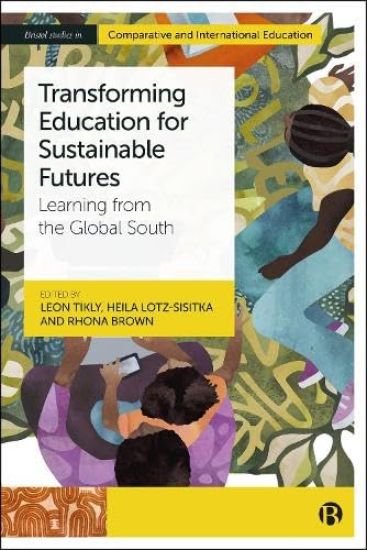
Transforming Education for Sustainable Futures

Transforming Education for Sustainable Futures

Amal Ali; Poonam Batra; Amir Bazaz; Ash Brockwell; Rhona Brown; Beena Choksi; Joan DeJaeghere; Keri Facer; Freya Gasgoyne; Eric Herring; Dan Imaniriho; Latif Ismael; Sanele kaNtshingana; Heila Lotz-Sisitka; Vainola Makan; Simon McGrath; Rafael Mitchell; Sujata Noronha; Sue Parnell; Leon Tikly; Michael Tusiime; Colleen Vogel; Arjen Wals

Bristol University Press
2026
nidottu
Available open access digitally under CC-BY-NC-ND licence. This book examines how education can drive change for marginalized communities across the Global South. Drawing on evidence from 67 projects in India, Rwanda, Somaliland/Somalia and South Africa, the book shows how education can expand youth livelihoods, strengthen sustainable cities and advance climate action. Yet for education to fulfil this role, it must be reimagined—tackling entrenched inequalities of class, caste, clan, gender, race, rurality and indigeneity. Arguing for more democratic, public and inclusive forms of education, the book calls for research that prioritises collaboration and equity over top-down models, offering a bold new agenda for transformative practice.
Green Skills Research in South Africa

Green Skills Research in South Africa

Eureta Rosenberg; Presha Ramsarup; Heila Lotz-Sisitka

TAYLOR FRANCIS LTD
2023
nidottu
This book proposes transformative, realist methodology for skills research and planning through an analysis of case studies of the changing world of work, new learning pathways and educational system challenges. Studies of the green economy and sustainability transitions are a growing field internationally, however there are few books that link this interest to the development of skills. This book draws on, and showcases, the experience and insights of researcher-practitioners who are at the cutting edge in this emerging field, internationally and in South Africa. The context for this book is South Africa, but application is worldwide. In many ways indicative of the global picture, South Africa is in the grip of economic and environmental imperatives, searching for safe and just transitions. The authors present a new, embedded transitioning systems model for studying skills for a sustainable, just future. This book will be of great interest to students and scholars of sustainable development, ecological economics and skills planning.
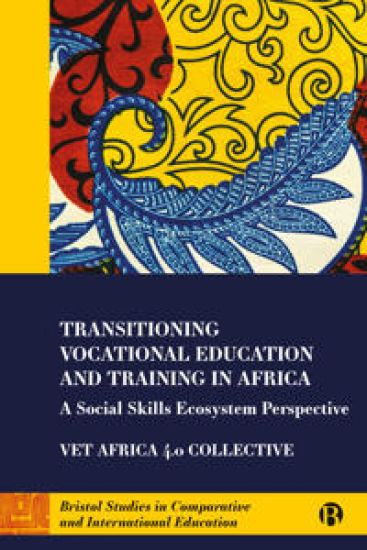
Transitioning Vocational Education and Training in Africa

Transitioning Vocational Education and Training in Africa

Simon McGrath; George Openjuru Ladaah; Heila Lotz-Sisitka; Stephanie Allais; Jacques Zeelen; Volker Wedekind; Presha Ramsarup; David Monk; Luke Metelerkamp; Jo-Anna Russon; Bonaventure Kyaligonja; Glen Robbins; Scovia Adrupio; David Ocan; Kenneth Nyeko; Adoye Primo; Palesa Molebatsi; Themba Tshabalala; Sidney Muhangi; Maxwell Openjuru

Bristol University Press
2023
nidottu
EPDF and EPUB available Open Access under CC-BY-NC-ND licence. The transition to more just and sustainable development requires radical change across a wide range of areas and particularly within the nexus between learning and work. This book takes an expansive view of vocational education and training that goes beyond the narrow focus of much of the current literature and policy debate. Drawing on case studies across rural and urban settings in Uganda and South Africa, the book offers a new way of seeing this issue through an exploration of the multiple ways in which people learn to have better livelihoods. Crucially, it explores learning that takes place informally online, within farmers’ groups, and in public and private educational institutions. Offering new insights and ways of thinking about this field, the book draws out clear implications for theory, policy and practice in Africa and beyond.
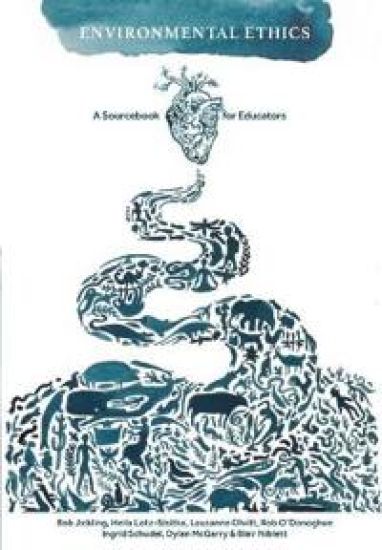
Environmental Ethics

Environmental Ethics

Bob Jickling; Heila Lotz-Sisitka; Lausanne Olvitt

Sun Press
2021
pokkari
This well-constructed, and highly original, sourcebook integrates educational materials for teaching environmental ethics with theoretical reflections. The book is set to contribute immensely to its aim of taking ethics out of philosophy departments and putting it into the streets, into villages, and on the Earth-to make ethics an everyday activity, not something left to experts and specialists. Context-based activities are presented in almost every chapter. While it acknowledges foundational theories in environmental ethics, and the work that they continue to do, it wholeheartedly embraces a growing body of literature that emphasises contextual, process-oriented, and place-based approaches to ethical reflection, deliberation, and action. It walks on the ground and isn't afraid to get a little dirty or to seek joy in earthly relationships. And it ultimately breaks with much Western academic tradition by framing "ethics in a storied world", thus making room to move beyond Euro-American perspectives in environmental issues. This work will be of interest to school teachers and other non-formal and informal educators, teacher educators, college instructors, university professors, and other professionals who wish to bring environmental ethics to the forefront of their pedagogical practices.
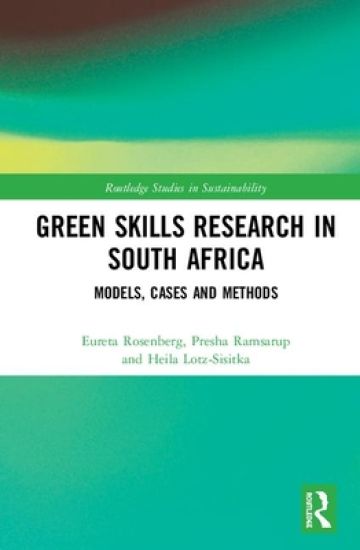
Green Skills Research in South Africa

Green Skills Research in South Africa

Eureta Rosenberg; Presha Ramsarup; Heila Lotz-Sisitka

Routledge
2019
sidottu
This book proposes transformative, realist methodology for skills research and planning through an analysis of case studies of the changing world of work, new learning pathways and educational system challenges. Studies of the green economy and sustainability transitions are a growing field internationally, however there are few books that link this interest to the development of skills. This book draws on, and showcases, the experience and insights of researcher-practitioners who are at the cutting edge in this emerging field, internationally and in South Africa. The context for this book is South Africa, but application is worldwide. In many ways indicative of the global picture, South Africa is in the grip of economic and environmental imperatives, searching for safe and just transitions. The authors present a new, embedded transitioning systems model for studying skills for a sustainable, just future. This book will be of great interest to students and scholars of sustainable development, ecological economics and skills planning.