
Kirjojen hintavertailu – 12 903 725 kirjaa ja 27 kauppaa

Kirjailija

Helen Donaghue

Kirjat ja teokset yhdessä paikassa: 3 kirjaa, julkaisuja vuosilta 2014–2023, suosituimpiin kuuluu Teacher Evaluation in Second Language Education. Vertaile teosten hintoja ja tarkista saatavuus suomalaisista kirjakaupoista.

3 kirjaa

Kirjojen julkaisuvuodet: 2014–2023.

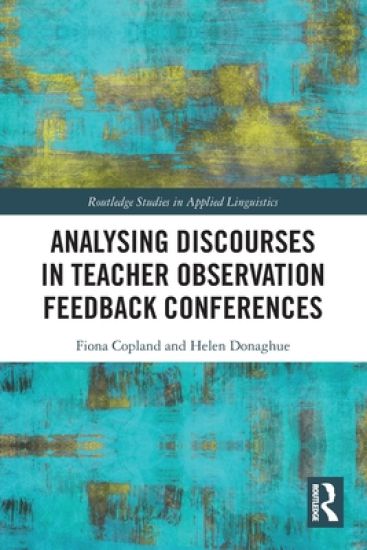
Analysing Discourses in Teacher Observation Feedback Conferences

Analysing Discourses in Teacher Observation Feedback Conferences

Fiona Copland; Helen Donaghue

TAYLOR FRANCIS LTD
2023
nidottu
This volume focuses on the post-observation feedback conference, a common feature of teacher education programs, and highlights the importance of such talk in the development and evaluation of teachers and other professionals. The book adopts a linguistic ethnographic approach, which provides a framework for examining the contextual nature of the talk and how it is embedded within wider social contexts and structures, such as evaluation regimes. Drawing on data from a range of settings, including pre-service teacher education, medical education, and teacher appraisal programs, Copland and Donaghue examine the feedback conference from a range of perspectives, including face, identity and genre, and show how a nuanced understanding of discussions can support teacher trainers, supervisors and observers to provide appropriate and useful feedback. A concluding chapter brings together brief vignettes from researchers active in the field to point to future directions for further study. This book will be of particular interest to students and researchers in discourse analysis, language education, linguistic anthropology, and professional communication, as well as pre- and in-service teachers.
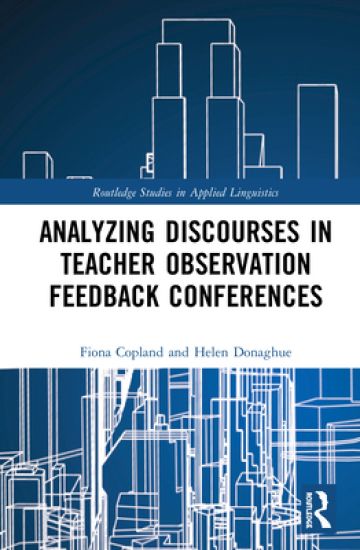
Analysing Discourses in Teacher Observation Feedback Conferences

Analysing Discourses in Teacher Observation Feedback Conferences

Fiona Copland; Helen Donaghue

CRC Press Inc
2021
sidottu
This volume focuses on the post-observation feedback conference, a common feature of teacher education programs, and highlights the importance of such talk in the development and evaluation of teachers and other professionals. The book adopts a linguistic ethnographic approach, which provides a framework for examining the contextual nature of the talk and how it is embedded within wider social contexts and structures, such as evaluation regimes. Drawing on data from a range of settings, including pre-service teacher education, medical education, and teacher appraisal programs, Copland and Donaghue examine the feedback conference from a range of perspectives, including face, identity and genre, and show how a nuanced understanding of discussions can support teacher trainers, supervisors and observers to provide appropriate and useful feedback. A concluding chapter brings together brief vignettes from researchers active in the field to point to future directions for further study. This book will be of particular interest to students and researchers in discourse analysis, language education, linguistic anthropology, and professional communication, as well as pre- and in-service teachers.
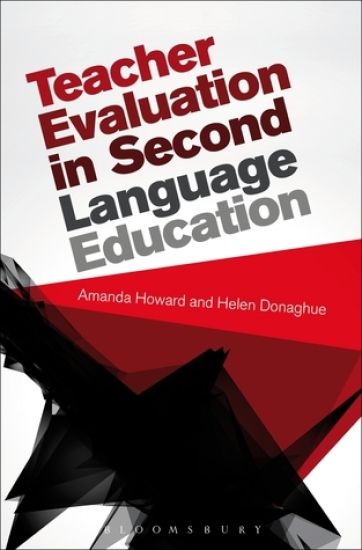
Teacher Evaluation in Second Language Education

Teacher Evaluation in Second Language Education

Amanda Howard; Helen Donaghue

Bloomsbury Academic
2014
sidottu
Effective language learning depends on effective instruction. In order to investigate whether or not this is taking place, teachers’ classroom pedagogical practices, both in-service and pre-service, are frequently monitored by means of observation and feedback. However, research indicates that although this process has potential value for teacher learning and development, there are also a number of attendant problems and it is therefore important that practitioners share their experience with others in the field in order to expand the existing knowledge base. This volume investigates participant experiences, looking beyond the materials used and examining the way in which language teachers are evaluated and supported throughout their careers. Particular attention is given to the practices and frameworks involved, outlining key approaches and discussing tools for investigation and collaboration. The book highlights the importance of the use of talk to foster reflection and teacher learning, the value of learning from experienced others and the importance of giving voice to all those involved in the process of development and evaluation.