Kirjailija
Helen Keller
Kirjat ja teokset yhdessä paikassa: 141 kirjaa, julkaisuja vuosilta 1905–2026, suosituimpiin kuuluu Helen Keller: Autobiographies & Other Writings (LOA #378). Vertaile teosten hintoja ja tarkista saatavuus suomalaisista kirjakaupoista.
Nimi esiintyy myös muodoissa: Helen. Keller
141 kirjaa
Kirjojen julkaisuvuodet: 1905–2026.
This is a reproduction of a book published before 1923. This book may have occasional imperfections such as missing or blurred pages, poor pictures, errant marks, etc. that were either part of the original artifact, or were introduced by the scanning process. We believe this work is culturally important, and despite the imperfections, have elected to bring it back into print as part of our continuing commitment to the preservation of printed works worldwide. We appreciate your understanding of the imperfections in the preservation process, and hope you enjoy this valuable book.

My Religion is a memoir written by Helen Keller, a renowned American author, activist, and lecturer who was deafblind. In this book, Keller shares her spiritual journey and her beliefs about religion and faith. She discusses the influence of her family and friends on her religious beliefs, as well as her encounters with various religious traditions, including Christianity, Buddhism, and Hinduism. Keller also reflects on the role of religion in society and its potential to promote peace and justice. Throughout the book, Keller's writing is deeply personal and introspective, providing a unique insight into the inner world of a remarkable woman who overcame immense challenges to become a leading figure in the disability rights movement. My Religion is a powerful and inspiring work that offers a profound reflection on the nature of faith and the human spirit. This scarce antiquarian book is a facsimile reprint of the old original and may contain some imperfections such as library marks and notations. Because we believe this work is culturally important, we have made it available as part of our commitment for protecting, preserving, and promoting the world's literature in affordable, high quality, modern editions, that are true to their original work.
Helen Adams Keller was an American writer and social activist; an illness (possibly scarlet fever or meningitis) at the age of 19 months left her deaf and blind. No matter how dull, or how mean, or how wise a man is, he feels that happiness is his indisputable right. It is curious to observe what different ideals of happiness people cherish, and in what singular places they look for this well-spring of their life. Many look for it in the hoarding of riches, some in the pride of power, and others in the achievements of art and literature; a few seek it in the exploration of their own minds, or in search for knowledge. Most people measure their happiness in terms of physical pleasure and material possession. Could they win some visible goal which they have set on the horizon, how happy they could be Lacking this gift or that circumstance, they would be miserable. If happiness is to be so measured, I who cannot hear or see have every reason to sit in a corner with folded hands and weep. If I am happy in spite of my deprivations, if my happiness is so deep that it is a faith, so thoughtful that it becomes a philosophy of life, - if, in short, I am an optimist, my testimony to the creed of optimism is worth hearing. Helen Keller was left blind and deaf by a terrible disease at the age of 19 months, trapped in a shell of incomprehensibility. With the help of Annie Sullivan, she was able to overcome these handicaps and educate herself. Shortly after her autobiography, My Story, appeared in 1900, this book on Optimism was also published.

Friendly Settlements before the European Court of Human Rights
Helen Keller; Magdalena Forowicz; Lorenz Engi
Oxford University Press
2010
sidottu
The friendly settlement procedure is an important tool for the reduction of the European Court of Human Rights' (ECtHR) case load. Recent practice demonstrates that this procedure is increasingly resorted to by applicants and Contracting States. This book evaluates this largely unexplored instrument from doctrinal as well as practical perspectives, making recommendations to render the negotiations before the ECtHR more efficient and professional. The book examines questions relating to the admissibility as well as to the practical manageability of friendly settlements. In contrast to ordinary civil proceedings, the friendly settlements procedure has a mixed legal character: while settlements are an inter-partes procedure, they are also binding under international law, as the ECtHR often hands them down in the form of a judgment. In this context, the question arises as to how far the proceedings can be 'privatised' and where the limits to the monetisation of human rights violation lie. This book evaluates possible abuses and identifies the precautions that need to be taken in the framework of friendly settlements. This issue is linked to the question of whether the legal framework which governs the conclusion of a friendly settlement should be formulated in a more concrete manner, given that the position of the parties is unequal and that the role of the Court is hardly defined in this context. Furthermore, the book empirically examines whether the friendly settlement procedure is as advantageous in comparison to ordinary proceedings as others have argued. It also questions whether the friendly settlements procedure can provide the applicant with 'more money faster'.
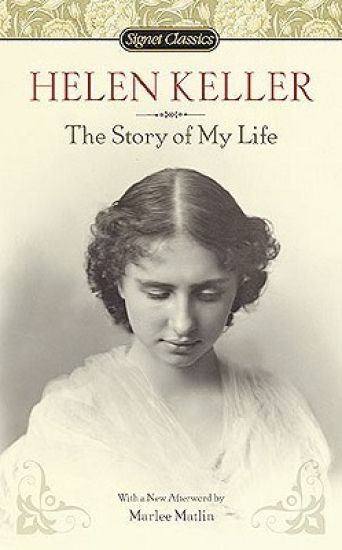
Helen Keller's triumph over her blindness and deafness has become one of the most inspiring stories of our time. Here, in a book first published when she was young woman, is Helen Keller's own story complex, poignant, and filled with love. With unforgettable immediacy, Helen s own words reveal the heart of an exceptional woman, her struggles and joys, including that memorable moment when she finally understands that Anne s finger-spelled letters w-a-t-e-r mean the fluid rushing over her hand. Helen Keller was always a compassionate and witty advocate for the handicapped, and her sincere and eloquent memoir is deeply moving for the sighted and the blind, the deaf and the hearing. Her spirit will endure, said Senator Lister Hill at her funeral, as long as man can read and stories can be told of the woman who showed the world there are no boundaries to courage and faith. Through movies and plays, most notably"The Miracle Worker," which portrayed her relationship with her teacher, Anne Sullivan, Keller s life has become an emblem of hope for people everywhere. With an Introduction by Jim Knipfel and an Afterword by Marlee Matlin This Signet Classic edition includes a facsimile of the Braille alphabet, a sign-language alphabet, and a full selection of Helen Keller s letters."
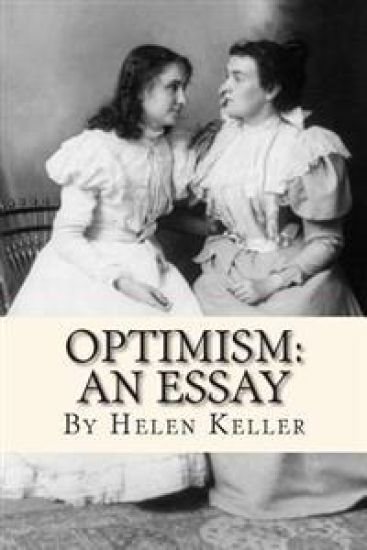
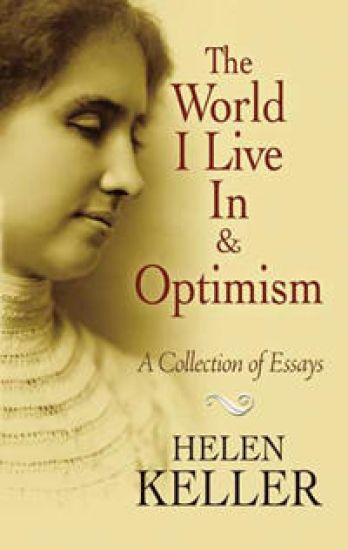
These poetic, inspiring essays offer remarkable insights into the world of a gifted woman who was deaf and blind. Helen Keller relates her impressions of the world's beauty and promise, perceived through the sensations of touch, smell, and vibration, together with the workings of a powerful imagination.
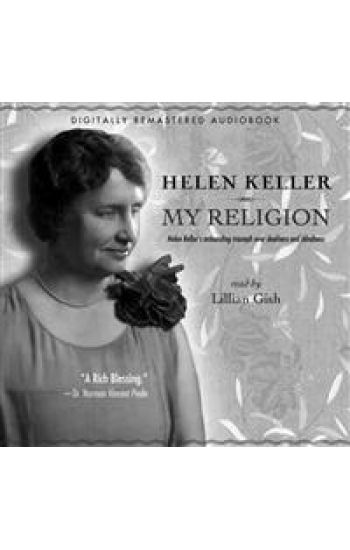
A woman who lived in silent darkness describes a world of love, light, and color. Where did Helen Keller find the strength and courage to break out of her silent and dark world and discover light? What inner resources of faith helped her overcome the limits of her physical body? In My Religion, this dynamic woman describes the spiritual odyessy that brought her to a faith that opened her spiritual sight. This recording was originally made in 1960 by actress Lillian Gish and remastered for a new release.