Kirjojen hintavertailu – 12 903 725 kirjaa ja 27 kauppaa

Kirjailija

Helen Riess

Kirjat ja teokset yhdessä paikassa: 3 kirjaa, julkaisuja vuosilta 2002–2018, suosituimpiin kuuluu The Empathy Effect. Vertaile teosten hintoja ja tarkista saatavuus suomalaisista kirjakaupoista.

3 kirjaa

Kirjojen julkaisuvuodet: 2002–2018.

The Empathy Effect

The Empathy Effect

Helen Riess; Liz Neporent

Sounds True Inc
2018
sidottu
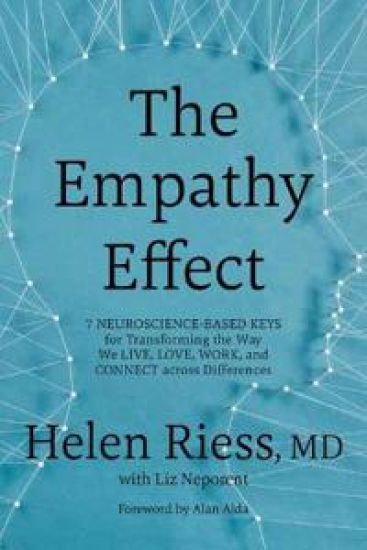
"We are all connected on a neurobiological level far more than we have previously realized. Consciously or not, we are in constant, natural resonance with one another’s feelings. When we are engaged in shared mind awareness, the possibilities for mutual aid and collaborative problem solving abound." —Helen Riess, MD A Revolutionary Guide for Understanding and Changing the Way We Connect Empathy is undergoing a new evolution. In a global and interconnected culture, we can no longer afford to identify only with people who seem to be a part of our "tribe." As Dr. Helen Riess has learned, our capacity for empathy is not just an innate trait—it is also a skill that we can learn and expand. With The Empathy Effect, Dr. Riess presents a definitive resource on empathy: the science behind how it works, new research on how empathy develops from birth to adulthood, and tools for building your capacity to create authentic emotional connection with others in any situation. Dr. Riess emerged as leading researcher on empathy by creating a breakthrough training curriculum now used internationally in health care, business, and education. Drawing from this successful program and the latest science, she presents: • The E. M. P. A. T. H. Y.® method—a powerful seven-step system for understanding and increasing empathy, starting with Eye Contact and ending with Your Response • How empathy works—a comprehensive synthesis emerging from neuroscience, sociology, developmental psychology, and evolutionary theory • Tools for recognizing and promoting empathic behavior in yourself and others • Parenting and teaching empathy in kids—guidance for every stage of development • Texts, emojis, and digital empathy—the modern challenge of authentic connection in the information age • Empathy through art and literature—exploring the power of creative expression to expand our emotional experience • Leading with empathy—how political and business leaders can combine compassion with efficiency through group empathy skills and shared mind intelligence • Digging deep for empathy—how to reverse scapegoating and recognize shared humanity with those we normally keep at a distance • Self-compassion—why your ability to express love toward yourself affects every other relationship in your life "Nourishing empathy lets us help not just ourselves," says Dr. Riess, "but also everyone we interact with, whether for a moment or a lifetime." The Empathy Effect is a life-changing book that will revolutionize the way you understand yourself, relate to your loved ones, and connect to every person in your life.
Integrative Group Treatment for Bulimia Nervosa

Integrative Group Treatment for Bulimia Nervosa

Helen Riess; Mary Dockray-Miller

Columbia University Press
2002
sidottu
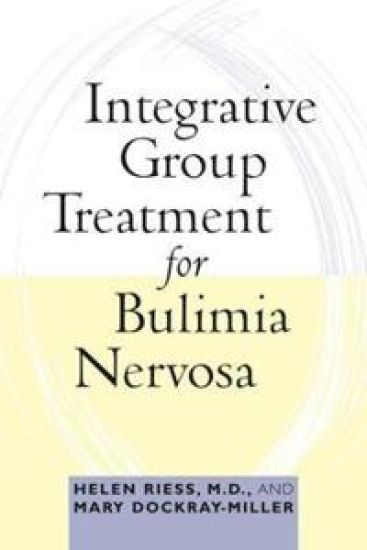
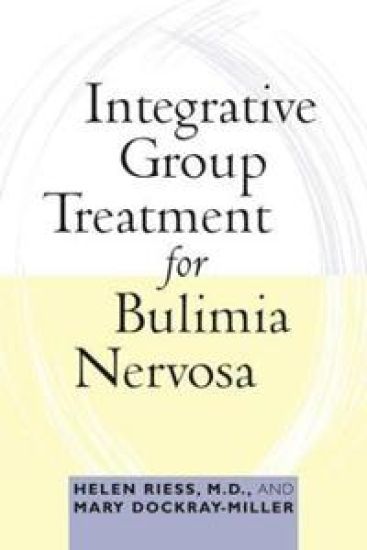
Eating disorders are but one of many specific pathological responses to the pressures of the modern world. In group therapy, patients battling bulimia nervosa can learn from one another how to heal the emotional wounds that have put their health in jeopardy. Group therapy addresses the four etiologies of eating disorders by teaching the sociocultural context, discussing both the psychological and familial constellation of each member, and providing a forum to address the physiological aspects of the disorder by discussing the benefits of or disappointments in medications. The only eating-disorder treatment manual for group application available, this book presents an integrative treatment model bringing together psychoeducational, cognitive behavioral, relational, experiential, and interpersonal methods. The introduction begins with a detailed discussion of bulimia's cultural roots as well as its epidemiology and etiology, moves to a survey of available treatments, and concludes with a rationale for use of the integrative group method. Following chapters provide instructions for leading a time-limited therapy group for bulimic patients, including a discussion of screening procedures for prospective members and a guide for processing group dynamics. These precede the core of the book: step-by-step descriptions of the twelve structured therapy sessions. Interspersed throughout are group reading assignments and reflective essays.
Integrative Group Treatment for Bulimia Nervosa

Integrative Group Treatment for Bulimia Nervosa

Helen Riess; Mary Dockray-Miller

Columbia University Press
2002
pokkari
Eating disorders are but one of many specific pathological responses to the pressures of the modern world. In group therapy, patients battling bulimia nervosa can learn from one another how to heal the emotional wounds that have put their health in jeopardy. Group therapy addresses the four etiologies of eating disorders by teaching the sociocultural context, discussing both the psychological and familial constellation of each member, and providing a forum to address the physiological aspects of the disorder by discussing the benefits of or disappointments in medications. The only eating-disorder treatment manual for group application available, this book presents an integrative treatment model bringing together psychoeducational, cognitive behavioral, relational, experiential, and interpersonal methods. The introduction begins with a detailed discussion of bulimia's cultural roots as well as its epidemiology and etiology, moves to a survey of available treatments, and concludes with a rationale for use of the integrative group method. Following chapters provide instructions for leading a time-limited therapy group for bulimic patients, including a discussion of screening procedures for prospective members and a guide for processing group dynamics. These precede the core of the book: step-by-step descriptions of the twelve structured therapy sessions. Interspersed throughout are group reading assignments and reflective essays.