Kirjojen hintavertailu – 12 859 819 kirjaa ja 27 kauppaa

Kirjailija

Helen Sanderson

Kirjat ja teokset yhdessä paikassa: 21 kirjaa, julkaisuja vuosilta 2007–2026, suosituimpiin kuuluu Psychological Safety in Practice. Vertaile teosten hintoja ja tarkista saatavuus suomalaisista kirjakaupoista.

21 kirjaa

Kirjojen julkaisuvuodet: 2007–2026.

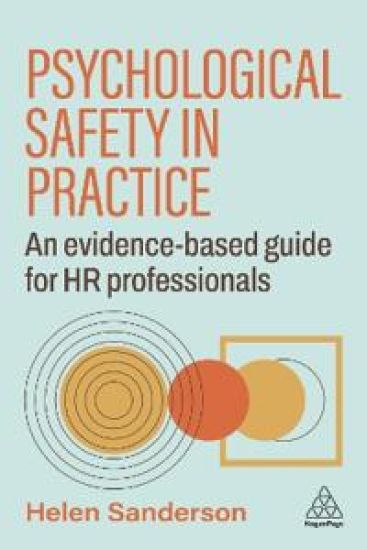
Psychological Safety in Practice

Psychological Safety in Practice

Helen Sanderson

KOGAN PAGE LTD
2026
sidottu
A business can't achieve the results it needs without an engaged and productive workforce performing at their full potential. This isn't possible without psychological safety at work. Psychological Safety in Practice is a practical evidence-based guide for senior HR professionals which explains how to embed psychological safety in the organization to benefit both individuals and the overall business. The first part of the book is structured around the five foundations of psychological safety: mattering, voice, clarity, collaboration and growth. These foundations translate the science of psychological safety into practical ways of working that any team can apply and make a well-known concept tangible, moving from knowing about the concept to practising it. The second part of book explains how to embed psychological safety through the employee journey from recruitment and induction through to probation, feedback and development. There is also expert guidance on the importance of safety to employee recognition and inclusion as well as why these practices boost wellbeing, productivity, performance and staff retention. Full of tips, tools and practical advice, this book explains how to make decisions with transparency and trust in mind, ensure that meetings work for all employees and don't encourage a culture of fear and crucially, how to handle conflict and tensions among teams. With advice on how to scale psychological safety practices from teams to the organization as a whole, ensure structural alignment throughout the business and balance quick wins with strategic and cultural benefits, this is essential reading for all mid to senior-level HR professionals.
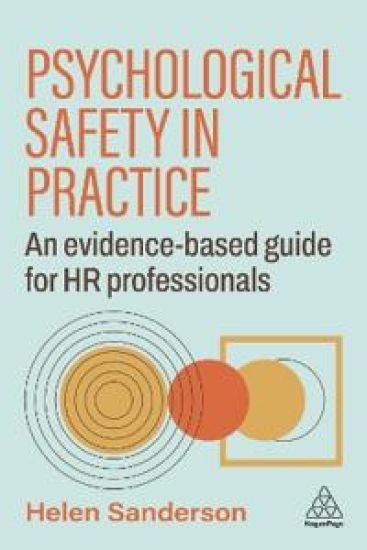
Psychological Safety in Practice

Psychological Safety in Practice

Helen Sanderson

KOGAN PAGE LTD
2026
pokkari
A business can't achieve the results it needs without an engaged and productive workforce performing at their full potential. This isn't possible without psychological safety at work. Psychological Safety in Practice is a practical evidence-based guide for senior HR professionals which explains how to embed psychological safety in the organization to benefit both individuals and the overall business. The first part of the book is structured around the five foundations of psychological safety: mattering, voice, clarity, collaboration and growth. These foundations translate the science of psychological safety into practical ways of working that any team can apply and make a well-known concept tangible, moving from knowing about the concept to practising it. The second part of book explains how to embed psychological safety through the employee journey from recruitment and induction through to probation, feedback and development. There is also expert guidance on the importance of safety to employee recognition and inclusion as well as why these practices boost wellbeing, productivity, performance and staff retention. Full of tips, tools and practical advice, this book explains how to make decisions with transparency and trust in mind, ensure that meetings work for all employees and don't encourage a culture of fear and crucially, how to handle conflict and tensions among teams. With advice on how to scale psychological safety practices from teams to the organization as a whole, ensure structural alignment throughout the business and balance quick wins with strategic and cultural benefits, this is essential reading for all mid to senior-level HR professionals.

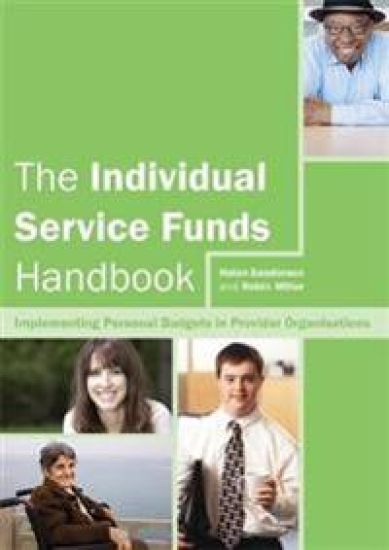
The Individual Service Funds Handbook

The Individual Service Funds Handbook

Robin Miller; Helen Sanderson

Jessica Kingsley Publishers
2014
pokkari
The Individual Service Funds Handbook is the definitive guide to one of the most innovative forms of personal budget in health and social care. It gives a clear explanation of what Individual Service Funds (ISFs) are, how to use them effectively and includes all the information you need in order to implement them in your organisation. The Handbook spans a range of settings, including a dementia care home, supported living and residential homes for adults with learning disabilities and people who use mental health services. It also sets out guidelines and templates which can be used when implementing ISFs, addressing key practical concerns including: how to put together effective support plans, and how to ensure that ISFs are delivered in a person-centred way, how to overcome organisational complexities in implementation and supporting managers. A one-stop resource for anyone wanting to understand the potential of ISFs, the Handbook is required reading for service providers, commissioners, and those engaged in person-centred practice and personalisation, including user-led organisations.
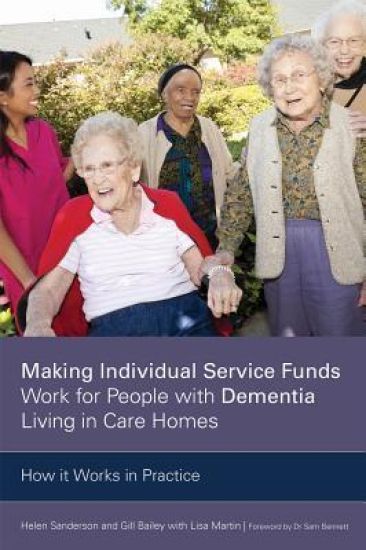
Making Individual Service Funds Work for People with Dementia Living in Care Homes

Making Individual Service Funds Work for People with Dementia Living in Care Homes

Gill Bailey; Helen Sanderson

Jessica Kingsley Publishers
2014
pokkari
Dispelling the myths about how personalisation works for people with dementia living in care homes, this book demonstrates how to introduce Individual Service Funds (ISFs), what works and what doesn't, and how to deal with difficulties and setbacks. Individual Service Funds are one way that people living with dementia can have a personal budget. The authors explain how they went about introducing the principles of ISFs to people living with dementia in a large care home in Stockport, without using any additional funding. They describe the person-centred practices used and the involvement of the council, commissioners, staff and families. Through clear and detailed stories and examples, they demonstrate the dramatic approach to quality of life for people with dementia the approach can deliver. There is a strong emphasis on managerial and organisational issues, including getting staff 'on board', providing adequate support, budgeting, building effective partnerships and implementing change. Providing helpful insights and examples for good practice, this book is essential reading for all those involved in providing personalised care for people with dementia living in care homes, including care staff, care home managers, local authority commissioners, service providers and policy makers.
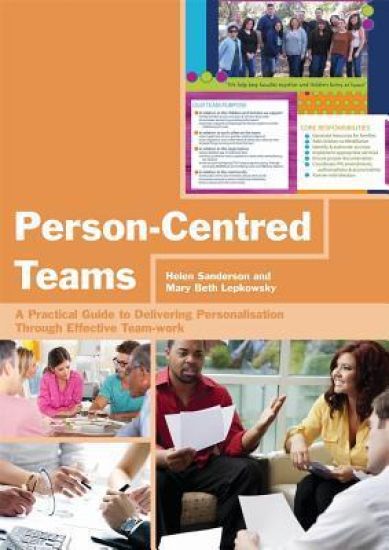
Person-Centred Teams

Person-Centred Teams

Helen Sanderson; Mary Beth Lepkowsky

Jessica Kingsley Publishers
2014
pokkari
Person-Centred Teams provides much-needed guidance on person-centred working following the roll out of personalisation and personal budgets across health and social care. In order to deliver personalisation you need to work with staff in person-centred ways. Straightforward and easy-to-read, this practical guide describes how to do this by developing a person-centred team using person-centred practices. The authors outline their model for developing a team, and how information is recorded in a person-centred team plan. They explain:Purpose - how to clarify a team's purpose People - what managers need to know about each team member, and how one-page profiles can helpPerformance - how to clarify service users' expectations of a team's services, and assess whether or not these are being met Process - how person-centred practices can aid teamwork and help your team deliver Progress - how to continuously improve teamwork and performanceEach section features clear illustrations and examples from teams to enable you to develop a person-centred team plan and work together in person-centred ways. This guide is essential reading for service providers, managers, practitioners and students in the health and social care fields, as well as person-centred planning coordinators and user-led organisations.
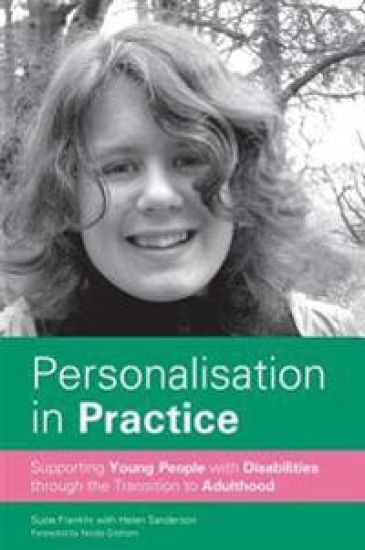
Personalisation in Practice

Personalisation in Practice

Suzie Franklin; Helen Sanderson; Nicola Gitsham

Jessica Kingsley Publishers
2013
pokkari
This book demonstrates very clearly how the personalisation of support and services works in practice. The authors describe how Jennie, a young person with autism and learning difficulties, was supported through the transition from school to living independently using simple, evidence-based person-centred planning tools. Jennie's story illustrates the importance of quality person-centred reviews, dispels the many myths surrounding Individual Service Funds and personal budgets and demonstrates how families, schools and other agencies can work collaboratively to help young people with disabilities move into adulthood with more choice and control over their lives, and with better life prospects. Practical pointers for readers to apply to their own circumstances are included, and the book contains helpful examples of the key person-centred thinking tools. Anyone involved in supporting children and young people with disabilities as they approach adulthood, including parents and carers, SENCOs, teachers, social workers and service providers, will find this to be essential reading. More generally, it will be an informative resource for those seeking a better understanding of how personalisation and person-centred planning work in practice.
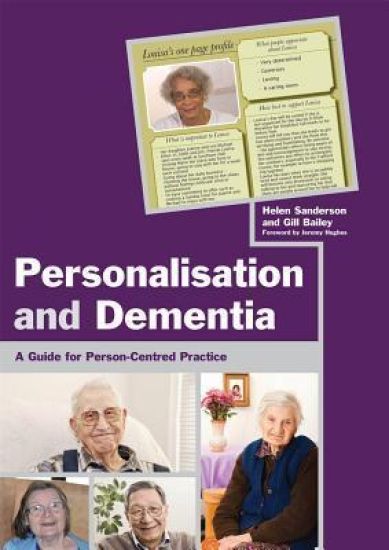
Personalisation and Dementia

Personalisation and Dementia

Gill Bailey; Helen Sanderson

Jessica Kingsley Publishers
2013
pokkari
Personalisation builds on person-centred care to focus on how people with dementia can have more choice and control over decisions affecting them, and be supported to be part of their communities. This practical guide explains how to deliver personalised services and support for people with dementia through simple, evidence-based person-centred practices. The authors clearly explain personalisation and current person-centred thinking and practice, providing many vivid examples of how it has been achieved in community as well as residential care settings. They guide the reader through using a range of person-centred practices. Strategies for ensuring a good match between the person with dementia and the staff and volunteers supporting them are also described. In the final chapter, the reader is introduced to Progress for Providers, a photocopiable tool for tracking progress in delivering appropriate personalised support for people with dementia living in care homes. This is essential reading for dementia care practitioners and managers, as well as social and health care workers, community workers and students.
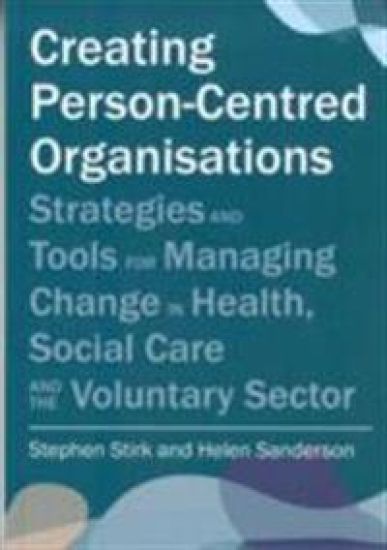
Creating Person-Centred Organisations

Creating Person-Centred Organisations

Stephen Stirk; Helen Sanderson

Jessica Kingsley Publishers
2012
pokkari
Person-centred thinking and planning are approaches that enable people using social care and health services to plan their future, and use a personal budget to commission personalised services. Creating Person-Centred Organisations is a guide for organisations who want to deliver personalised services. Key issues covered include attending to the vision, strategy and business planning of the organisation, as well as organisational processes, culture and managing change. Drawing on the pioneering work of the social care charity United Response, the authors provide a wealth of practical tools and techniques to enable organisations within health, social care and the voluntary sector to use person-centred thinking tools and approaches to move towards becoming person-centred organisations. This is an essential guide for managers and leaders within private, statutory and voluntary organisations. Stephen Stirk is Director of Human Resources at the social care charity United Response. He has had over 30 years' experience in human resources, organisation development and line management positions, including specialism in organisation design and development with GlaxoSmithKline. Helen Sanderson is Director of Helen Sanderson Associates. She has written extensively on person-centred thinking, planning, community building and Individual Service Funds. She has worked with a range of providers to enable them to deliver more personalised services. She is co-author (with Jaimee Lewis) of A Practical Guide to Delivering Personalisation: Person-Centred Practice in Health and Social Care (Jessica Kingsley Publishers).
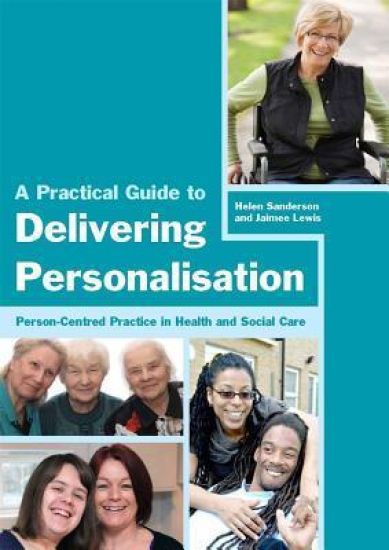
A Practical Guide to Delivering Personalisation

A Practical Guide to Delivering Personalisation

Jaimee Lewis; Helen Sanderson

Jessica Kingsley Publishers
2011
pokkari
Personalisation means people, their families and carers having choice and control over their support on a day-to-day basis. To deliver personalised services, professionals and carers need to do more than just hand over financial control: they need to know what is important to a person, the best way to support them, how they communicate and how they make decisions. This book will show how to deliver personalisation through simple, effective and evidence-based person-centred practice that changes people's lives and helps them achieve the outcomes they want. It covers why person-centred practice is relevant to the personalisation agenda and what person-centred thinking and person-centred reviews are, introducing the tools that can help you carry them out. It also explores the relationship between person-centred plans and support plans, and how person-centred practice can be used in the journey of support through adulthood – from prevention or the management of long-term health conditions to reablement, recovery, support in old age and at the end of life. There is also a chapter on taking a person-centred approach to risk. This is an essential guide for all staff in health and social care including service providers, managers, practitioners and students.
Macmillan Natural and Social Science 4 Activity Book Pack
Macmillan Natural and Social Science is a new six-level course for children studying science in English. The course develops children's knowledge of science, history and geography and provides a systematic development of English language skills. The activities are varied in their approach to provide a motivating stimulus to children's learning.
Macmillan Natural and Social Science Level 4 Pupil's Book
Macmillan Natural and Social Science is a new six-level course for children studying science in English. The course develops children's knowledge of science, history and geography and provides a systematic development of English language skills. The activities are varied in their approach to provide a motivating stimulus to children's learning.
Macmillan Natural and Social Science 4 Poster

Macmillan Natural and Social Science 4 Poster

Helen Sanderson

Macmillan Education
2011
juliste
Macmillan Natural and Social Science is a new six-level course for children studying science in English. The course develops children's knowledge of science, history and geography and provides a systematic development of English language skills. The activities are varied in their approach to provide a motivating stimulus to children's learning.
Macmillan Natural and Social Science 3 Poster

Macmillan Natural and Social Science 3 Poster

Helen Sanderson

Macmillan Education
2010
juliste
Macmillan Natural and Social Science is a new six-level course for children studying science in English. The course develops children's knowledge of science, history and geography and provides a systematic development of English language skills. The activities are varied in their approach to provide a motivating stimulus to children's learning.
Macmillan Natural and Social Science 3 Activity Book Pack
Macmillan Natural and Social Science is a new six-level course for children studying science in English. The course develops children's knowledge of science, history and geography and provides a systematic development of English language skills. The activities are varied in their approach to provide a motivating stimulus to children's learning.
Macmillan Natural and Social Science Level 3 Pupil's Book
Macmillan Natural and Social Science is a new six-level course for children studying science in English. The course develops children's knowledge of science, history and geography and provides a systematic development of English language skills. The activities are varied in their approach to provide a motivating stimulus to children's learning.