Kirjojen hintavertailu – 12 903 724 kirjaa ja 27 kauppaa

Kirjailija

Helen Scott

Kirjat ja teokset yhdessä paikassa: 11 kirjaa, julkaisuja vuosilta 2013–2026, suosituimpiin kuuluu Using Grounded Theory. Vertaile teosten hintoja ja tarkista saatavuus suomalaisista kirjakaupoista.

11 kirjaa

Kirjojen julkaisuvuodet: 2013–2026.

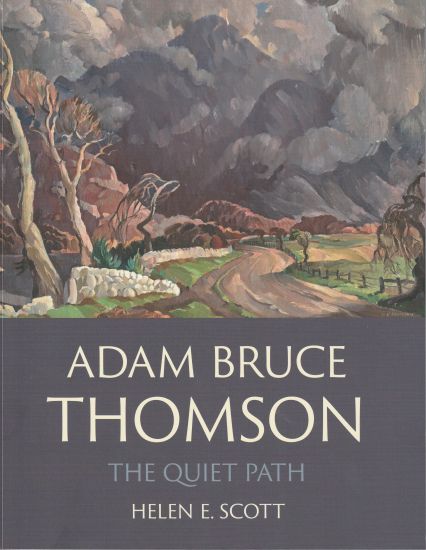
Adam Bruce Thomson

Adam Bruce Thomson

Helen Scott

SANSOM CO
2024
nidottu
Adam Bruce Thomson (1885-1976) was one of the most quietly impactful artists of his generation. Born in Edinburgh, he was among the earliest intake of students to train at the newly established Edinburgh College of Art. He went on to have a long-running teaching career at the College, supporting and encouraging successive cohorts. In his own practice, Thomson worked across a range of media, producing etchings, drawings, watercolours and oil paintings. A committed member of several artist-led societies, he exhibited widely and was well-respected by his peers. To date, however, his contribution to twentieth-century Scottish art remains largely unexplored. _Adam Bruce Thomson: The Quiet Path_ celebrates the achievements of this talented yet modest figure. It provides an in-depth account of his life and career, charting his creative development and examining his role as a teacher, mentor and friend to other artists. The book is fully illustrated, and draws from previously unseen archival material. It accompanies a major exhibition at Edinburgh’s City Art Centre in 2024.
Live, Laugh, Lesbian

Live, Laugh, Lesbian

Helen Scott

JESSICA KINGSLEY PUBLISHERS
2023
pokkari
"Sometimes, it's easy to feel like the only lesbian in the world - let alone in the village. But wherever you are with your sexuality, you've just picked up a book with the word 'lesbian' in the title and I know baby you would be so proud." From strap-ons and Lesbian Bed Death to dealing with homophobic microaggressions in the workplace and finding your second family, Helen Scott, lesbian big sister and lipstick femme in chief is here to hold your hand as you travel your own unique path to Gay Town. Half memoir, half guide, and 100% big lesbian hug, plunge with Helen into the highs and lows of navigating lesbian life in the modern world and emerge with all the lesbian life hacks you'll need to get out there and live the life of your dreams. Candid, wise, bold and hilarious - it's time to reclaim the L in LGBTQ+
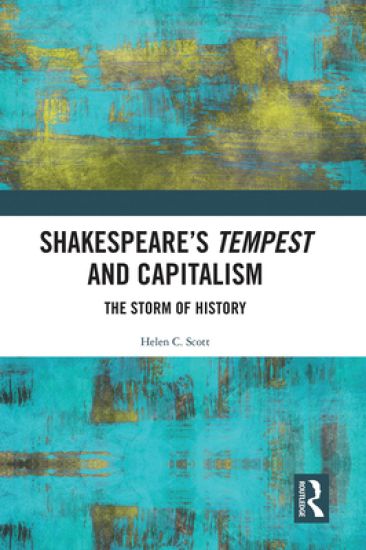
Shakespeare's Tempest and Capitalism

Shakespeare's Tempest and Capitalism

Helen Scott

Taylor Francis Ltd
2021
nidottu
In this forceful study, Helen C. Scott situates The Tempest within Marxist analyses of the ‘primitive accumulation’ of capital, which she suggests help explain the play’s continued and particular resonance. The ‘storm’ of the title refers both to Shakespeare’s Tempest hurtling through time, and to Walter Benjamin’s concept of history as a succession of violent catastrophes. Scott begins with an account of the global processes of dispossession—of the peasantry and indigenous populations—accompanying the emergence of capitalism, which generated new class relationships, new understandings of human subjectivity, and new forms of oppression around race, gender, and disability. Developing a detailed reading of the play at its moment of production in the business of theatre in 1611, Scott then moves gracefully through the global reception history, showing how its central thematic concerns and figurative patterns bespeak the upheavals and dispossessions of successive stages of capitalist development. Paying particular attention to moments of social crisis, and unearthing a radical political tradition, Scott follows the play from its hostile takeover in the Restoration, through its revival by the Romantics, and consolidation and contestation in the nineteenth century. In the twentieth century transatlantic modernism generated an acutely dystopic Tempest, then during the global transformations of the 1960s postcolonial writers permanently associated it with decolonization. At century’s end the play became a vehicle for exploring intersectional oppression, and the remarkable ‘Sycorax school’ featured iconoclastic readings by writers such as Abena Busia, May Joseph, and Sylvia Wynter. Turning to both popular culture and high-profile stage productions in the twenty-first century, Scott explores the ramifications and figurative potential of Shakespeare's Tempest for global social and ecological crises today. Sensitive to the play’s original concerns and informed by recent scholarship on performance and reception history as well as disability studies, Scott’s moving analysis impels readers towards a fresh understanding of sea-change and metamorphosis as potent symbols for the literal and figurative tempests of capitalism’s old age now threatening ‘the great globe itself.’

Shakespeare's Tempest and Capitalism

Shakespeare's Tempest and Capitalism

Helen Scott

Ashgate Publishing Limited
2019
sidottu
In this forceful study, Helen C. Scott situates The Tempest within Marxist analyses of the ‘primitive accumulation’ of capital, which she suggests help explain the play’s continued and particular resonance. The ‘storm’ of the title refers both to Shakespeare’s Tempest hurtling through time, and to Walter Benjamin’s concept of history as a succession of violent catastrophes. Scott begins with an account of the global processes of dispossession—of the peasantry and indigenous populations—accompanying the emergence of capitalism, which generated new class relationships, new understandings of human subjectivity, and new forms of oppression around race, gender, and disability. Developing a detailed reading of the play at its moment of production in the business of theatre in 1611, Scott then moves gracefully through the global reception history, showing how its central thematic concerns and figurative patterns bespeak the upheavals and dispossessions of successive stages of capitalist development. Paying particular attention to moments of social crisis, and unearthing a radical political tradition, Scott follows the play from its hostile takeover in the Restoration, through its revival by the Romantics, and consolidation and contestation in the nineteenth century. In the twentieth century transatlantic modernism generated an acutely dystopic Tempest, then during the global transformations of the 1960s postcolonial writers permanently associated it with decolonization. At century’s end the play became a vehicle for exploring intersectional oppression, and the remarkable ‘Sycorax school’ featured iconoclastic readings by writers such as Abena Busia, May Joseph, and Sylvia Wynter. Turning to both popular culture and high-profile stage productions in the twenty-first century, Scott explores the ramifications and figurative potential of Shakespeare's Tempest for global social and ecological crises today. Sensitive to the play’s original concerns and informed by recent scholarship on performance and reception history as well as disability studies, Scott’s moving analysis impels readers towards a fresh understanding of sea-change and metamorphosis as potent symbols for the literal and figurative tempests of capitalism’s old age now threatening ‘the great globe itself.’
Unjust Enrichment in South African Law

Unjust Enrichment in South African Law

Helen Scott

Hart Publishing
2013
sidottu
Conventional thinking teaches that the absence of liability - in particular contractual invalidity - is itself the reason for the restitution of transfers in the South African law of unjustified enrichment. However, this book argues that while the absence of a relationship of indebtedness is a necessary condition for restitution in such cases, it is not a sufficient condition. The book takes as its focus those instances in which the invalidity thesis is strongest, namely, those traditionally classified as instances of the condictio indebiti, the claim to recover undue transfers. It seeks to demonstrate that in all such instances it is necessary for the plaintiff to show not only the absence of his liability to transfer but also a specific reason for restitution, such as mistake, compulsion or incapacity. Furthermore, this book explores the reasons for the rise of unjust factors in South African law, attributing this development in part to the influence of the Roman-Dutch restitutio in integrum, an extraordinary, equitable remedy that has historically operated independently of the established enrichment remedies of the civilian tradition, and which even now remains imperfectly integrated into the substantive law of enrichment. Finally, the book seeks to defend in principled terms the mixed approach to enrichment by transfer (an approach based both on unjust factors and on the absence of a legal ground) which appears to characterise modern South African law. It advocates the rationalisation of the causes of action comprised within the condictio indebiti, many of which are subject to additional historically-determined requirements, in light of this mixed analysis.